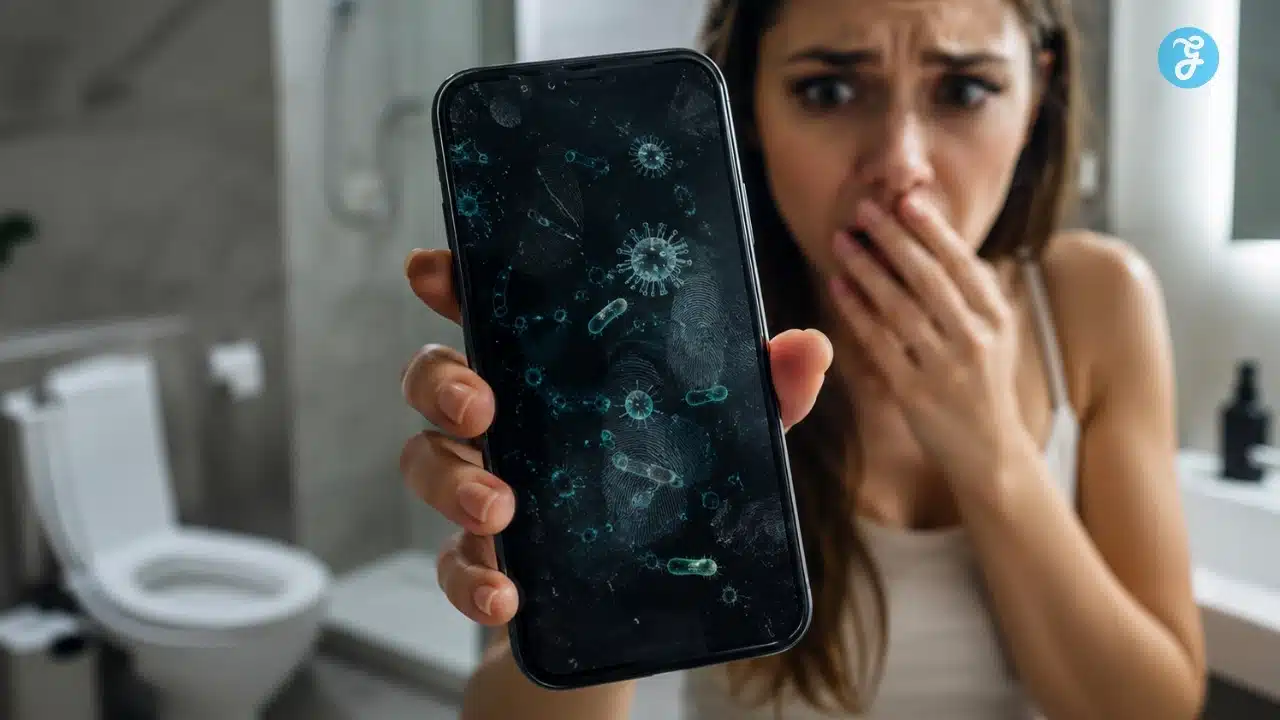
I woke up with a razor-sharp pain in my throat. Swallowing felt entirely impossible. My voice had completely vanished overnight. I dragged myself to the doctor, expecting the usual clinical lecture. Instead, my physician pointed directly at the glowing smartphone in my hand and asked a simple question that made me realize exactly how dirty a phone is when left uncleaned.
I just blinked. I wash my hands constantly. I carry liquid hand sanitizer everywhere I go. But my phone? I occasionally wiped it on my shirt sleeve. I only did this when the glass looked smudged or blurry. That was the extent of my daily device hygiene.
He explained the harsh reality of modern illness. My phone was a highly efficient vehicle for pathogens. It rests directly against my face. It touches my lips. My fingers tap the screen constantly throughout the day. Washing my hands is entirely useless if I immediately pick up a dirty device. I had not sanitized my phone in months.
Our smartphones have become literal pocket Petri dishes. They are highly contaminated personal environments. We touch them thousands of times a day. We almost never clean them. This realization sent me down a deep rabbit hole of scientific research. I needed to understand exactly what I was carrying in my pocket.
The Bacterial Baseline
People frequently ask exactly how dirty a phone is compared to everyday household items. The answer is surprising. Peer-reviewed microbiology studies provide a very clear picture. We need to look at the exact data.
Research from the University of Arizona reveals a clear metric. Microbiologists swabbed dozens of personal devices to compare bacterial loads. They discovered the ten times rule. The average smartphone screen carries up to ten times more bacteria than a standard toilet seat.
We scrub public and private toilet seats regularly. We use strong chemical disinfectants on our bathroom fixtures. We rarely wash our phones. This widespread neglect allows bacterial colonies to build dense biofilms on the glass. A biofilm is a thick layer of microorganisms. They stick together to form a protective shield. Simple wiping with a dry cloth does not remove them.
Toilet seats are generally smooth and dry between uses. Phones are handled constantly. They are exposed to various environments in a single day. This makes the phone screen a much more active transmission vector than a stationary bathroom fixture.
The scientists found that mobile phones harbor a vast array of opportunistic pathogens. These are microbes that wait for the right conditions to cause an infection. They transfer from your hands to the screen. They multiply in the warmth. They transfer back to your hands later. They eventually make their way into your mouth or eyes.
The Medical Verdict: A Doctor’s Warning on Fomite Transmission

“Many of us carry our smartphones to the toilet or keep them on kitchen countertops and similar high-germ environments, inadvertently making them a ready source of contamination and fomite-borne transmission of bacteria and viruses. Handwashing with soap and water and cleaning mobile screens with an alcohol-based disinfectant should be made a regular practice.” — Dr. Shuvankar Mukherjee, Associate Professor, Department of Community Medicine, Calcutta National Medical College, Kolkata
The Microbial Lineup
What exactly lives on your screen? Microbiologists have identified a specific lineup of germs riding along in your pocket or purse.
First is Staphylococcus aureus. This bacteria is commonly found on human skin. It lives harmlessly on about thirty percent of the population. But it becomes dangerous on a screen. It can cause severe skin infections when introduced to open cuts. It can cause serious respiratory issues if inhaled. The bacteria forms robust colonies on hard surfaces. It waits for an entry point into the body.
Next is Escherichia coli. The public knows this as E. coli. This bacteria is a direct indicator of fecal contamination. Its presence means microscopic particles of waste have reached your device. This usually transfers to your device via improper hand hygiene. People use the restroom and fail to wash their hands properly. They immediately touch their screens. The E. coli then sets up camp on the glass display.
Finally, your screen hosts influenza and rhinoviruses. These are the bugs responsible for the flu and the common cold. These viruses are incredibly resilient. They survive on hard plastic and glass surfaces for anywhere from a few hours to several days. You can touch a contaminated doorknob. You check a text message. The virus moves to your phone. You wash your hands. You pick up the phone again. The virus moves right back to your clean hands.
The Anatomy of a Mobile Ecosystem
Phones are the perfect breeding grounds for microbes. They offer everything microscopic organisms need to thrive and multiply. They are essentially portable incubators.
They provide constant warmth. Processors and lithium-ion batteries generate heat during active use. The internal temperature of a working smartphone often hovers around human body temperature. This is the exact thermal range where human pathogens reproduce most efficiently. A cold surface slows bacterial growth. A warm smartphone accelerates it.
We also keep them in dark places. Phones spend hours inside dark pockets, backpacks, and handbags. Ultraviolet light from the sun naturally degrades bacterial DNA. Keeping phones in the dark protects these microbes from natural solar disinfection. The dark pockets also trap lint and organic material. This provides a constant food source for the bacteria.
They gather moisture constantly. Microorganisms need water to survive. Microscopic droplets from talking, coughing, and breathing settle right on the screen. Even the natural oils and sweat from your fingertips provide enough moisture and nutrients to sustain a bacterial colony.
Add human behavioral data to this mix. The numbers are staggering. Studies show the average user touches their phone over two thousand six hundred times a day. Heavy users easily double that number. They tap, swipe, and click constantly. Every single touch transfers new microbes from the surrounding environment directly to the glass.
A Day in the Life of a Contaminated Screen
Track your phone for just one single day. You will quickly understand the massive scale of the problem.
The morning routine often starts in the bathroom. Many people scroll through news or social media while on the toilet. They place the phone on the bathroom counter. A flushing toilet creates a plume of aerosolized water droplets. These droplets contain fecal coliforms. These invisible particles settle directly on the phone screen and the protective case.
Then comes the morning commute. You grip public transit railings on the bus or subway. You handle physical cash at the local coffee shop. You push public door handles to enter your office building. These surfaces are touched by thousands of strangers every day. You immediately pull out your phone to check a morning calendar notification. The biological transfer is instant.
You arrive at work. You place your phone on the office desk. The desk was perhaps wiped down by the cleaning staff last night. But perhaps it was not. Later in the day, you set the device down on a restaurant table during lunch. The device absorbs whatever bacteria previous occupants left behind on those specific surfaces.
Then your phone rings. You bring that newly collected cocktail of public microbes directly against your cheek. You press it right next to your mouth. You speak into the microphone. The moisture from your breath feeds the bacteria you just picked up from the subway and the coffee shop.
The Psychology of the Invisible Dirty
Why is this massive hygiene gap so frequently overlooked? It comes down to human psychology and the illusion of cleanliness.
We naturally perceive a smudge-free glass screen as clean. Glass is transparent. It reflects light. If it looks shiny, our brains instinctively tell us it is safe. We judge cleanliness entirely by sight. But biologically, a shiny screen can be absolutely filthy. Microorganisms are completely invisible to the naked eye. So we pretend the germs simply do not exist.
There is a massive cleaning disconnect in our modern society. People wash their bedsheets every single week. They wipe down their kitchen counters multiple times a day. They vacuum their floors diligently. They sanitize their hands after touching a public garbage can. Yet they completely ignore their most frequently used personal device.
Psychologists refer to this as the concept of the extended self. We view our smartphones as extensions of our own bodies. We do not view our own bodies as inherently dirty or dangerous. We project this same innate trust onto our personal devices. We view a stranger’s phone as potentially dirty. We view our own phone as perfectly safe. The bacteria do not care about ownership.
Decontaminating Your Digital Life
Taking control of your digital hygiene is simpler than you might think. The solution protocols are simple and highly effective. You just need to follow manufacturer guidelines carefully. You want to kill the germs without damaging your expensive device.
Never use harsh industrial chemicals. Pure bleach and standard window cleaners are highly destructive to consumer electronics. Modern smartphone screens feature a specialized oleophobic coating. This chemical layer repels oils and prevents permanent fingerprints. Harsh chemicals will strip this protective coating right off the glass.
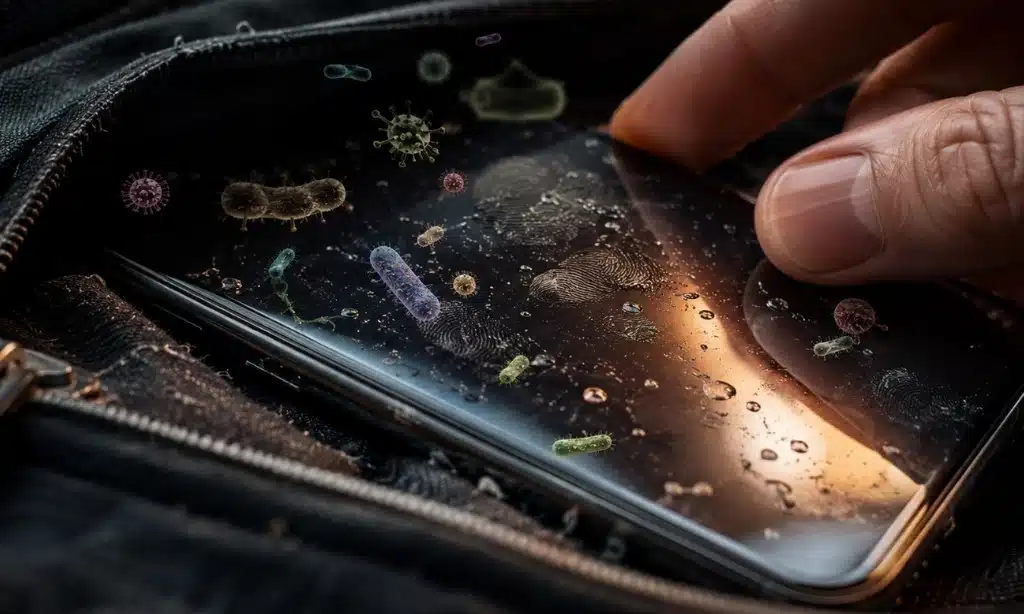
Instead, use seventy percent isopropyl alcohol wipes. This specific concentration of alcohol is highly effective. It breaks down the cellular walls of bacteria. It evaporates quickly. This fast evaporation prevents liquid from seeping into the charging ports or the speakers. You can also use a clean, damp microfiber cloth with a tiny drop of mild soap. Wipe the screen gently from top to bottom. Do this daily.
Apple and Samsung both updated their official cleaning guidelines recently. For years, they explicitly warned against using any alcohol wipes. They feared the alcohol would dissolve the screen coatings. Recent global events changed this policy. They conducted extensive internal testing. They confirmed that seventy percent isopropyl alcohol wipes are safe for the screen. They are now officially recommended by the manufacturers.
Ultraviolet light sanitizers offer a fantastic modern alternative. These small desktop devices use short wavelength UV light. You place your phone inside a small enclosed box. The ultraviolet light damages the nucleic acids in the bacteria and viruses. It destroys their DNA. It kills the germs without any liquid exposure at all.
Habit Formation and High-Risk Environments
Cleaning the phone is only half the battle. You must stop contaminating it in the first place. You need to focus heavily on habit formation.
Establish firm rules for yourself and your family. Implement a strict rule of no phones at the dinner table. This prevents cross-contamination with your food. More importantly, enforce a non-negotiable rule of absolutely no phones in the restroom.
Consider the gym environment. People use their phones to track workouts. They stream music. They touch dumbbells and exercise machines. These machines are covered in sweat and bacteria from hundreds of other gym members. They immediately touch their screens to change a song. The gym is a high-risk environment for microbial transfer. Wiping down the gym equipment is standard etiquette. Wiping down the phone after the workout should be equally mandatory.
The Science of Device Hygiene in the Workplace
This issue extends far beyond personal health. It directly impacts workplace wellness. Offices are highly connected environments. Employees share conference rooms. They share breakroom appliances. They pass documents back and forth.
A single contaminated phone can act as a distribution hub for an entire department. An employee touches a sick colleague’s desk. That employee touches their own phone. They go home. They return the next day. The pathogen remains on the device. It reenters the office ecosystem.
Corporate wellness programs emphasize handwashing stations and hand sanitizer dispensers. They rarely address digital hygiene. Companies need to provide alcohol wipes in conference rooms. They need to encourage employees to sanitize their devices upon entering the building. A comprehensive approach to workplace health must include the technology we carry.
Protecting Vulnerable Populations
Phone hygiene becomes a matter of public safety when we consider vulnerable populations. We hand our phones to children constantly. We let them play games to keep them occupied. Children touch their faces and mouths constantly. Handing a child an unsanitized phone is a direct transfer of environmental pathogens.
The same applies to the elderly. People with compromised immune systems are highly susceptible to the bacteria living on our screens. We visit sick relatives in the hospital. We pull out our phones to show them photos. We place the phone on their hospital bed. We inadvertently introduce outside pathogens into a sterile environment.
Awareness is the first line of defense. We must recognize the device for what it is. It is a surface. It requires the same maintenance as a kitchen counter or a doorknob.
The Future of Antimicrobial Technology
Device manufacturers are beginning to recognize this massive problem. Engineers are currently researching antimicrobial glass. Some companies are exploring embedding silver ions directly into the screen material.
Silver has natural antibacterial properties. It disrupts the cellular metabolism of microorganisms. This technology is still in its infancy for consumer electronics. But it represents a highly promising shift. Future smartphones may actively fight the bacteria we leave behind. Until that technology becomes standard across all models, the responsibility falls entirely on the user.
5 Rules of Digital Hygiene: Mastering Device Hygiene
- The 10x Contamination Rule: Microbiological studies confirm your smartphone screen harbors up to ten times more bacteria than an average toilet seat. It acts as a highly active, constantly moving transmission vector for daily germs.
- Portable Microbial Incubators: Your device provides the perfect warm, moisture-rich environment for dangerous opportunistic pathogens. Microbes like E. coli, Staphylococcus aureus, and rhinoviruses thrive and multiply rapidly on these frequently handled glass surfaces.
- The Handwashing Paradox: Diligently washing your hands is entirely ineffective if you immediately pick up an unsanitized phone. You instantly transfer a massive ecosystem of public environmental microbes right back onto your newly cleaned skin.
- Safe Decontamination Protocols: Never use harsh household chemicals or bleach on consumer electronics. Sanitize your device daily using 70% isopropyl alcohol wipes or a dedicated ultraviolet (UV) light sanitizer to destroy bacterial DNA without damaging the screen’s protective coating.
- Enforce High-Risk Boundaries: Prevent initial contamination by establishing strict digital habits. Never take your phone into the restroom, avoid using it while eating, and always sanitize the screen immediately after visiting high-touch public environments like the gym or subway.
The Clean Screen Awakening
My severe throat infection eventually healed. The prescribed medication worked perfectly. My voice returned after a few painful days. But the experience changed my behavior permanently. The physical pain was a harsh teacher.
I now look at my technology through a strict microbiological lens. I understand the unseen world living on the glass. I keep screen wipes on my office desk. I clean my device every single evening when I return home. It is now a core part of my daily routine.
True hygiene in the modern world requires a complete picture of our daily habits. We spend our lives touching screens. We navigate the world through these digital portals. We trust them with our most private information. We must also take responsibility for their physical cleanliness. Once you understand exactly how dirty a phone is, you realize that a clean hand means absolutely nothing without a clean screen.
Frequently Asked Questions (FAQs) on How Dirty a Phone Is
Q: Can the bacteria on my phone screen cause facial acne or skin breakouts?
A: Yes. When you press a contaminated phone screen against your cheek during a call, you transfer trapped oils, sweat, and bacterial colonies like Staphylococcus aureus directly onto your skin. This microbial transfer can clog pores and inflame hair follicles, leading to localized breakouts or acne mechanica along the jawline and cheeks.
Q: Does gender or a specific daily routine change the amount of bacteria found on a mobile device?
A: Peer-reviewed microbiological research shows no statistically significant difference in phone contamination levels based on gender. Both male and female users carry similar bacterial loads. Similarly, whether an individual spends their day primarily indoors or outdoors, the frequency of touch and lack of regular device sanitation remain the true driving factors behind high germ levels.
Q: Exactly how many individual bacteria live on one square inch of a typical smartphone screen?
A: Data from environmental health studies show that a typical smartphone screen can host approximately 25,127 bacteria per square inch. This massive concentration makes personal mobile devices significantly more contaminated than high-touch public fixtures like store checkout screens or public doorknobs.
Q: Can a phone screen harbor antibiotic-resistant strains of bacteria?
A: Yes. Clinical swabbing studies conducted in hospital environments and teaching wards have isolated high percentages of dangerous, drug-resistant pathogens from the personal mobile phones of users. These include Methicillin-resistant Staphylococcus aureus (MRSA) and Vancomycin-resistant Enterococcus (VRE), proving that uncleaned devices can serve as critical vectors for severe healthcare-associated infections.
Q: Does a phone case trap more germs than an uncovered glass screen?
A: Yes. While the glass screen holds dense biofilms, protective phone cases, especially those with rubber ridges, card slots, textured designs, or deep seams around the buttons, create physical micro-environments. These crevices trap pocket lint, food crumbs, and sweat, providing an isolated food supply and a physical shelter where bacteria can multiply undisturbed by basic wiping.