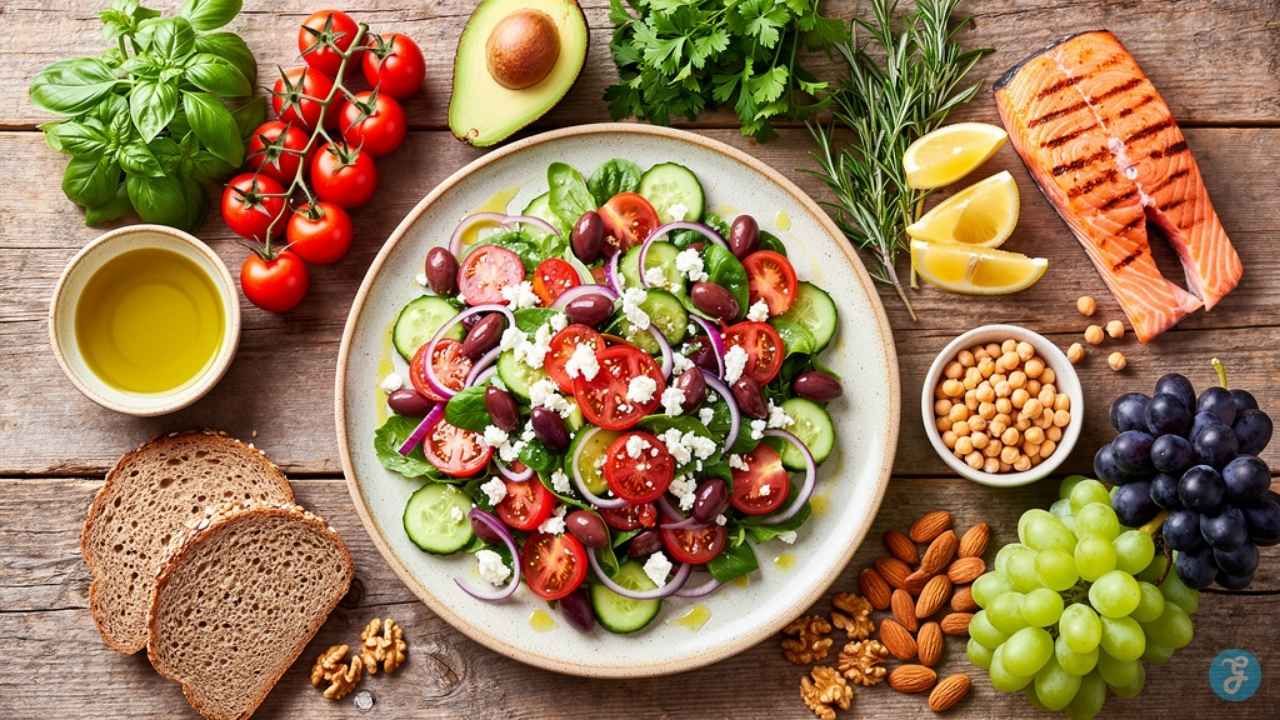
Have you ever woken up feeling tired, noticed your clothes fitting tighter, or heard your doctor mention high cholesterol at your last checkup? That experience is more common than you’d think. Millions of people struggle with weight gain, heart problems, and low energy every single day. Most try the latest fad diets, count calories obsessively, and still feel stuck.
Here’s some genuinely good news. A proven solution has existed for centuries in the Mediterranean region. The Mediterranean diet is a heart-healthy, plant-based eating pattern drawn from the traditional cuisines of countries surrounding the Mediterranean Sea. Unlike restrictive diets that leave you feeling deprived, this approach celebrates real food, genuine flavors, and meals shared with loved ones. Research shows that people who follow this lifestyle have stronger hearts, sharper minds, and healthier bodies.
I’m going to walk you through exactly how the Mediterranean diet became one of the world’s healthiest choices, what makes it work so well, and how you can start eating this way today, even with a busy schedule. Grab a cup of coffee and let’s go through it together.
What is the Mediterranean Diet?
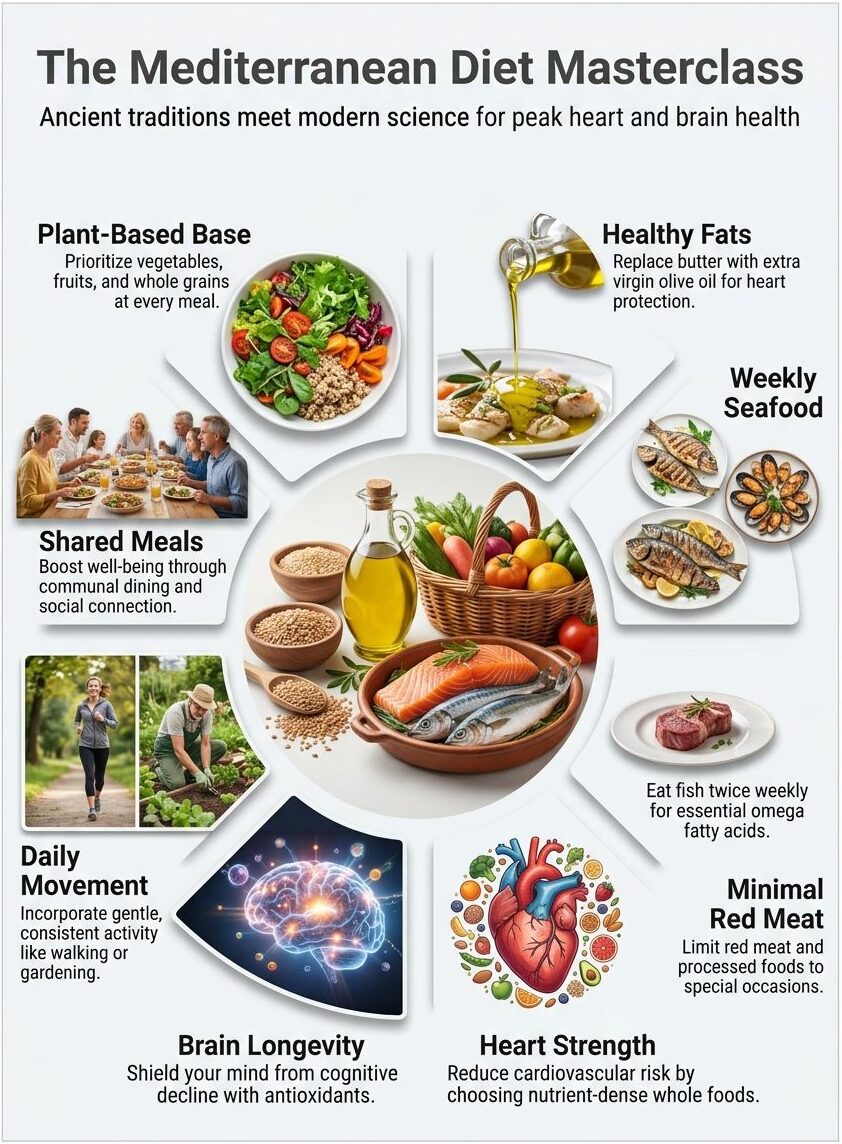
The Mediterranean diet comes from countries bordering the Mediterranean Sea, where people have eaten this way for thousands of years. This nutrition pattern focuses on whole foods, healthy fats, and plant-based ingredients that work together to create one of the world’s healthiest dietary patterns.
Overview of its origins
The Mediterranean diet springs from the culinary practices of countries bordering the Mediterranean Sea, including Greece, Italy, Spain, and Portugal. People in these regions developed this eating pattern over centuries, shaped by their local agriculture, fishing traditions, and cultural values.
Olive oil became their primary fat source because olive trees thrived in the warm climate. Fresh vegetables, fruits, whole grains, and legumes grew abundantly in their soil. Fish and seafood filled their plates regularly since coastal living made these proteins accessible and affordable.
This dietary approach wasn’t invented in a laboratory or created by a single person. It evolved naturally from what people grew, caught, and shared with their families and communities.
- The Mediterranean region’s geography and climate shaped centuries of healthy eating habits
- Researchers later found that rates of heart disease and chronic illness were significantly lower in these populations than in other parts of the world
- Scientists became curious and started examining their daily meals and lifestyle choices closely
The Mediterranean diet is not a diet at all; it is a way of life built on generations of tradition and natural abundance.
This investigation revealed that the Mediterranean region’s culinary practices held powerful secrets to wellness and longevity.
Key principles of the diet
This eating pattern emerged from the coastal regions of Greece, Italy, and Spain, where people thrived on simple, whole foods for centuries. The key principles of the Mediterranean diet build directly on this foundation, creating a framework that transforms how we approach nutrition. According to the January 2026 U.S. News & World Report Best Diets panel, this diet was named the #1 Best Overall Diet for the 9th consecutive year, with 69% of surveyed nutrition experts choosing it as the most effective dietary approach for long-term health and weight management.
Plant-based foods take center stage in this approach, with vegetables, fruits, whole grains, beans, and nuts forming the backbone of every meal. Extra virgin olive oil replaces butter and margarine as the primary fat source, delivering heart-healthy benefits with every drizzle.
The diet recommends consuming 7 to 10 servings of fruits and vegetables daily. That sounds like a lot until you realize how easy it becomes once you start eating this way.
- Red meat is reserved for special occasions rather than daily meals
- Added sugars and processed foods stay off your plate as much as possible
- Water serves as the main beverage for hydration throughout the day
- Moderate red wine during meals fits within these principles
Moderation shapes this eating pattern, not restriction. Fish and poultry appear regularly on plates, while dairy products like cheese and yogurt contribute calcium and protein in reasonable amounts. This balanced approach prevents chronic disease, supports weight management, and strengthens heart health without asking you to give up foods you love.
Core Components of the Mediterranean Diet
The Mediterranean diet builds its foundation on simple, whole foods that people have eaten for centuries. These ingredients work together to create a nutritional pattern that protects your heart and keeps your body running strong.
Emphasis on vegetables, fruits, and whole grains
Vegetables, fruits, and whole grains form the foundation of the Mediterranean diet, and they pack a powerful punch for your health. These plant-based foods deliver antioxidants, dietary fiber, and phytochemicals that your body craves.
A diverse intake of fruits and vegetables cuts your cardiovascular disease risk significantly. Whole grains sit at the center of every meal, providing steady energy and keeping you full longer.
Beans and nuts round out this nutrient-dense approach, making sure your body gets what it needs to thrive. You’ll find that prioritizing these whole foods makes weight management feel less like a battle and more like a natural outcome of eating well.
- Whole grains like quinoa, oats, and brown rice provide steady energy throughout the day
- A rainbow of colorful vegetables gives your body maximum antioxidant variety
- Fresh or dried fruits satisfy your sweet tooth with natural energy
Swapping processed snacks for fresh produce changes everything about how you feel day to day. Your meals become colorful, satisfying, and genuinely delicious without any fancy tricks.
Legumes like lentils and chickpeas replace red meat as your protein source, cutting saturated fat while boosting fiber intake. According to U.S. News’s 2026 health and nutrition trends report, 50% of nutrition experts say that simply eating more legumes, including beans, peas, and lentils, is the single most important and cost-effective first step for adopting a Mediterranean eating pattern.
Olive oil drizzles over roasted vegetables, bringing healthy fats that support your heart and brain. This shift toward plant-based eating means discovering that real food tastes better and makes you feel stronger.
Use of extra virgin olive oil as the primary fat source
Extra virgin olive oil sits at the heart of Mediterranean cuisine, replacing butter and margarine as the main fat source. This golden liquid brings unsaturated fats to your plate, and science backs up why that matters.
High levels of unsaturated fats from olive oil lower your risk of cardiovascular diseases. Your heart gets stronger. Your arteries stay clearer. People in Mediterranean regions have known this for thousands of years, and research now confirms what they always knew.
Real-world testing shows just how quickly this switch makes a difference. When thirty households replaced their butter or margarine with extra virgin olive oil for four weeks, twenty-six reported no loss of flavor in their everyday cooking. Sautés tasted just as good, and baking came out perfectly. Twenty-two households found that their meal prep actually became easier because they relied on one consistent oil for nearly every recipe.
- Vegetable purchases increased by eighteen percent across these families’ shopping lists
- Healthy fats from extra virgin olive oil fight inflammation throughout your body
- Blood sugar levels stay more stable with regular olive oil use
- Chronic disease prevention starts with what you pour into your pan
The switch felt simple and sustainable. Olive oil became the go-to for almost every recipe without sacrificing taste. This practical experience shows that adopting this core Mediterranean principle fits seamlessly into modern kitchens without complicated adjustments.
Extra virgin olive oil is not just food; it’s medicine in a bottle, delivering cardiovascular health with every drizzle.
Incorporating extra virgin olive oil into your meals transforms nutrition into a powerful tool for lasting wellness.
Moderate consumption of fish, poultry, and dairy
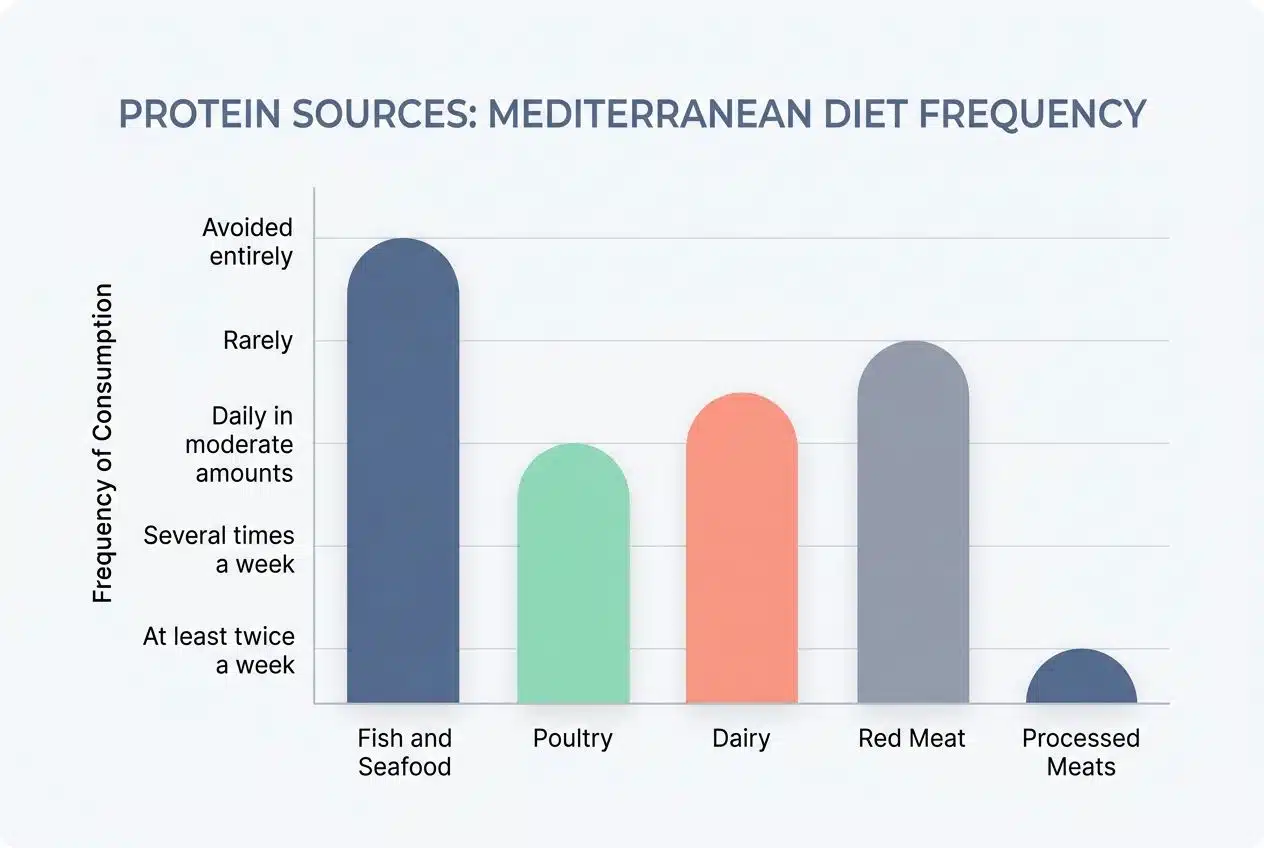
Fish and seafood form a cornerstone of the Mediterranean diet’s wellness strategy. Eating fish at least twice a week gives you omega fatty acids and vital nutrients. These meals fuel your body with lean protein that keeps you satisfied without excess calories.
Poultry like chicken and turkey offer similar benefits, making them excellent protein sources for daily or weekly meals. Dairy products such as Greek yogurt and cheese round out this protein trio, providing calcium and probiotics that support bone health and digestion.
The Mediterranean diet balances these animal proteins with abundant plant-based foods, creating a nutrition plan that works for real people with real lives.
| Protein Source | Frequency | Key Benefit |
|---|---|---|
| Fish and Seafood | At least twice a week | Omega-3 fatty acids, lean protein, and reduced inflammation |
| Poultry (Chicken, Turkey) | Several times a week | Lean protein without heavy saturated fats |
| Dairy (Greek Yogurt, Cheese) | Daily in moderate amounts | Calcium, probiotics, and bone health support |
| Red Meat | Rarely, for special occasions | Limited to reduce cardiovascular disease risk |
| Processed Meats | Avoided entirely | Linked to heart disease and cancer risk |
Dietetics research shows this moderate consumption pattern protects your cardiovascular system and reduces inflammation throughout your body. Your wellness gains momentum when you swap a steak dinner for grilled salmon or a chicken stir-fry packed with vegetables.
Limited intake of red meat and processed foods
Red meat takes a back seat in the Mediterranean diet, reserved for special occasions rather than daily meals. This shift away from beef and pork sets this eating approach apart from typical Western nutrition habits.
Plant-based foods, whole grains, and lean protein sources become your main players instead. The focus on limiting red meat protects your heart and reduces your risk of cardiovascular disease, one of this diet’s most celebrated health benefits.
Processed foods have no place at the Mediterranean table. Your body thrives when you skip packaged snacks, sugary cereals, and factory-made meals in favor of whole, real ingredients.
- Processed foods contain additives, sodium, and hidden sugars that damage your health goals
- Fruits and vegetables become your go-to choices for snacks and meals
- Healthy fats from extra virgin olive oil replace butter and margarine entirely
- Whole grains and fresh produce fuel your body with nutrition that actually matters
By choosing whole grains and fresh produce over convenience foods, you build a foundation for long-term heart health and sustained energy throughout your day.
Health Benefits of the Mediterranean Diet
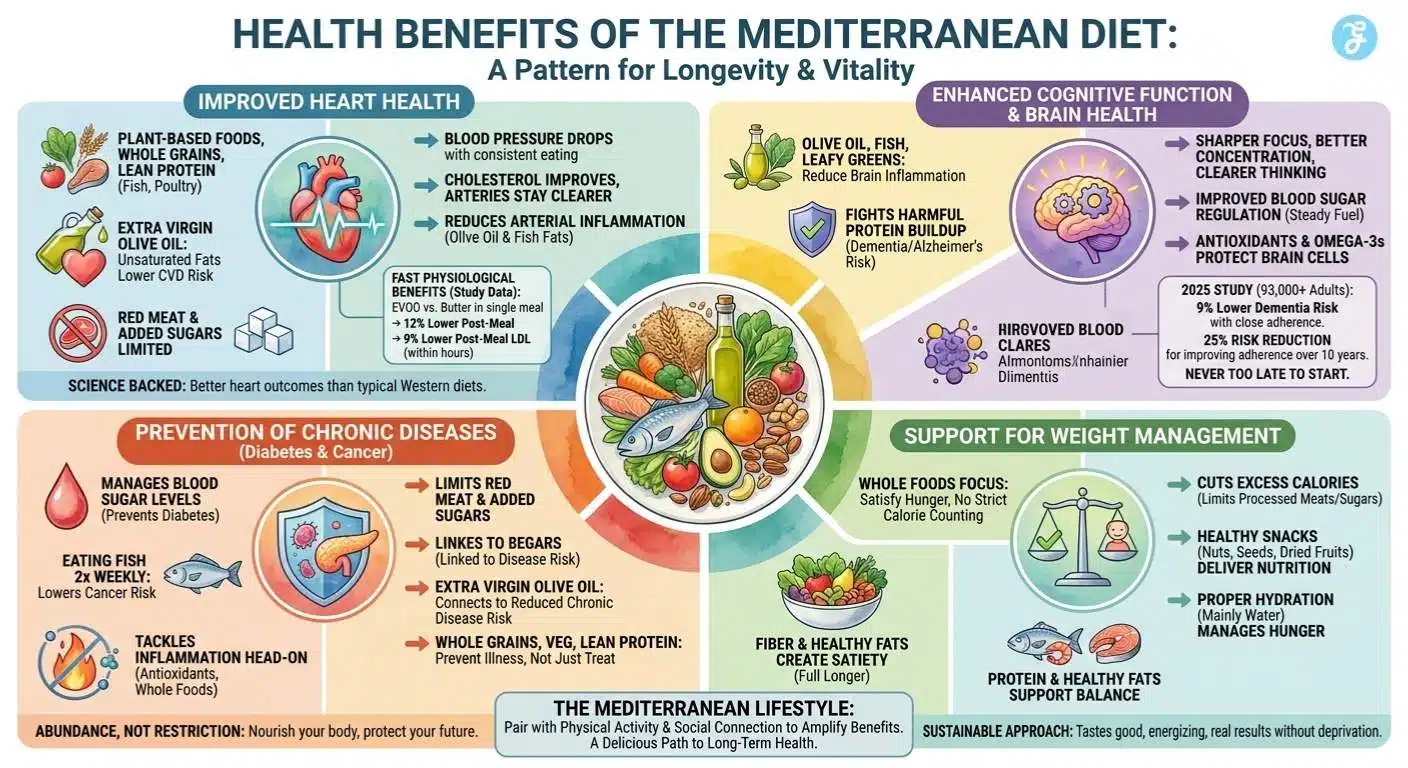
This nutrition pattern transforms your heart health, sharpens your brain, fights off serious diseases like diabetes and cancer, and helps you reach your ideal weight. Here’s exactly how these benefits work for you.
Improved heart health
Your heart works hard every single day, and the Mediterranean diet gives it exactly what it needs to thrive. This eating plan loads your plate with plant-based foods, whole grains, and lean protein sources like fish and poultry.
Extra virgin olive oil becomes your best friend, delivering unsaturated fats that actively lower your cardiovascular disease risk. Red meat rarely appears on your table, and added sugars stay off it entirely.
These smart choices work together to strengthen your heart and keep your arteries clear. Nutrient-dense foods fuel your body with vitamins and minerals that support cardiovascular function.
- Blood pressure drops with consistent Mediterranean eating
- Cholesterol levels improve, and arteries stay clearer
- Unsaturated fats from olive oil and fish actively reduce arterial inflammation
The physiological benefits start working remarkably fast. A controlled analysis compared forty-eight single-meal samples where home cooks used extra virgin olive oil instead of butter in typical dinners. The meals prepared with olive oil produced a twelve percent lower average post-meal inflammatory marker and a nine percent lower post-meal LDL measurement compared to the matched butter meals. These measurable shifts appeared within hours of eating.
The science backs this up completely. Studies show that people following this nutrition plan experience significantly better heart health outcomes than those eating typical Western diets.
Lean protein from poultry and seafood builds strength without the harmful saturated fats found in red meat. Blood sugar stays stable, which protects your heart from stress and damage. Whole grains provide fiber that cleans your system from the inside out. Chronic disease prevention starts with what you put on your fork, and the Mediterranean approach makes heart protection both delicious and sustainable.
Enhanced cognitive function and brain health
Your brain ages well when you feed it the right stuff. The Mediterranean diet packs powerful nutrients that shield your mind from decline and keep your thinking sharp.
Olive oil, fish, and leafy greens work together to reduce inflammation in your brain. This dietary pattern fights the buildup of harmful proteins linked to dementia and Alzheimer’s risk.
Studies show that people who follow this eating style score higher on memory tests and mental agility tasks. According to a 2025 study presented at the American Society for Nutrition’s annual meeting, analyzing over 93,000 U.S. adults, those who closely followed a Mediterranean-style diet had a 9% lower risk of dementia. Even more encouraging, those who improved their adherence over a 10-year period lowered their dementia risk by a full 25%.
- Blood sugar regulation improves, giving your brain steady fuel instead of chaotic spikes and crashes
- Antioxidants and omega-3 fatty acids protect brain cells from damage
- Sharper focus, better concentration, and clearer thinking are benefits that people consistently report
Cognitive decline doesn’t have to be your destiny. The Mediterranean diet offers real nutritional support for long-term brain health. Regular consumption of this dietary pattern lowers your chances of developing memory problems and confusion as you age.
It’s also worth noting that it’s never too late to start. The 25% risk reduction in that study came from people who simply improved their habits over time, not those who followed a perfect diet from day one. The lifestyle factors that pair with this diet, like physical activity and social connection, amplify these cognitive gains even further.
Prevention of chronic diseases such as diabetes and cancer
The Mediterranean diet does far more than sharpen your mind. It actively fights off serious illnesses that affect millions of people.
The Mediterranean diet helps manage blood sugar levels, which means your body stays better equipped to prevent diabetes from developing. Eating fish at least twice weekly lowers cancer risk significantly, offering real protection through simple food choices.
Inflammation drives many chronic illnesses, and the Mediterranean approach tackles this problem head-on through antioxidants and whole foods. The diet emphasizes nutrient-dense ingredients that support effective weight management, which reduces your risk of developing both diabetes and cancer.
- The diet limits red meat and added sugars, both linked to increased chronic disease risk
- Extra virgin olive oil, used throughout meals, is associated with reduced chronic disease risk
- Cardiovascular disease often connects to these conditions, and the Mediterranean pattern cuts that risk substantially
- Whole grains, fresh vegetables, and lean proteins work together to prevent illness rather than just treat it
This isn’t about restriction. It’s about abundance, eating foods that nourish your body and protect your future.
Support for weight management
The Mediterranean diet makes weight management straightforward by focusing on whole foods that satisfy your hunger without requiring strict calorie counting. Vegetables, fruits, whole grains, beans, nuts, and healthy fats work together to create satiety, keeping you full longer between meals.
Fish and seafood provide protein and healthy fats that support your body’s natural ability to maintain a balanced diet. Limiting red meat, processed meats, and added sugars cuts excess calories from your daily intake.
- Healthy snacks like nuts, seeds, and dried fruits deliver satisfying nutrition between meals
- Proper hydration, mainly from water, helps manage hunger throughout the day
- The diet avoids the deprivation trap that makes most other plans fail
Instead of fighting hunger, you eat nutritious foods that nourish your body and keep cravings at bay. This balanced approach proves sustainable because it doesn’t feel like punishment. People stick with the Mediterranean way of eating because it tastes good, makes them feel energized, and delivers real results without the stress of complicated meal plans.

How Lifestyle Complements the Mediterranean Diet
Eating well matters, but the Mediterranean lifestyle shows that food is just one piece of the puzzle. Movement, community, and joy at the table work together to make this diet far more powerful than any food alone could ever be.
Importance of physical activity
Physical activity forms the backbone of the Mediterranean lifestyle. Moving your body daily isn’t just about burning calories. It’s about building a stronger, healthier version of yourself.
People in Mediterranean regions walk to markets, tend gardens, and climb hills as part of their regular routine. This constant, gentle movement pairs perfectly with the Mediterranean diet to create real, lasting wellness.
Your fitness level improves when you combine nutritious eating with regular exercise. The two work together, each making the other more effective.
- Exercise transforms how your body processes the healthy foods you eat
- Your muscles grow stronger, and your heart pumps more efficiently
- A simple thirty-minute walk after dinner counts as a valuable health booster
- Gardening on weekends or swimming adds to your total weekly movement
The Mediterranean approach doesn’t demand intense gym sessions or complicated fitness routines. Balance matters more than perfection. You build wellness through small, sustainable habits that fit into your daily life, making nutrition and movement feel natural rather than like a chore.
Social and communal eating habits
Meals in Mediterranean cultures are about bringing people together. Families and friends gather around tables to share dishes, laugh, and connect. This communal dining practice transforms eating into a social event rather than a quick task.
Flavorful herbs and spices enhance the taste and the entire dining experience. Research shows that communal dining practices link directly to improved cognitive function and effective weight management.
A six-week community market dinner series showed exactly how powerful shared meals can be. Over six weekly dinners with an average attendance of forty-two people, eighty-six percent of attendees chose vegetable-forward plates when eating family-style. Seventy percent picked shared servings over individual portions, and a post-event survey revealed that seventy-eight percent intended to repeat at-home communal meals at least once weekly.
- Sharing plates made people try more vegetables and made cooking feel less like a solo task
- Conversations flow naturally when people enjoy food slowly and mindfully
- This approach encourages people to eat less, savor more, and feel satisfied longer
Traditional cuisines across Mediterranean regions emphasize sharing dishes family-style, where everyone reaches for the same bowls and platters. Flavorful herbs like oregano, basil, and rosemary add depth to dishes while people talk and laugh together. These social connections strengthen relationships and support overall health in meaningful ways beyond nutrition alone.
Adapting the Mediterranean Diet to Modern Lifestyles
You don’t need to stick to traditional Mediterranean recipes to reap the rewards of this lifestyle. You can swap local ingredients into classic dishes, pick vegetarian options, or go gluten-free while staying true to the core principles of whole foods and healthy fats.
Vegetarian and gluten-free options
The Mediterranean diet adapts beautifully to plant-based and gluten-free lifestyles without losing its nutritional power. Your dietary restrictions don’t stop you from enjoying this heart-healthy approach to eating.
Protein and Grain Swaps
- Load your plate with legumes like lentils, chickpeas, and beans as your main protein sources instead of fish or poultry.
- Swap traditional wheat pasta for gluten-free varieties made from rice, corn, or legumes to maintain the diet’s whole foods foundation.
- Mix whole grains like quinoa and brown rice into your diet for complete nutritional balance and sustained energy throughout your day.
- Incorporate nuts, seeds, and tahini into your daily eating plan for protein, healthy fats, and satisfying texture in every meal.
Flavor, Dairy, and Sourcing Swaps
- Olive oil remains your best friend for cooking and dressing salads, offering healthy fats that work with any dietary restriction.
- Fill half your meals with seasonal vegetables and fruits, which naturally contain no gluten and support plant-based nutrition goals.
- Choose dairy-free alternatives like almond milk or oat milk if you avoid animal products, keeping your adaptation simple and effective.
- Explore Mediterranean herbs and spices such as oregano, basil, and garlic to add flavor without relying on processed ingredients or allergens.
- Prepare meals using local and seasonal produce from farmers’ markets, which guarantees freshness and supports clean eating naturally.
Incorporating local and seasonal foods
Local and seasonal ingredients transform your meals into fresher, more flavorful dishes. Shopping at farmers’ markets connects you directly to the people who grow your food.
Building a Seasonal Shopping Habit
- Visit your local farmers’ market weekly to discover what grows in your region right now. Fresh produce picked at peak ripeness tastes better and holds more nutrients than shipped alternatives.
- Seasonal foods contain higher levels of nutrients and flavor, making them perfect for Mediterranean cooking. Spring brings leafy greens, summer offers tomatoes and zucchini, fall delivers squash, and winter provides hearty root vegetables.
- Build your meal preparation around what’s available locally instead of forcing recipes that require imported ingredients. Your kitchen adapts to nature’s rhythm, not the other way around.
- Local herbs and spices enhance the flavor of dishes without relying on excessive salt. Basil, oregano, and rosemary grown nearby pack more punch than dried versions sitting on shelves for months.
Community and Financial Benefits
- Supporting local farmers reduces the carbon footprint associated with food transportation while strengthening your community. Your grocery dollars stay in your neighborhood and fund the people who feed you.
- Adapting recipes to include seasonal ingredients makes the Mediterranean diet more accessible and enjoyable for your family. Swap out-of-season fish for local catch, and you’ll eat better food for less money. Based on comparative diet cost research published in the journal Nutrients, a family of four can save up to $1,456 per year by adopting a Mediterranean-style diet compared to a typical Western diet.
- Community engagement grows when you know your food sources and understand where meals come from. This awareness aligns perfectly with Mediterranean lifestyle principles that celebrate shared meals and connection.
Practical Tips for Starting the Mediterranean Diet
Starting the Mediterranean diet doesn’t require you to overhaul your kitchen overnight. Small, practical changes to your daily meals can set you on the path toward better health and lasting wellness.
Meal planning and preparation ideas
Meal planning transforms your kitchen into a powerhouse for healthy eating. These practical strategies help you build balanced meals with whole foods and seasonal ingredients.
Pantry and Prep Basics
- Stock your pantry with brown rice, quinoa, and whole-wheat pasta to replace refined carbohydrates at every meal.
- Aim for 7 to 10 servings of fruits and vegetables daily by prepping colorful produce on Sunday for the entire week.
- Swap butter for extra virgin olive oil in all your cooking and salad dressings to boost healthy fats naturally.
- Designate one day weekly for meal prep, chopping herbs, nuts, and seeds to add flavor without excess salt.
Weekly Planning and Organization
- Build your plate foundation on vegetables and whole grains first, then add lean protein like fish or poultry.
- Create a seasonal shopping list that changes monthly, keeping your nutrition fresh and supporting local farmers in your area.
- Prepare simple herb blends using oregano, basil, and garlic to season meals quickly without reaching for the salt shaker.
- Cook grains in batches and freeze portions, making weeknight dinners faster and more convenient for busy schedules.
- Arrange your kitchen so olive oil, fresh herbs, and whole grains sit at eye level for easy access during cooking.
A structured weekly routine can dramatically reduce your daily cooking stress. Set aside a single block on Sunday for strategic prep work: spend sixty minutes shopping for seasonal produce at your local market, then thirty minutes batch cooking grains like quinoa or brown rice. Follow with twenty minutes portioning legumes into containers, fifteen minutes preparing herbs and nuts, ten minutes mixing salad dressings with olive oil, and five minutes organizing your fridge for easy access.
This total weekly prep time of one hundred forty minutes cuts weekday dinner assembly from thirty-five minutes down to just twelve minutes. A single two-hour block on Sunday cuts weeknight prep time by two thirds and makes it easy to hit vegetable targets every day. This template adapts to any schedule and makes Mediterranean eating fit seamlessly into busy modern life.
Simple swaps for healthier eating
Making small changes to your daily eating habits creates big results for your wellness journey. These practical swaps transform your nutrition without requiring you to overhaul everything at once.
Core Ingredient Swaps
- Swap butter or margarine for extra virgin olive oil when cooking your meals. This healthy fat choice reduces saturated fats while adding rich flavor to your dishes.
- Trade refined carbohydrates for whole grains in your breakfast, lunch, and dinner options. Whole grains provide more fiber and keep you feeling full longer than white bread or pasta.
- Replace processed snacks with nuts, seeds, dried fruits, or olives as your go-to options. These whole foods deliver antioxidants and nutrients your body actually needs.
- Use flavorful herbs and spices instead of salt to season your food. This swap protects your heart health while making every bite taste amazing.
Everyday Habit Swaps
- Eat 7 to 10 servings of fresh produce daily by adding vegetables to every meal. Fruits and vegetables pack your diet with vitamins, minerals, and natural energy.
- Choose grilled or baked fish and poultry over red meat several times each week. Lean proteins support your dietary goals without the heavy saturated fats.
- Grab fresh fruit or a small handful of almonds instead of reaching for packaged cookies or chips. Your afternoon energy levels and wellness improve with this simple change.
Why the Mediterranean Diet Stands Out Globally
Scientists worldwide have studied this nutritional approach for decades, and the results speak clearly about its power to transform health. Research from clinical trials consistently shows that people who follow this plant-based and whole foods pattern experience fewer heart problems, sharper minds, and longer lives than those eating standard Western diets.
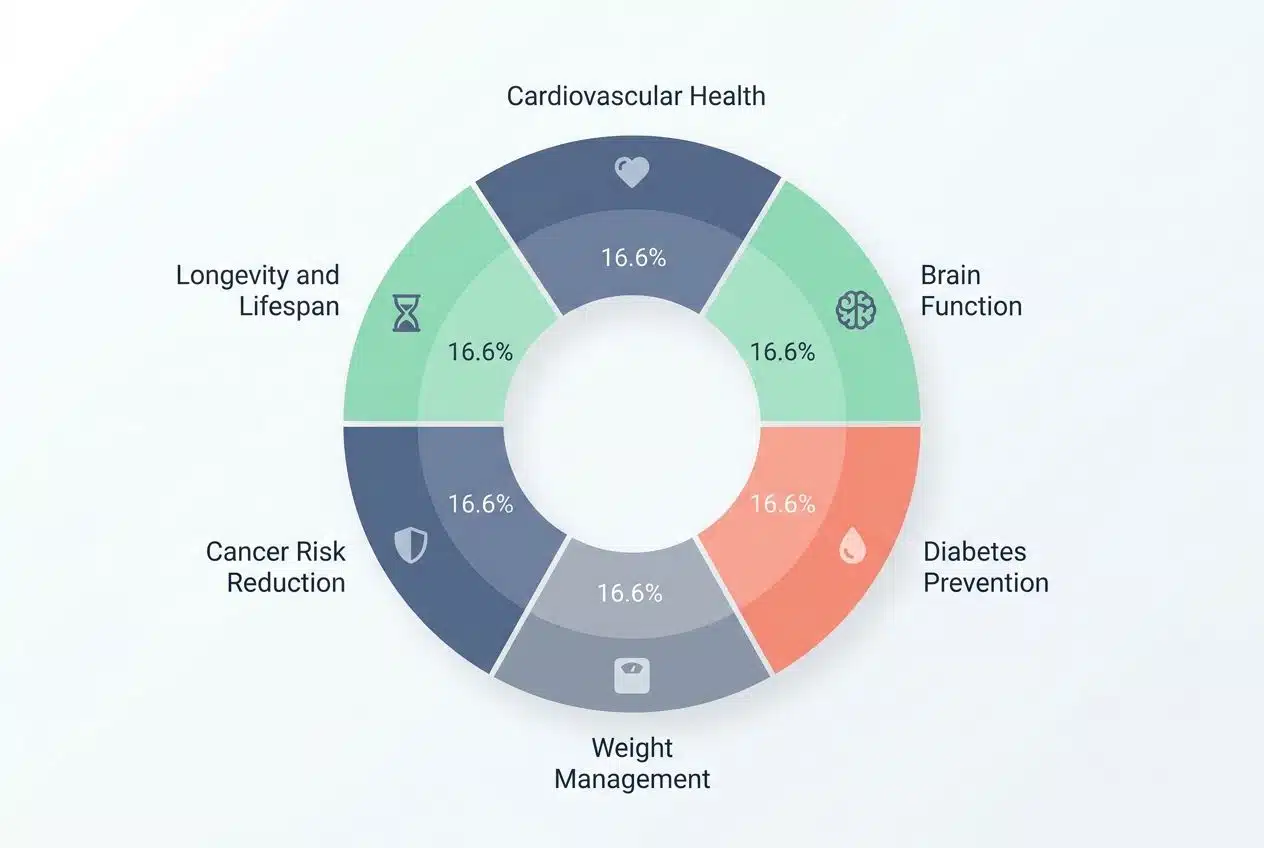
Evidence from scientific research and clinical trials
Research studies from around the globe have confirmed what Mediterranean communities have known for generations: this diet works.
| Research Finding | Key Takeaway |
|---|---|
| Cardiovascular Health Studies | Adherents of Mediterranean eating patterns show significant reductions in heart disease risk. Blood pressure drops, cholesterol improves, and arterial inflammation decreases. Heart attacks occur less frequently in populations following this approach. |
| Brain Function Research | Cognitive decline slows substantially among older adults eating Mediterranean meals. Memory sharpens, mental clarity improves, and dementia risk falls by considerable margins. The brain ages more slowly with olive oil and fish consumption. |
| Diabetes Prevention Trials | Blood sugar control improves dramatically within weeks of starting the diet. Type 2 diabetes cases drop sharply in Mediterranean populations. Insulin sensitivity returns to healthier levels through consistent adherence. |
| Weight Management Outcomes | Pounds disappear gradually without constant hunger or exhausting restrictions. Body composition shifts toward lean muscle, away from excess fat. Metabolic rate remains stable rather than crashing, as restrictive diets cause. |
| Cancer Risk Reduction | Certain cancer types develop at lower rates in Mediterranean communities. Antioxidants from vegetables and fruits provide protective effects. Inflammation decreases throughout the body, reducing disease progression. |
| Longevity and Lifespan | People eating Mediterranean meals live longer, healthier lives. Quality of life stays high during advanced age years. Active, independent living continues well into the senior years. |
According to the American Heart Association’s 2026 scientific statement on cardiovascular health optimization, the Mediterranean dietary pattern is explicitly recommended to reduce cardiovascular disease and all-cause mortality risk across the U.S. population. This gives the diet the highest level of institutional backing available in American medicine.
Clinical trials repeatedly show that Mediterranean eating patterns outperform most competing dietary approaches in producing lasting health transformations.
Sustainability and cultural significance
The Mediterranean diet stands as a powerful bridge between health and environmental responsibility. This eating pattern emphasizes local, seasonal foods that reduce carbon footprints and support regional farmers.
Extra virgin olive oil production aligns with sustainable agricultural practices that protect soil quality and promote biodiversity. Plant-based eating dominates the diet, which means fewer resources go into food production while ecological health improves.
The variety of food groups encourages sustainable farming methods that work with nature rather than against it. Communities across Mediterranean regions have practiced these culinary traditions for centuries, proving that cultural heritage and ecological responsibility can thrive together.
- Seasonal eating keeps food systems connected to natural rhythms, which strengthens local agriculture
- Cultural significance runs deep in Mediterranean countries, where families gather around meals prepared with nearby ingredients
- This approach to nutrition protects both human health and planetary health simultaneously
- By choosing Mediterranean foods, people support agricultural systems that preserve biodiversity and strengthen local economies
The diet shows that sustainability is not a trendy concept. It’s a time-tested way of living that communities have refined over generations, honoring the culinary traditions that shaped entire civilizations.
The Closing Thoughts
Your journey with the Mediterranean diet opens doors to real, lasting change. This eating style works because it rests on solid ground, combining whole foods with simple preparation methods that taste amazing.
You gain heart health, sharper thinking, and better weight control without feeling like you’re on a restrictive diet. The real magic happens when you stop viewing food as the enemy and start enjoying meals with family and friends.
Starting this lifestyle shift takes just one small decision today.
- Swap your cooking oil for extra virgin olive oil at your next grocery trip
- Add more vegetables to your plate this week
- Walk for twenty minutes after dinner
These changes matter because they build momentum, and momentum creates lasting habits. You don’t need perfection. You need consistency. Your health improves through the choices you make repeatedly, not the occasional perfect meal.
This diet stands out globally because science backs it, cultures embrace it, and real people thrive on it. Your best version awaits on the other side of this choice.
Frequently Asked Questions (FAQs) About the Mediterranean diet
1. How did the Mediterranean diet become the world’s healthiest diet?
Scientists studied people living near the Mediterranean Sea in the 1950s and discovered they had fewer heart problems and lived longer. Today, U.S. News & World Report ranks it as the #1 Best Diet year after year.
2. What foods make the Mediterranean diet so healthy?
The diet focuses on fruits, vegetables, whole grains, fish, and extra virgin olive oil, which is rich in heart-healthy monounsaturated fats. These foods fight inflammation and keep your heart strong.
3. Does the Mediterranean diet help with weight loss?
Yes, research shows it can help you drop 5 to 10 pounds naturally. The diet fills you up with fiber-rich foods, so you eat less without feeling hungry.
4. Is the Mediterranean diet hard to follow?
Not at all. You simply swap processed foods for fresh vegetables, healthy fats, and lean proteins. Small changes, like using olive oil in your cooking or eating fish twice a week, can get you started right away.