

Have you ever woken up feeling groggy and wondered what your body would feel like if you took a break from drinking? You might enjoy a glass of wine to unwind or grab beers with friends on the weekend. Then, a morning comes when you feel tired, and you start asking questions.
A recent 2024 survey from the US Sleep Foundation found that 75% of adults who took a month off from drinking reported massive improvements in their rest. I have found that taking a step back makes a huge difference in how you feel every single day.
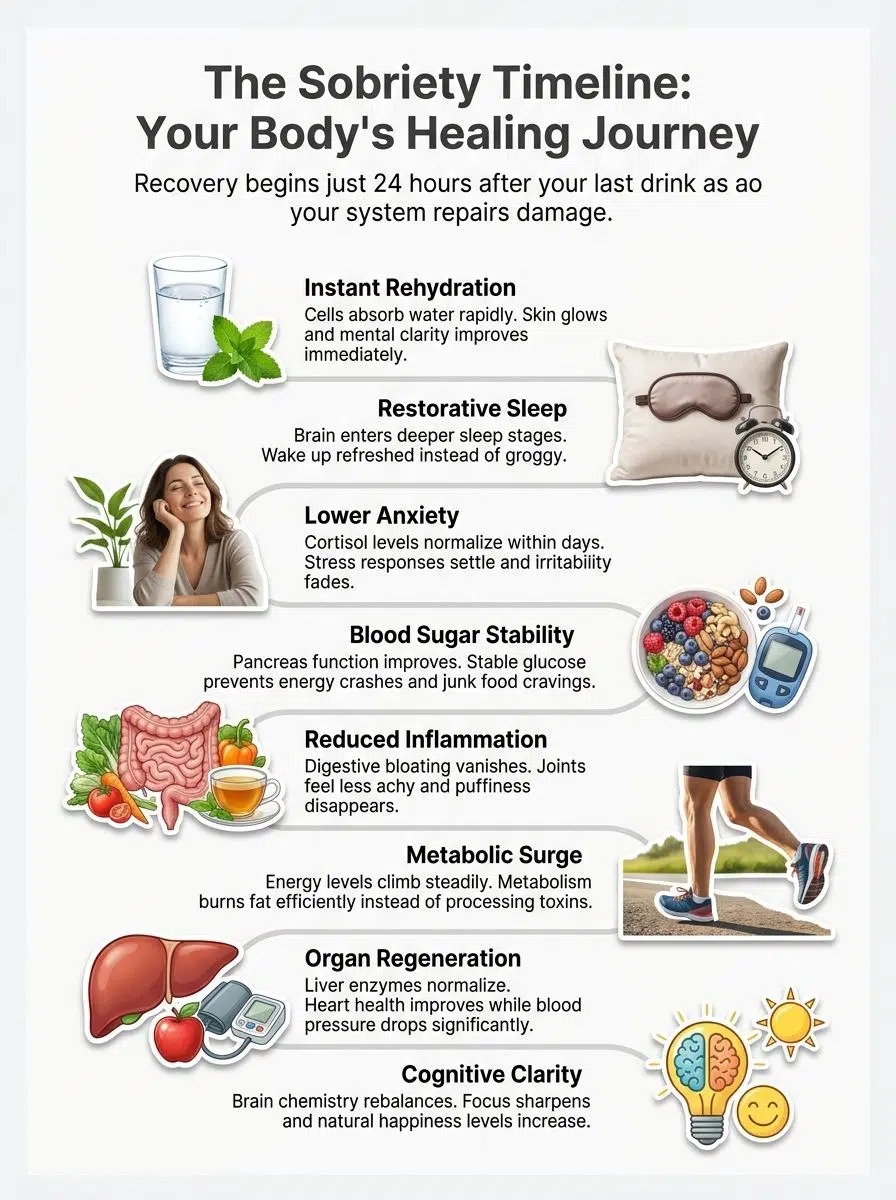
Your body starts healing itself within just 24 hours of your last drink. The moment you stop, your system kicks into recovery mode and begins fixing the damage. We are going to walk through quitting alcohol effects and what happens to your body when you stop drinking, step by step.
Grab a cup of coffee or a tall glass of water. I will show you everything you need to know about the amazing benefits of sobriety waiting for you on the other side.
Immediate Benefits: What Happens To Your Body When You Stop Drinking Alcohol
Your body starts healing the moment you put down that glass. Within hours, your system begins to repair itself and respond to this positive change.
Enhanced Hydration Levels
Your cells start absorbing water rapidly the moment you quit alcohol. The US National Library of Medicine notes that alcohol blocks your brain from releasing antidiuretic hormone (ADH).
Without this crucial hormone, your kidneys flush out water instead of absorbing it, which leaves you dehydrated. Stop drinking, and your kidneys resume their normal function.
Hydration levels bounce back quickly, often within the first 24 hours of sobriety. Improved hydration gives your skin a healthier appearance, helps your muscles function better, and makes your thinking clearer.
Improved Sleep Quality

As your body soaks up more water, your sleep patterns start to shift for the better. According to 2024 data from the Sleep Foundation, roughly 20% of Americans use alcohol to fall asleep.
Many people think a nightcap helps, but the reality is quite different. Alcohol severely suppresses REM sleep, which is the deep stage your brain needs to store memories and process emotions.
Sleep is the best meditation. – Dalai Lama
Once you quit drinking, your body stops fighting against this sleep-stealing substance. You will wake up feeling refreshed instead of groggy and exhausted.
Decreased Anxiety and Irritability
Better sleep sets the stage for calmer emotions, and your anxiety levels drop fast once alcohol leaves your system. “Hangxiety” is a very real physical reaction caused by your brain chemistry.
Your body produces more cortisol, the primary stress hormone, when you drink regularly. Stop drinking, and your cortisol levels normalize within days, meaning you feel much less on edge.
During the first week, your dopamine receptors also begin to reset. This chemical shift helps you handle daily frustrations without snapping at the people around you.
Health Improvements in the First Week
Your body starts healing fast during that first week off alcohol. You will notice your blood sugar steadies, bloating shrinks, and your skin begins to glow again.
More Stable Blood Sugar Levels
Alcohol treats your blood sugar like a rollercoaster. The American Diabetes Association warns that processing alcohol stops your liver from doing its normal job of releasing glucose.
This blockage causes a delayed drop in your blood sugar, which leaves you exhausted and craving junk food. Once you quit drinking, your blood sugar levels stabilize within the first week.
This new stability brings some amazing daily benefits:
- Fewer afternoon crashes: Your energy stays consistent without the dramatic afternoon dips.
- Reduced cravings: You stop hunting for heavy, carbohydrate-rich snacks the next morning.
- Sharper focus: Your brain receives a steady supply of fuel, making it easier to concentrate.
- Lower inflammation: Steady glucose levels help calm your immune system.
Less Bloating and Inflammation
Your gut starts celebrating the moment you quit drinking. The National Institutes of Health states that alcohol physically irritates your stomach lining and disrupts your microbiome. This chronic irritation causes your digestive system to swell and retain water. Within the first week of sobriety, your body stops holding onto excess fluid.
Your pants will fit better, and you will actually see your real waistline again. Your joints feel less achy because your immune system stops overreacting to the daily influx of toxins.
Improved Skin Clarity
Alcohol dehydrates your skin cells, leaving your face looking dull and tired. Board-certified dermatologists note that drinking also expands your blood vessels, causing facial redness. Once you quit drinking, your body starts holding onto water again, and your skin soaks up that moisture. You will notice several visible changes within the first week:
- Reduced redness: Flare-ups of conditions like rosacea often decrease significantly.
- Smaller pores: Your skin’s natural barrier repairs itself and tightens up.
- Fewer breakouts: Acne fades because your body stops fighting systemic inflammation.
Changes to Expect from Weeks 2 to 4
Your body shifts into high gear during weeks two through four. The transformation gets real as your energy soars, your digestion smooths out, and the scale starts moving in the right direction.
Increased Energy Levels
Your body starts producing energy like a well-oiled machine once you quit drinking. Your body treats ethanol as a toxin, meaning it drops everything else to flush it out of your system.
Within weeks of stopping, your cells recover their ability to function properly. You will notice you can tackle tasks without hitting the afternoon slump.
Energy levels climb steadily as your body stops fighting toxic effects and redirects that effort to healing. Sobriety brings a natural boost that an extra cup of coffee simply cannot match.
Better Digestion and Gut Health
Alcohol irritates your digestive system and destroys the protective mucus layer in your intestines. Stopping drinking allows your stomach lining to finally heal.
Digestive enzymes begin to function properly without alcohol getting in the way. Food moves through your system more smoothly, and painful bloating decreases noticeably.
Within the first few weeks, your body starts absorbing essential nutrients like Vitamin B12 and folate again. Addiction recovery includes healing your gut, which makes you feel so much lighter every single day.
Noticeable Weight Loss
Your body sheds pounds fast once you cut out alcohol. Alcohol packs a massive amount of empty calories that offer absolutely zero nutritional value.
US calorie tracking data shows that a standard craft beer easily packs 150 to 200 calories. Cutting out just three drinks a day saves you around 450 empty calories.
This simple change creates a natural calorie deficit. Most people notice their waistline shrinking within the first few weeks of sobriety without changing anything else.
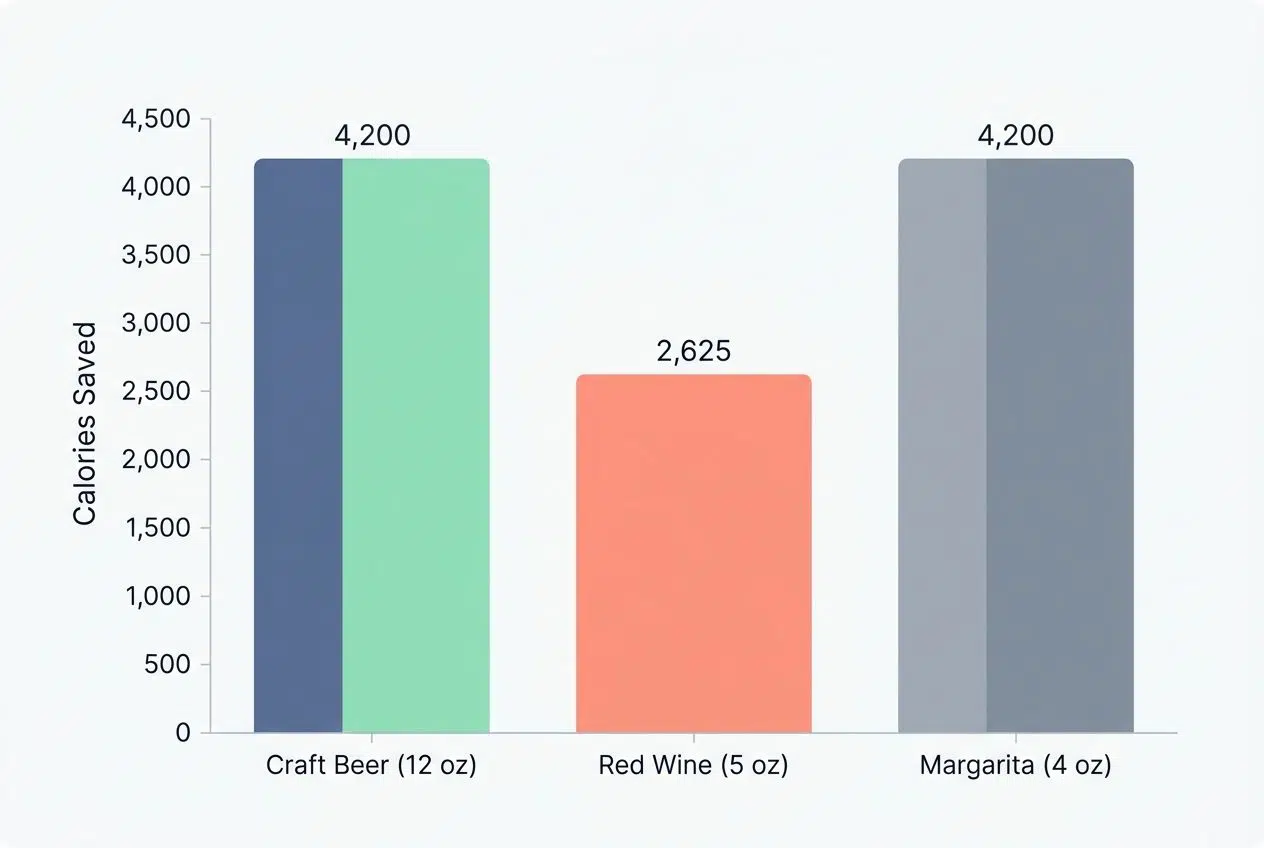
| Drink Type (Average US Serving) | Estimated Calories | Calories Saved Per Week (If skipping 3/day) |
|---|---|---|
| Craft Beer (12 oz) | 150 – 200 | 3,150 – 4,200 |
| Red Wine (5 oz) | 120 – 125 | 2,520 – 2,625 |
| Margarita (4 oz) | 160 – 200 | 3,360 – 4,200 |
Long-Term Health Benefits of Alcohol Cessation
Your body transforms in powerful ways when you quit drinking for good. Your heart, liver, and immune system all start healing and working better than they have in years.
Stronger Immune System
Alcohol suppresses your immune system, making you more prone to infections and illness. The Centers for Disease Control and Prevention notes that heavy drinking weakens your white blood cells.
Once you quit drinking, your body starts rebuilding its defense mechanisms right away. Your white blood cells bounce back, and they function significantly better.
Infections take hold less easily, and you recover faster when you do get sick. This detoxification process strengthens your natural defenses, leading to fewer sick days.
Enhanced Heart Health
Your cardiovascular system starts healing the moment you quit drinking. Alcohol puts immense stress on your heart muscle and consistently raises your blood pressure.
The American Heart Association points out that quitting alcohol immediately lowers your resting blood pressure. This drop directly reduces your long-term risk of experiencing a stroke or irregular heartbeat.
Your arteries become less inflamed, and your cholesterol levels improve as your body stops processing empty toxins. Exercise becomes easier, which strengthens your heart muscle even further.
Improved Liver Function and Recovery
Your liver starts healing the moment you quit alcohol. This organ works incredibly hard to filter toxins from your blood, and constant drinking damages its cells. Fatty liver disease is incredibly common, affecting roughly 1 in 4 Americans. The great news is that the American Liver Foundation confirms the liver can actually regenerate its own tissue.
Stopping alcohol reverses early fat accumulation in just weeks. Here are the specific ways your liver recovers:
- Reduced inflammation: Swelling in the liver drops rapidly within the first month.
- Normalized enzymes: Liver enzymes return to healthy, baseline levels.
- Healthy tissue growth: The organ literally rebuilds new, healthy cells.
- Better nutrient processing: Your body absorbs vitamins much more efficiently.
Mental and Emotional Gains
Your mind clears up fast, and your thoughts sharpen. You will feel happier, more focused, and ready to tackle what matters most to you.

Increased Focus and Concentration
Your brain starts firing on all cylinders once you ditch alcohol. Regular drinking actually shrinks the brain’s frontal lobes, which control your focus and decision-making skills.
Within two weeks of sobriety, brain volume literally begins to recover. You will notice you can read a book or hold a deep conversation without losing your place.
Sobriety gives your brain the clean fuel it needs to perform at peak. The fog lifts, and suddenly, you can think straight for hours without your mind wandering off track.
Enhanced Mood and Lower Depression Risk
Alcohol artificially spikes your brain’s feel-good chemicals, causing an inevitable crash that mimics depression. Stopping drinking lets your mood stabilize and bounce back naturally.
The Substance Abuse and Mental Health Services Administration notes that mental health drastically improves over the first month of sobriety. Your natural serotonin levels begin climbing within days.
Depression often walks hand-in-hand with heavy drinking, and quitting alcohol cuts that risk significantly. Energy returns, motivation kicks in, and you stop waking up with that heavy weight on your chest.
Strategies to Maintain an Alcohol-Free Lifestyle
Staying sober takes real work, but you can build strong habits that stick with you for life. You need to find exactly what works best for your specific daily routine.
Staying Hydrated and Maintaining a Balanced Diet
Your body needs excellent fuel and fluids to repair itself after quitting alcohol. Proper nutrition speeds up your healing process and supports your overall well-being.
- Drink at least eight glasses of water daily to flush out lingering toxins and restore your kidney function.
- Eat foods rich in B-complex vitamins, like leafy greens, to help repair any nerve damage caused by drinking.
- Include lean proteins in every meal to supply the amino acids needed to rebuild your brain’s neurotransmitters.
- Limit processed sugar, as your body will naturally crave sweets while trying to replace the sugar found in alcohol.
- Consult a nutritionist to create an eating plan that matches your specific health goals during this transition.
Recognizing Withdrawal Signs
Your body sends clear signals when you quit drinking. Understanding the Clinical Institute Withdrawal Assessment (CIWA) signs helps you know what is normal and when to ask for help.
- Mild hand tremors can start as early as 6 to 24 hours after your last drink.
- You might experience unusual sweating, even when sitting comfortably in a cool room.
- Headaches frequently strike hard during the first few days as your blood pressure recalibrates.
- Nausea and stomach upset happen as your digestive system adapts to functioning without alcohol.
- Intense insomnia may keep you awake, leaving you staring at the ceiling despite feeling exhausted.
Seeking Professional Support
Professional support plays a critical role in your journey. Trained experts guide you safely through the physical and emotional challenges of alcohol withdrawal.
- Call the SAMHSA National Helpline at 1-800-662-HELP for a free, confidential treatment referral in the US.
- Medical doctors can monitor your physical health and prescribe safe medications to ease high blood pressure during withdrawal.
- Therapists specializing in addiction recovery can help you identify the root causes of your drinking habits.
- Psychiatrists can treat co-occurring mental health conditions like depression that often accompany alcohol dependence.
- Nutritionists can guide your dietary choices to accelerate the physical health healing of your gut and liver.
Building a Strong Support System
Professional help sets the foundation, but your personal relationships form the backbone of lasting sobriety. Friends and community members become your greatest allies.
- Join localized support groups like Alcoholics Anonymous (AA) or SMART Recovery to meet people walking the exact same path.
- Find an accountability partner who checks in with you regularly and provides a lifeline during intense cravings.
- Communicate your boundaries clearly to family members, letting them know which specific situations trigger your urge to drink.
- Spend time with people who respect your decision to quit, slowly building friendships that do not revolve around bars.
- Share your timeline of quitting with trusted friends so they understand the physical body changes you are experiencing.
Wrapping Up
Quitting alcohol sets your body on a fast track to real healing. Your hydration improves, your sleep deepens, your skin clears up, and your liver recovers. Energy floods back into your days. Mental clarity sharpens your focus, and your mood swings finally settle down.
These What Happens To Your Body When You Stop Drinking Alcohol changes stack up quickly. Some shifts appear within hours, while others take a few weeks to show themselves.
Your body is incredibly resilient and knows exactly how to fix itself when you stop pouring toxins into it. This journey to sobriety demands patience and self-compassion. Withdrawal symptoms might hit hard at first, but they will fade away.
Drink water constantly, eat nutritious food, move your body, and talk to people who understand what you are going through. The timeline looks a little different for everyone. The destination stays exactly the same: a stronger, healthier, happier version of yourself.
Frequently Asked Questions (FAQs) on Quitting Alcohol Effects
1. What changes happen to your body when you stop drinking alcohol?
Your liver starts healing, often reducing liver fat by up to 15% within the first month, according to a 2023 JAMA Internal Medicine study. You’ll also notice better sleep, brighter skin, more energy, and clearer thinking as your body adjusts.
2. How fast do you feel better after stopping alcohol?
Some people feel different in just a few days, while others need a couple of weeks for noticeable change. A 2024 study from the University of Sussex found that 70% of participants reported better sleep quality within just 7 days of stopping. By the end of one month, most folks say they have sharper focus and steadier moods.
3. Will quitting alcohol help with weight loss?
Yes, cutting out alcohol can save you around 3,000 to 4,000 calories per week if you were drinking regularly, according to the National Institute on Alcohol Abuse and Alcoholism. Many people see their waistlines shrink and find they naturally make healthier food choices too.
4. Can stopping alcohol affect mental health?
Your brain chemistry does adjust after quitting, which can cause temporary anxiety or sadness in the first week or two. Most people find that anxiety decreases significantly and overall mood improves within 4 to 6 weeks as the mind clears out old patterns.