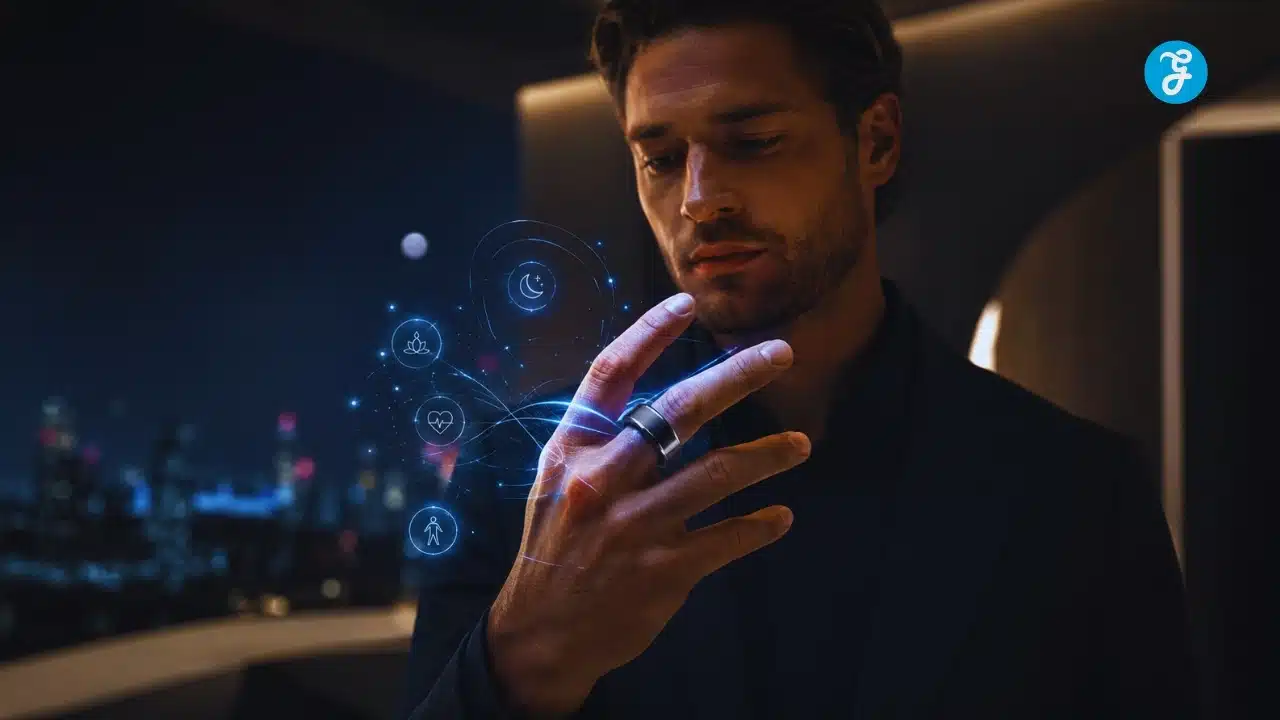
Silicon Valley has a new obsession with your index finger. The bulky smartwatch is losing its grip as the primary health tool. Today, the most innovative Smart Ring Companies USA are shrinking medical-grade sensors into sleek titanium bands. This shift is not just about aesthetics. It is about physics. The finger offers a clearer look at your pulse than the wrist ever could. These tiny devices track sleep stages and blood oxygen levels with surgical precision.
While tech giants grab the headlines, a group of nimble startups and SMEs is actually leading the charge. They are building tools for accessibility, enterprise security, and chronic disease management. This transition marks a move away from loud notifications toward quiet data. Users no longer want a screen on their arm. They want invisible insights.
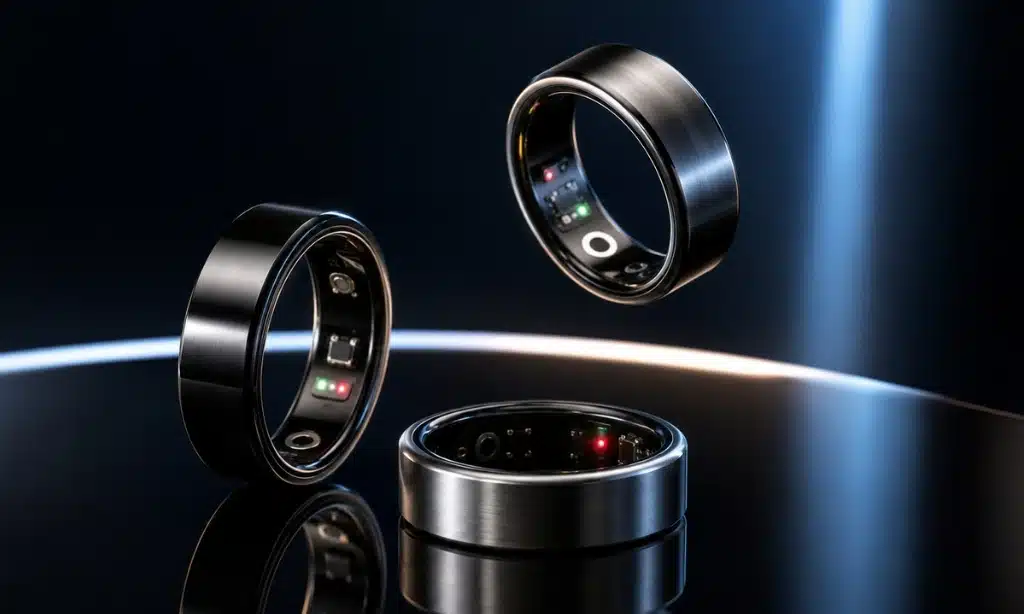
Engineering has finally caught up with our biology. Batteries are smaller. Sensors are more sensitive. The result is a device that stays on for days instead of hours. These American firms are not just making jewelry. They are creating a new category of human-computer interaction. The ring revolution has arrived. It is quiet, discreet, and incredibly powerful.
The innovators are proving that the most sophisticated technology is the kind you almost forget you are wearing.
Tracking the Surge: Why Smart Ring Technology is Taking Over
The wearable market is witnessing a major migration from the wrist to the finger. While smartwatches once defined the category, the global smart ring market is now projected to reach nearly $3.5 billion by 2033. In the United States alone, adoption is surging as users prioritize discreet, continuous monitoring over flashy screens and constant notifications.
Precision Beyond the Wrist
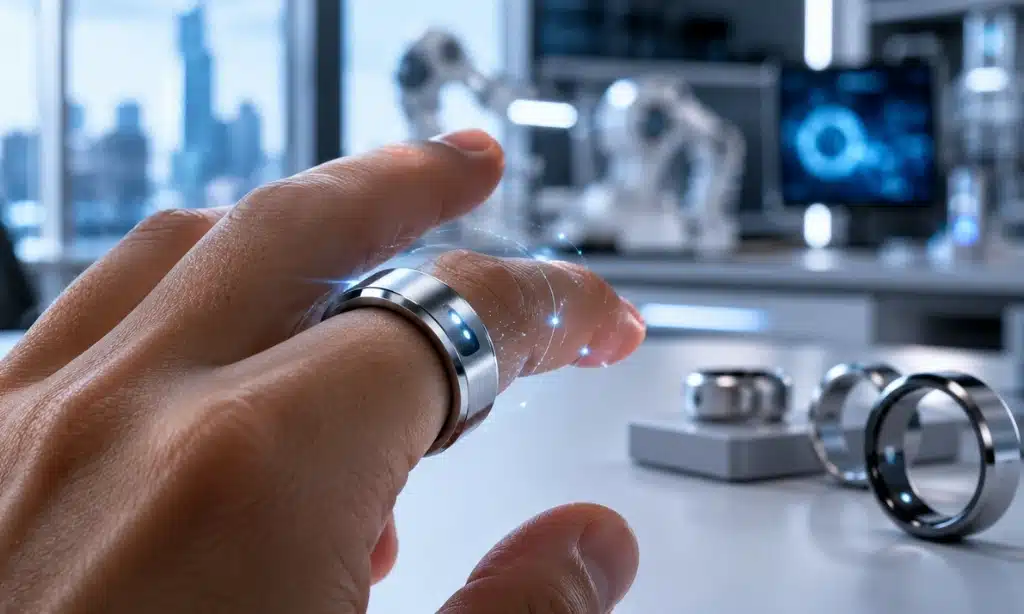
The finger is a superior site for biometric data collection compared to the wrist. Medical professionals have used fingertip pulse oximeters for decades because the arteries there are closer to the skin surface. Smart rings leverage this anatomy to provide cleaner signals for heart rate, blood oxygen, and temperature. Because rings fit more snugly and move less during sleep, they often deliver more consistent overnight data than bulky watches.
The Miniaturization Breakthrough
Engineering advances have finally allowed high-performance sensors and batteries to fit inside a standard ring size. Modern triple-wavelength PPG sensors and ultra-low-power Bluetooth modules enable these devices to run for up to seven days on a single charge. This efficiency eliminates the charging anxiety that plagues many smartwatch users. Improvements in titanium and ceramic manufacturing also ensure these devices are durable enough for 24/7 wear.
Expansion into Enterprise and Accessibility
The growth of Smart Ring Companies USA is no longer limited to fitness tracking. A new wave of American startups is applying ring technology to specialized sectors. Some firms focus on passwordless authentication and zero-trust security for corporate environments. Others are developing assistive tools that allow people with limited mobility to control their homes through simple gestures. This shift toward functional, purpose-built hardware is a primary driver of the current market explosion.
The Rise of Passive Health Tracking
Consumers are moving toward a set it and forget it approach to wellness. Smart rings excel at passive tracking, which collects data in the background without requiring user input. This allows for long-term trend analysis of stress levels, recovery scores, and sleep stages. By removing the distraction of a screen, these rings offer a more mindful way to stay connected to one’s health data.
Selection Standards: Why These 12 Firms Made the Cut
Selecting the right innovators for this list required a focus on substance over style. We bypassed the generic wellness gadgets flooding the market to find companies offering genuine technological breakthroughs. Our team prioritized firms with headquarters or significant research operations in the United States to highlight the specific ingenuity driving the domestic ecosystem.
- Specialized Utility: We looked for rings that do more than count steps. Our focus remained on devices tackling enterprise security, accessibility, or clinical-grade diagnostics.
- Engineering Precision: We verified the hardware. We selected firms that successfully balanced high accuracy biometric sensors with week-long battery life and durable materials like titanium.
- Market Impact: These are not just concepts on a drawing board. Every entry is an active player with a verified track record, from holding FDA clearances to redefining workplace safety.
- Domestic Innovation: By focusing on Smart Ring Companies USA, we ensured each selection contributes to a professional toolkit rather than just a consumer trend.
12 Smart Ring Startups in the U.S.
The following list highlights the pioneers shaping the future of wearables. These American companies prove that size is no barrier to sophisticated engineering. From medical-grade diagnostics to biometric security, these firms offer diverse solutions for modern needs. Explore the twelve Smart Ring Companies USA currently leading the charge in this miniature tech revolution.
1. Movano Health / Evie Ring
HQ: Pleasanton, California, United States
SME or Startup: Health-tech SME / Public micro-cap wearable startup
Founder: Michael Leabman
Company Overview: Movano Health develops the Evie Ring, a women-focused smart ring that combines consumer wellness design with regulated medical-device ambitions. The company positions Evie around sleep, activity, heart rate, blood oxygen, menstrual-cycle, mood, and energy insights, while EvieMED extends the platform toward clinical monitoring. Movano is important because it shows how a U.S. wearable startup can compete beyond lifestyle tracking by pursuing FDA-cleared health data, remote monitoring, and healthcare partnerships while still selling a consumer-friendly ring in the United States.
Core Services:
- Women’s health smart ring
- Sleep and activity tracking
- Heart-rate and SpO2 monitoring
- Menstrual-cycle and mood insights
- Clinical/remote-monitoring wearable solutions
Target Market & Track Record: Targets women, health-conscious consumers, clinical-trial teams, healthcare providers, payors, and remote-patient-monitoring programs. EvieMED received FDA 510(k) clearance for the pulse oximeter in its ring platform
Website: eviering.com
2. BodiMetrics / CIRCUL Health
HQ: Manhattan Beach / Los Angeles area, California, United States
SME or Startup: Medical wearable SME
Founder: Neil Friedman and Mark Goettling
Company Overview: BodiMetrics is a medical-wearable SME behind the CIRCUL ring family, including the CIRCUL Pro pulse-oximeter ring. Its products focus on continuous oxygen saturation, pulse rate, heart rate, sleep, activity, and wellness measurements from the finger. Unlike many style-first smart rings, BodiMetrics leans toward clinical and sleep-health use cases. It is a practical example of a smaller company serving consumers, clinicians, researchers, and remote-care programs with finger-worn monitoring hardware rather than broad smartwatch-style lifestyle features, fashion-first design, or general wellness accessories for everyday users in care settings.
Core Services:
- CIRCUL smart ring
- Continuous SpO2 monitoring
- Pulse-rate monitoring
- Sleep and activity tracking
- Remote health data sharing
Target Market & Track Record: Targets health consumers, sleep-monitoring users, clinicians, researchers, and remote-care programs. The CIRCUL Pro Ring is FDA-cleared as a wireless, non-invasive pulse oximeter for SpO2 and pulse-rate collection.
Website: circul.health
3. Token
HQ: Rochester, New York, United States
SME or Startup: Cybersecurity startup / Enterprise wearable SME
Founder: Melanie Shapiro, Steve Shapiro, and John Dvorak
Company Overview: Token is a Rochester-born biometric identity company using a smart ring for enterprise security rather than wellness tracking. Its ring combines fingerprint verification, cryptographic assurance, proximity, and passwordless authentication to reduce phishing, credential sharing, ransomware, and identity misuse. The company has shifted from a consumer access idea toward business cybersecurity, IAM, SSO, and MFA deployments. Token proves the smart-ring category also includes secure workplace access and zero-trust authentication, not only sleep scores, steps, or heart-rate dashboards for consumers.
Core Services:
- Biometric smart ring
- Passwordless authentication
- Phishing-resistant MFA
- IAM/SSO integration
- Enterprise access assurance
Target Market & Track Record: Targets enterprises, cybersecurity teams, regulated workplaces, IT administrators, and access-control buyers. Token’s current site positions the product around fingerprint-based identity signals, cryptography, and proximity, while its newsroom shows active RSA/security-award activity in 2024–2025.
Website: tokenring.com
4. Sandbar / Stream Ring
HQ: New York City, New York, United States
SME or Startup: AI hardware startup
Founder: Mina Fahmi and Kirak Hong
Company Overview: Sandbar is a New York AI hardware startup building Stream, a smart ring for voice capture, note-taking, and personal productivity. The ring lets users press, speak, and send thoughts into a companion app, where audio becomes organized notes and AI-assisted memory. Its founders have human-computer interaction backgrounds, giving the product a clear interface-first identity. Sandbar stands out because it represents the fast-rising AI companion hardware wave inside the U.S. smart-ring market, with a focus on frictionless everyday productivity for modern users and creators alike.
Core Services:
- AI voice smart ring
- Voice-note capture
- AI-assisted note organization
- Music and podcast control
- Personal productivity memory tools
Target Market & Track Record: Targets professionals, founders, creators, knowledge workers, and AI-device early adopters. Sandbar raised a reported $23 million Series A to support Stream’s launch.
Website: sandbar.com
5. Core Devices / Pebble Index 01
HQ: Palo Alto, California, United States
SME or Startup: Small hardware SME
Founder: Eric Migicovsky
Company Overview: Core Devices, the small company behind Pebble’s revival, added the Pebble Index 01 as a minimalist smart ring for capturing short voice notes. The product avoids the usual health-tracking race and focuses on a button, microphone, Bluetooth transfer, local transcription, reminders, timers, and customizable actions. Its founder, Eric Migicovsky, is known for the original Pebble smartwatch. This makes Core Devices a credible U.S. SME example where smart rings are treated as simple productivity gadgets instead of biometric jewelry.
Core Services:
- Voice-capture smart ring
- Bluetooth note transfer
- Local transcription workflow
- Reminder and timer capture
- Open-source gadget ecosystem
Target Market & Track Record: Targets productivity users, Pebble fans, developers, open-source hardware users, and people who want low-friction voice capture. The Index 01 is officially listed by Pebble/RePebble and was covered as a $75 smart ring for notes and reminders.
Website: repebble.com
6. Lotus
HQ: San Jose, California, United States
SME or Startup: Assistive-tech startup
Founder: Dhaval Patel
Company Overview: Lotus builds an accessibility-first smart ring that lets people control home objects by pointing and clicking. The ring works with small switch covers and avoids complicated smart-home setup, including rewiring, Wi-Fi, apps, or voice commands. Founded by former Apple engineer Dhaval Patel, Lotus focuses on independence for people with limited mobility while also supporting aging-in-place needs. It stands out as a clear example of smart rings solving real accessibility problems instead of only tracking sleep, fitness, or health data for everyday living, care, and comfort.
Core Services:
- Gesture-control smart ring
- Light-switch control
- Appliance control
- Assistive home technology
- Aging-in-place accessibility hardware
Target Market & Track Record: Targets people with disabilities, older adults, caregivers, accessibility-focused households, and smart-home users. Lotus was named in TIME’s Best Inventions 2025 list for its point-and-click smart-home ring.
Website: getlotus.com
7. WearOpal / Opal Wearables
HQ: New York, New York, United States
SME or Startup: Personal-safety wearable startup
Founder: Jen Chiang
Company Overview: WearOpal is a New York safety-tech startup developing a personal-safety smart ring that pairs with a phone and can alert 911 and emergency contacts. The brand combines jewelry-like design with discreet panic-button functionality, live location sharing, and emergency messaging. Founder Jen Chiang built the company around safety concerns gathered from women and vulnerable users. WearOpal is a strong U.S. SME entry because it applies smart-ring design to personal-safety, fashion, commuting, campus safety, and everyday confidence.
Core Services:
- Personal-safety smart ring
- 911 alerting
- Emergency-contact alerts
- SOS messaging
- Location sharing
Target Market & Track Record: Targets women, students, commuters, minorities, solo travelers, and personal-safety buyers. The company’s official site describes the ring as a fashion accessory and safety device paired with a companion app.
Website: wearopal.com
8. RingOn
HQ: Houston, Texas, United States
SME or Startup: Early-stage child-safety startup
Founder: Shoshi Kaganovsky
Company Overview: RingOn is a women-owned safety startup creating a wearable GPS smart ring for children. The product is designed as a discreet panic button that lets a child alert trusted adults and share real-time location without unlocking a phone or finding a bag. The company is still in waitlist and product-building mode, so it should be framed as emerging. Its value for a business listing is the clear family-safety use case, where smart rings become child-protection tools for schools, parents, travel, and daily routines.
Core Services:
- Child-safety smart ring
- Panic-button alerting
- Real-time GPS sharing
- Trusted-contact notifications
- Automatic removal-alert concept
Target Market & Track Record: Targets parents, children, schools, caregivers, and child-safety advocates. RingOn’s official website verifies the product concept, waitlist status, panic-button function, GPS positioning, and women-owned startup positioning
Website: myringon.com

9. CUDIS
HQ: Los Angeles, California, United States
SME or Startup: AI wellness startup
Founder: Edison Chen
Company Overview: CUDIS is a U.S.-based wellness startup developing AI-powered smart rings for biometric tracking, personal coaching, and user-owned health data. Its rings monitor sleep, activity, blood oxygen, HRV, stress, and recovery, while the app turns daily patterns into practical recommendations and rewards. The company also promotes Web3-style control over personal health information. CUDIS stands out by targeting Oura-style health optimization with AI coaching, incentive-based engagement, and a subscription-free model, without adding another monthly subscription cost, for longevity-focused users seeking smarter, more personalized wellness insights for everyday health decisions and long-term self-improvement.
Core Services:
- AI health smart ring
- Sleep and recovery tracking
- HRV, SpO2, and stress monitoring
- AI health coaching
- Health-data ownership and rewards
Target Market & Track Record: Targets wellness users, longevity enthusiasts, fitness consumers, Web3 users, and Oura-alternative shoppers. TechCrunch reported CUDIS had sold more than 30,000 rings across its first two models and reached 250,000 app users across 103 countries.
Website: cudis.xyz
10. Happy Health / Happy Ring
HQ: Austin, Texas, United States
SME or Startup: Digital-health startup / Medical wearable SME
Founder: Sean Rad, Dustin Freckleton, Sue Smalley, Paul Berns, and Robert Nelsen
Company Overview: Happy Health develops Happy Ring, a clinical-grade smart ring now connected to Happy Sleep’s at-home sleep-testing platform. The company began with stress, mood, sleep, and biometric monitoring, then moved deeper into FDA-cleared medical-device and sleep-care workflows. Its platform combines the ring, software, physician review, and remote care access. Happy Health is a verified U.S. SME/startup example showing how smart rings are moving from wellness gadgets toward regulated home diagnostics, sleep-apnea evaluation, and continuous patient monitoring.
Core Services:
- Clinical-grade smart ring
- Sleep testing
- Stress and mood monitoring
- Biometric health monitoring
- Remote sleep-care platform
Target Market & Track Record: Targets patients, sleep-health users, wellness consumers, physicians, and at-home care programs. Happy Ring has FDA clearance, and Happy Sleep markets the ring as part of an at-home sleep-testing and clinical-care platform.
Website: happysleep.com
11. KiWear
HQ: Delaware-based company with U.S. headquarters; AWE USA activity in Long Beach, California
SME or Startup: Human-computer-interaction startup
Founder: Chris Shi
Company Overview: KiWear is a Delaware-based human-computer-interaction startup building smart-ring input technology for AI glasses, smart glasses, and XR devices. Its reference design uses gesture, motion, touch, and haptics to help users control next-generation wearable displays more naturally. The company announced its smart-ring solution at AWE USA 2025 with Qualcomm collaboration messaging. KiWear deserves inclusion because it treats the ring as an input controller for spatial computing, not as a health sensor, making it relevant for OEMs and wearable-platform builders.
Core Services:
- Smart-ring input reference design
- AI-glasses control
- XR/AR gesture input
- Haptics and motion control
- OEM wearable interface solutions
Target Market & Track Record: Targets AI-glasses makers, XR/AR hardware companies, OEM partners, consumer-electronics firms, and wearable-platform developers. KiWear publicly announced its smart-ring input solution at AWE USA 2025 and described collaboration with Qualcomm Technologies.
Website: kiwear.com
12. Fusion NFC
HQ: Chico, California, United States
SME or Startup: NFC networking SME / Student-founded startup
Founder: Founded by nine Chico State students; public employee/founder names include Noah Ross, Robbie Squire, Ivan Monreal, and Brianna Wehan
Company Overview: Fusion NFC is a small Chico, California company founded by Chico State students to sell NFC networking products, including an NFC smart ring. Its ring is not a biometric health tracker; it is a contactless business identity tool that can share profiles, links, and digital cards with a tap. That makes it useful for entrepreneurs, sales teams, students, and event networking. Fusion NFC represents the low-cost, practical SME side of smart rings for business connections rather than health analytics.
Core Services:
- NFC smart ring
- Digital business cards
- Contactless profile sharing
- NFC keychains and bands
- Networking and lead-sharing tools
Target Market & Track Record: Targets entrepreneurs, students, sales teams, creators, small businesses, and event-networking users. Fusion NFC’s LinkedIn verifies its Chico HQ, small-team status, 2023 founding, and smart business-card positioning; its shop listing includes an NFC Smart Ring product.
Website: nfctech.net/shop/
U.S. Smart Ring Startups & SMEs: Overview Comparison
Here is an overview comparison table of the 12 U.S. smart ring startups and SMEs, categorized by their primary functionality to help you quickly scan their unique positions in the market.
| Company & Product | Primary Use Case | Core Technology / Focus | Target Audience | Standout Feature / Differentiator |
| Movano Health
(Evie Ring) |
Women’s Health & Medical Data | FDA-cleared SpO2 & pulse oximetry, menstrual tracking | Women, health-conscious consumers, clinical trials | Balances jewelry-like consumer design with regulated medical-device ambitions. |
| Happy Health
(Happy Ring) |
Clinical Sleep Monitoring | FDA-cleared biometrics linked to at-home sleep tests | Sleep-apnea patients, physicians, remote care | Integrates directly into the “Happy Sleep” clinical care and diagnostic platform. |
| BodiMetrics
(CIRCUL Pro) |
Continuous Vitals Monitoring | FDA-cleared continuous SpO2 and pulse-rate tracking | Clinicians, sleep researchers, remote patient care | Form factor optimized for strict clinical and sleep-health data collection over style. |
| CUDIS
(Sporty Ring) |
AI Wellness & Coaching | Biometric tracking paired with an AI coach and Web3 | Wellness enthusiasts, athletes, longevity buyers | Subscription-free model featuring gamified health rewards and data ownership. |
| Sandbar
(Stream Ring) |
AI Voice Notes & Productivity | Voice capture, Bluetooth, AI-assisted transcription | Knowledge workers, creators, founders | A wearable microphone that turns spoken thoughts into organized AI notes. |
| Core Devices
(Pebble Index 01) |
Minimalist Voice Capture | Microphone, local storage, open-source software | Pebble fans, developers, productivity users | Extreme simplicity, $75 price point, and a battery that lasts for years without charging. |
| KiWear
(KiWear Smart Ring) |
Spatial Computing Input | Gestures, motion, haptics | XR/AR hardware OEMs, smart glasses users | Acts as a controller for next-generation displays rather than a health tracker. |
| Token
(Token Ring) |
Cybersecurity & Access | Biometrics (fingerprint), cryptography, proximity | Enterprises, IT admins, regulated workplaces | Delivers Phishing-resistant MFA, SSO, and passwordless authentication. |
| WearOpal
(Opal Ring) |
Personal-Safety & SOS | Bluetooth alerting, GPS sharing, panic button | Women, commuters, solo travelers, students | Discreet SOS messaging and 911 alerts disguised as fashionable jewelry. |
| RingOn
(RingOn) |
Child Safety & Tracking | Real-time GPS, panic button alerting | Parents, children, schools | Allows children to share location and alert parents without needing a smartphone. |
| Lotus
(Lotus Ring) |
Accessibility & Home Control | Infrared pointing technology, gesture control | Aging adults, people with limited mobility | Point-and-click control for light switches and appliances without Wi-Fi or voice commands. |
| Fusion NFC
(Fusion NFC Ring) |
Contactless Networking | Embedded NFC chip, profile sharing | Entrepreneurs, sales teams, students | Low-cost tool ($49.99) for sharing digital business cards and links with a single tap. |
Beyond the Band: The Evolution of Personal Integration
The rise of these innovators signals a move toward invisible infrastructure. We are trading bright screens for quiet sensors. This shift represents a sophisticated leap in how we interact with our own biological data.
The Security Frontier
Handling intimate biological signatures requires a new standard for data guardianship. As these startups grow, they are moving beyond basic encryption to build robust security frameworks. The challenge for the industry is ensuring that data privacy scales alongside innovation. Users are increasingly looking for firms that treat health profiles with the same rigor as financial records. This creates a competitive market where trust is the primary currency.
The Sustainability Model
Building durable hardware in a miniature form factor is a significant engineering feat. While early models faced short life cycles, the current trend among Smart Ring Companies USA is toward longevity and sustainable business models. Companies are moving away from restrictive paywalls in favor of value-added services. The focus is shifting to creating hardware that lasts longer and software that stays relevant without constant financial friction.
A Future of Seamless Insight
The ultimate mission is to remove the friction of the interface. These firms want technology to assist our lives without demanding our attention. It is a vision of seamless living that empowers the user with high-fidelity data. We are moving toward a world where health tracking is not a chore but a natural part of our daily rhythm. This transition allows for a deeper connection to our physical well-being through professional-grade, discreet technology.
Frequently Asked Questions (FAQs) on Smart Ring Companies USA
How do US smart ring firms handle battery degradation?
Most smart rings contain sealed lithium polymer batteries that are not user replaceable. Because these batteries typically last between 300 and 500 charge cycles, many devices reach their end of life within three years. Some American SMEs are exploring trade-in programs to ensure the titanium and electronics are properly recycled.
Can these rings track health data without a smartphone nearby?
Yes. Most leading Smart Ring Companies USA design their hardware with onboard memory. This allows the ring to store biometric data for several days. Once you move back into Bluetooth range, the ring automatically syncs the cached information to its companion app for analysis.
Are smart rings from US startups eligible for HSA or FSA?
Many smart rings are now eligible for Health Savings Account (HSA) or Flexible Spending Account (FSA) reimbursement. Companies like Movano and Oura often provide the necessary documentation if the device is used to monitor a specific medical condition. You should always verify eligibility with your plan administrator before purchasing.
Do these rings interfere with daily manual work or lifting?
While smart rings are durable, they can pose a safety risk during heavy weightlifting or manual labor. This is known as ring avulsion. Many professional users choose to wear a silicone cover over the ring or move it to a necklace during high-intensity physical activity to protect both the hand and the device.