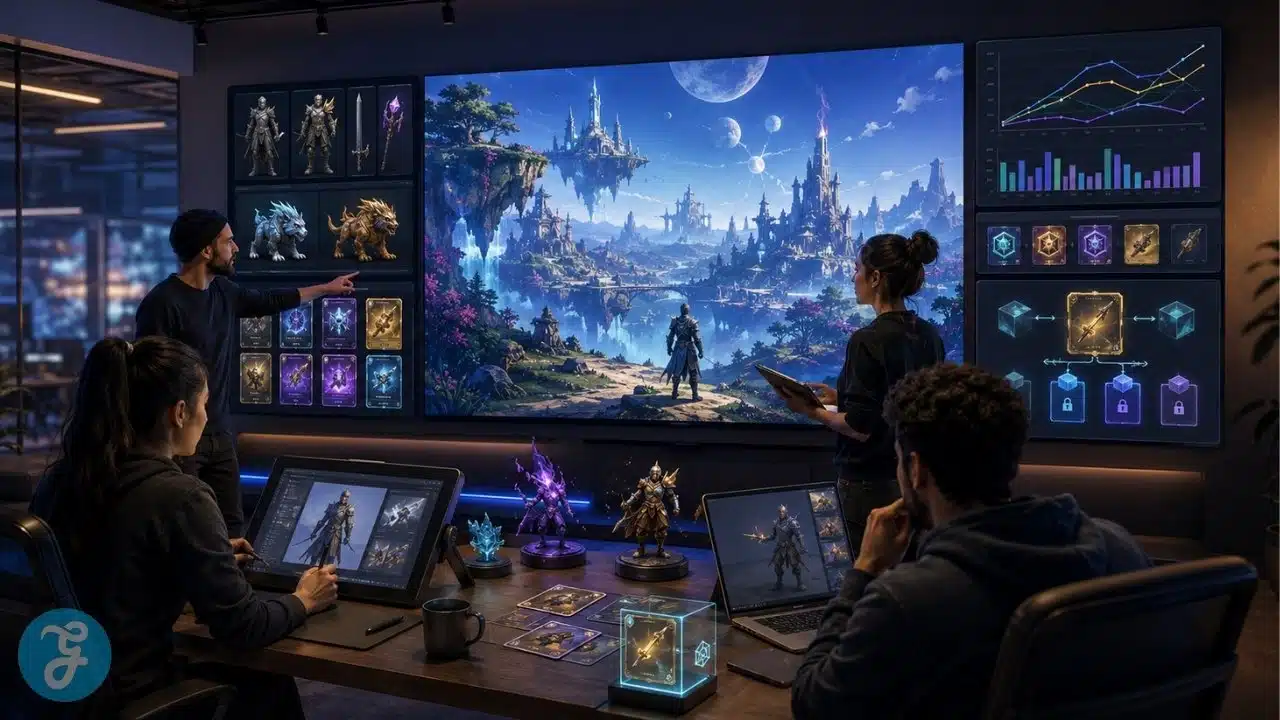
The gaming industry has seen plenty of “revolutions” that were mostly press releases wearing expensive hoodies. Blockchain & NFT Games went through that same painful phase. For a while, too many projects talked more about tokens, wallets, and “ownership” than actual gameplay, which is a small problem when the product is supposed to be a game.
But the niche is not dead. It is simply growing up. The weaker play-to-earn experiments are fading, while stronger studios are trying to build games where blockchain adds real value through digital ownership, player-driven economies, tradable assets, creator ecosystems, and on-chain infrastructure. For this list, the United States stands out as the strongest country because it has the deepest verified cluster of Web3 gaming startups and SMEs, backed by gaming talent, venture capital, crypto infrastructure, and founders with real experience in building playable products rather than just token decks.
How We Selected Our 10 Best SMEs Specializing In Blockchain & NFT Games In The USA
This list focuses on companies that are actually building games, game ecosystems, or Web3 gaming infrastructure. I avoided generic blockchain developers, NFT marketplaces, metaverse consultants, and crypto platforms that only touch gaming from the side.
| Selection Factor | Why It Matters |
|---|---|
| Blockchain Gaming Focus | The company needed a clear connection to Web3, NFT, onchain, or player-owned game economies |
| Startup Or SME Fit | Preference went to private, venture-backed, or specialist companies rather than large public gaming corporations |
| U.S. Presence | The company needed a meaningful U.S. headquarters or operating base |
| Product Evidence | The company needed visible games, game platforms, or active ecosystem work |
| Market Credibility | Funding, player traction, partnerships, or known game releases helped validate inclusion |
| Niche Relevance | Companies had to fit Blockchain & NFT Games, not just gaming in general |
Whom This Is For
This list is useful for game publishers, Web3 investors, founders, blockchain gaming researchers, NFT game analysts, and studios looking for U.S.-based partners or competitors in the Web3 gaming space.
It is especially relevant for:
- investors tracking Web3 game studios;
- founders studying the U.S. blockchain gaming ecosystem;
- publishers exploring player-owned economies;
- gaming writers covering NFT games;
- studios comparing open-economy game models;
- Web3 teams looking for gaming case studies.
Top 10 SMEs Specializing In Blockchain & NFT Games In The USA
The U.S. market is not dominated by one type of blockchain gaming company. Some studios build actual games, some build open-economy infrastructure, some focus on NFT assets, and others create onchain systems for player ownership.
1. Mythical Games
Headquarters: Sherman Oaks, California, United States
Website: mythicalgames.com
Email: Contact form available
Founder: John Linden, Jamie Jackson, Rudy Koch, Chris Downs, Cameron Thacker
Mythical Games is one of the strongest U.S. companies in Blockchain & NFT Games because it operates at the intersection of game development, player-owned economies, and Web3 infrastructure. The company describes itself as a venture-backed game technology company at the intersection of video games and economics, with 200+ employees and 6M+ engaged players. PrivCo lists the company as privately held and says it was founded in 2018 by Cameron Thacker, Chris Downs, Jamie Jackson, John Linden, and Rudy Koch.
Best Feature/For:
- Player-owned game economies
- Studios and publishers studying mainstream Web3 gaming infrastructure
Why We Chose It:
- Strong U.S. blockchain gaming profile
- Clear focus on digital ownership and in-game economies
- Venture-backed and still private
- Active game and marketplace ecosystem
Things to consider:
- Larger than many small studios, but still private and specialist
- Best suited for readers studying scaled Web3 gaming rather than early-stage experimentation
2. Gala Games
Headquarters: United States
Website: games.gala.com
Email: Contact form available
Founder: Eric Schiermeyer, Wright Thurston, Michael McCarthy
Gala Games is a major U.S.-based Web3 entertainment and gaming company with a clear blockchain gaming focus. Its public profile says Gala was founded by Eric Schiermeyer, Michael McCarthy, and other Web3/gaming veterans, and it has built a roster of gaming and entertainment partnerships. Gala’s game portal and creator contact page show its continued focus on Web3 gaming tools, creator systems, and blockchain-enabled entertainment.
Best Feature/For:
- Web3 gaming ecosystem development
- Game creators exploring blockchain-powered publishing and digital ownership
Why We Chose It:
- One of the most recognizable U.S. Web3 gaming names
- Strong founder background from traditional gaming
- Broad entertainment and gaming ecosystem
- Active blockchain game launcher and creator-facing infrastructure
Things to consider:
- Gala is broader than games alone because it also touches entertainment and creator infrastructure
- Buyers and partners should evaluate specific game products, not only the Gala brand
3. Faraway
Headquarters: Miami, Florida, United States
Website: faraway.com
Email: Contact form available
Founder: Alex Paley, Dennis Zdonov
Faraway is a U.S. game studio and platform company focused on open-economy games. Its website says it builds and publishes open-economy games including Dookey Dash: Unclogged, Serum City, Legends of the Mara, Mini Royale: Nations, and other Web3-enabled titles. Lightspeed describes Faraway as a gaming studio leveraging blockchain technology to unlock player-driven and decentralized game economies, with Alex Paley and Dennis Zdonov listed as co-founders.
Best Feature/For:
- Open-economy games and Web3 game infrastructure
- Studios that want NFT assets, marketplaces, wallets, and game economy tools
Why We Chose It:
- Strong fit for Blockchain & NFT Games
- Builds both games and developer infrastructure
- Supports multiple blockchain ecosystems
- Clear use cases around minting, crafting, ownership, marketplaces, and payouts
Things to consider:
- The company has expanded beyond a single game studio identity
- Partners should clarify whether they need publishing, platform tooling, or game development support
4. Proof Of Play
Headquarters: New York, New York, United States
Website: proofofplay.com
Email: Contact form available
Founder: Amitt Mahajan and team
Proof of Play is a U.S. startup focused on fully on-chain gaming infrastructure and game creation. Its site says it helps developers create high-performance serverless apps and games that can be extended or remixed by anyone. Its seed announcement names Amitt Mahajan as CEO and co-founder, while the company frames its work around on-chain games rather than ordinary games that simply attach NFTs to in-app purchases.
Best Feature/For:
- Fully onchain games
- Developers interested in composable, remixable blockchain game worlds
Why We Chose It:
- Clear blockchain-native gaming thesis
- Strong distinction between on-chain games and basic NFT add-ons
- Founded by experienced game builders
- Relevant to the future of decentralized game infrastructure
Things to consider:
- More infrastructure-heavy than some traditional game studios
- On-chain games remain a younger and technically demanding category
5. Azra Games
Headquarters: Sacramento / Lafayette, California, United States
Website: azragames.com
Email: Contact form available
Founder: Mark Otero, Sonny Mayugba, Travis Boudreaux
Azra Games is a U.S. RPG studio with Web3 and virtual collectible ambitions. Funding coverage says Azra Games was founded by veteran game designer Mark Otero, Sonny Mayugba, and Travis Boudreaux, and was created to build immersive game universes with specialized in-game economies and virtual collectibles powered by Web3 technology. The company’s own site highlights CEO Mark Otero’s game design background and its focus on high-quality RPG experiences.
Best Feature/For:
- Collectible RPGs with Web3 economy potential
- Players and investors interested in RPG-first blockchain gaming
Why We Chose It:
- Strong founder pedigree in mainstream mobile RPGs
- Focus on collectible battle RPG experiences
- U.S.-based startup profile
- Good example of Web2 gaming veterans moving into Web3-enabled design
Things to consider:
- The company should be evaluated by actual shipped gameplay and retention, not only funding or founder reputation
- Blockchain elements may evolve depending on product and market direction
6. Neon Machine
Headquarters: Seattle, Washington, United States
Website: shrapnel.com
Email: Contact form available
Founder/Leadership: Kenneth Rosman, CEO
Neon Machine is the Seattle-based studio behind Shrapnel, a Web3 first-person shooter. Shrapnel’s studio page says the team is headquartered in Seattle and works at the nexus of games, television, movies, graphic novels, and blockchain projects. GeekWire reported that Neon Machine was a Seattle-based startup building the Web3 game Shrapnel and raised a $20 million Series A round in 2023, while later 2025 reporting said the studio secured additional investment for Shrapnel’s global launch.
Best Feature/For:
- Blockchain-enabled FPS gaming
- Players and investors are watching AAA-style Web3 shooters
Why We Chose It:
- Clear U.S. startup profile
- Focused on a specific blockchain-enabled game
- Strong funding history
- Relevant to high-production-value Web3 gaming
Things to consider:
- Web3 shooter launches are complex and expensive
- Buyers and analysts should track funding, delivery, and community traction closely
7. Studio 369
Headquarters: United States
Website: 369.fun
Email: Contact form available
Founder: Dan Nikolaides, Vic Lopez, Matt Candler
Studio 369 is the studio behind MetalCore, a blockchain-enabled mech and combat game. Its LinkedIn profile describes it as an Unreal technology specialist focused on PC and console multiplayer, live operations, and community management. BlockchainGamer reported that CTO Dan Nikolaides founded the studio with Vic Lopez and Matt Candler, and the company has focused on large-scale mech combat and Web3 gaming through MetalCore.
Best Feature/For:
- Blockchain-enabled PC and console-style multiplayer games
- Players interested in mech combat, large-scale battles, and NFT-enabled game economies
Why We Chose It:
- Clear specialist gaming focus
- Small-to-mid-sized team profile
- Strong Unreal and multiplayer positioning
- Relevant to Web3 games moving beyond casual play-to-earn mechanics
Things to consider:
- MetalCore’s long-term success depends on gameplay retention, not only Web3 systems
- Buyers should review platform availability and current product status
8. Joyride Games / Super Champs
Headquarters: Palo Alto, California, United States, with additional U.S. and India presence
Website: onjoyride.com / superchamps.com
Email: Contact form available
Founder: Omar Siddiqui
Joyride Games is a Web3 games and infrastructure company behind the Super Champs ecosystem. Its about page lists Omar Siddiqui as founder, while Super Champs describes itself as an anime-inspired universe spanning games, video, social media, merchandise, and Web3 ownership. Public launch coverage says Joyride built onchain mobile games, infrastructure, and protocol that onboarded 10M+ players to Web3, while Super Champs had millions of installs and significant onchain activity on Base.
Best Feature/For:
- Mobile-first Web3 game ecosystems
- Teams studying scalable blockchain gaming for casual and anime-inspired audiences
Why We Chose It:
- Strong mobile gaming and Web3 infrastructure angle
- The founder and team have deep game industry experience
- Super Champs shows ecosystem-level thinking, not just one game
- Clear player onboarding and on-chain activity claims from public launch coverage
Things to consider:
- The ecosystem spans media and merchandising, so it is broader than a pure game studio
- Long-term sustainability depends on game retention and community growth
9. Revolving Games
Headquarters: San Francisco, California, United States
Website: revolvinggames.com
Email: Contact form available
Founder/Leadership: Public founder information is less consistently available; leadership should be verified during outreach
Revolving Games is a U.S. Web3 blockchain gaming company headquartered in San Francisco. Its website says the company has two independent gaming studios and a 150+ team of seasoned gaming veterans. Built In San Francisco describes Revolving Games as a Web3 blockchain gaming company developing scalable MMOs and deep strategy games in a connected metaverse, with teams in San Francisco, Los Angeles, Canada, and Asia.
Best Feature/For:
- Scalable Web3 MMO and strategy game development
- Investors and publishers looking at larger SME-scale blockchain game production
Why We Chose It:
- Clear Web3 gaming focus
- U.S. headquarters
- Strong team scale for an SME
- Works on multiplayer and strategy-oriented blockchain game experiences
Things to consider:
- Founder and leadership details should be verified directly before formal outreach
- Broad metaverse language should be checked against actual shipped games and user traction
10. The Wildcard Alliance
Headquarters: McKinney, Texas, United States
Website: wildcardgame.com
Email: Contact form available
Founder: Paul Bettner, Katy Drake Bettner
The Wildcard Alliance is a U.S. Web3 game studio connected to the competitive game Wildcard. PR Newswire reported that the company was founded by industry veterans Paul and Katy Drake Bettner, while earlier coverage said Wildcard combines arena-style battles with collectible card mecha nics and raised major funding for a Web3 game franchise. LinkedIn lists the company’s headquarters in McKinney, Texas.
Best Feature/For:
- Competitive Web3 arena game development
- Players and investors interested in blockchain-enabled spectator and creator ecosystems
Why We Chose It:
- U.S.-based specialist Web3 game studio
- Founded by proven mainstream gaming veterans
- Active funding and development activity in 2025
- Fits the Blockchain & NFT Games niche through player ownership and Web3 game economy design
Things to consider:
- The project is still proving its long-term market fit
- Buyers should evaluate gameplay, creator economy mechanics, and live user traction
An Overview Of 10 SMEs Specializing In Blockchain & NFT Games In The USA
The U.S. companies in this list cover multiple parts of the Blockchain & NFT Games ecosystem. Some build games directly. Some build player-owned economies. Some focus on open-economy infrastructure, while others are experimenting with fully onchain gameplay.
| Rank | Company | U.S. Base | Core Focus | Best Fit |
|---|---|---|---|---|
| 1 | Mythical Games | California | Player-owned economies and Web3 gaming infrastructure | Scaled blockchain gaming |
| 2 | Gala Games | United States | Web3 gaming and entertainment ecosystem | Creator and game publishing infrastructure |
| 3 | Faraway | Florida | Open-economy games and Web3 developer tools | NFT game economies |
| 4 | Proof Of Play | New York | Fully onchain games | Decentralized game infrastructure |
| 5 | Azra Games | California | Web3-powered collectible RPGs | RPG and virtual collectibles |
| 6 | Neon Machine | Washington | Web3 FPS game development | AAA-style blockchain shooter |
| 7 | Studio 369 | United States | Blockchain-enabled multiplayer games | PC and console-style Web3 games |
| 8 | Joyride Games / Super Champs | California | Mobile Web3 game ecosystem | Scalable mobile blockchain gaming |
| 9 | Revolving Games | California | Web3 MMOs and strategy games | Larger SME-scale Web3 game production |
| 10 | The Wildcard Alliance | Texas | Web3 arena and collectible card game | Competitive blockchain-enabled gaming |
Our Top 3 Picks And Why?
The top three depend on what the reader wants to study.
| Pick | Why It Stands Out |
|---|---|
| Mythical Games | Strongest scaled U.S. blockchain gaming company with player-owned economy infrastructure |
| Faraway | Strongest open-economy game and developer platform fit |
| Proof Of Play | Strongest fully on-chain gaming infrastructure angle |
These three represent three different versions of the market: mainstream Web3 gaming, open-economy game tooling, and blockchain-native game infrastructure.
Why Are Blockchain & NFT Games Booming In The USA?
Blockchain & NFT Games are booming in the USA because the country combines gaming talent, venture capital, crypto adoption, developer infrastructure, and a large consumer market. North America’s Web3 gaming market leadership reflects mature gaming culture, early blockchain adoption, and strong investor support for decentralized gaming platforms and NFT-driven virtual worlds.
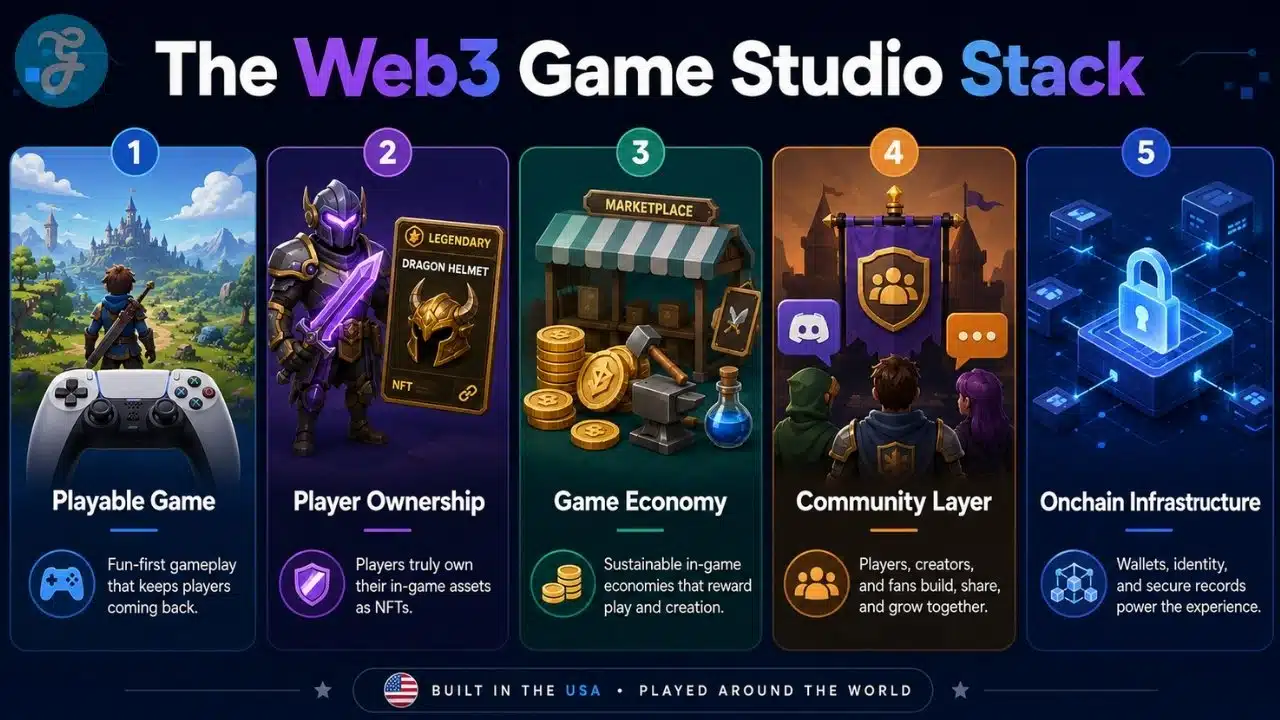
The USA also has a strong advantage because many Web3 gaming startups were founded by veterans from traditional gaming. That matters because the sector has moved away from pure play-to-earn hype and toward fun-first games, sustainable economies, player ownership, creator ecosystems, and infrastructure that can support real gameplay. DappRadar and ChainPlay’s 2025 coverage both show that blockchain gaming faced funding pressure and project shutdowns, which makes execution quality more important than hype.
What’s Special About Them?
The best U.S. companies in this niche usually share four traits:
- They bring mainstream game-development experience into Web3.
- They focus on ownership, digital assets, marketplaces, or on-chain economies.
- They are trying to make the games fun first, not just token-driven.
- They are backed by specialist gaming, crypto, or venture investors.
The uncomfortable truth is that the Blockchain & NFT Games market has already punished weak projects. The companies still worth watching are the ones building real games, real communities, and sustainable economies.
How To Choose The Right Blockchain & NFT Games Startup By Yourself?
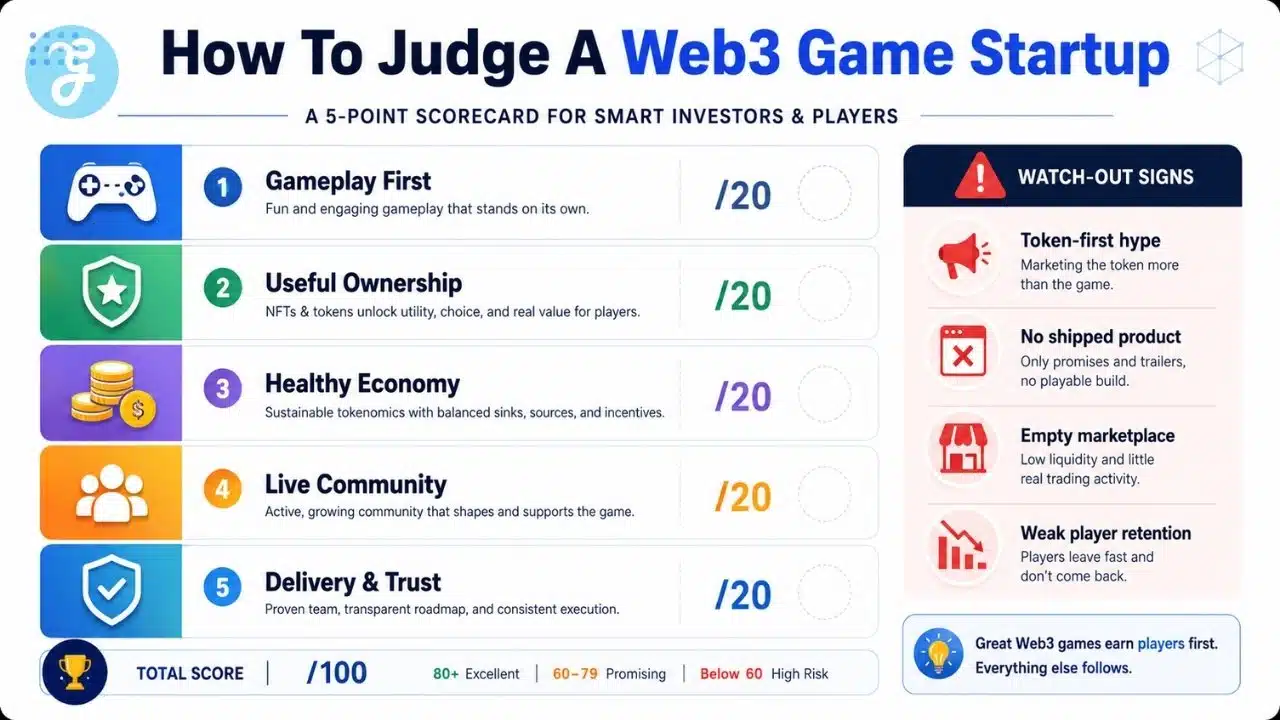
Choosing a company in this space requires more caution than choosing a normal game studio. Blockchain gaming has had hype cycles, failed token economies, abandoned games, and projects that looked more like financial experiments than entertainment.
The Selection Framework:
- Check The Game First: If the game is not fun without token rewards, the economy probably will not save it.
- Check Ownership Design: NFTs should support gameplay, identity, trading, or community, not just exist as expensive cosmetics.
- Check Live Traction: Look for active players, shipped builds, community retention, and marketplace activity.
- Check Sustainability: Strong tokenomics, fair monetization, and long-term development plans matter more than launch hype.
The Final Checklist
Before investing in, partnering with, or covering a Blockchain & NFT Games company, ask these five questions.
- Is the company actually building a game or only selling Web3 services?
- Is the team based in the country claimed?
- Does the game have active users or only future promises?
- Are NFTs or tokens meaningful to gameplay?
- Is the business still active and transparent about its roadmap?
The Real Test Is Fun, Not Tokens
The USA leads this list because it has the strongest verified startup and SME cluster for Blockchain & NFT Games. But leadership does not mean the whole sector is healthy. Web3 gaming has already seen overhyped projects collapse, funding dry up, and players reject games that treated them like wallets with avatars.
That is why the future of Blockchain & NFT Games will not be decided by who uses the most crypto vocabulary. It will be decided by who makes games people actually want to play. NFT ownership, token rewards, marketplaces, on-chain economies, and creator tools can add value, but only if the core experience works.
The best U.S. startups in this space understand that lesson. They are not just building speculative assets. They are trying to build games where digital ownership feels useful, natural, and fun. That is the difference between a real Web3 game company and a token project wearing a game costume.
Frequently Asked Questions (FAQs) About Blockchain & NFT Games
Which Country Leads In Blockchain & NFT Games Startups?
The United States is the strongest country for this SME list because it has the deepest verified cluster of startups and SMEs building Web3 games, NFT game economies, on-chain games, and blockchain gaming infrastructure.
Are Blockchain & NFT Games Still Growing?
Yes, but the sector is more selective now. Reports from 2025 show funding pressure, project shutdowns, and weaker speculative hype, but the strongest teams are shifting toward fun-first gameplay, sustainable economies, and real user retention.
What Makes A Blockchain Game Different From A Normal Game?
A blockchain game uses Web3 technology such as NFTs, tokens, on-chain assets, or decentralized ownership systems. The best versions make ownership useful inside the game, not just collectible for speculation.
Are NFT Games The Same As Play-To-Earn Games?
Not always. Some NFT games use play-to-earn mechanics, but many newer projects are moving toward play-and-own or open-economy models where NFTs support identity, assets, trading, crafting, or community participation.
What Should Investors Or Publishers Check First?
They should check whether the game is fun, live, and retaining players. Token design matters, but gameplay, team quality, community trust, and delivery history matter more.