

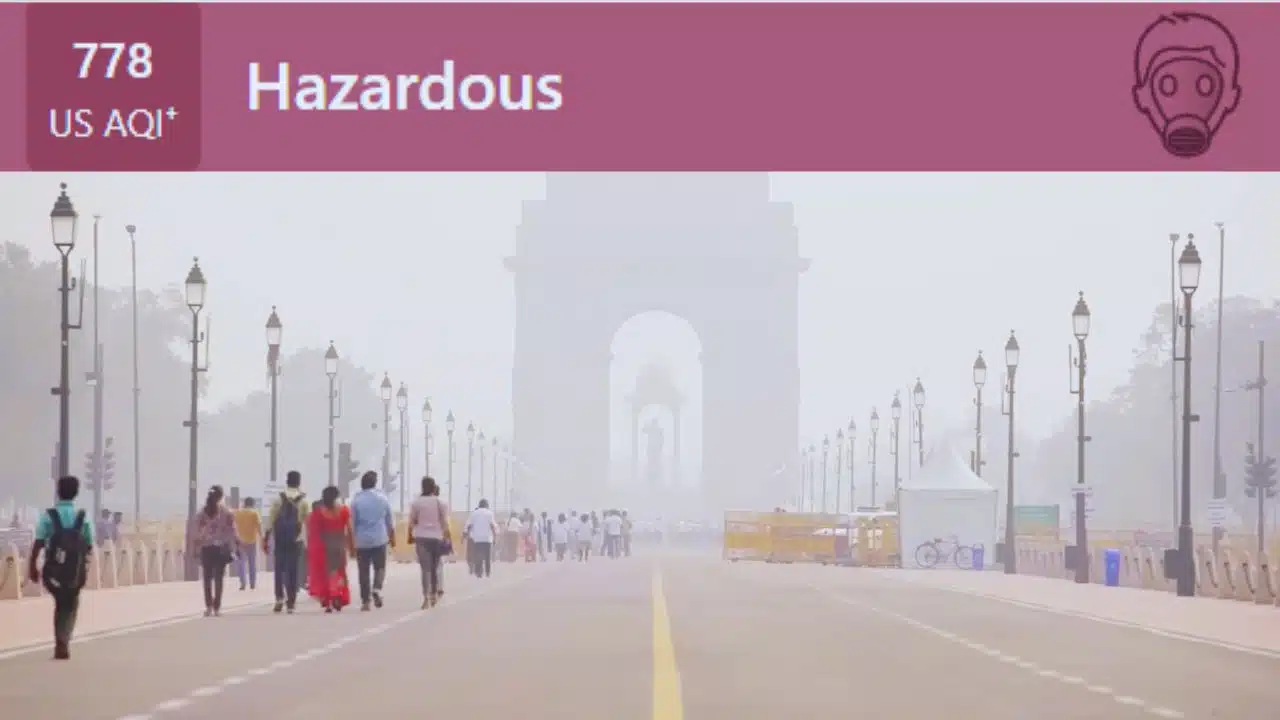
Delhi woke up on Tuesday under a thick blanket of smog as the city’s air quality reached alarming levels for the first time this year. According to the Central Pollution Control Board (CPCB), the 24-hour average Air Quality Index (AQI) stood at 428, placing it in the “severe” category — the most dangerous level on the national scale.
This marks the first “severe” air quality day of 2025, with pollution levels crossing the threshold that endangers even healthy individuals. The situation worsened overnight as stagnant air, temperature inversion, and local emissions allowed pollutants to accumulate close to the ground. By early morning, residents reported a dense haze covering most parts of the capital, reducing visibility and producing a noticeable burning odor in the air.
For several consecutive days prior, Delhi’s air had remained in the “very poor” range, with readings between 320 and 380. On Tuesday, however, fine particulate matter (PM2.5) and nitrogen oxides surged dramatically, pushing the index into the “severe” zone. The CPCB’s city-wide monitoring network recorded AQI values above 400 at nearly all stations. Some of the worst readings were seen in industrial and high-traffic zones such as Bawana, Anand Vihar, and RK Puram.
The “severe” category, defined for AQI values between 401 and 500, signifies extremely unhealthy air conditions. At this level, pollution begins to affect even people without prior health problems. Those with asthma, chronic bronchitis, or heart disease face particularly high risks, as prolonged exposure can cause breathing difficulties, throat irritation, fatigue, and an overall decline in lung capacity. Doctors have advised residents to minimize outdoor movement, especially during the morning and evening hours when pollution levels peak.
Meteorologists attributed the sudden deterioration to a combination of calm winds, low temperatures, and increasing moisture in the lower atmosphere. These conditions trap pollutants, preventing them from dispersing. In addition, the rise in vehicular movement, ongoing construction activities, and regional smoke from crop residue burning in northern states such as Punjab and Haryana have compounded the problem.
This episode recalls similar conditions from December 2024, when Delhi last recorded “severe” air levels. Experts note that the seasonal cycle of worsening air quality typically begins after Diwali and intensifies through early winter, as meteorological factors converge with regional emissions.
In response to the alarming figures, authorities activated the Graded Response Action Plan (GRAP) Stage III in the National Capital Region. This phase includes restrictions on non-essential construction and demolition, bans on older petrol and diesel vehicles, and increased road-dust suppression drives. Municipal bodies have been instructed to intensify street-cleaning operations and monitor industrial emissions. Schools in several districts were also advised to switch to online or hybrid classes for younger students to limit exposure.
Health agencies urged citizens to wear N95-grade masks when outdoors, avoid morning walks or outdoor exercise, and use air purifiers indoors where possible. Residents were also encouraged to track daily AQI updates through verified government apps and follow real-time advisories. Hospitals reported a noticeable uptick in patients complaining of coughing, wheezing, and eye irritation as pollution spiked.
Despite the strict measures, environmental experts warn that improvement may be slow unless the weather changes significantly. Forecasts suggest that light winds and a temperature drop may keep pollutants trapped for several more days. Long-term solutions, they emphasize, must involve tighter control on industrial emissions, cleaner fuel transitions, better waste management, and regional cooperation to curb stubble-burning across northern India.
A Wake-Up Call for Delhi’s Winter Pollution Battle
The city’s latest “severe” day underscores how deeply entrenched its winter air-pollution crisis has become. Over the past decade, Delhi’s residents have repeatedly faced hazardous conditions during the cooler months, despite ongoing policy interventions and awareness campaigns. Experts describe the issue as a mix of meteorology, infrastructure challenges, and behavioral inertia — an annual reminder that urban growth and environmental neglect cannot coexist sustainably.
As the AQI touched 428, the skyline disappeared behind a veil of gray, vehicles moved slowly with headlights on through the haze, and outdoor workers resorted to face covers for basic protection. Doctors, environmentalists, and civic groups have renewed their calls for aggressive emission-cutting measures, saying the city’s health and economic productivity are at stake.
While emergency curbs provide short-term relief, sustained improvement will depend on systemic efforts — from strengthening public transport and promoting electric vehicles to ensuring strict compliance with emission norms and waste-burning bans. For millions of Delhiites, the day’s grim milestone is not merely a statistic but a reminder of the urgent need for cleaner energy, regional cooperation, and consistent enforcement.
Until favorable weather returns and pollutants disperse, Delhi remains under environmental stress. For now, residents brace themselves for several more days of “very poor” to “severe” air, hoping that both nature and policy action can soon clear the haze that has once again enveloped India’s capital.
The Information is Collected from NDTV and India Today.





















