

Most people only pay attention to breathing after the body sends a warning. The chest tightens before a difficult meeting. The breath turns shallow while replying to messages. The shoulders creep upward during a tense conversation. At night, the body feels tired, but the mind keeps running. The breath is not always the main problem. Often, it is the first signal that stress has already entered the body.
That is where breathwork can help.
Breathwork means using intentional breathing patterns to influence how the body and mind respond. The practice may involve slowing the breath, extending the exhale, breathing through the nose, counting each breath, or following a simple pattern from yoga traditions such as pranayama.
This guide keeps breathwork practices explained in a practical way. It covers beginner-safe breathing exercises, simple pranayama beginner options, breath techniques wellness routines, common mistakes, and situations where breathing exercises need to be paired with deeper support.
Breathwork has limits. It can support stress regulation, focus, sleep preparation, and body awareness, but it should not replace therapy, medical care, medication, rest, movement, nutrition, or necessary changes in daily life. The useful part is the pause. A short breathing practice can give someone enough space to slow a reaction, soften tension, or get through the next task with a little more control.
What Breathwork Actually Does?
Breathwork starts with a simple idea: the breath can be observed, guided, and adjusted. That adjustment may be small, such as making the exhale longer, or more structured, such as counting the inhale, holding briefly, and exhaling on a set rhythm. For beginners, the best place to start is gentle breathing. Fast breathing, long breath holds, and intense emotional release sessions are not necessary for everyday wellness. Those methods may have a place in guided settings, but they can make new learners dizzy, anxious, or uncomfortable when practiced too early.
Diaphragmatic breathing teaches the body to breathe with less upper-chest tension. Extended exhale breathing helps the body slow down. Box breathing gives the mind a clear pattern to follow. Alternate nostril breathing introduces a gentle pranayama beginner practice without jumping into forceful techniques. Breathwork also makes hidden habits visible. Many people hold their breath while typing, breathe through the mouth when stressed, or sigh repeatedly when pressure builds. These patterns are easy to miss until someone pauses long enough to notice them.
Stress rarely stays only in the head. It can show up as a tight chest, shallow breathing, a clenched jaw, or a stomach that will not settle. Breathwork gives people one physical place to start when the mind feels hard to manage.
Here is a simple way to separate the main terms.
| Term | What It Means | Beginner Example |
| Breath awareness | Watching the breath without changing it | Noticing whether the breath feels shallow, tense, or relaxed |
| Breathing exercises | Specific breathing patterns used for a goal | Inhale for 4 counts, exhale for 6 counts |
| Breathwork | A broad term for intentional breathing practices | Calm breathing, guided breathing, or pranayama |
| Pranayama | Yogic breath regulation practices | Alternate nostril breathing |
| Breath retention | Holding the breath after inhale or exhale | Better used carefully, not forced |
| Paced breathing | Breathing in a steady count | 4-6 breathing or box breathing |
| Breath techniques wellness routine | Breathing used as part of daily self-care | Short breathing reset before sleep or work |
A beginner does not need a complicated system. One steady breathing pattern, used at the right time, can be enough to make the next few minutes easier.
Why Stress Changes Your Breathing Before You Notice It

Stress often reaches the breath before the mind names the problem. A person may not think, “I am stressed,” but the body already knows. The chest tightens. The jaw locks. The breath becomes short. The shoulders lift. The stomach may feel tense.
This happens because the nervous system prepares the body for action. Faster or shallower breathing can help during real danger or physical effort. The problem is that many modern stressors do not need a physical fight-or-flight response. Deadlines, notifications, family pressure, unpaid bills, poor sleep, and mental overload can keep the body braced even when no immediate danger is present. When this pattern repeats all day, breathing can stay slightly tense for hours. Not enough to feel like an emergency, but enough to leave the body tired, unsettled, and harder to calm later.
Slower breathing gives the body a different signal. A longer exhale, relaxed belly breath, or steady nasal rhythm can reduce the physical charge around stress. The situation may remain, but the body does not have to enter it at full intensity.
Before replying to a tense message or walking into a meeting, even six slower breaths can lower the pressure a little. The problem may still be there, but the body is not entering it as aggressively.
| Stress Breathing Pattern | What It May Feel Like | Better Breathing Option |
| Shallow chest breathing | Tight chest, nervous energy | Diaphragmatic breathing |
| Breath holding | Pressure, tension, fatigue | Breath awareness and slow exhale |
| Fast breathing | Restlessness, anxiety, racing thoughts | Extended exhale breathing |
| Mouth breathing under stress | Dry mouth, unsettled feeling | Gentle nasal breathing when possible |
| Repeated sighing | Built-up pressure | Slow, steady exhales |
| Nighttime overarousal | Tired body, active mind | Body scan breathing |
| Screen-related tension | Neck, eye, and chest tightness | Stand, look away, breathe slowly |
The earlier someone notices the breathing pattern, the easier it is to adjust. Waiting until the body feels overwhelmed makes every technique harder.
Start With Safe, Gentle Breathing
New breathwork should be simple enough that the body does not resist it. Start while sitting or lying down. Keep the session short. Avoid aggressive inhales, long breath holds, and any practice that makes the body feel trapped. Two to five minutes is enough at the beginning. That gives the body time to learn the pattern without turning the session into a test.
A new technique should not create air hunger, chest pressure, strong dizziness, panic, numbness, or tingling. Mild unfamiliarity is normal. Strong discomfort means the method, pace, or timing is wrong. If a breathing method makes someone dizzy, tense, or panicked, it is the wrong method for that moment.
Extra caution is needed for anyone with serious breathing problems, heart conditions, uncontrolled high blood pressure, fainting episodes, pregnancy-related concerns, panic disorder, trauma symptoms, or neurological conditions. Advanced breathwork is not the place to experiment casually.
| Safe Beginner Rule | What It Means in Practice |
| Start short | Practice for 2 to 5 minutes |
| Sit or lie down first | Reduce risk if dizziness appears |
| Keep the breath smooth | Avoid pulling in air aggressively |
| Avoid long holds | Breath retention is not needed early |
| Stop if dizzy | Return to normal breathing immediately |
| Skip intense methods alone | Fast breathing and long holds need guidance |
| Adjust for health history | Use professional guidance when needed |
Gentle breathing may look too basic, but it is usually where beginners make the most progress.
Diaphragmatic Breathing Is the Best First Exercise for Most Beginners
Diaphragmatic breathing is often called belly breathing, although the lower ribs are involved too. The diaphragm is a major breathing muscle below the lungs. When it moves well, breathing often feels slower, easier, and less trapped in the upper chest. This is a strong first technique for people who sit for long hours, carry tension in the shoulders, or breathe shallowly during stress. It gives the body a reference point for easier breathing before adding counts, holds, or more structured methods.
Start lying down if sitting feels awkward. Bend the knees slightly or place a pillow under them. Put one hand on the chest and one hand on the belly. Breathe in gently through the nose if that feels comfortable. Let the belly and lower ribs expand slightly. Exhale slowly and allow the belly to soften.
The common mistake is pushing the belly out too much. That turns a calming exercise into effort. The movement should be natural, not exaggerated. Once lying practice feels comfortable, try it while sitting. Later, use it before a meeting, after work, before sleep, or during a short reset after exercise. It may feel plain at first, but that is helpful for beginners. The practice teaches the body what easier breathing feels like before adding more complicated patterns.
| Step | How to Practice |
| Position | Lie down or sit with support |
| Hand placement | One hand on chest, one on belly |
| Inhale | Breathe gently through the nose if possible |
| Movement | Let the belly and lower ribs expand slightly |
| Exhale | Let the breath leave slowly without force |
| Duration | Start with 2 to 5 minutes |
| Progression | Move from lying down to sitting, then daily use |
If basic breathing feels strained, advanced breathing will usually feel worse. Learn the foundation first.
Extended Exhale Breathing Helps When Stress Feels Too Loud

Extended exhale breathing is simple: make the exhale longer than the inhale. A beginner can inhale for three counts and exhale for five. Another useful rhythm is inhale for four and exhale for six. Longer patterns are optional, not required.
This method suits moments when stress feels loud in the body. Irritation after a difficult call. Nervous energy before a meeting. A wired feeling before bed. A sense that the body is moving faster than the situation requires. Stress often shortens the exhale. The body inhales quickly and does not fully release. A longer exhale encourages a slower rhythm without requiring breath holds.
That makes it easier than box breathing for many people. If holding the breath makes someone anxious, extended exhale breathing is usually the better first choice. The exhale should feel smooth. Do not squeeze the lungs empty. Do not chase a perfect count. The method is there to soften the pattern, not create another rule.
Its main advantage is convenience. A person can use it at a desk, before sleep, after a difficult call, or while waiting for a meeting to start.
| Pattern | Best Use | Beginner Note |
| Inhale 3, exhale 5 | New beginners | Easy and low pressure |
| Inhale 4, exhale 6 | Daily stress reset | Good for most calm breathing |
| Inhale 4, exhale 8 | Evening relaxation | Use only if comfortable |
| No breath holds | Anxiety-sensitive practice | Less restrictive than box breathing |
| 2 to 5 minutes | Short routine | Enough for a reset |
| Nasal inhale | Gentle rhythm | Use mouth exhale if needed |
| Smooth exhale | Safety | Never force air out aggressively |
Box Breathing Gives the Mind Something Clear to Follow
Box breathing uses four equal parts: inhale, hold, exhale, hold. A common rhythm is 4-4-4-4. You inhale for four counts, hold for four, exhale for four, and hold again for four. This technique works well when scattered thoughts need structure. The counting gives attention a clear job. That can help before a presentation, interview, study session, or difficult conversation.
People who dislike vague relaxation advice often prefer box breathing because the pattern is easy to follow. There is no need to guess what “relax” means. You simply follow the count for a few rounds. The hold is the part to watch. Some people feel fine with it. Others feel pressure or air hunger. If that happens, shorten the hold or skip it. A 3-3-3-3 rhythm may be easier than 4-4-4-4. Extended exhale breathing may work better for anyone who dislikes pausing the breath.
Three to five rounds are usually enough for a short reset.
| Part of Box Breathing | Common Count | Beginner Adjustment |
| Inhale | 4 | Keep it smooth, not huge |
| Hold after inhale | 4 | Reduce to 2 or skip if uncomfortable |
| Exhale | 4 | Let the breath leave steadily |
| Hold after exhale | 4 | Shorten if it creates pressure |
| Rounds | 3 to 5 | Stop before strain appears |
| Best use | Focus and pressure control | Good before tasks |
| Easier version | 3-3-3-3 | Better for new beginners |
4-7-8 Breathing Can Help at Night, but Keep It Flexible
The 4-7-8 method is popular because the pattern is easy to remember. Inhale for four counts, hold for seven, and exhale for eight. Many people use it before sleep or during stress. The longer exhale can be calming, and the rhythm gives the mind something steady to follow. For some beginners, though, the full pattern is too demanding. A seven-count hold may feel uncomfortable if the breath is already tense.
Modify it without guilt. A gentler version could be 3-4-6 or 4-4-6. The slow rhythm matters more than strict numbers. Use this method while sitting or lying down in a quiet setting. Do not practice it while driving, walking in a busy area, or doing anything that requires quick attention.
A few rounds are enough. If dizziness, pressure, or air hunger appears, stop and return to normal breathing.
| Version | Pattern | Who May Prefer It |
| Traditional | 4-7-8 | People comfortable with breath holds |
| Gentler | 4-4-6 | Beginners who need less pressure |
| Very gentle | 3-3-5 | People who feel air hunger easily |
| Bedtime use | Few rounds | Useful before sleep if comfortable |
| Best setting | Quiet and safe | Sitting or lying down |
| Avoid | Forcing the count | Stop if dizzy or tense |
| Main purpose | Downshifting | Better for calm than energy |
Alternate Nostril Breathing Is a Gentle Pranayama Beginner Option
Alternate nostril breathing is one of the more approachable pranayama beginner practices. In yoga traditions, pranayama refers to breath regulation. Many people use this method before meditation, quiet work, or sleep because it gives the mind a clear sequence. The practice involves breathing through one nostril at a time while using the fingers to switch sides. A simple pattern is: inhale through the left nostril, exhale through the right, inhale through the right, exhale through the left.
The coordination matters. Breath, nostril, hand position, and attention all move together. That makes it harder for the mind to drift too far. Keep the breath soft. Do not pull air sharply through the nose. Skip this practice if the nose is blocked, irritated, or uncomfortable. If the hand position feels distracting, use paced breathing instead.
One to three minutes is enough at first.
| Step | Action |
| Sit comfortably | Keep the spine upright but relaxed |
| Close right nostril | Inhale gently through the left |
| Switch sides | Close the left nostril |
| Exhale right | Let the breath leave smoothly |
| Inhale right | Keep the breath quiet |
| Switch again | Close the right nostril |
| Exhale left | Complete one round |
| Practice time | Start with 1 to 3 minutes |
If this method feels awkward, that is fine. It is one option, not a requirement.
Pranayama Beginner Practices Need Patience
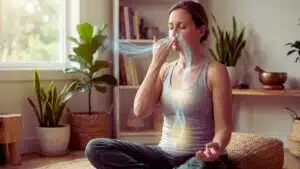
Pranayama covers many yogic breathing practices. The range is wide: slow nasal breathing, alternate nostril breathing, throat-based breathing, breath retention, and stronger techniques that use faster or more forceful breathing. Beginners should not place all pranayama methods in the same category. Slow nasal breathing and alternate nostril breathing are reasonable starting points for many people. Stronger methods such as kapalabhati, bhastrika, or long breath retention should wait until someone has proper instruction and knows how their body responds.
Fast or forceful breathing can cause dizziness, tingling, emotional discomfort, or anxiety in some people. Long holds can feel stressful if the person is not prepared. Pranayama also comes from a wider yoga tradition. Treating it only as a quick productivity trick misses the context. A respectful approach starts slowly, learns the basics, and pays attention to the body.
People with heart conditions, respiratory illness, uncontrolled high blood pressure, pregnancy-related concerns, fainting episodes, panic symptoms, or neurological conditions should be careful with advanced pranayama.
| Pranayama Practice | Beginner Suitability | Caution |
| Slow nasal breathing | Good | Keep the breath soft |
| Alternate nostril breathing | Good | Avoid if congested or irritated |
| Simple belly breathing | Good | Do not exaggerate belly movement |
| Ujjayi-style breathing | Moderate | Keep the throat relaxed |
| Kapalabhati | Advanced | Avoid without proper instruction |
| Bhastrika | Advanced | Can cause dizziness |
| Long retention | Advanced | Not ideal for beginners |
Gentle practice is enough for daily wellness. The stronger methods can wait.
Breathing Exercises for Work Stress and Screen Overload
Work stress often builds through small repeated pressures. Messages, meetings, deadlines, tabs, calls, notifications, and constant switching between tasks can keep the body slightly activated all day. Breathing exercises cannot reduce the workload by themselves. They can, however, stop the body from staying braced for hours. A workday reset can be very short. Sit back. Relax the jaw. Lower the shoulders. Inhale naturally. Exhale slowly. Repeat for six to eight breaths. No app, music, or perfect setup is needed.
Before sending a tense reply, take three slow exhales. Before a meeting, use one minute of box breathing or extended exhale breathing. After a long screen session, stand up, look away from the monitor, and breathe slowly. Screen overload deserves special attention. Many people breathe shallowly while scrolling, writing, editing, or reading stressful news. The eyes stay locked, the neck stiffens, and the breath becomes small. A breathing pause brings attention back to the body.
The best workday breathwork is discreet. If it needs silence, headphones, and twenty minutes, most people will not use it when stress actually appears.
| Work Situation | Breathing Option | Time Needed |
| Before a meeting | Box breathing or 4-6 breathing | 1 to 2 minutes |
| After a stressful email | Extended exhale breathing | 60 seconds |
| Screen fatigue | Stand and breathe slowly | 2 minutes |
| Before replying emotionally | Three slow exhales | 30 seconds |
| Afternoon slump | Nasal breathing with posture reset | 2 to 3 minutes |
| After scrolling | Slow breathing while looking away | 1 to 2 minutes |
| Between tasks | One mindful breathing minute | 1 minute |
Breathwork for Sleep Should Feel Almost Boring
Breathwork before sleep should calm the body, not stimulate it. Strong breathing, fast breathing, or intense breath holds are poor bedtime choices for most people. Better options include diaphragmatic breathing, extended exhale breathing, body scan breathing, and gentle 4-6 breathing. A modified 4-7-8 pattern may also help if it feels comfortable.
The breath should become softer and slower. Bedtime is not the place to test how long you can hold your breath. A simple routine can take five minutes. Lie down. Place one hand on the belly. Let breathing settle naturally for one minute. Then inhale for four counts and exhale for six counts. After several rounds, move attention slowly through the body from feet to face.
This does not guarantee sleep. Breathwork is not a sleeping pill. It creates better conditions for rest by lowering physical and mental arousal. If counting makes the mind too active, stop counting. Feel the mattress, blanket, pillow, and weight of the body. Let the breath return to a natural rhythm.
| Sleep Issue | Better Breathwork Choice |
| Racing thoughts | Extended exhale breathing |
| Physical tension | Body scan breathing |
| Restless body | Diaphragmatic breathing |
| Counting creates pressure | Natural breath awareness |
| Night waking | Gentle 4-6 breathing |
| Bedtime anxiety | Grounding before breathwork |
| Screen overstimulation | Slow breathing after phone cutoff |
Breathwork Around Exercise Should Match the Moment
Breathwork can support movement, but timing matters. Before exercise, breathing should prepare the body. After exercise, it should help the body settle. Before light movement, yoga, walking, or mobility work, slow nasal breathing can help focus attention. Before intense exercise, overly calming breathing may make the body feel less ready. A few steady breaths are enough.
During exercise, breathing should match the activity. Strength training often requires controlled breathing and bracing. Cardio needs rhythm. Yoga often connects breath with movement. Beginners should avoid unnecessary breath holding, especially if they have not learned proper technique. After exercise, breathwork can help the body downshift. Slow walking, nasal breathing, and longer exhales can support recovery after the heart rate has been elevated.
Do not use breathing techniques to ignore warning signs. Chest pain, faintness, severe breathlessness, wheezing, or unusual discomfort deserves proper attention. A simple post-workout practice is easy: walk slowly for one minute, then breathe in gently through the nose and exhale slowly for two to five minutes.
| Exercise Moment | Breathwork Choice | Purpose |
| Before light movement | Slow nasal breathing | Settle attention |
| Before intense training | Natural steady breathing | Prepare without over-relaxing |
| During warm-up | Smooth rhythmic breathing | Match breath with movement |
| During strength work | Controlled breathing | Avoid unnecessary breath holding |
| After cardio | Longer exhales | Help the body downshift |
| After strength training | Diaphragmatic breathing | Release bracing tension |
| Warning symptoms | Stop and seek help | Do not mask serious signs |
Mistakes That Make Breathwork Less Useful
The biggest mistake is forcing the breath. Beginners often inhale too deeply, exhale too hard, or hold too long because they think stronger effort means better results. It usually creates tension. Another mistake is choosing advanced methods too early. Intense breathing can feel powerful, but powerful does not always mean helpful. Fast or forceful techniques can cause dizziness, tingling, anxiety, or emotional discomfort.
Some people also over-monitor the breath. They become so focused on breathing correctly that they feel more anxious. If breath focus creates stress, use a different anchor, such as sounds, walking, or body contact. Breathwork can also become avoidance. If the real issue is poor sleep, overwork, a harmful relationship, untreated anxiety, or constant pressure, breathing exercises may help for a moment, but they should not replace deeper action.
Trying too many techniques at once creates another problem. A person may save ten methods and practice none consistently. Choose one calming method and one focus method. Stay with them for two weeks before adding more. If the practice makes someone more tense, shorten it, soften it, or choose another anchor. Breathing should not become another thing to get right.
| Mistake | Why It Causes Problems | Better Choice |
| Breathing too deeply | Can create dizziness or strain | Keep the breath smooth |
| Holding too long | May trigger discomfort | Shorten or skip holds |
| Starting with intense methods | Can overwhelm beginners | Begin with gentle practices |
| Practicing only during panic | Makes the skill harder to access | Practice during calm moments |
| Chasing perfect technique | Creates pressure | Use a simple repeatable pattern |
| Ignoring distress | Can make symptoms worse | Stop and adjust |
| Using breathwork to avoid action | Delays needed support | Pair breathwork with real changes |
A 7-Day Beginner Breathwork Plan
A short plan helps beginners try breathwork without turning it into homework. The aim is to find one or two techniques that feel safe and easy to repeat. Start with diaphragmatic breathing because it teaches the foundation. Then try extended exhale breathing for stress. Use box breathing only if breath holds feel comfortable. Add walking breath awareness if sitting feels restless. Try alternate nostril breathing as a gentle pranayama beginner option. Use body scan breathing before sleep. On the final day, choose the method that felt easiest to repeat.
Keep each session short. Two to five minutes is enough.
After seven days, ask practical questions. Which method helped during stress? Which felt annoying? Which fit the day without much effort? Which made breathing feel worse? Those answers matter more than completing the plan perfectly. If any method causes discomfort, replace it with simple belly breathing or slow walking.
| Day | Practice | Time | Purpose |
| Day 1 | Diaphragmatic breathing | 3 minutes | Learn relaxed breathing |
| Day 2 | Extended exhale breathing | 3 to 5 minutes | Calm the body |
| Day 3 | Box breathing | 2 to 4 minutes | Support focus |
| Day 4 | Walking breath awareness | 5 minutes | Help restlessness |
| Day 5 | Alternate nostril breathing | 2 to 3 minutes | Try gentle pranayama |
| Day 6 | Body scan breathing | 5 minutes | Prepare for sleep |
| Day 7 | Choose your best method | 5 minutes | Build repeatability |
If the plan starts feeling like a pressure system, reduce the time and keep only the easiest practice.
How Breathwork Fits Into a Mind-Body Wellness Routine?
Breathwork works best when it supports other habits instead of standing alone. It pairs naturally with meditation because both train attention. It supports stress management because it gives the body a quick reset. It can also help yoga, sleep hygiene, journaling, mindful eating, digital detox habits, and fitness recovery.
For example, someone trying to reduce late-night scrolling can use two minutes of slow breathing after putting the phone away. Someone building a meditation habit can begin with three rounds of extended exhale breathing before sitting. Someone who eats quickly under stress can take three slow breaths before meals.
These small pauses interrupt automatic behavior. Breathwork creates a moment between urge and action. That moment may help someone choose sleep instead of another video, a slower meal instead of rushed eating, or a calmer reply instead of a reactive message. Breathwork also makes mind-body health feel less abstract. Stress becomes something you can feel in the jaw, chest, belly, shoulders, and breathing pattern. Once stress becomes physical and observable, it becomes easier to work with.
This is why breathwork belongs inside a broader mental wellness and mind-body health guide, not as a separate trick. It becomes more useful when combined with sleep, movement, food, emotional support, digital boundaries, and practical stress management.
Still, breathwork is only one part of the routine. People also need rest, movement, nutrition, social connection, emotional support, medical care when needed, and practical life changes.
| Wellness Area | How Breathwork Helps |
| Meditation | Settles attention before practice |
| Stress management | Reduces immediate physical tension |
| Sleep hygiene | Helps the body slow down at night |
| Yoga | Connects breath with movement |
| Journaling | Creates calm before reflection |
| Mindful eating | Adds a pause before meals |
| Digital detox | Breaks automatic screen use |
| Fitness recovery | Helps shift from effort to rest |
One short breathing pause before a repeated habit can slowly change how that habit feels.
When Breathwork Should Not Be the Only Tool?
Breathwork can help regulate stress, but some situations need more than breathing. Wellness advice often makes self-regulation sound like the answer to everything. That is not fair to the reader. If someone has frequent panic attacks, severe anxiety, depression, trauma symptoms, self-harm thoughts, or emotional distress that disrupts daily life, professional support matters. Breathing exercises may be part of the picture, but they are not enough for every situation.
If someone has asthma, COPD, heart disease, uncontrolled high blood pressure, fainting episodes, pregnancy-related concerns, or serious breathing symptoms, advanced breathwork needs caution. Strong breathing practices are different from slow, gentle breathing. Breathwork also cannot fix an unsafe workload, poor sleep schedule, financial pressure, unhealthy relationship, or environment that keeps the body under constant stress. It may help someone cope for a few minutes. Coping should not become the whole plan.
A practical approach is to use breathwork for immediate regulation while also addressing the deeper issue. Calm the body first. Then make the call, change the routine, ask for help, set the boundary, or seek care. Breathwork is more useful when readers understand what it can and cannot do. It can help calm the body in the moment. It cannot fix a harmful routine, untreated symptoms, or an unsafe situation by itself.
| Situation | Breathwork Role | What Else May Be Needed |
| Everyday stress | Short reset tool | Better planning and boundaries |
| Sleep trouble | Bedtime support | Sleep hygiene and medical advice if persistent |
| Panic symptoms | Gentle support for some people | Professional care if frequent or severe |
| Trauma history | Use caution | Trauma-informed support |
| Breathing illness | Gentle practice only if safe | Medical guidance |
| Chronic overwork | Temporary regulation | Workload changes |
| Emotional crisis | Not enough alone | Immediate support and care |
The Smallest Breath Practice Is Often the One That Works
Breathwork does not need to take over your routine. It only needs one place to begin. Choose one technique and one situation. Use extended exhale breathing before sleep. Use diaphragmatic breathing after work. Use box breathing before meetings. Use walking breath awareness when sitting feels impossible. Keep the practice short enough that you cannot easily avoid it. Two minutes is a realistic beginning. One minute is better than skipping entirely.
The phrase breathwork practices explained may sound broad, but the practical lesson is simple. Different breathing methods create different effects, and beginners should start with the safest, easiest, most repeatable ones. Do not chase the most intense technique. Do not force long breath holds. Do not treat dizziness as progress. Do not turn breathing into another thing to perfect.
Start with one calm practice today. Notice how your body responds. If it helps, repeat it tomorrow. If it does not help, adjust the method. That is how breathwork becomes useful. Not dramatic. Not complicated. Just available when the body needs a steadier signal.
Frequently Asked Questions About Breathwork Practices Explained
Beginners usually need practical answers, not long definitions. These questions cover the basics before someone adds breathing exercises to a daily routine.
What Is Breathwork in Simple Terms?
Breathwork is intentional breathing. You change the pace, depth, rhythm, or focus of the breath to help the body feel steadier. A simple example is inhaling for three counts and exhaling for five.
Are Breathwork and Breathing Exercises the Same Thing?
Breathing exercises are specific techniques. Breathwork is the wider category. Box breathing, diaphragmatic breathing, alternate nostril breathing, and guided breathing sessions all sit under breathwork.
What Is the Best Breathwork Practice for Beginners?
Start with diaphragmatic breathing or extended exhale breathing. Both are gentle and easy to repeat. If a person feels tense before sleep or after work, extended exhale breathing is often the easier first choice.
How Long Should a Beginner Practice Breathwork?
Two to five minutes is enough. Short sessions help the body learn without creating pressure. Increase the time only when the practice feels comfortable.
Can Breathwork Help With Anxiety?
Gentle breathwork may help during mild anxiety or everyday stress. Extended exhale breathing and grounding-based breathing are usually safer starting points than intense methods. Frequent panic attacks or severe anxiety need qualified support.