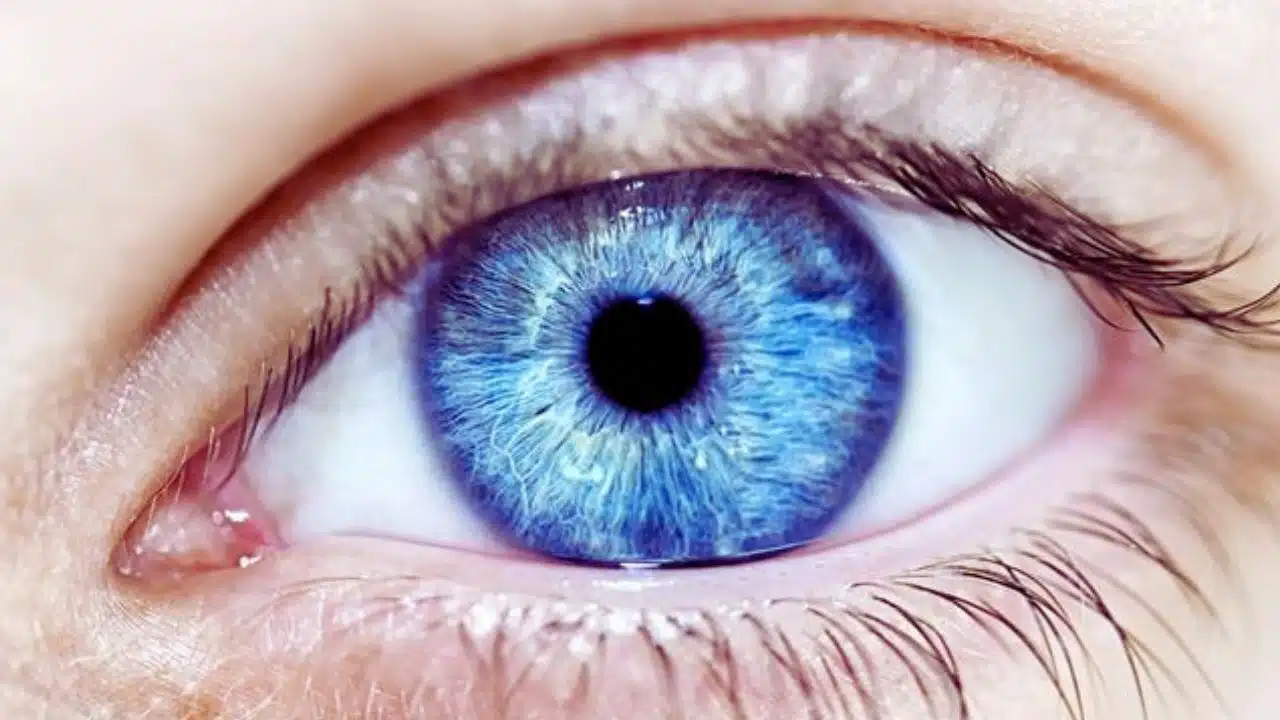
A team of researchers at the University of Copenhagen has made a groundbreaking discovery: all blue-eyed people may share a single common ancestor. This remarkable finding, based on a recent study, focuses on a genetic mutation affecting the OCA2 gene, shedding new light on the origins and genetic history of blue eyes.
The Role of the OCA2 Gene in Melanin Production
The OCA2 gene plays a critical role in the production of melanin, the pigment responsible for the color of our skin, hair, and eyes. Melanin is produced by specialized cells called melanocytes, which distribute this pigment throughout the body. The amount and type of melanin produced determine an individual’s skin, hair, and eye color.
The OCA2 gene is responsible for producing the P protein, which is essential for the proper functioning of melanocytes. Mutations in the OCA2 gene can disrupt the production or distribution of melanin, leading to variations in eye color. For instance, people with certain mutations in the OCA2 gene may have lighter skin, hair, and eyes, a condition known as oculocutaneous albinism. This condition is characterized by a significant reduction in melanin production, resulting in very fair skin, light-colored hair, and eyes that may appear blue, green, or even reddish.
The Genetic Mutation Behind Blue Eyes
The study conducted by the University of Copenhagen’s team identified a specific genetic mutation that acts like a “switch” near the OCA2 gene. This mutation does not directly alter the OCA2 gene itself but affects its regulatory elements, inhibiting melanin production specifically in the iris, the colored part of the eye. As a result, this reduction in melanin leads to blue eyes.
Professor Hans Eiberg, who led the study, explained the significance of this discovery: “From this, we can conclude that all blue-eyed individuals are linked to the same ancestor.” According to the research, this genetic mutation likely occurred between 6,000 to 10,000 years ago. Before this mutation, all humans had brown eyes, which is the most common eye color due to higher melanin levels.
Confirming the Findings
To confirm their hypothesis, the researchers conducted extensive analyses of mitochondrial DNA, which is inherited maternally and can provide valuable insights into human ancestry. They compared eye color data from a diverse range of populations across different countries, including Jordan, Denmark, and Turkey. By analyzing these genetic markers and their distribution, the team was able to trace the mutation’s lineage and establish a genetic link among blue-eyed individuals worldwide.
The consistency of their findings across various populations reinforced the validity of their conclusions. Professor Eiberg emphasized that this mutation does not confer any particular advantage or disadvantage in terms of survival or adaptation. “It simply shows that nature constantly shuffles the human genome, creating a genetic cocktail and trying out different changes,” he remarked. This random shuffling and the resulting genetic diversity are key drivers of human evolution and the wide array of physical traits observed in different populations.
Insights into Human Genetic Evolution
This research not only traces the origins of blue eyes but also underscores the dynamic nature of genetic evolution. It highlights the intricate processes that shape human diversity and the complex interplay of genetic factors that contribute to our unique physical characteristics. The study offers valuable insights into how single genetic mutations can have far-reaching effects on entire populations over time.
The discovery of a common ancestor for blue-eyed individuals provides a fascinating glimpse into the history of human migration and the spread of genetic traits. It suggests that as early humans migrated out of Africa and settled in various parts of the world, specific genetic mutations, such as the one affecting the OCA2 gene, emerged and persisted within certain populations. These mutations, although rare, became part of the genetic makeup of subsequent generations, contributing to the rich tapestry of human diversity we see today.
This study by the University of Copenhagen adds a new layer of understanding to our knowledge of genetics and human ancestry. It emphasizes the importance of genetic research in uncovering the origins of our physical traits and the evolutionary pathways that have shaped humanity. The findings also highlight the value of studying genetic variations across different populations to gain a more comprehensive understanding of human biology and evolution.
By exploring the genetic underpinnings of eye color and other traits, scientists can continue to unravel the complex mechanisms that drive human diversity and adaptation. This research not only enriches our understanding of human genetics but also opens up new avenues for exploring the interplay between genetics, environment, and evolution in shaping the characteristics that define us as individuals and as a species.