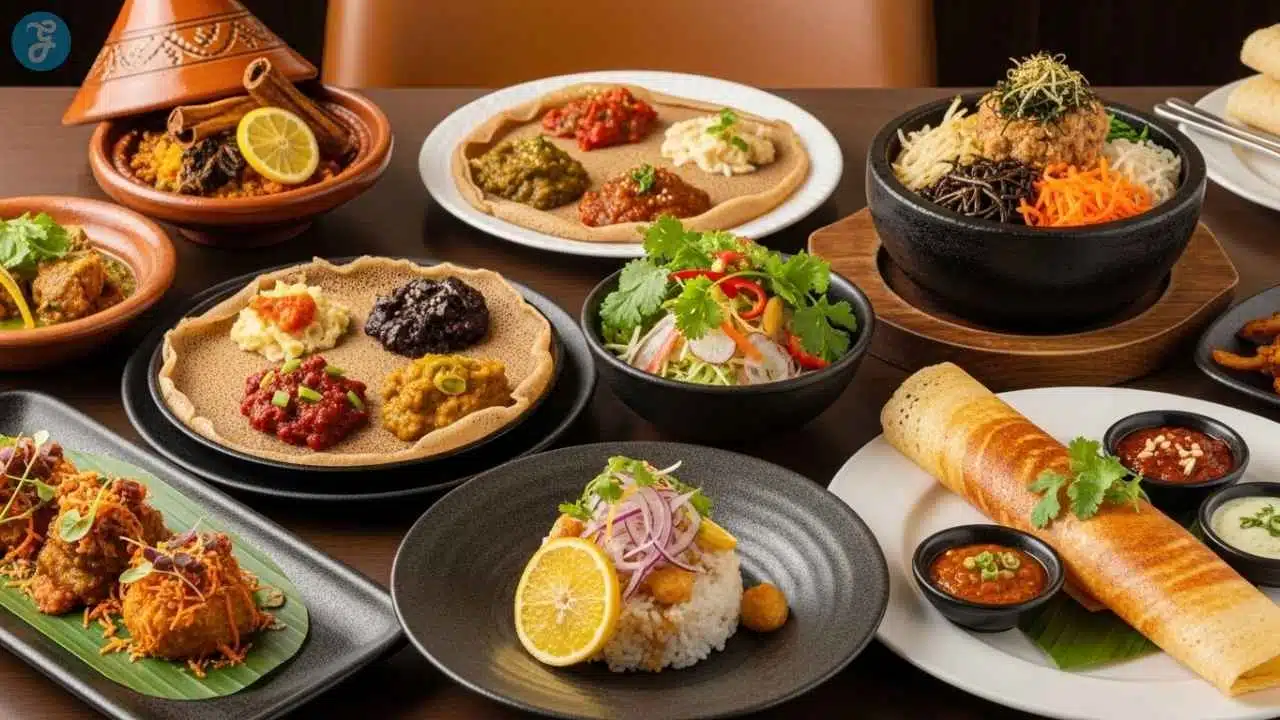
Do you ever feel like your dinners are stuck on repeat? We often eat the same meals week after week, and our taste buds crave something different. Most of us stick to familiar choices because stepping outside our comfort zone feels confusing. You have probably enjoyed Italian, Mexican, and Chinese food plenty of times. But you are missing out on the best global cuisines that you haven’t tried yet.
Over 195 countries exist on our planet, yet most people only taste foods from a handful of them. That means you are skipping thousands of global flavors and cooking traditions that could easily become your new favorites. I am going to walk you through the exact steps I use to find amazing international cuisine.
We will explore hidden gems from Asia, Europe, Africa, and the Americas. You will see exactly what makes these dishes special and how to easily cook them at home.
Why Explore Lesser-Known Global Cuisines?
Most food lovers stick to the exact same restaurants they know well. They miss out on incredible flavors hiding right in plain sight. Exploring lesser-known global cuisines opens doors to new taste adventures and cultural connections that typical dining never offers. The National Restaurant Association’s 2026 forecast found that diners are actively seeking “flavor escapism” and global comfort foods.
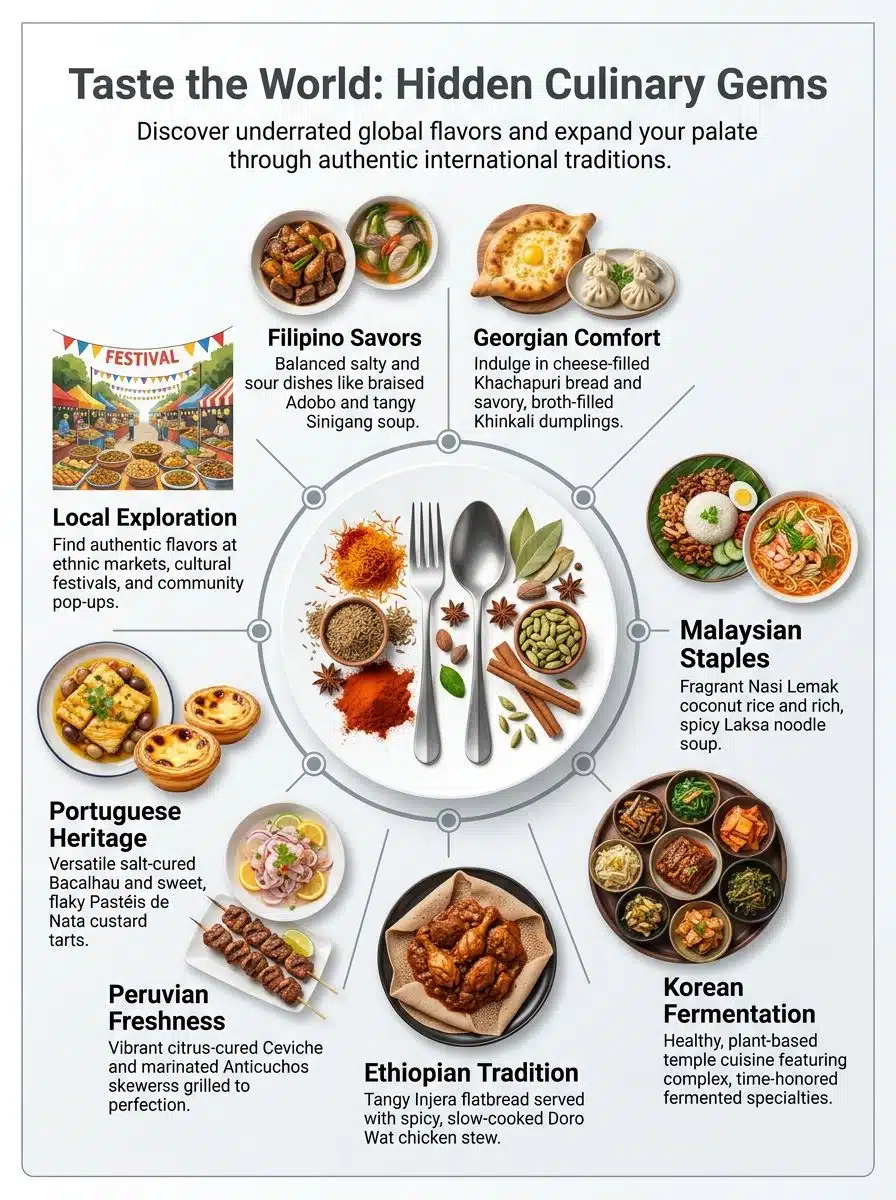
Food tells amazing stories about people, their lands, and their histories. When you taste dishes from different cultures, you learn how communities celebrate and thrive. Ethiopian injera becomes much more than flatbread. It represents thousands of years of beautiful tradition.
“Comfort and value are the twin pillars shaping America’s menus right now, and consumers are meeting that ask with creative takes on comfort classics.”
Culinary diversity teaches empathy in ways textbooks simply cannot match. Trying Burmese mohinga challenges your taste buds and greatly expands your perspective. These underrated foods deserve your attention because they showcase immense human creativity. Gourmet food becomes personal when you understand the history behind each recipe and cooking method.
- Connection: Sharing a meal builds instant rapport.
- Discovery: You learn about native ingredients and farming methods.
- Joy: Finding a new favorite dish brings genuine happiness.
Hidden Culinary Gems in Asia and Eurasia
Asia and Eurasia hold incredible food treasures that many people skip right over. From the Philippines to Georgia, you will find recipes that make your palate wake up.
Filipino Cuisine: Adobo and Sinigang
Filipino food brings bold flavors that stick with you long after your meal ends. Adobo stands as the national dish, featuring meat braised in vinegar, soy sauce, garlic, and bay leaves. Sinigang offers a completely different experience with its tangy, tamarind-based sour soup. Both dishes show how Filipino cooks brilliantly balance salty, sour, and savory tastes.
The popularity of Filipino food in the United States is exploding right now. In Chicago, a restaurant named Kasama recently became the world’s first Michelin-starred Filipino restaurant. Chefs Tim Flores and Genie Kwon proved that traditional Filipino flavors appeal to the highest levels of fine dining.
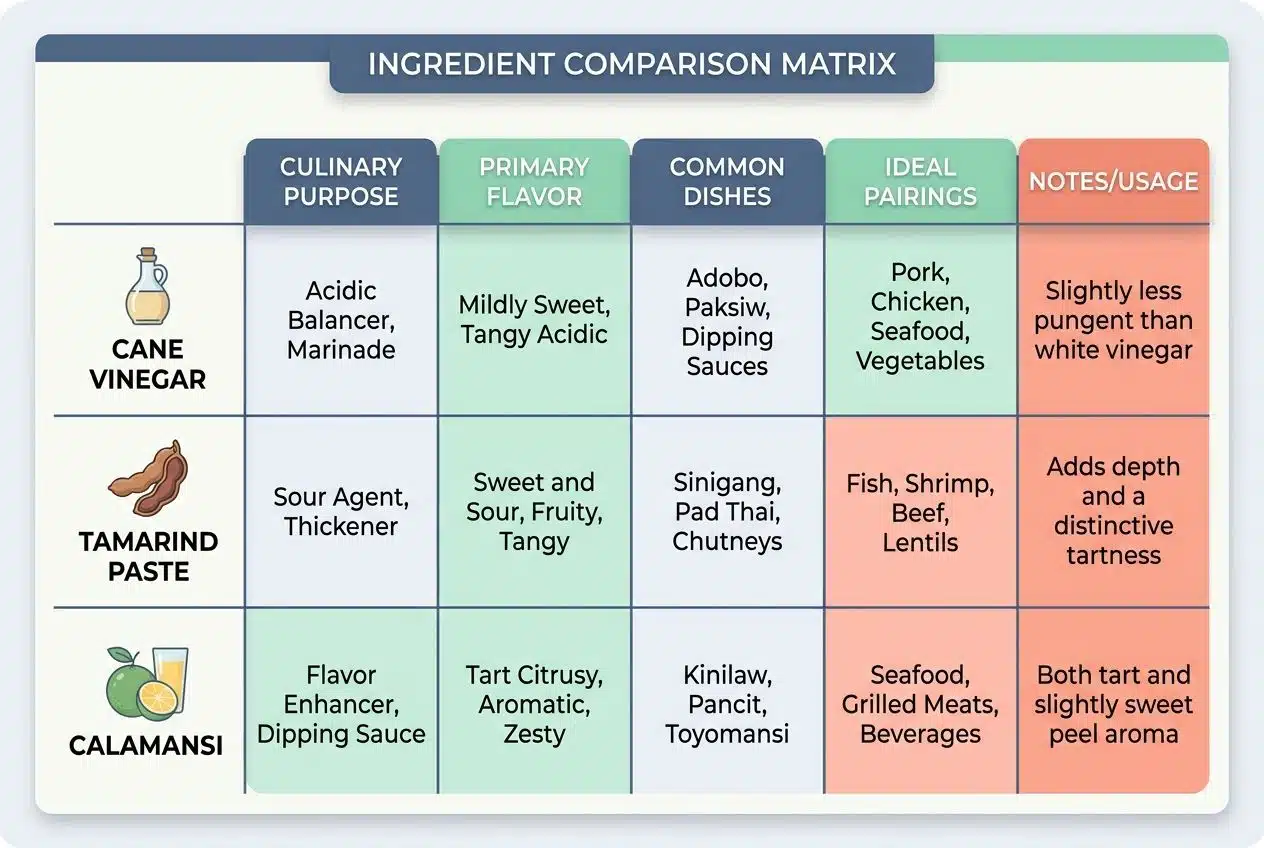
| Ingredient | Purpose in Filipino Cooking |
|---|---|
| Cane Vinegar | Provides the signature tangy bite in Adobo. |
| Tamarind Paste | Creates the sour, fruity base for Sinigang broth. |
| Calamansi | A native citrus fruit used for marinades and dipping sauces. |
Why You Should Try Filipino Cuisine
You should try this food because it is the ultimate comfort dining experience. The flavors are strong, vibrant, and incredibly satisfying, perfectly blending Asian and Spanish cooking styles into something completely unique that feels like a warm home-cooked meal.
Must-Try Specialties:
- Lechon: A whole roasted pig with perfectly crispy skin and tender, juicy meat.
- Pancit: A savory stir-fried noodle dish packed with fresh vegetables and sliced meat.
- Halo-Halo: A refreshing, sweet shaved ice dessert layered with beans, jellies, and purple yams.
Georgian Cuisine: Khachapuri and Khinkali
Georgia sits at a fascinating crossroads between Europe and Asia. Khachapuri represents Georgian comfort food at its absolute finest. This cheese-filled bread stretches and oozes with melted goodness, often topped with a runny egg. Khinkali are delightful little dumplings filled with meat and hot broth.
Locals eat these pockets of flavor by holding the twisted top, taking a small bite, and slurping the broth. You can find these gastronomic experiences popping up across American cities. Restaurants like Supra in Washington, D.C., have made Georgian cheese boats a massive viral sensation.
Food is the most universal language we all speak, and Georgia’s culinary heritage proves this truth through every bite.
Why You Should Try Georgian Cuisine
Georgian dining is all about warmth and community. It is a fantastic choice if you love rich cheeses, freshly baked breads, and dishes that are designed to be shared generously around a big table with friends.
Must-Try Specialties:
- Pkhali: A flavorful, cold vegetarian appetizer made from minced vegetables and crushed walnuts.
- Churchkhela: A traditional candle-shaped candy made by dipping walnuts in thickened grape juice.
- Satsivi: Tender poultry served in a thick, rich, and deeply spiced walnut sauce.
Malaysian Cuisine: Nasi Lemak and Laksa
Nasi lemak stands as Malaysia’s national dish, and it definitely deserves a spot on your culinary bucket list. This fragrant rice dish cooks in coconut milk and pandan leaves, creating a creamy and aromatic base. Served with sambal, fried anchovies, peanuts, and hard-boiled eggs, it brings sweet, salty, and spicy flavors together.
Laksa represents another Malaysian masterpiece you need to taste. This spiced noodle soup comes in rich, creamy coconut styles or tangy, broth-based versions. The secret to authentic laksa is galangal, a sharp, citrusy rhizome in the ginger family.
- Complex Spice Pastes: Cooks blend fresh chilies, lemongrass, and shallots.
- Comforting Broths: Soups like laksa simmer for hours to build deep flavor.
- Unique Textures: Dishes often feature a mix of crispy anchovies and soft noodles.
Why You Should Try Malaysian Cuisine
It offers some of the best street food experiences in the world by seamlessly mixing Malay, Chinese, and Indian flavors. If you love deep, aromatic spices combined with the rich creaminess of coconut milk, this cuisine will quickly become a favorite.
Must-Try Specialties:
- Beef Rendang: A slow-cooked, dry curry packed with toasted coconut and intense spices.
- Roti Canai: A flaky, buttery flatbread typically served with a savory side of lentil or meat curry.
- Char Kway Teow: A smoky, stir-fried flat rice noodle dish made with soy sauce, prawns, and egg.
Korean Temple Cuisine: Fermented Delights
Korean monks created a beautiful culinary tradition centered on fermented foods and plant-based ingredients. This gastronomy emerged from Buddhist principles that deeply respect all living things. Fermented delights like kimchi, doenjang, and gochujang transform simple vegetables into flavor powerhouses. These specialties sit at the very heart of Korean temple cuisine.
The fermentation process acts as nature’s time machine, deepening flavors over weeks or months. If you follow food media, you might know Chef Jeong Kwan, a nun who popularized these techniques on Netflix’s Chef’s Table.
Fiber-rich, fermented foods are huge in the 2026 wellness space for supporting gut health. Korean temple chefs use these natural ingredients to craft meals that satisfy both the body and the spirit.
Why You Should Try Korean Temple Cuisine
This is the perfect cuisine for anyone seeking healthy, mindful, and gut-friendly meals. It proves that you do not need heavy meats or artificial flavorings to create deeply savory and highly satisfying food.
Must-Try Specialties:
- Balwoo Gongyang: A traditional, meditative meal featuring a variety of seasonal vegetable side dishes.
- Lotus Leaf Rice: Sticky rice mixed with nuts and dates, steamed beautifully inside a large lotus leaf.
- Twigim: Incredibly light and crispy deep-fried seasonal vegetables.
Burmese Cuisine: Mohinga and Tea Leaf Salad
Burmese culinary traditions offer flavors that punch way above their weight in the global food scene. Mohinga stands as Burma’s national dish. This rice noodle soup combines fish broth, chickpea flour, and aromatic spices into one soul-warming bowl. Tea leaf salad, or laphet thoke, represents another cornerstone of Burmese gastronomy.
This salad combines fermented tea leaves with peanuts, sesame seeds, garlic, and crispy fried beans. The fermented tea leaves bring a tangy punch that instantly wakes up your taste buds. On the West Coast, restaurants like Burma Superstar in San Francisco made this salad a cultural phenomenon. They showed Americans how bitter, salty, and nutty flavors can exist in perfect harmony.
Why You Should Try Burmese Cuisine
It is a masterclass in contrasting textures. If you enjoy dishes that are simultaneously crunchy, soft, sour, and savory, Burmese food offers a uniquely vibrant experience that bridges the gap between Indian and Southeast Asian styles.
Must-Try Specialties:
- Shan Noodles: A comforting bowl of rice noodles tossed in a sweet and savory spiced meat sauce.
- Burmese Tofu: A unique, silky tofu made entirely from chickpea flour rather than soybeans.
- Ohn No Khao Swè: A rich, coconut milk-based chicken noodle soup garnished with crispy fritters.
Sri Lankan Gastronomy: Hoppers and Kottu Roti
Sri Lanka serves up some of the most delicious international cuisine you have ever heard of. Hoppers are a perfect example of this island nation’s creativity. These bowl-shaped pancakes get fried in a special mold, creating crispy edges with a soft, pillowy center. Kottu roti takes shredded flatbread and transforms it into something spectacular.
Street vendors chop, fry, and mix the bread with meat, vegetables, and rich spices. The rhythmic chopping sound of metal blades echoes through lively Sri Lankan markets.
- Coconut Base: Used extensively in curries and fresh sambols.
- Rich Spices: Pure Ceylon cinnamon, cardamom, and clove dominate the flavor profile.
- Maldive Fish: Adds a salty, umami depth very similar to cured anchovies.
Why You Should Try Sri Lankan Cuisine
The island’s tropical climate produces incredibly fresh and potent spices. It is a must-try for heat lovers who want fiery, deeply fragrant dishes balanced by the cooling, sweet richness of fresh coconut.
Must-Try Specialties:
- Pol Sambol: A bright, spicy garnish made from freshly grated coconut, red chilies, and lime juice.
- Lamprais: A flavorful meal of rice, meat curry, and eggplant pickle baked together in a banana leaf.
- Fish Ambul Thiyal: A uniquely sour and dry fish curry preserved with goraka fruit.
Discovering Underrated European Eats
Europe hides some of the world’s most delicious dishes that many travelers completely overlook. Let us explore the fantastic meals your taste buds have been missing.
Basque Country Cuisine: Pintxos and Bacalao
Basque Country cooking brings bold flavors and serious tradition right to your table. Pintxos are tiny, savory morsels served on bread or skewers at lively bars. Bacalao, or salt cod, appears in countless dishes and represents the absolute heart of Basque culinary identity.
You do not actually have to fly to Spain to experience this culture. Boise, Idaho, is home to the famous “Basque Block,” representing one of the largest Basque communities in the United States. They host massive festivals celebrating these exact culinary traditions right in the American West.
- Bacalao al Pil-Pil: Salt cod cooked slowly in olive oil and garlic.
- Txuleton: A thick, beautifully aged ribeye steak grilled over hot coals.
- Basque Cheesecake: A crustless, deeply caramelized dessert that has taken over bakeries globally.
Why You Should Try Basque Cuisine
Basque food is all about respecting high-quality ingredients. If you love fresh seafood and minimalist cooking where the natural flavors of the food are allowed to shine, this cuisine is unparalleled.
Must-Try Specialties:
- Marmitako: A hearty, comforting tuna and potato stew cooked with sweet peppers.
- Kokotxas: A true delicacy consisting of the incredibly tender, gelatinous lower jaw of a codfish.
- Txangurro: Stuffed spider crab baked in its own shell with breadcrumbs and rich aromatics.
Smørrebrød brings delicious Danish open-faced sandwiches straight to your plate. These culinary delights feature dark, dense rye bread topped with pickled herring, roast beef, or crispy onions. Each bite delivers a symphony of tastes that work together perfectly. Gravlax represents another amazing Scandinavian treasure that deserves your attention.
Locals cure fresh salmon with salt, sugar, and dill for several days. The result is incredibly tender, silky fish that practically melts on your tongue. You can find these dishes at modern Nordic cafes popping up in major cities.
It offers a very clean, earthy, and refreshing flavor profile. It is perfect for those who appreciate artisanal breads, beautifully preserved fish, and a simple, highly aesthetic approach to plating.
Must-Try Specialties:
- Swedish Meatballs: Savory, tender ground meat paired with creamy gravy and tart lingonberry jam.
- Pickled Herring: Small fish preserved in a tangy, sweet vinegar and onion brine.
- Cloudberry Desserts: Golden, tart berries native to the Arctic are used to top cakes and sweet creams.
Portuguese Cuisine: Traditional Bacalhau and Pastéis
Portuguese food tells a beautiful story of salt, sea, and centuries of tradition. Bacalhau sits at the center of this culinary adventure. Portuguese cooks have created over one thousand different dishes using this single dried salt cod ingredient. Bacalhau à Brás shreds the cod into thin strands, tosses it with crispy potatoes, and finishes with a fried egg.
Pastéis de Nata offer a much sweeter side of Portuguese cuisine. These golden pastry cups filled with creamy custard come from Lisbon’s historic convents. If you want to taste authentic Portuguese cuisine in the US, visit the Ironbound district in Newark, New Jersey, where bakeries serve this daily.
Why You Should Try Portuguese Cuisine
Portuguese food is deeply soulful and satisfying. It combines the brightness of Mediterranean flavors with heavy, comforting ingredients, making it an incredibly affordable and accessible way to enjoy world-class seafood and pastries.
Must-Try Specialties:
- Caldo Verde: A deeply comforting traditional soup made with pureed potatoes, thinly sliced kale, and chorizo.
- Francesinha: A massive, indulgent sandwich layered with meats, covered in melted cheese, and drowned in a rich beer-tomato sauce.
- Polvo à Lagareiro: Tender octopus roasted whole with plenty of garlic, olive oil, and smashed potatoes.
Hungarian Culinary Art: Goulash and Lángos
Hungarian gastronomy centers on bold spices, slow-cooked stews, and warming comfort food. Goulash stands as the national treasure of Hungary. This rich beef stew is loaded with onions and tender meat that simmers for hours. The true secret to authentic goulash is high-quality, sweet Hungarian paprika.
This specific spice gives the dish its deep red color and smoky flavor. Lángos is a fried bread topped with garlic and sour cream that pairs perfectly with goulash.
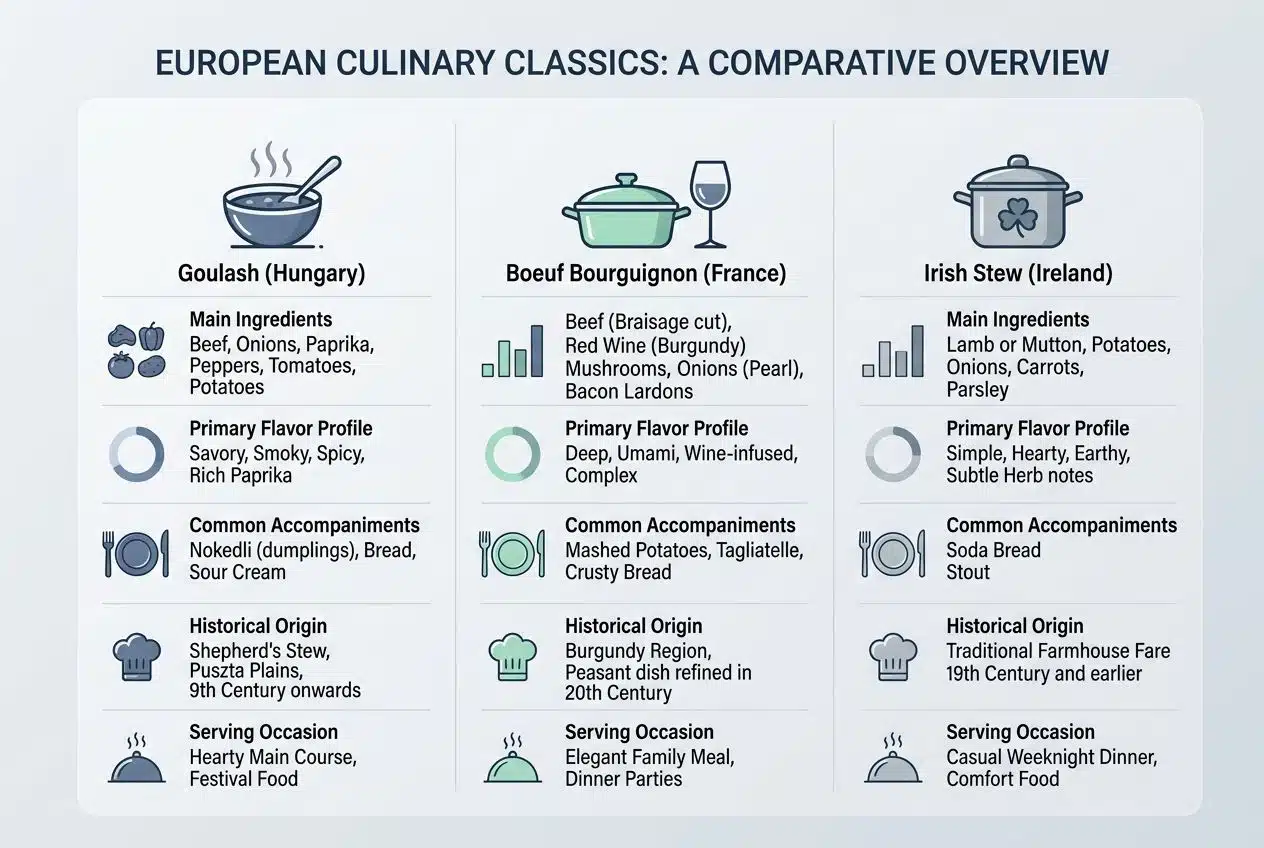
| Dish Name | Country of Origin | Key Flavor Profile |
|---|---|---|
| Goulash | Hungary | Sweet paprika, beef, and onions. |
| Boeuf Bourguignon | France | Red wine, mushrooms, and pearl onions. |
| Irish Stew | Ireland | Lamb, potatoes, and root vegetables. |
Why You Should Try Hungarian Cuisine
It is the absolute definition of winter comfort food. The liberal use of premium paprika gives the food a distinct, warm, and sweet-smoky flavor that perfectly cuts through cold weather.
Must-Try Specialties:
- Chicken Paprikash: Tender chicken pieces simmered in a rich, creamy paprika sauce, usually served with dumplings.
- Dobos Torte: A stunning sponge cake layered with chocolate buttercream and topped with a hard caramel glaze.
- Kürtőskalács (Chimney Cake): A sweet, spiral-shaped dough roasted over charcoal and coated in sugar and walnuts.
The Exotic Flavors of Africa
Africa serves up bold, spiced dishes that pack serious flavor into every single bite. These cuisines tell stories of historic trade routes and deep family traditions.
Ethiopian Cuisine: Injera and Doro Wat
Ethiopian food brings centuries of tradition straight to your dining table. Injera is a spongy flatbread made from teff flour that serves as both your plate and your utensil. You simply tear off pieces of this tangy bread to scoop up delicious stews and vegetables. Doro Wat stands out as Ethiopia’s most celebrated stew, featuring tender chicken in a rich sauce.
The Washington, D.C. metropolitan area actually hosts the largest Ethiopian community outside of Africa. With over 33 dedicated restaurants in the district alone, this area is a true stronghold for authentic injera and Doro Wat. Eating this food creates an unforgettable gastronomic experience based on shared communal meals.
Why You Should Try Ethiopian Cuisine
It is a deeply social experience. Eating with your hands from a shared platter instantly brings people together, and the rich, complex spice blends offer layers of flavor that slowly reveal themselves with every bite.
Must-Try Specialties:
- Tibs: Fast-cooked, sizzling cubes of meat sautéed with onions, peppers, and warming spices.
- Shiro Wat: A thick, deeply savory vegetarian stew made from powdered chickpeas and spices.
- Kitfo: Minced raw beef mixed with clarified butter and spices, similar to a highly seasoned tartare.
Moroccan Cuisine: Tagine and Couscous
Moroccan food offers bold flavors that transport your taste buds straight to North Africa. Tagine is a slow-cooked stew named after the unique cone-shaped clay pot it cooks in. It brilliantly combines meat or vegetables with dried fruits, nuts, and warm spices. Couscous features tiny grains of semolina that soak up rich, savory sauces.
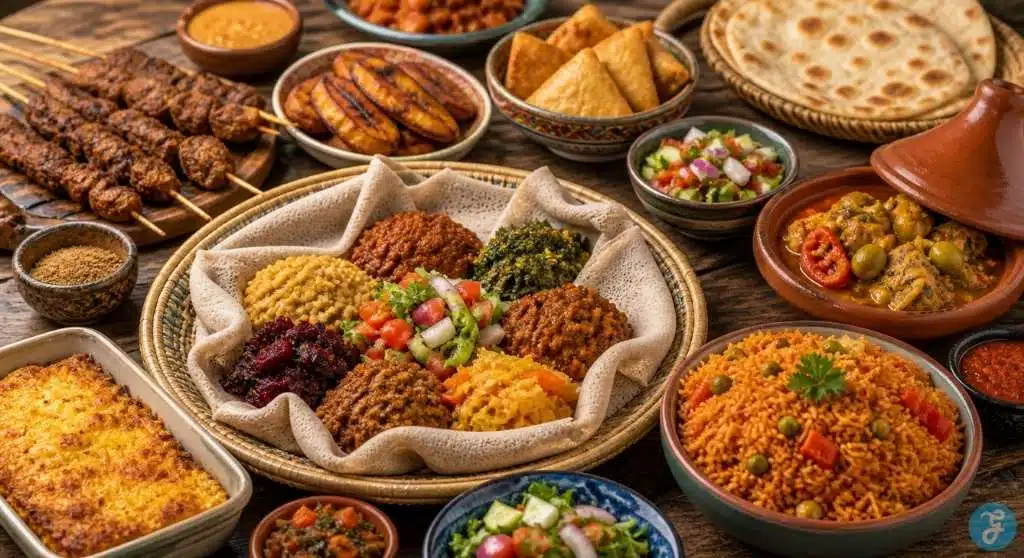
The secret to Moroccan cooking is Ras el Hanout, a complex spice blend that translates to “head of the shop.” This blend can contain up to 30 different spices, including cinnamon, cumin, and turmeric.
- Use Your Hands: Traditional Moroccan meals are often eaten using bread instead of forks.
- Sip Mint Tea: Sweet green tea with fresh mint leaves is the perfect palate cleanser.
- Embrace Sweet and Savory: Do not be afraid of mixing savory chicken with sweet apricots.
Why You Should Try Moroccan Cuisine
If you appreciate meals that surprise your palate by mixing the savoriness of slow-roasted meats with the honeyed sweetness of dried fruits and floral waters, Moroccan food will truly amaze you.
Must-Try Specialties:
- Pastilla: A unique, savory-sweet meat pie wrapped in ultra-thin, crispy dough and dusted with powdered sugar and cinnamon.
- Harira: A hearty, traditional soup made with lentils, tomatoes, chickpeas, and a squeeze of fresh lemon.
- Zaalouk: A warm, smoky dip made from roasted eggplants, tomatoes, garlic, and rich olive oil.
South African Culinary Diversity: Braai and Bobotie
South Africa serves up flavors that tell stories of its beautifully diverse cultures. Braai stands as the absolute heartbeat of this local culinary tradition. This outdoor cooking method brings people together around open flames to grill spectacular meats. A popular snack tied to this meat-loving culture is biltong, a spiced, air-dried meat.
While similar to American beef jerky, biltong is cured with vinegar and coriander, making it much more tender. Bobotie shifts the spotlight to a baked dish layered with spiced ground meat and a creamy egg topping, reflecting incredible influences from Indonesian and Dutch cooking traditions.
Why You Should Try South African Cuisine
It is the perfect culinary match for outdoor dining enthusiasts and barbecue lovers. The cuisine acts as an edible history lesson, merging European, Asian, and indigenous African flavors into hearty, meat-forward feasts.
Must-Try Specialties:
- Boerewors: A thick, incredibly juicy farmer’s sausage heavily spiced with coriander and cloves.
- Malva Pudding: A warm, sticky, and sweet apricot-flavored sponge cake soaked in a rich cream sauce.
- Bunny Chow: A hollowed-out loaf of white bread filled to the brim with a rich, spicy meat or bean curry.
Unearthing the Savory Secrets of Turkish Gourmet Food
When most people think of Turkish food, their minds immediately jump to standard doner kebabs and sticky-sweet baklava. However, venturing deeper into the culinary traditions of this transcontinental nation reveals a treasure trove of intricate, dough-based delicacies that perfectly balance savory meats with tangy yogurts and vibrant spices.
Lahmacun: The Wood-Fired Wonder
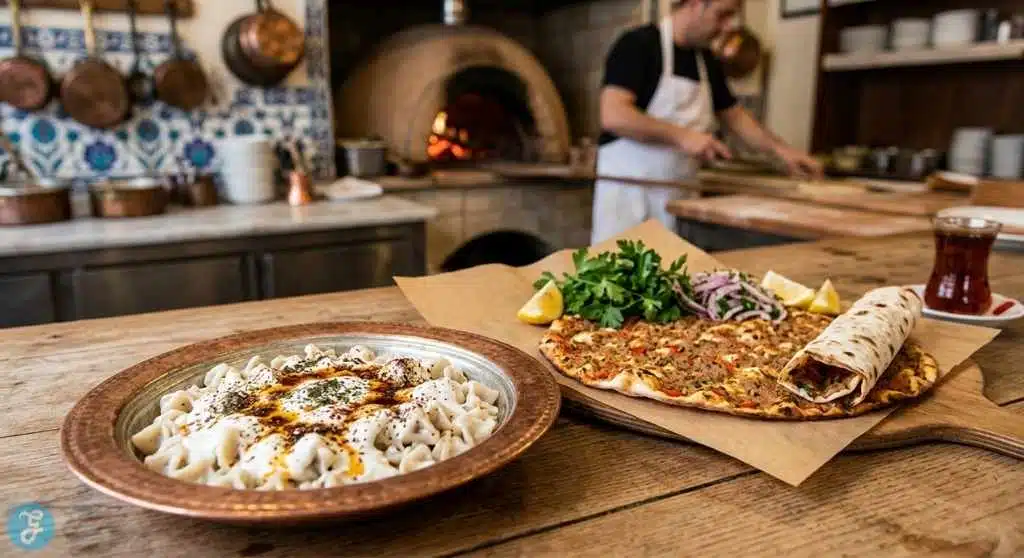
Often misleadingly referred to as “Turkish pizza,” lahmacun is a marvel of texture and flavor that stands entirely on its own. It consists of a paper-thin, impossibly crisp round of dough topped with a finely minced mixture of lamb or beef, tomatoes, onions, parsley, and deeply flavorful spices like sumac and isot pepper.
Baked swiftly in a roaring wood-fired oven, the flatbread emerges blistered and crackling. To eat it authentically, you sprinkle the hot dough with a generous handful of fresh parsley, add a heavy squeeze of lemon juice, and roll it up tightly. The result is a vibrant, smoky, and tangy street food staple that completely shifts the paradigm of what a flatbread can be.
Why You Should Try Lahmacun
It is an incredibly accessible, affordable street food that delivers a massive punch of flavor. The crispness of the baked dough perfectly highlights the smoky, spiced meat without feeling heavy.
Must-Try Specialties:
- Pide: A boat-shaped flatbread filled with melting cheeses, spiced meats, or fresh vegetables.
- Mercimek Çorbası: A smooth, comforting red lentil soup traditionally served with a wedge of lemon.
Manti: The Ultimate Culinary Comfort
Manti represents an entirely different level of craftsmanship and culinary comfort. These tiny, meticulously hand-pinched dumplings are typically stuffed with spiced ground meat and boiled until perfectly tender. Because of their miniature size, preparing authentic manti is incredibly labor-intensive, making it a true labor of love often reserved for family gatherings.
What truly elevates the dish, however, is the final presentation. The hot dumplings are smothered in a cooling pool of creamy garlic yogurt and then generously drizzled with a sizzling sauce made from brown butter infused with red pepper flakes or Aleppo pepper. The mesmerizing contrast of hot, spiced butter against the cool, tangy yogurt creates a complex and deeply satisfying flavor profile that defines Turkish home cooking.
Why You Should Try Manti
The contrast of temperatures and textures is stunning. The hot, spicy butter clashing with the cold, tangy yogurt over soft dough creates an unforgettable comfort food experience.
Must-Try Specialties:
- İskender Kebap: Thinly sliced grilled lamb served over pita bread, drenched in hot tomato sauce, and slathered with butter and yogurt.
- Künefe: A warm, syrupy dessert made from shredded pastry layered with stretchy, melted cheese and topped with pistachios.
Culinary Adventures in the Americas
The Americas serve up vibrant flavors that will make your taste buds dance. Keep reading to discover amazing dishes that deserve a spot on your food bucket list.
Peruvian Cuisine: Ceviche and Anticuchos
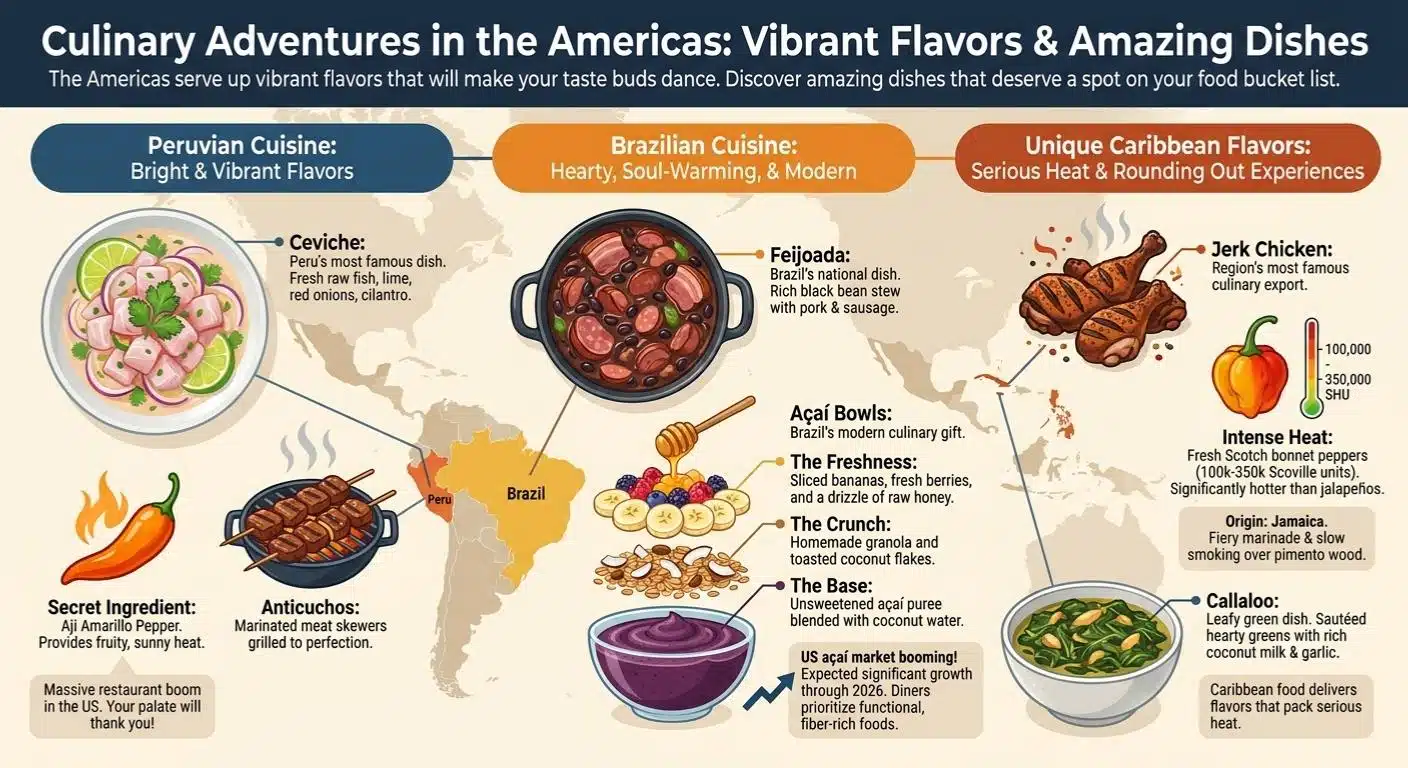
Peruvian food brings bright, vibrant flavors that wake up your palate. Ceviche stands out as Peru’s most famous dish, combining fresh raw fish with lime juice, red onions, and cilantro. The secret ingredient in authentic Peruvian ceviche is the aji amarillo pepper. This bright orange chili provides a fruity, sunny heat that completely elevates the dish.
Anticuchos offer a different experience entirely, featuring marinated meat skewers grilled to perfection. Peruvian cuisine is experiencing a massive restaurant boom across the United States, so your palate will definitely thank you for trying these amazing taste adventures.
Why You Should Try Peruvian Cuisine
It is arguably the best fusion cuisine on the planet. By mixing indigenous Incan staples with Japanese, Chinese, and Spanish techniques, Peruvian food is incredibly fresh, dynamic, and wonderfully unpredictable.
Must-Try Specialties:
- Lomo Saltado: A hearty, Chinese-influenced stir-fry combining tender beef, tomatoes, onions, and crispy French fries.
- Aji de Gallina: A rich, creamy chicken stew thickened with bread and walnuts, colored beautifully with yellow chilies.
- Causa: A cold, layered dish of smooth mashed potatoes seasoned with lime and filled with chicken or seafood salad.
Brazilian Cuisine: Feijoada and Açaí Bowls
Brazil serves up hearty, soul-warming dishes that tell stories of massive cultural fusion. Feijoada stands as Brazil’s national dish, a rich black bean stew loaded with pork and sausage. Açaí bowls represent Brazil’s modern culinary gift to the health-conscious world. These bowls start with frozen açaí berries blended into a thick, delicious purple base. The US açaí market is booming, expected to grow significantly through 2026 as diners prioritize functional, fiber-rich foods.
- The Base: Unsweetened açaí puree blended with a splash of coconut water.
- The Crunch: Homemade granola and toasted coconut flakes.
- The Freshness: Sliced bananas, fresh berries, and a drizzle of raw honey.
Why You Should Try Brazilian Cuisine
Brazilian food is lively, energetic, and completely unpretentious. It perfectly reflects the country’s festive spirit, offering incredibly satisfying portions of roasted meats and deeply savory, slow-cooked beans.
Must-Try Specialties:
- Pão de Queijo: Addictive, bite-sized cheese breads made from cassava flour, making them naturally gluten-free and incredibly chewy.
- Moqueca: A fragrant, bright orange seafood stew cooked with coconut milk, tomatoes, and palm oil.
- Brigadeiros: Rich, fudgy chocolate truffles rolled in sprinkles, practically mandatory at any Brazilian celebration.
Unique Caribbean Flavors: Jerk Chicken and Callaloo
Caribbean food takes your dining adventure further by delivering flavors that pack serious heat. Jerk chicken stands as the region’s most famous culinary export. This cooking method originated in Jamaica and transforms ordinary poultry through a fiery marinade and slow smoking over pimento wood. The intense heat comes from fresh Scotch bonnet peppers.
These peppers rate between 100,000 and 350,000 on the Scoville heat scale, making them significantly hotter than jalapeños. Callaloo is a leafy green dish that beautifully rounds out these Caribbean experiences, traditionally prepared by sautéing hearty greens with rich coconut milk and garlic.
Why You Should Try Caribbean Cuisine
It provides an unparalleled, soul-warming experience. The heavy use of aromatic spices, intense chilies, and sweet tropical fruits creates food that is bold, loud, and incredibly comforting.
Must-Try Specialties:
- Ackee and Saltfish: Jamaica’s national dish, where a unique local fruit is sautéed with salted cod to create a rich, savory meal.
- Roti: A warm, soft flatbread used to wrap up deeply spiced, heavy potato and meat curries.
- Fried Plantains: Sweet, caramelized, and starchy side dishes that provide the perfect counter to spicy main courses.
Why Cuisines Vary From Country to Country
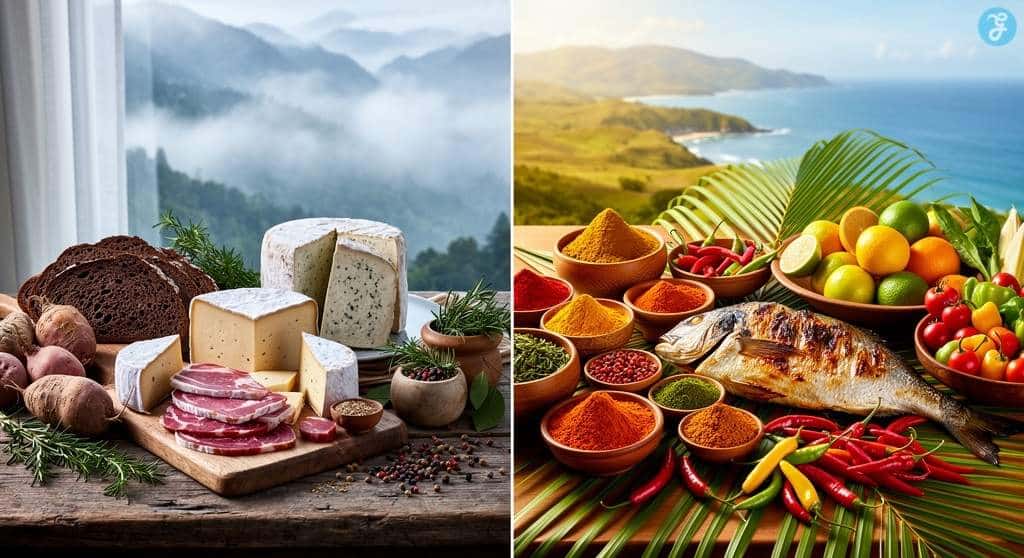
The different foods we eat around the globe are not random; they are deeply tied to the natural world. Climate and local soil dictate exactly what crops can survive in a specific region. For example, countries near tropical equators naturally built diets around cooling fruits and plants like coconut and sugarcane, while areas with short, harsh summers relied heavily on root vegetables like potatoes that could be stored for months in root cellars.
Additionally, access to the ocean completely shapes a country’s cooking habits. Coastal nations developed techniques to dry, salt, and ferment fish to preserve it, while landlocked, mountainous regions focused on dairy preservation, giving rise to rich cheeses and butter-heavy dishes. Every local cuisine is essentially a survival strategy that has been refined over thousands of years into delicious art.
Culinary Crossroads: Trade, Travel, and Shifting Tastes
Food boundaries are constantly shifting due to human movement and global trade. Historically, massive networks like the Silk Road moved spices from Asia into Europe, completely changing how royalty and commoners seasoned their food. Later, the Columbian Exchange transported New World ingredients like tomatoes to Italy and chili peppers to Thailand, fundamentally altering foods we now consider “traditional.”
Today, modern migration continues to evolve these geographic boundaries. As people move across the world, they bring their family recipes with them, but are often forced to substitute unavailable ingredients with local ones. This brilliant adaptation leads to completely new food cultures, proving that global cuisines are not frozen in time, but are living, breathing traditions that continue to change every single day.
The Continental Divide: How Geography Shapes Global Flavors
While every single country boasts its own unique culinary fingerprint, zooming out to look at food on a continental scale reveals a fascinating story about human survival and adaptation. Before modern transportation allowed us to ship ingredients across the globe overnight, entire civilizations had to build their diets around what their specific climate could reliably produce.
Comparing the culinary foundations of different continents highlights how distinct geographic environments forced early cooks to develop entirely different methods for flavoring, cooking, and preserving their food. Here is a high-level look at the authentic, foundational elements that define the world’s major culinary regions.
A Global Comparison of Culinary Foundations
| Continent | Foundational Carbohydrates | Defining Flavor Profiles | Signature Cooking Techniques | Primary Fats & Oils |
| Asia | Rice, wheat noodles, taro | Umami-rich and aromatic: Soy, ginger, garlic, lemongrass, fermented fish pastes, and vibrant chilies. | Fast, high-heat wok frying, steaming, and complex, long-term fermentation. | Sesame oil, peanut oil, coconut oil, and pork fat. |
| Europe | Wheat (breads/pasta), potatoes, rye | Earthy, herbaceous, and dairy-heavy: Butter, garlic, wine, thyme, rosemary, and root vegetables. | Slow-braising, oven-baking, roasting, and dry-curing of meats and cheeses. | Olive oil, butter, and rendered animal fats (tallow/lard). |
| Africa | Teff, millet, sorghum, cassava, yams | Warm, complex, and earthy: Cumin, coriander, cinnamon, smoked paprika, and indigenous groundnuts. | Open-fire roasting, slow-simmering one-pot stews, and grain pounding. | Red palm oil, shea butter, and peanut oil. |
| The Americas | Corn (maize), beans, potatoes, quinoa | Bright, smoky, and acidic: A massive variety of chilies, fresh lime, cilantro, tomatoes, and smoke. | Smoke-roasting, underground pit-cooking (barbacoa), and citrus-curing (ceviche). | Avocado, animal lard, and indigenous seed oils. |
Decoding the Continental Plate
Looking at these overarching differences helps explain the “why” behind the foods we love:
- The Spice Belt (Asia, Africa, and the Americas): Continents with vast tropical and sub-tropical regions naturally developed heavily spiced diets. Before refrigeration, robust spices and fiery chilies were essential for naturally preserving foods and masking the flavor of meats in warm climates. Furthermore, the abundance of tropical fruits and native chilies in the Americas and Southeast Asia naturally led to a heavy reliance on bright, acidic, and sweet-and-sour flavor profiles.
- The Preservation Masters (Europe): Because much of Europe experiences long, harsh winters where agriculture comes to a halt, their ancestral diets were heavily dependent on animal husbandry. This geographic reality birthed a massive culture of dairy (butter and aged cheeses) and cold-weather preservation (salted cod, smoked sausages, and cellar-stored root vegetables). The flavors tend to be heavier, relying on slow-braised meats and rich dairy to provide warmth and sustained energy through the cold months.
- The Communal Pot (Africa): Across much of the African continent, culinary traditions are deeply communal and tied to hearth cooking. Because ovens were historically less common than open fires, the cuisine evolved to master the “one-pot” slow-simmered stew, utilizing hearty indigenous tubers and ancient grains that can withstand hours of cooking while absorbing massive amounts of warm, aromatic spices.
Finally: Your Passport to the Plate
Your culinary journey does not require a passport or an expensive plane ticket; it simply demands an open mind. Food is the ultimate bridge between communities, offering a profound, tactile way to experience histories you never knew existed. By stepping outside your usual dining habits and intentionally exploring lesser-known global cuisines, you transform your daily routine into a cultural adventure.
Start small: visit an authentic neighborhood restaurant, ask the server for their favorite regional dish, or seek out a local cultural food festival. Stock your pantry with unfamiliar spices and attempt a traditional recipe at home. The world’s borders may be vast and constantly shifting, but you can explore them all right from your dining table. Stay curious, and take that first bite.
Frequently Asked Questions (FAQs) on The Best Global Cuisines
1. Which lesser-known international cuisines are the most vegetarian and vegan-friendly?
If you eat a plant-based diet, Ethiopian cuisine should be at the top of your list. Because of strict fasting traditions in the Ethiopian Orthodox Church, the cuisine features massive platters of deeply spiced, slow-cooked lentil and vegetable stews (wat) served over injera bread. Korean Temple cuisine is another spectacular option, focusing entirely on mindful, plant-based eating and ancient vegetable fermentation techniques without any animal products.
2. Is there specific dining etiquette I should know when eating these foods?
Yes, and embracing it is half the fun! In many African and Middle Eastern traditions, such as Ethiopian and Moroccan dining, meals are served communally on a single large platter. The etiquette is to eat exclusively with your right hand, using traditional breads (like injera or pita) as your utensil to scoop up the food. It is a highly social, tactile experience designed to bring diners closer together.
3. How do I start exploring these global cuisines if my town has few options?
Start by searching for beginner-friendly recipes on YouTube or cooking apps like Tasty. Swap any hard-to-find ingredients with similar items from your local grocery store. The improvisation actually makes it more fun and personal.
4. I have a low spice tolerance. Which global cuisines are safe to explore?
Not all international food is fiery! If you want massive flavor without the heat, explore Scandinavian cuisine, which relies on fresh dill, curing techniques, and earthy root vegetables. Basque and Portuguese cuisines are also fantastic options; they focus heavily on high-quality olive oil, garlic, and the natural, unmasked flavors of fresh seafood and roasted meats rather than heavy chilies.
5. Are there any easy dishes from these world cuisines that beginners can make?
If you are new to international cooking, start with dishes that require minimal specialized equipment or complex techniques. Filipino chicken adobo is incredibly forgiving, requiring only a simple simmer of soy sauce, cane vinegar, garlic, and bay leaves. Alternatively, Peruvian ceviche is a brilliant, no-heat recipe where fresh fish is “cooked” entirely by the acidity of fresh lime juice and tossed with red onions.
6. Why is it important to try cuisines beyond standard French, Italian, or American food?
Stepping outside your culinary comfort zone is one of the most accessible ways to build cultural empathy. Food acts as a direct historical record of a region’s trade routes, agricultural struggles, and triumphs. Tasting a beautifully crafted, lesser-known dish not only broadens your palate but also directly supports diverse immigrant communities and helps preserve ancient culinary traditions.