Long queues for a plastic SIM card and steep roaming bills were once the unavoidable cost of staying connected abroad. In 2026, an app handles that whole exchange in minutes. The options below cover 15 eSIM apps for international travel, evaluated across country coverage, pricing, device support on iOS and Android, and activation speed.
Most of these services sell data only, so the specific terms matter just as much as the provider. Picking the right one among the 15 comes down to trip duration and daily data habits.
1. Airalo
Travelers heading to popular routes will find coverage for over 200 countries within Airalo, earning it the top spot for variety.
Coverage and Data Rules That Decide Real Trips
Device choice makes no difference here, since iOS and Android users receive identical network access. The data terms vary by package, which is where itineraries diverge. Most options provide data alone, routing calls and messages through separate internet apps.
Regional bundles protect multi-destination travel under a single allowance. Single-country options stay cheaper for focused visits.
The Catch to Check Before Buying
Banks and other services send verification codes by SMS, and a data-only account with no local number can’t receive them. Activation triggers also differ across packages. Certain plans start their clock immediately after installation, while others wait for the profile to log on abroad. Miss that fine print, and you burn paid days before you even pack.
How to Choose Between the 15 Apps
Itinerary length settles the decision between these 15 alternatives faster than any single feature. A quick stop in one nation pairs well with a small fixed allowance. Extended stays point toward heavy allowances or uncapped connections.
Coverage reach and upfront pricing separate the field first. App usability runs a close third. Before spending money, verify that the chosen package covers every border crossing along the itinerary.
2. Saily
Created by the team behind NordVPN, Saily targets travelers who want budget rates combined with built-in digital security.
What the App Does and Where It Fits
Options run from 1GB to uncapped usage, covering both quick weekend hops and longer stays. The standard plans deliver data without a line, though travelers can pick up an optional US number. It suits anyone seeking simple connection packages paired with mobile security features.
Setup Steps Before Departure
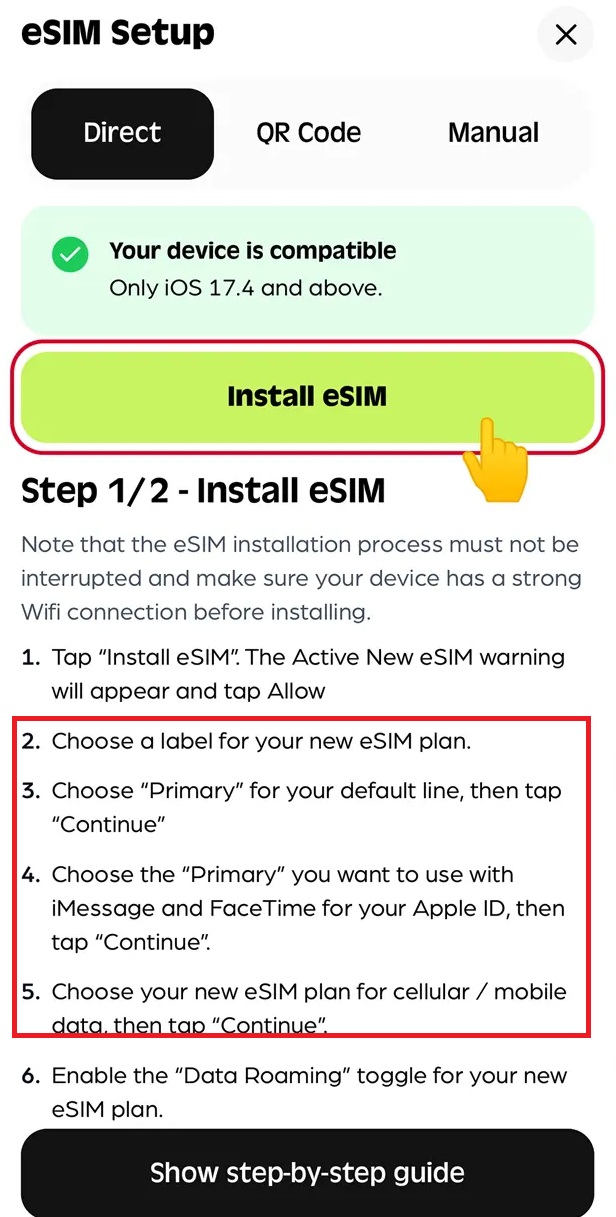
Check that the phone is carrier-unlocked and accepts eSIM hardware before buying a plan. Then install the profile through the application right after purchase. The line should sit inactive in the device settings until arrival abroad. Do all of this at home, and there’s no airport Wi-Fi to fight with.
3. Holafly
Covering more than 200 destinations, Holafly directs its catalog entirely toward unmetered access. Durations span from a single day to a full month, catering to users who want data volume over bargain prices.
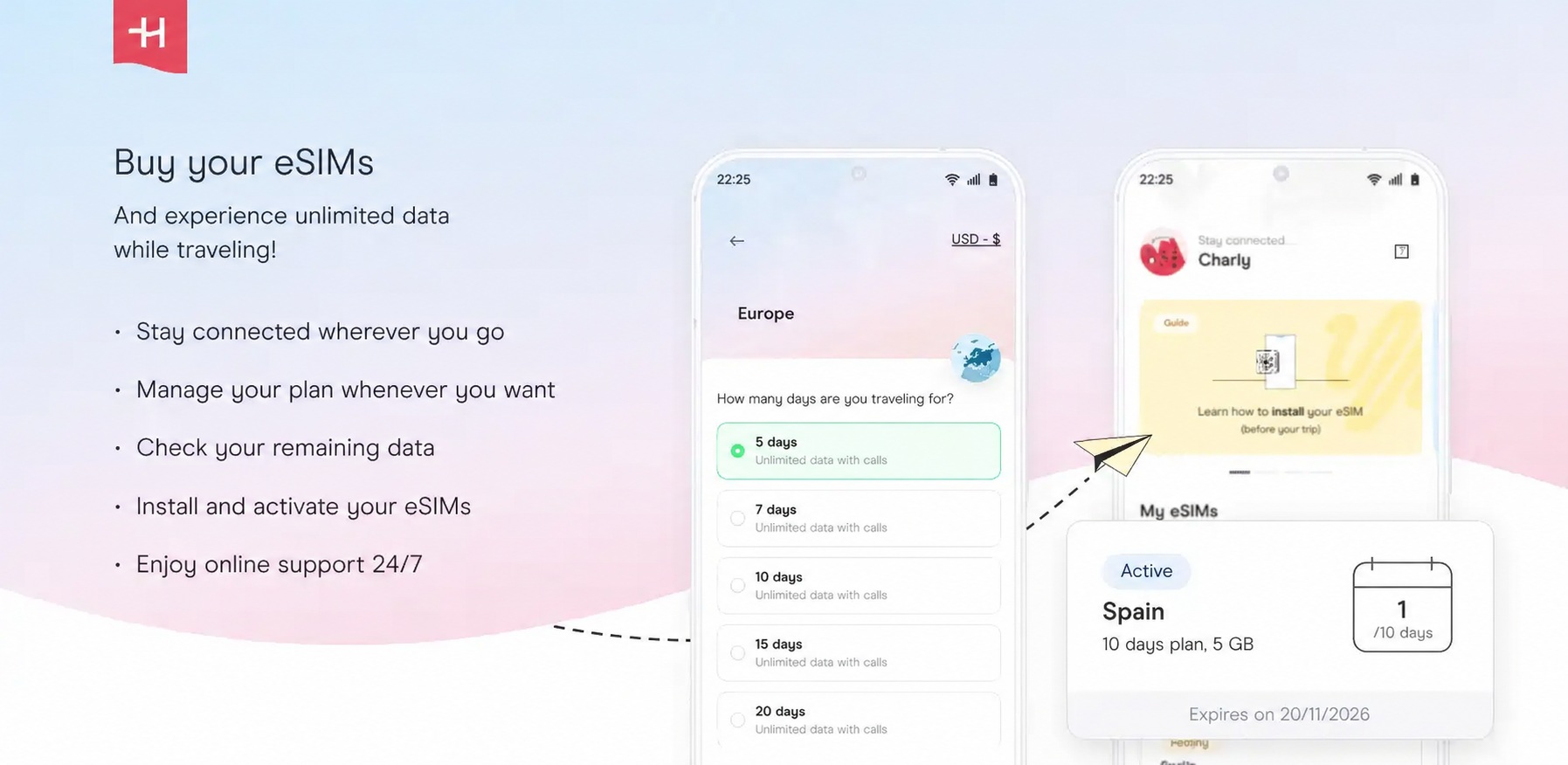
Tethering limits apply to those uncapped plans. For someone needing a laptop connection on a business stop, that cap redefines what unlimited truly means.
How Holafly Handles Unlimited Data Plans
Fair-use policies govern these plans instead of an upfront gigabyte ceiling. The app also stocks fixed allowances for buyers who want an exact allocation. Daily hotspot sharing runs between 500MB and 1GB on uncapped packages.
4. Nomad
An allowance here stays active across multiple trips, so there’s no need to buy fresh profiles each time. Those strong validity windows are what put Nomad among the best eSIM apps for international travel in 2026.
It stands out when measured against monthly unlimited options. Checking the duration and data cap on the purchase screen shows whether it suits the schedule.
5. aloSIM
Packages on aloSIM reach up to 100GB, giving the app one of the largest single allowances on the market. Five distinct validities run from 7 to 180 days, arranged around simple navigation and geographical boundaries.
When a Regional Plan Beats a Country Plan
Crossing borders on one journey is simpler when a single allowance spans the entire itinerary. Staying within one border makes a dedicated local plan much more economical. Pick the wrong one, though, and you’re left juggling wasted gigabytes or sudden top-up fees.
6. Ubigi
Frequent flyers who hate deleting and reinstalling profiles can leave this profile active on their phone. Instead of buying a new download before every departure, they simply add fresh data whenever the next flight comes up. That convenience stems from reusable setups and recurring billing. In broad comparisons across the market, Ubigi regularly earns mentions for flexible terms alongside Airalo and FlexiRoam.
7. Roafly
Hotspot sharing is where many providers sting you, with an unexpected penalty or a quiet speed throttle the moment a laptop connects. Roafly aims at that exact frustration. Its fixed-data bundles permit tethering on your full allowance, with no separate caps.
Its published guide, updated on 5 August 2026, sorts the current market by travel style, naming Airalo for sheer catalog size, Holafly for unlimited usage, and Saily for built-in security features.
8. Gigsky
A traveler on a cruise ship loses signal the moment the vessel leaves national waters, because standard roaming agreements stop there. GigSky is the service worth a close look for that scenario. The question that matters: does the plan reach real maritime transmitters, or only land towers on the coast? Comparison reviews of cruise coverage name GigSky as the primary pick for maritime journeys.
Why Cruise and Wi-Fi-Calling Coverage Is the Draw
Out on the ocean, your handset links to an offshore satellite transmitter rather than a conventional land tower. Ordinary eSIM packs target mainland cell sites. A cruise-focused bundle registers with the shipboard satellite system instead. And if the local vessel connection isn’t supported, running Wi-Fi calling over satellite internet can save the day.
9. Maya
Boutique vendors survive against industry giants through odd package lengths and forgiving extensions, not big ad budgets. Maya operates in that niche, with an app that serves as the entire storefront. Two quick questions show whether it fits your upcoming flight: does the territory list span every stop, and can you top up without reinstallation? Check the refund policy for unused validity periods too. Fixed bundles without extensions must be sized carefully before you take off.
10. Jetpac
Hardware operators that manage real infrastructure deliver fundamentally different customer support than simple digital storefronts. Jetpac makes that case in its overview of eSIM Apps for International Travel, describing how connectivity moved past expensive carrier roaming charges and long airport lines for plastic cards. Marketing claims are cheap. Before handing over your credit card, confirm the seller actually runs legitimate cellular infrastructure.
11. Truphone
Truphone operated international networks years before app-only vendors appeared. Companies with that kind of direct carrier background lease capacity in advance, which brings corporate-grade billing tools and round-the-clock help desks that typical software startups lack.
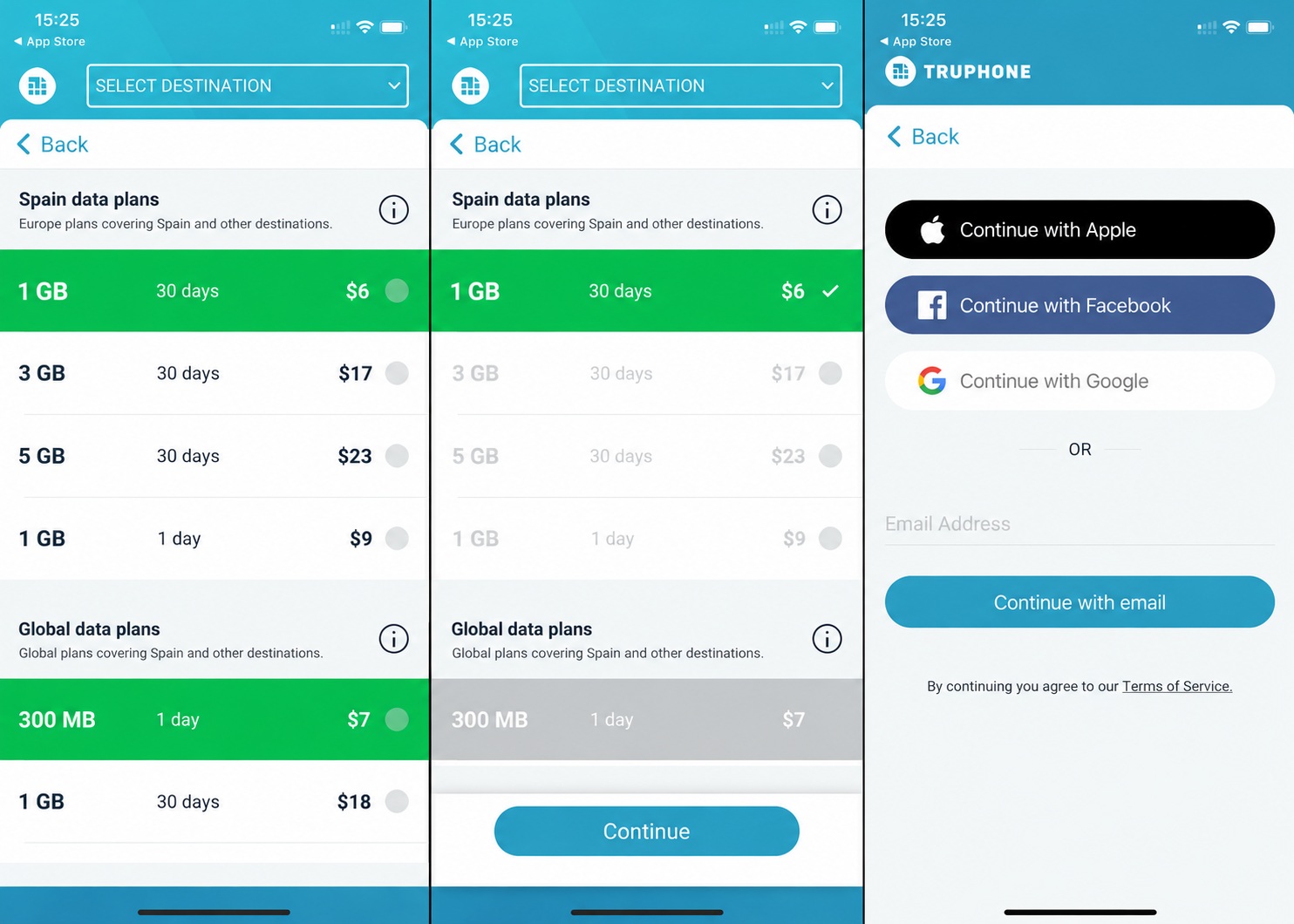
If you travel for client business, the downloadable corporate invoices and dependable carrier partners make Truphone an attractive option.
12. Flexiroam
Families and tour groups save money by splitting one data pool across their phones. Flexiroam allows users to share connectivity allowances across multiple devices, which suits exactly that need. The industry overview Best eSIM Apps for International Travel in 2026 groups Flexiroam under group data sharing while commending Airalo for reach, aloSIM for basic setup, and GigSky for voyages.
13. BetterRoaming
Cheap flat rates look attractive until your traffic runs through a secondary partner network that barely loads a transit map. BetterRoaming packages simplified access across regions, trading granular carrier selection for quick checkout. A budget plan loses its appeal fast if page loads stall. Checking which local provider actually carries the data matters far more than saving two dollars.
14. Yesim
Rigid seven-day bundles waste money for travelers who hop between regions, so the flexible controls Yesim concentrates on the real selling point. The app lets you compare package durations and pause active days while you move. Before buying, verify your handset’s hardware compatibility. Then set the destination filters side by side across two platforms to compare the daily rates.
15. MobiMatter
More than 1.6 billion trips will happen this year according to World Tourism Organization forecasts, and that volume has pushed hundreds of local roaming companies into app stores.
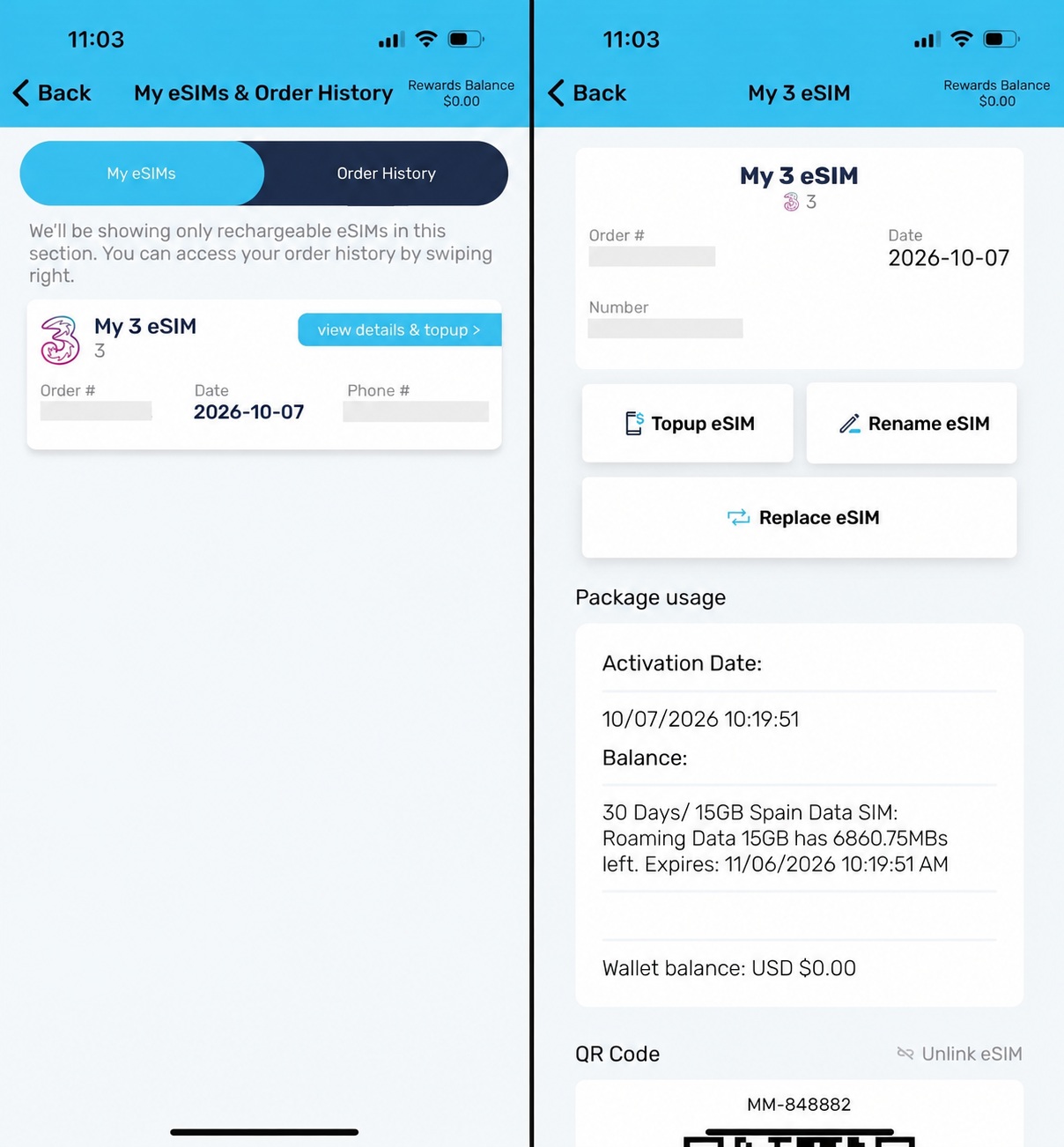
MobiMatter targets the crowd by functioning as an open marketplace, where buyers browse rival operators in one dashboard. When weighing the best eSIM apps for international travel for your next trip, check how many regional partners MobiMatter lists for your exact landing city.
Frequently Asked Questions (FAQs) on the Best eSIM Apps for International Travel
Recent surveys published in 2026 reach remarkably similar conclusions, with network range and simple controls setting the leaders apart from the rest of the pack. Choosing between the major eSIM apps for international travel usually comes down to how someone moves and what hardware they carry.
What is the best eSIM app for international travel?
A solo trip to an unfamiliar country calls for a different approach than a return to somewhere familiar. Guides from 2026 compare the main services without crowning one universal champion.
Can an eSIM app work on both Android and iOS?
Hardware issues are far more common than software barriers. Every service reviewed here works across both operating systems, provided the device accepts digital profiles and remains unlocked.
When should an eSIM be installed—before or after arrival?
Setting up a profile at home over a trusted home network prevents unnecessary headaches later. Some packages begin their countdown immediately upon setup rather than waiting for an overseas handshake, so keep the profile toggled off until stepping off the plane.
How do I pick an eSIM app for my trip length and data use?
Quick weekend getaways run smoothly on modest allowances. Month-long journeys naturally require larger bundles or unrestricted access to keep up with daily navigation and messaging.
Which eSIM app offers the widest international coverage?
Airalo remains ahead with footprints spanning more than 200 countries across both ecosystems. None of its current rivals manages that breadth.
Are eSIM apps compatible with both Android and iOS devices?
Everything depends on the phone in hand. Recent hardware from Apple handles eSIM without issue, as do modern Google devices, though older hardware and niche regional releases often lack the necessary radios. Compatibility lists on each download page resolve any lingering doubts.
How do unlimited-data eSIM plans differ from fixed-data plans?
Unrestricted packages operate on daily fair-use limits and typically restrict mobile tethering. Fixed allotments allow people to spend their balance whenever they wish across the active window.
What should travelers verify before purchasing an eSIM plan?
Looking at base price alone reveals very little about real service quality. True value emerges through reliable coverage maps alongside straightforward controls.
What makes one eSIM app better than another for a trip?
A tool built for light city breaks often falls short on cross-border itineraries. Generic review scores ignore the reality of how individual itineraries actually unfold.
Does a cheaper eSIM plan ever cost more in the end?
Bargain rates frequently mask frustrating trade-offs. Hidden countdowns that trigger before departure, alongside restrictions on sharing data to laptops, quickly inflate the actual daily expense.
Which apps support both iOS and Android travelers?
Airalo continues to feature prominently across modern round-ups while maintaining full parity on both operating systems. App store pages provide fast verification for anyone else.
What to Do Next
Confirm the phone supports eSIM and isn’t tied to a carrier. Then compare the same destination across two or three apps, checking what each charges and what it covers.
Buy the plan before departure and install it at home. Switch the eSIM on after landing.