Buying from the best eco-friendly brands should feel simple. In reality, it often feels like homework. One brand says it is clean. Another says it is natural. Another puts a leaf on the label and calls the product planet-friendly. Then you look closer and find almost no details about materials, factories, packaging, repair, sourcing, or waste.
That is where many shoppers get stuck. You want to support better companies, but you do not want to pay extra for green marketing.
The honest answer is this: no consumer brand is impact-free. Every product still needs materials, labor, packaging, transport, and energy. But some brands are clearly doing more serious work than others. They publish better information. They use certified materials. They design products to last. They offer repair, refill, resale, recycling, or take-back systems. They think about workers, farmers, animals, emissions, and waste.
This sustainable brands list is built around that practical standard. These are not perfect companies. They are better options in categories where people already spend money: clothing, shoes, beauty, cleaning, home goods, tech, food, travel, children’s products, and pet care.
The goal is not to make you buy more. The goal is to help you buy less junk and choose better when you actually need something.
How I Chose These Eco-Friendly Brands
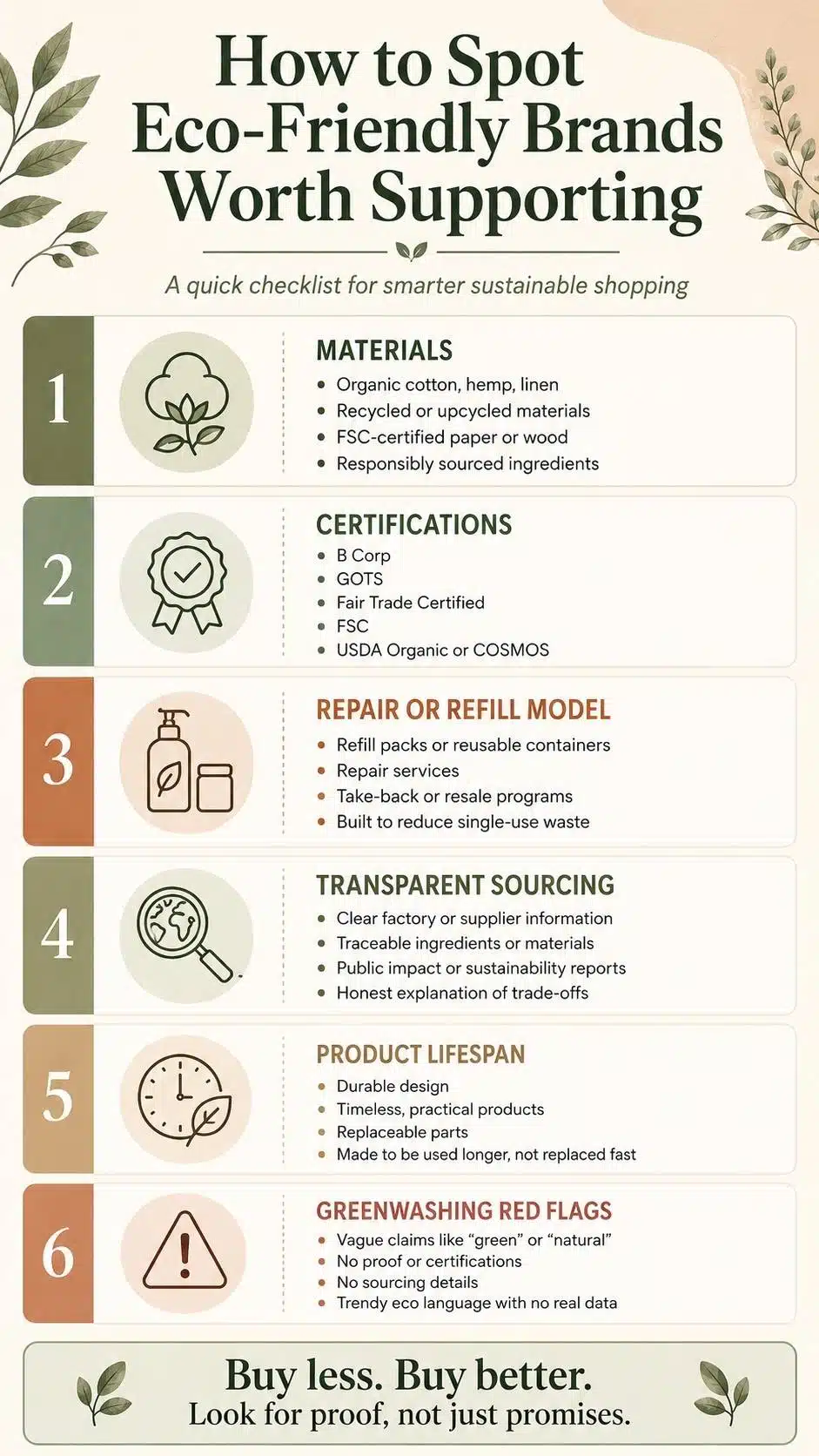
For this list, a brand needed more than good branding. A serious eco-friendly brand should show at least some proof of better practices. That proof may include B Corp certification, organic or recycled materials, GOTS certification, Fair Trade programs, climate reporting, refill systems, repair programs, resale, circular design, traceable sourcing, or transparent public impact information.
I also looked at usefulness. A brand can have a beautiful sustainability page, but if the product is not practical, durable, or relevant to everyday life, it is not very helpful for most readers.
The strongest brands here tend to do three things well:
- They make products people genuinely need.
- They reduce harm compared with conventional alternatives.
- They give shoppers enough information to make a confident decision.
That is the standard behind this list of eco brands worth buying.
1. Patagonia
Patagonia remains one of the strongest names in responsible outdoor gear because it has built sustainability into repair, resale, materials, activism, and product lifespan.
The brand’s Worn Wear program is the clearest reason to support it. Instead of pushing only new jackets and fleece, Patagonia encourages customers to repair, trade in, and buy used gear. That matters because keeping clothing in use longer is one of the most realistic ways to reduce fashion waste.
Patagonia is strongest when you need something durable: a jacket, fleece, base layer, hiking pants, backpack, or weather-ready item that will be worn for years.
The repair reason: Patagonia is worth supporting when you are buying for long-term use, not impulse fashion.
2. Pact
Pact is a practical choice for people who want sustainable basics without changing their entire wardrobe.
The brand focuses heavily on organic cotton essentials, including underwear, T-shirts, leggings, socks, sleepwear, and bedding. That may not sound exciting, but basics are where better buying habits often begin. These are the items people wear, wash, and replace most often.
Pact’s value is simplicity. It gives shoppers a more responsible alternative to cheap fast-fashion basics, especially for everyday cotton pieces.
Everyday swap: Start with Pact if you want organic cotton underwear, tees, pajamas, or simple bedding that does not feel complicated.
3. Cotopaxi
Cotopaxi is an outdoor and travel brand known for colorful bags, jackets, fleece, and adventure gear. Its sustainability work is tied to B Corp certification, repurposed materials, recycled fabrics, and social impact.
The brand works especially well for people who want functional gear that does not look like every other black backpack in the airport. Its Del Día bags, made with repurposed fabrics, are one of the clearest examples of turning leftover materials into useful products.
Outdoor buyer fit: Cotopaxi is a good pick for backpacks, travel packs, lightweight jackets, and bold outdoor gear with a social-impact mission.
4. tentree
tentree built its identity around tree planting, but the brand is more useful when viewed as a casual clothing company with a visible environmental mission.
It sells hoodies, joggers, T-shirts, sweaters, and everyday basics made with preferred materials such as organic cotton, recycled polyester, hemp, and TENCEL blends. Its tree-planting model gives the brand a clear impact story, but the product still matters. The best purchases are pieces you will wear often.
Impact model: tentree is strongest for casual shoppers who want comfortable basics connected to a simple environmental action.
5. Eileen Fisher
Eileen Fisher is one of the better examples of circular fashion in a mainstream wardrobe category.
The brand’s Renew program takes back used Eileen Fisher clothing and sorts it for resale, donation, repair, or remake. That matters because clothing waste is not solved only by choosing better fibers. Clothes also need a second life after the first owner is finished with them.
The brand works best for shoppers who like quiet, minimalist, long-lasting pieces rather than trend-led fashion.
Circularity angle: Eileen Fisher is worth supporting for timeless clothing, resale, and a take-back model that keeps garments moving.
6. Outerknown
Outerknown is a strong option for relaxed casual wear with a sustainability-first identity. The brand focuses on responsible materials, fair labor, supplier standards, and easy coastal-inspired clothing. Its shirts, denim, sweaters, swimwear, and everyday basics feel polished but not overdesigned.
Outerknown is not the cheapest option, but it is useful for people who want clothing that looks normal, wears well, and comes from a brand with clearer labor and material commitments than many mainstream labels.
Wardrobe lane: Outerknown fits best when you want casual clothing with better sourcing and a clean, grown-up style.
7. Nudie Jeans
Denim is a difficult category. It can use heavy resources, chemicals, dyes, and water. Nudie Jeans is worth supporting because it treats jeans as repairable, long-term products instead of disposable fashion.
The brand uses organic cotton for its denim and offers free repairs. That one policy changes the relationship with the product. A good pair of jeans should fade, soften, tear, get repaired, and keep going.
Nudie is best for people who already wear denim often and want fewer, better pairs.
Denim reason: Choose Nudie when you want jeans that are meant to be repaired, not replaced after one season.
8. VEJA
VEJA helped make sustainable sneakers more visible without making them look overly “eco.”
The brand uses materials such as organic cotton, Amazonian rubber, recycled polyester, and other lower-impact alternatives. Its bigger strength is transparency. VEJA has made sourcing part of the product story instead of hiding it behind vague marketing.
The sneakers are clean, wearable, and easy to style with everyday outfits. That makes them useful for people who want one reliable casual sneaker.
Footwear strength: VEJA is a strong everyday sneaker choice for shoppers who care about material sourcing and supply-chain visibility.
9. Rothy’s
Rothy’s is known for washable shoes and bags made with recycled materials, especially recycled plastic bottle-based yarn.
Its knit-to-shape process helps reduce manufacturing waste, and the shoes are popular because they are practical for commuting, travel, and work. The best reason to buy Rothy’s is not just recycled material. It is the combination of reusability, washability, and long-term wear.
Recycled plastic is not perfect. It can still carry microfiber concerns. So the smarter approach is to buy one pair you will use heavily.
Use-case value: Rothy’s works best for washable flats, loafers, sneakers, and travel shoes that replace less durable options.
10. Ethique
Ethique is one of the easiest brands to understand in sustainable beauty: solid bars, no plastic bottles, and low-waste packaging.
Its shampoo bars, conditioner bars, body care, and face care products help reduce the plastic-heavy routine many people have in the bathroom. The waterless format also cuts down on shipping weight compared with liquid products.
Ethique is a practical first swap because it replaces something most people already use.
Bathroom swap: Try Ethique when you want to reduce shower bottle waste without building a complicated beauty routine.
11. UpCircle Beauty
UpCircle Beauty is built around a smart idea: take ingredients that might otherwise be wasted and turn them into skincare.
The brand uses upcycled ingredients such as coffee grounds, fruit stones, chai spices, and other byproducts in cleansers, scrubs, balms, serums, and creams. That gives it a stronger sustainability story than many “clean beauty” brands that only talk about what they leave out.
Beauty waste is a real issue, and UpCircle tackles it at the ingredient level.
Ingredient story: UpCircle is a good fit if you want skincare made with upcycled inputs and refill-aware packaging.
12. Davines
Davines is a professional haircare brand with a deeper sustainability record than many salon lines.
The brand combines salon-quality formulas with B Corp certification, ingredient sourcing work, packaging improvements, and environmental reporting. It is not as low-waste as a shampoo bar, but not every reader wants a shampoo bar. Some people need professional haircare that still moves in a better direction.
That is where Davines fits.
Salon category fit: Davines is worth considering when performance matters but you still want a beauty brand with stronger sustainability standards.
13. Plaine Products
Plaine Products offers refillable personal care in aluminum bottles. Customers use the product, return the empty bottle, and receive a refill.
That model is useful because many people are not ready to switch to bars. They still want liquid shampoo, conditioner, body wash, hand wash, or lotion. Plaine Products makes that possible with less reliance on single-use plastic.
The system only works if customers actually return the bottles, but the idea is strong.
Refill model: Plaine Products is best for households that want familiar liquid personal care with reusable packaging.
14. Seventh Generation
Seventh Generation is one of the most accessible eco-friendly household brands. You can find it in many grocery stores, supermarkets, and online shops.
The brand sells laundry detergent, dish soap, cleaners, paper products, diapers, and personal care items. Its biggest strength is availability. Sustainable products should not be limited to boutique zero-waste stores in major cities.
Seventh Generation is not the lowest-waste brand on this list, but it gives beginners a practical entry point.
Beginner-friendly choice: Use Seventh Generation when you want better household products without overhauling your shopping habits.
15. Blueland
Blueland is built around refillable bottles, tablets, and concentrates.
Instead of buying a new plastic spray bottle every time, you reuse the bottle and add a tablet with water. The brand also sells laundry tablets, dishwasher tablets, hand soap refills, and other household products designed to reduce plastic packaging.
The idea is simple, and that is why it works. A sustainable swap should not feel like a full-time project.
Cleaning system: Blueland is a strong option for cutting plastic from cleaning routines while keeping the process easy.
16. Grove Collaborative
Grove Collaborative works as both a retailer and a household product brand. It curates cleaning, personal care, laundry, baby, and wellness products that meet its internal standards.
Its value is convenience. Many shoppers want better products but do not want to research every dish soap, sponge, cleaner, detergent, and hand wash separately. Grove helps make that process less exhausting.
The only caution is subscription-style shopping. Sustainable shopping still requires discipline. Do not let auto-ship turn into overbuying.
Convenience angle: Grove is useful for busy households that want a curated route into better home essentials.
17. Who Gives A Crap
Who Gives A Crap turns a boring household purchase into a better one.
The brand sells toilet paper, tissues, and paper towels made from recycled paper or bamboo, with plastic-free packaging. Its bigger mission is social impact: the company donates 50% of profits to sanitation and clean water projects.
This is one of the easiest swaps because every household buys toilet paper anyway.
Everyday impact: Who Gives A Crap is a smart choice for paper products with better packaging and a clear giving model.
18. Avocado Green Mattress
Avocado Green Mattress is a strong option for shoppers looking for certified organic mattresses, pillows, bedding, and furniture.
Mattresses are one of those purchases where vague words like “natural” are not enough. Avocado stands out because it uses credible certifications and publishes more information than many mattress brands.
It is a premium option, but mattresses are long-term products. If you are replacing one, it makes sense to choose carefully.
Home investment: Avocado is worth considering when you want an organic mattress with stronger certification support.
19. Coyuchi
Coyuchi focuses on organic bedding, towels, robes, and home textiles. Its products feel calm, natural, and built for long-term use.
The brand also works on circularity through take-back and renewal programs. That is important because home textiles create waste too. Sheets, towels, and blankets may feel less trendy than clothing, but they still need better end-of-life systems.
Coyuchi is best for shoppers upgrading daily-use home textiles.
Textile focus: Coyuchi is a strong choice for organic bedding and towels with a circularity mindset.
20. Stasher
Stasher makes reusable silicone bags and bowls that replace disposable plastic bags.
This is a small product with a real use case. You can use Stasher bags for lunches, snacks, leftovers, freezer storage, travel items, toiletries, and school bags. The value comes from repetition. One reusable bag only matters if it replaces many disposable ones over time.
Do not buy a full drawer of them. Buy the sizes you will actually use.
Kitchen swap: Stasher is best for people who still reach for disposable plastic bags out of habit.
21. Fairphone
Fairphone is one of the most important brands in sustainable tech because it challenges the disposable smartphone model.
The company designs phones and accessories with repairability, fairer materials, and longer use in mind. It does not try to win by having the flashiest camera or thinnest body. It tries to make electronics less wasteful and less exploitative.
That is a meaningful difference in a category where devices are often sealed, replaced quickly, and difficult to repair.
Tech principle: Fairphone is the phone brand to watch if repairability and fairer electronics matter more than luxury specs.
22. Framework
Framework is changing the laptop conversation through modular design.
Its laptops are built to be repaired, upgraded, customized, and kept in use longer. That matters because electronic waste is not only a recycling issue. It is also a design issue. If a laptop is hard to open, hard to upgrade, and expensive to repair, replacement becomes the default.
The framework gives owners more control.
Repair-first design: Framework is ideal for users who want a laptop they can maintain instead of discarding.
23. Pela
Pela makes compostable phone cases, which may sound like a small category, but phone cases are often treated as disposable accessories.
The brand’s value is simple: it offers a plastic-free alternative for a product millions of people buy. Pela is also tied to Lomi, the food-waste appliance company, under the same broader waste-reduction ecosystem.
Compostability still depends on proper disposal conditions, so do not treat it as magic. The better choice is to buy one case and use it for the full life of your phone.
Small product, big habit: Pela is useful if you replace plastic phone cases often and want a lower-waste option.
24. Nimble
Nimble makes tech accessories such as chargers, cables, portable batteries, and phone cases using recycled and repurposed materials.
This category is easy to ignore, but it creates plenty of waste. Cheap cables break. Low-quality chargers get replaced. Packaging piles up. Nimble tries to make everyday tech accessories with better materials and e-waste recovery in mind.
Its products are practical, not preachy.
Accessory upgrade: Nimble is a good choice when you need chargers, cables, or batteries and want to avoid the cheapest throwaway tech.
25. Alter Eco
Alter Eco is a chocolate and snack brand focused on organic ingredients, fair trade, regenerative agriculture, and lower-waste packaging.
Chocolate is a category where sourcing matters. Cocoa supply chains are linked to farmer poverty, deforestation, child labor risks, and weak traceability. A brand that takes sourcing seriously deserves attention.
Alter Eco is not just selling premium chocolate. It is trying to support a better food system through better farming and trade practices.
Food sourcing strength: Alter Eco is a smart chocolate choice for shoppers who care about organic and fairer supply chains.
26. Tony’s Chocolonely
Tony’s Chocolonely has made ethical cocoa sourcing part of mainstream chocolate conversation.
Its mission is focused on ending exploitation in cocoa. The brand promotes traceable cocoa, long-term farmer relationships, higher payments, and industry collaboration through Tony’s Open Chain.
The chocolate is fun and widely recognizable, but the bigger value is pressure. Tony’s uses its brand to challenge how the cocoa industry works.
Ethical mission: Tony’s is worth supporting when you want chocolate that pushes harder on farmer income and supply-chain accountability.
27. Oatly
Oatly helped make oat milk mainstream, and plant-based milk can be a practical swap for people trying to reduce the footprint of dairy-heavy diets.
The brand is strongest when it is honest about trade-offs. Oat milk still requires farming, processing, packaging, and transport. But compared with conventional dairy, oat-based drinks can be a lower-impact choice for many consumers.
Oatly is useful because it makes a sustainable-ish alternative easy to find in cafes and grocery stores.
Food-system swap: Oatly works best as a practical dairy alternative, not as a perfect climate solution.
28. Nature’s Path
Nature’s Path is a long-running organic food brand known for cereals, granola, oatmeal, waffles, and snacks.
Its strength is everyday grocery relevance. Organic breakfast food may not feel revolutionary, but repeat purchases matter. A family that switches common pantry staples can support better farming practices over time.
Nature’s Path is especially useful for households looking for organic options that children and adults will actually eat.
Pantry role: Nature’s Path is a strong pick for organic breakfast staples and family-friendly grocery swaps.
29. Too Good To Go
Too Good To Go is not a typical product brand. It is a food-waste app that connects users with surplus food from restaurants, bakeries, cafes, hotels, and grocery stores.
This is one of the most practical climate-conscious services on the list. Food waste wastes land, water, labor, energy, packaging, and money. Too Good To Go gives consumers a simple way to rescue edible food at a lower price.
The catch is that availability depends on your city, and surprise bags are unpredictable.
Waste-reduction service: Too Good To Go is worth using if you want to save money while helping reduce edible food waste.
30. Intrepid Travel
Intrepid Travel is one of the stronger names in responsible small-group travel.
The company focuses on local guides, smaller groups, community-based experiences, and responsible tourism practices. Travel is never impact-free, especially when flights are involved, but not all travel companies operate with the same level of care.
Intrepid is a better fit for travelers who want organized trips without the worst mass-tourism feel.
Travel standard: Intrepid is worth considering for guided trips that put more attention on local communities and responsible operations.
31. REI Co-op
REI Co-op is a major outdoor retailer, so it should be judged carefully. It still sells a lot of new products. But it also plays a meaningful role in used gear, trade-ins, rentals, repair culture, outdoor education, and product standards.
The best way to use REI sustainably is not to buy a new jacket every season. It is to check used gear, rentals, trade-ins, and durable products before buying new.
REI’s influence also matters because large retailers can push brands toward better standards.
Outdoor shopping note: REI is most useful when you use its secondhand, rental, and durability-focused options.
32. Green Toys
Green Toys makes children’s toys from recycled materials, especially recycled plastic.
The products are simple, sturdy, colorful, and practical for everyday play. That matters because children’s products can become waste quickly when they are cheaply made, overdesigned, or tied to short-lived trends.
Green Toys is a good middle ground for parents who want durable toys but do not want every toy to be wooden, expensive, or delicate.
Kids’ product value: Green Toys is strongest for sturdy toddler toys, bath toys, pretend-play sets, and gifts that can survive repeated use.
33. Frugi
Frugi is a sustainable children’s clothing brand known for organic cotton, bright colors, and practical designs.
Kids grow quickly, so sustainability in children’s clothing is difficult. The best pieces are durable enough to wash, wear, and pass down. Frugi’s organic cotton focus and long-wear approach make it a stronger option than fast-fashion kids’ clothing.
It is especially useful for baby clothes, pajamas, dresses, outerwear, and playful everyday outfits.
Parenting angle: Frugi works best when clothes are worn hard, washed often, and passed to another child.
34. West Paw
West Paw makes dog toys, beds, bowls, and pet products with a serious sustainability focus.
Its Zogoflex toys are designed to be durable and recyclable through the brand’s system. That is useful because pet toys can become waste fast, especially for dogs that chew through cheap toys in days.
The smarter purchase is not buying more toys. It is buying toys that last longer and can be responsibly handled at the end of life.
Pet durability: West Paw is a strong option for dog owners tired of flimsy toys that go straight to landfill.
35. Open Farm
Open Farm is a pet food brand focused on traceability, animal welfare, sustainability, and higher ingredient transparency.
Pet food is a category where many shoppers feel lost. Labels can be confusing, and sourcing details are often vague. Open Farm stands out because it gives more information about where ingredients come from and how they are sourced.
The brand sells dog and cat food, treats, broths, freeze-dried products, and supplements.
Pet food standard: Open Farm is worth considering if you want ethically sourced pet food with clearer traceability.
Best Eco-Friendly Brands by Category
If you are scanning quickly, here is the easiest way to think about the list.
- Sustainable clothing: Patagonia, Pact, Cotopaxi, tentree, Eileen Fisher, Outerknown, Nudie Jeans
- Sustainable footwear: VEJA, Rothy’s
- Eco-friendly beauty: Ethique, UpCircle Beauty, Davines, Plaine Products
- Eco-friendly home and cleaning: Seventh Generation, Blueland, Grove Collaborative, Who Gives A Crap, Avocado Green Mattress, Coyuchi, Stasher
- Eco-friendly tech: Fairphone, Framework, Pela, Nimble
- Sustainable food brands: Alter Eco, Tony’s Chocolonely, Oatly, Nature’s Path, Too Good To Go
- Sustainable travel and outdoor services: Intrepid Travel, REI Co-op
- Sustainable children’s brands: Green Toys, Frugi
- Sustainable pet brands: West Paw, Open Farm

How to Support Ethical Brands Without Overbuying
The biggest mistake people make with sustainable shopping is replacing everything at once.
They discover eco-friendly brands and suddenly feel pressure to buy new clothes, new cleaning products, new beauty products, new kitchen storage, new bedding, new shoes, and new travel gear. That is not sustainability. That is just another shopping cycle with greener labels.
A better approach is slower. Start with what you already need to replace.
If your sneakers are worn out, look at VEJA or Rothy’s. If your shampoo bottle is empty, try Ethique or Plaine Products. If your dog keeps destroying toys, try West Paw. If your laptop needs replacing, consider Framework. If you buy chocolate often, choose Alter Eco or Tony’s Chocolonely.
Also, focus on repeat purchases. Toilet paper, laundry detergent, shampoo, pet food, cereal, kids’ pajamas, dish soap, and food storage bags are small categories where better habits can add up.
The point is not to become a perfect consumer. The point is to stop rewarding the worst systems when better options are available.
Greenwashing Red Flags to Watch For
Not every eco-friendly claim deserves your trust. Be careful when a brand relies only on soft words such as green, clean, natural, conscious, earth-friendly, planet-safe, or biodegradable without explaining what those words mean.
A credible brand should make basic answers easy to find:
- What is the product made from?
- Where is it made?
- Is the material certified?
- Can the product be repaired, refilled, reused, recycled, composted, or resold?
- Does the brand explain worker, supplier, farmer, or animal welfare standards?
- Does it publish progress, not just promises?
- Does it admit limitations?
That last point matters. A brand that admits trade-offs is often more trustworthy than a brand that acts like buying one product will save the planet.
The Smarter Way to Choose the Best Eco-Friendly Brands
The best eco-friendly brands are not perfect. But they are useful because they give shoppers better options in categories where spending already happens.
Better basics. Better shoes. Better cleaning products. Better pet supplies. Better food choices. Better travel decisions. Better tech that lasts longer. That matters.
Still, the most sustainable product is often the one you already own. Use it longer. Repair it if you can. Refill it if possible. Buy secondhand when it makes sense. Choose durable products over trendy items. Avoid buying something just because it has a green label.
Support ethical brands when you genuinely need something. That is how sustainable shopping becomes realistic instead of performative.
Frequently Asked Questions About Eco-Friendly Brands
1. What are the best eco-friendly brands to start with?
The best eco-friendly brands to start with are the ones that replace products you already buy often. Good examples include Who Gives A Crap for toilet paper, Blueland for cleaning products, Ethique for shampoo bars, Pact for basics, Stasher for reusable bags, and Nature’s Path for organic breakfast foods.
2. Are eco-friendly brands always more expensive?
Many eco-friendly brands cost more upfront, but not always over time. A durable jacket, reusable food bag, refillable bottle, repairable laptop, or long-lasting dog toy may replace several cheaper products. The real value depends on how often you use it and how long it lasts.
3. How can I tell if a brand is greenwashing?
Look for proof. Stronger signs include third-party certifications, public impact reports, organic or recycled material details, refill or repair systems, supplier transparency, take-back programs, and clear sourcing standards. Vague words without evidence are a warning sign.
4. Is B Corp certification enough to trust a brand?
B Corp certification is a useful signal, but it should not be the only thing you check. It shows that a company has gone through an impact assessment, but you should still look at the product category, materials, ownership, packaging, labor policies, and current sustainability progress.
5. What is the most sustainable thing to buy?
Usually, the most sustainable thing is the thing you do not need to buy. After that, better choices include durable, repairable, reusable, refillable, secondhand, recycled, organic, or responsibly sourced products. Long product life matters more than a green label.
6. Are recycled plastic products actually sustainable?
Recycled plastic can be better than virgin plastic because it uses existing waste, but it is not perfect. It can still shed microfibers and may be hard to recycle again. The best recycled plastic products are durable, useful, and are kept in use for a long time.