You know the scene if you live it: the child understands every word their grandmother says on the video call and answers in English. That gap—full comprehension, almost no output—is where heritage languages quietly disappear, and it tends to open around age five or six, right when school starts eating the day.
So parents go looking for an app, and the search is frustrating. Type “learn Bengali for kids” into either store and you get forty near-identical Bengali alphabet apps with clip-art mangoes, half of them ad-supported, most abandoned three years ago. Meanwhile, the big-name platforms everyone recommends often don’t teach Bengali at all.
I went through the current store listings, language catalogs and support pages to sort out which are maintained, which cover Bengali specifically, and which are worth paying for. Here’s what I’d hand a parent looking for a Bengali and South Asian language learning app today.
What Makes a Good Bengali and South Asian Language Learning App
Four things decided the order below.
- Script or romanization? A phrasebook that spells bhalo achi in Latin letters won’t get a child reading a storybook.
- Is it maintained? An app last updated in 2021 will break on the next OS release.
- Ads and data. Kids’ apps running ad networks are a hard no for me, whatever the price says.
- Platform. Several of the best options are on one store only, which matters more than parents expect.
1. Bornomala: The Best Bengali App for Kids Right Now
This one isn’t close. Bornomala was built by BALA School, a nonprofit weekend Bengali school in the US, for exactly the child described above—a kid growing up far from Bengali with parents trying to pass it on. It’s free, works entirely offline, and has no ads, no accounts and no purchases.
It teaches Bengali the way a teacher would. The alphabet is laid out as three villages: Vowel Village for the eleven vowels, Consonant Town for the thirty-nine consonants and signs, grouped by where in the mouth the sound is made, and Counting River for the numbers 0 to 100, including the different counting words Bengali uses for people, things and flat objects. That last part is early-maths work as much as language work, and our piece on what number sense is covers why counting words matters.
It also explains the inherent vowel, the reason the first consonant is read “ko” and not “ka,” in one sentence a five-year-old can hold. Most Bengali primers never say this out loud, and it’s the idea that unlocks reading.
The detail that made me sit up: the app asks which words your family uses for “aunt,” “grandmother,” and “water,” then uses your household’s words in the cards, games and recorded audio. Bangladeshi standard throughout, with the West Bengal variants treated as correct rather than as mistakes.
There are 37 narrated storybooks, 746 illustrated words and over 4,000 human recordings, and a word only counts as known after being answered correctly on separate days across a week. Tapping through earns nothing.
The catch is the platform: it’s iOS and iPadOS only and needs iOS 17 or later. Android families can’t get it.
2. Read Along by Google: Free Reading Practice that Listens Back
Read Along is the opposite trade-off: Android and web only, no iPhone app. If you have an Android tablet, install it today.
It supports Bangla, Hindi, Urdu, Tamil, Telugu, Marathi and Gujarati alongside English, Spanish and Portuguese. A child reads illustrated stories aloud while an animated helper called Diya listens, highlights words in real time and supplies one if they stall. Speech is processed on the device rather than sent to Google’s servers; there’s no sign-in, no ads and no purchases, and it runs offline once stories are downloaded.
Best for ages five to twelve and for children who already recognize letters. This is reading practice, not a first alphabet.
3. Mango Languages: Free Through Your Library And It Actually Has Bengali
Mango’s catalog includes Bengali, Hindi, Tamil, Telugu, Urdu, Malayalam, Punjabi, Pashto and Dari. Thousands of public libraries and schools give members full access at no cost, which makes it the best value on this list if your card qualifies. Paid individual and family plans exist otherwise.
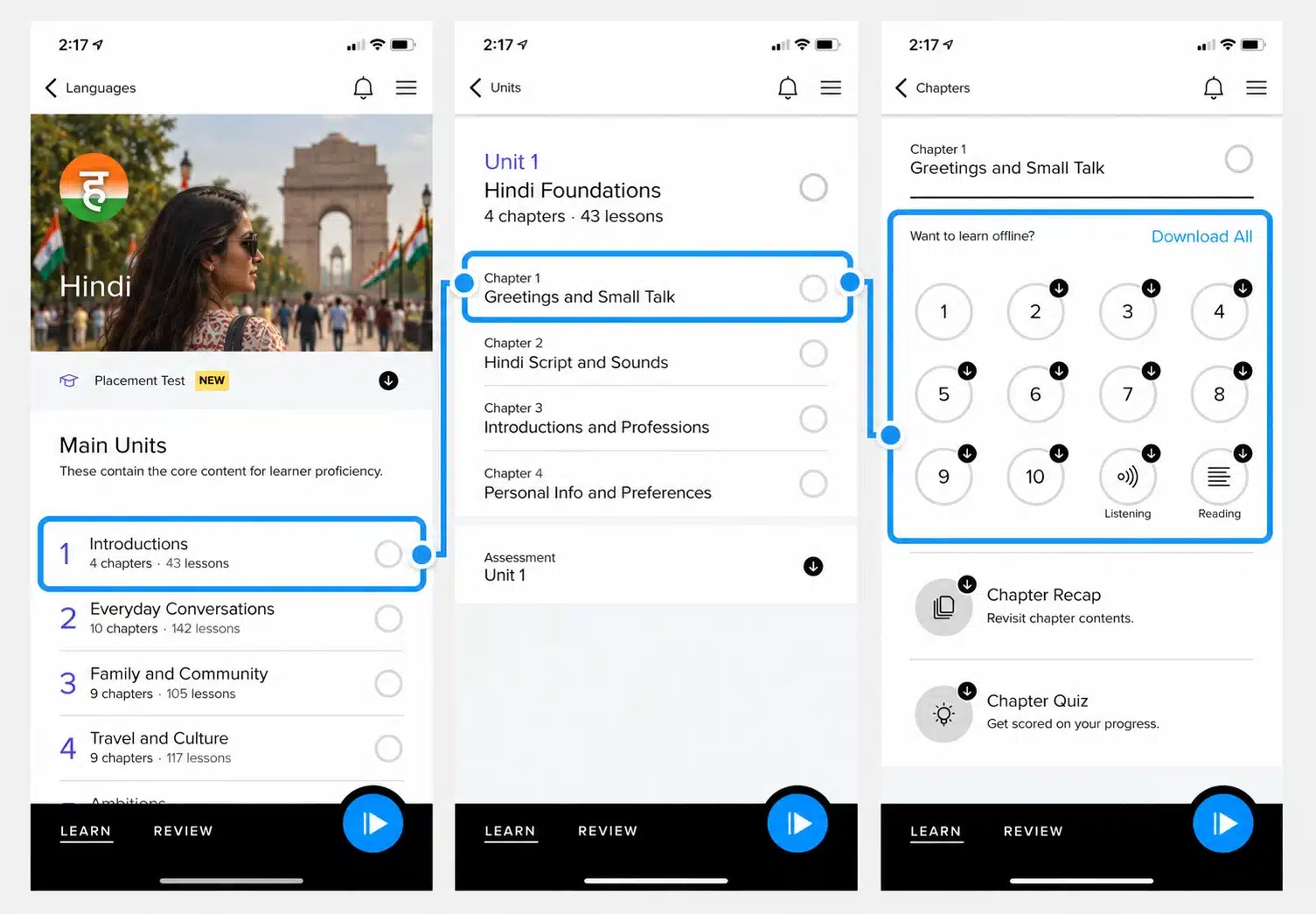
Lessons are conversation-based, with native-speaker audio and cultural notes. It’s built for adults, though: a seven-year-old won’t use it alone. Treat it as a parent-and-child activity, or save it for ages ten and up.
4. Ling: Gamified, Broad Coverage
Ling covers Bengali plus most major South Asian languages, with writing practice, native audio and short quizzes wrapped in streaks and points. That loop works on older kids who already like Duolingo.
Two caveats: it’s a subscription, and the rate changes often enough that you should check it in-app rather than trusting a blog. Ling’s own marketing also fills the “best apps for kids” search results, so weigh those reviews accordingly.
5. Dinolingo: Genuinely Built for Children But No Bengali
Dinolingo is the strongest kid-first platform here: ages two to fourteen, immersion-style, with cartoons, songs, storybooks, printable worksheets, a parent dashboard, and one family plan covering up to six children.
Its South Asian coverage is Hindi, Gujarati, Punjabi and Urdu. No Bengali, no Tamil—which rules it out for a lot of families reading this. It’s also the priciest option here, around $19.99 a month or $199.99 a year after a seven-day trial. Note where you subscribe, through the app store or the website, because that’s where you have to cancel.
6. KidsLipi: Alphabets and Barakhadi, Free to Download
Free, ad-free, and focused on the letters themselves: Hindi, Gujarati, Telugu and Tamil, plus barakhadi combinations, numbers to 100, and themed vocabulary with clear audio. Teachers can assign activities through shareable links.
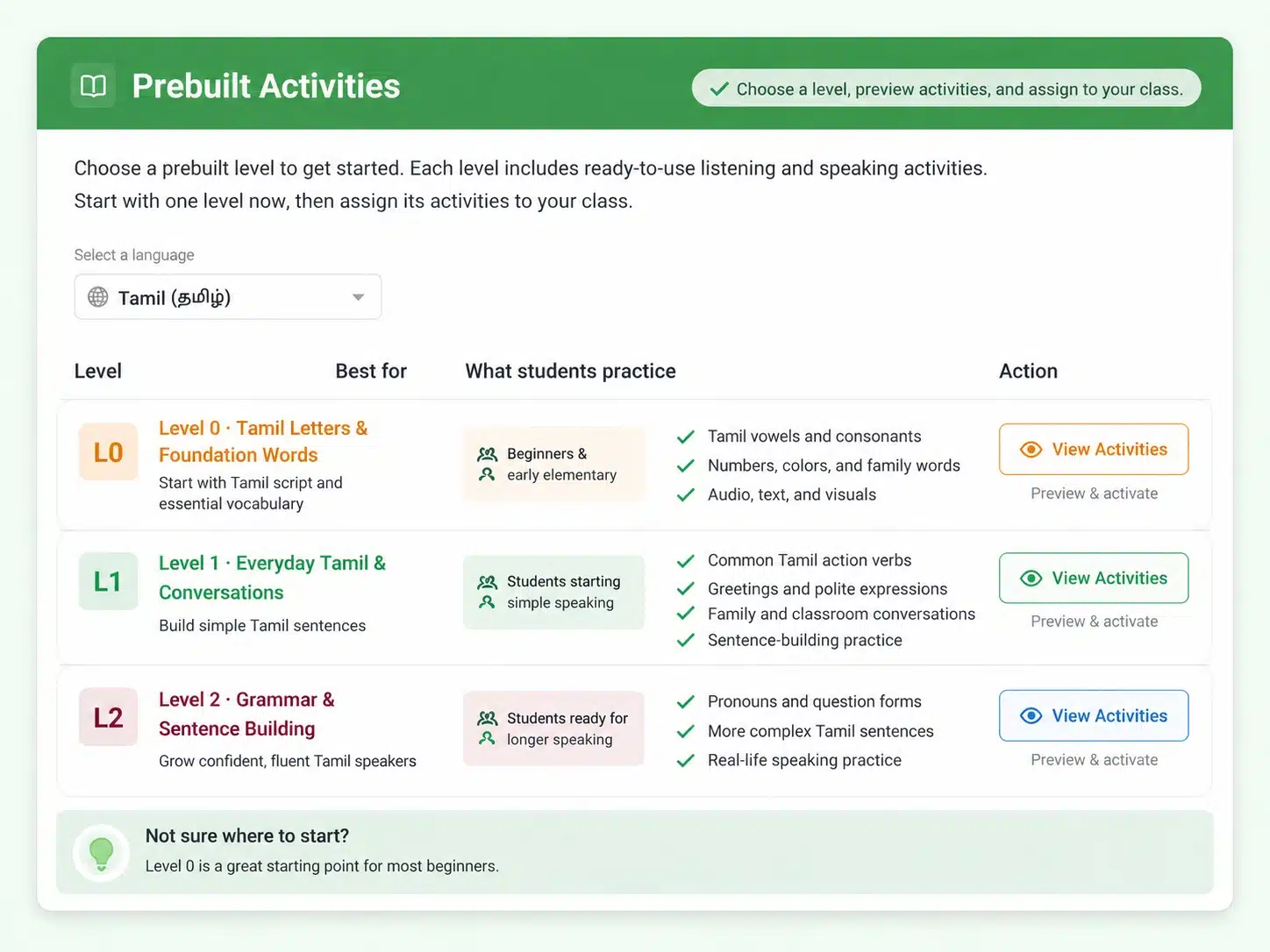
No Bengali. But for a Gujarati or Tamil household, it does roughly what Bornomala does for Bangla and costs nothing to try.
7. Maya and Mosha: Culture Alongside the Language
Hindi, Telugu, Gujarati and Marathi, taught through stories aimed at conversation rather than script drills, with optional live classes. Good for a child who’s bored by tracing but will sit through a story about festivals and family. Think if reading is the goal.
8. BhashaKids: For Parents Who Don’t Read the Script Either
A different bet: Hindi, Tamil and Malayalam are taught conversationally through phonetic English, so a second-generation parent who speaks the language but can’t read it can still teach it. Marathi, Telugu, Kannada, Urdu and Gujarati are listed as coming. Not a script tool, and not a substitute for one.
9. Duolingo: Popular But Check the Language List First
Worth naming only to save you the download. Duolingo’s South Asian offering for English speakers is essentially Hindi; there’s no Bengali course, and its age guidance puts it at thirteen and up. Fine for a teenager reconnecting with Hindi; not the tool for a six-year-old learning the Bengali alphabet.
10. The Free Bornomala Apps on Google Play: Usable With Conditions
There’s a whole shelf of them: Bangla Bornomala, Bangla Alphabet, Shishu Shikkha, and a dozen more. Several are decent, with letter audio, tracing and Bengali numbers, and they run offline.
Read the data safety panel before installing. Many are ad-supported, some bundle unrelated content, and update histories can be thin. If Bornomala isn’t an option, pick one updated recently and keep the tablet offline during use so the ads don’t load.
Quick match by language
| If your child is learning | Start with |
|---|---|
| Bengali (iOS) | Bornomala |
| Bengali (Android) | Read Along, then Mango via your library. |
| Hindi, Gujarati, Punjabi | Dinolingo or KidsLipi |
| Tamil, Telugu, Malayalam | KidsLipi or Mango |
Honorable Mention: Alphabet Magic Trace & Phonics
Full disclosure: this one is ours. Alphabet Magic is built by Edutorial, a sister concern of Editorialge Media LLC, and it’s on both Google Play and the App Store.
It teaches the English alphabet, not Bengali, so it isn’t a competitor to Bornomala—it’s the other half of the shelf. Eight mini-games cover uppercase and lowercase tracing, letter matching, phonics and spelling. Rated 4.5+, ad-free, and works offline.
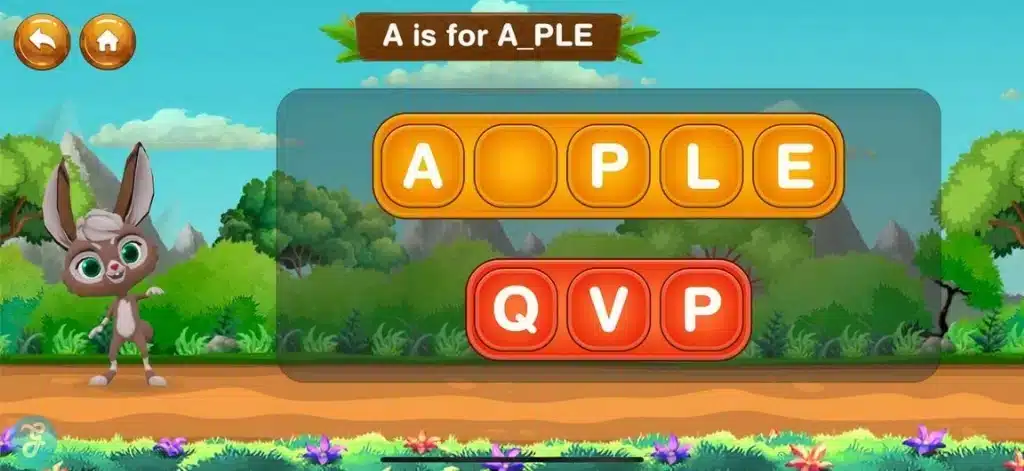
Why it belongs here: bilingual kids need letter-formation practice in both scripts, and the tracing habit transfers. A child used to following a guided stroke path in English picks up Bengali consonants faster. One reviewing parent put it fairly—it leans toward fun over depth and still wants an adult nearby.
Fifteen Minutes Beats a Subscription Stack
The common failure isn’t picking the wrong app. It’s buying three subscriptions and opening none of them past week two.
Pick two: one that teaches the script and one that gives your child something to read or hear. Fifteen minutes after dinner on a set day beats an hour of weekend catch-up.
Then take it off the screen. Have the child count out plates in Bengali, or name the vegetables in the fridge. Any Bengali and South Asian language learning app works better when it’s tied to something happening in the room, which is why our guides to games that encourage early language skills and offline educational activities for kids pair well with all of these.
And let the child hear the family’s own words. A grandmother who says “nanu” while the app insists on “dida” teaches a five-year-old that one of them is wrong.
Final Thoughts
If your household is Bengali and you have an iPad, the decision is basically made: Bornomala is free, thorough and built by people who teach this every weekend. On Android, Read Along Plus and Mango through your library get you most of the way there. For Hindi, Gujarati, Tamil or Telugu, KidsLipi costs nothing to try before you consider Dinolingo’s price tag.
No Bengali and South Asian language learning app does this alone. What it can do is hand a child the alphabet, the sounds and enough words to answer their grandmother and that first answered sentence tends to do the rest.
Install one tonight on the tablet your child already uses.