

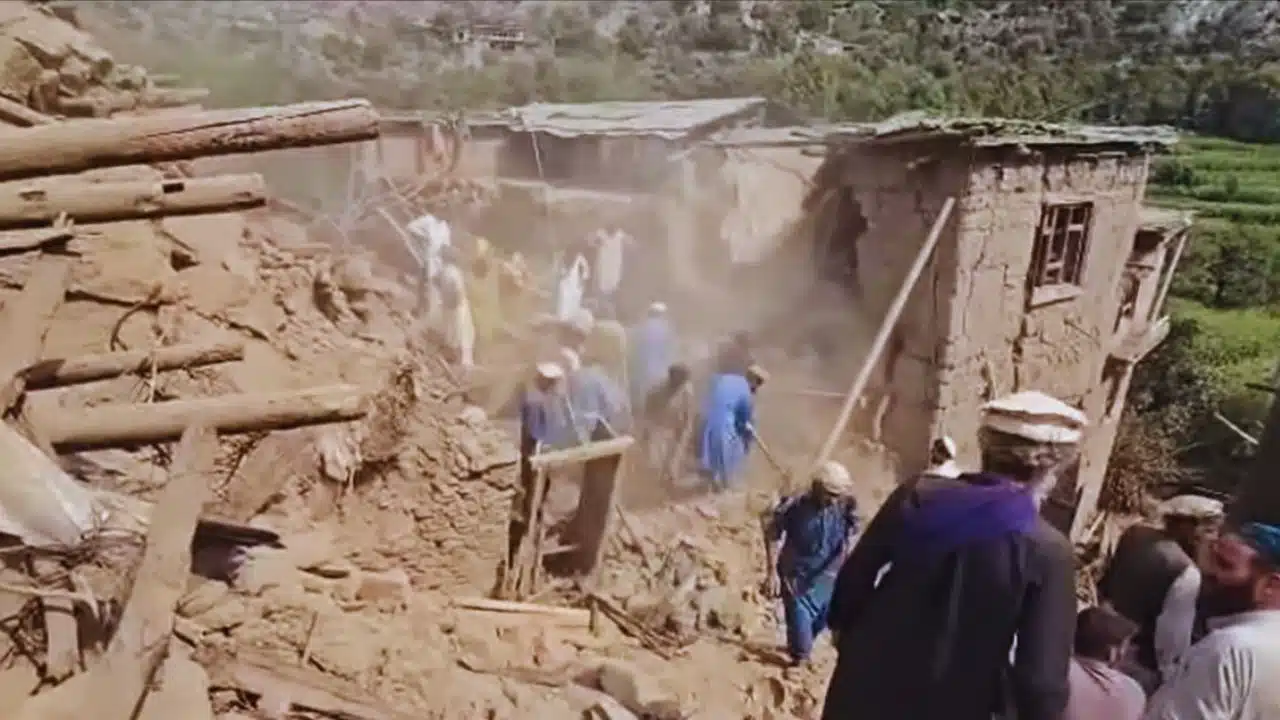
Eastern Afghanistan has been left reeling after a 6.0-magnitude earthquake struck just before midnight on Sunday, August 31, 2025, destroying entire villages and causing widespread human tragedy. The epicenter was recorded around 17 miles east of Jalalabad, at a shallow depth of only 8 kilometers, amplifying its destructive power.
According to the U.S. Geological Survey (USGS), the tremor struck at 11:47 p.m. local time, violently shaking homes and buildings across Kunar and Nangarhar Provinces. The quake triggered multiple aftershocks into Monday, with magnitudes ranging from 4.6 to 5.2.
Rising Death Toll and Thousands Injured
Afghan officials confirmed that at least 1,411 people have lost their lives, with more than 3,124 others injured. Authorities say the death toll is likely to rise as rescuers reach remote mountain villages.
Most of the fatalities occurred in Kunar Province, one of the poorest and most mountainous parts of Afghanistan. The districts of Chawkay, Nurgal, Chapa Dara, Dara-e-Pech, and Watapur were among the worst affected, with entire neighborhoods flattened.
Government spokesperson Zabihullah Mujahid and Interior Ministry official Mufti Abdul Matin Qani both confirmed that victims were also reported in neighboring Nangarhar Province, where several villages collapsed under the force of the tremors.
Aftershocks Shake an Already Traumatized Population
While rescue efforts were underway, another 5.2-magnitude earthquake struck on Tuesday, September 2, about 20 miles northeast of Jalalabad. The fresh quake forced already traumatized survivors to flee damaged homes and shelters, creating panic in makeshift camps where displaced families had gathered.
The USGS noted that since 1950, 71 earthquakes of magnitude 6 or larger have been recorded within 250 kilometers of this region, including six above magnitude 7. This history highlights the extreme vulnerability of Afghanistan’s eastern provinces, which sit on the fault line where the Indian and Eurasian tectonic plates collide beneath the Hindu Kush mountains.
Homes Destroyed, Families Displaced
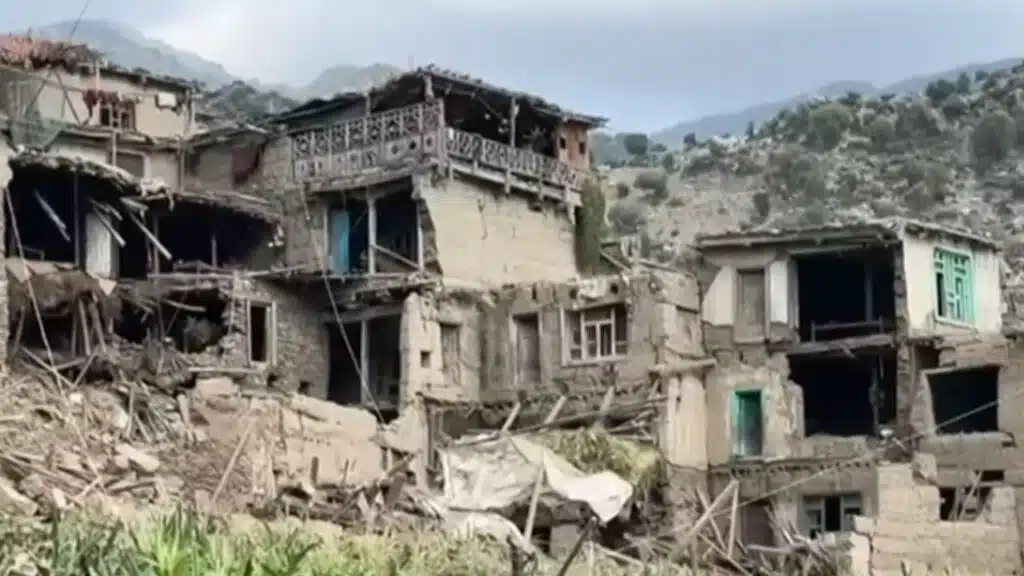
Officials estimate that at least 8,000 homes were completely destroyed in Kunar and neighboring provinces. Many were traditional mud and stone houses that offered no resistance to the quake’s violent shaking. Families who survived were left homeless overnight, forced to camp in open fields without proper shelter, food, or clean water.
The World Health Organization (WHO) reported that approximately 12,000 people have been directly affected. Many survivors are now at risk of illness due to exposure, contaminated water supplies, and lack of medical care.
Hospitals Struggle to Cope
Health officials confirmed that hospitals in Nangarhar and Kunar are operating at full capacity, with dozens of injured patients being treated in hallways and courtyards. The Nangarhar Regional Hospital received several children separated from their parents, highlighting the chaos that followed the disaster.
Dr. Sharafat Zaman Amar, spokesperson for the Ministry of Health, shared images of children with severe injuries being treated without relatives present. “These are painful and unbearable moments,” he said.
The WHO confirmed that while many local health facilities remained functional, they lack the equipment, medicine, and staff needed to handle such a large-scale disaster.
Rescue Operations Underway
Government officials said dozens of Afghan commandos had been deployed to remote areas inaccessible by road. Helicopters were used to airlift the wounded from deep valleys where landslides blocked access routes. Emergency responders are racing against time to pull survivors from beneath the rubble.
Deputy spokesperson Hamdullah Fitrat confirmed that efforts are focused on villages where entire families may still be trapped under collapsed homes. However, difficult terrain, poor infrastructure, and continuous aftershocks are slowing operations.
International observers warn that the full scale of the devastation may not be known for days, as several villages remain cut off.
Calls for International Aid
The Taliban government has appealed for international assistance, acknowledging that the scale of destruction is beyond Afghanistan’s current capacity to manage. Officials noted that past foreign aid has declined due to political tensions and restrictions imposed after the Taliban takeover in 2021.
Despite this, some international partners have pledged support:
- United Nations: Coordinating air services between Kabul and Jalalabad for aid delivery.
- European Union: Announced emergency funding worth $1.16 million and shipments of tents, blankets, and food.
- India: Sent shipments of tents, medicines, and food supplies.
- United Kingdom: Pledged aid through independent humanitarian partners to avoid strengthening the Taliban regime.
- UAE and China: Expressed readiness to send relief materials.
Aid agencies stress that shelter, clean water, medical supplies, and food are the most urgent needs.
Comparisons to Past Disasters
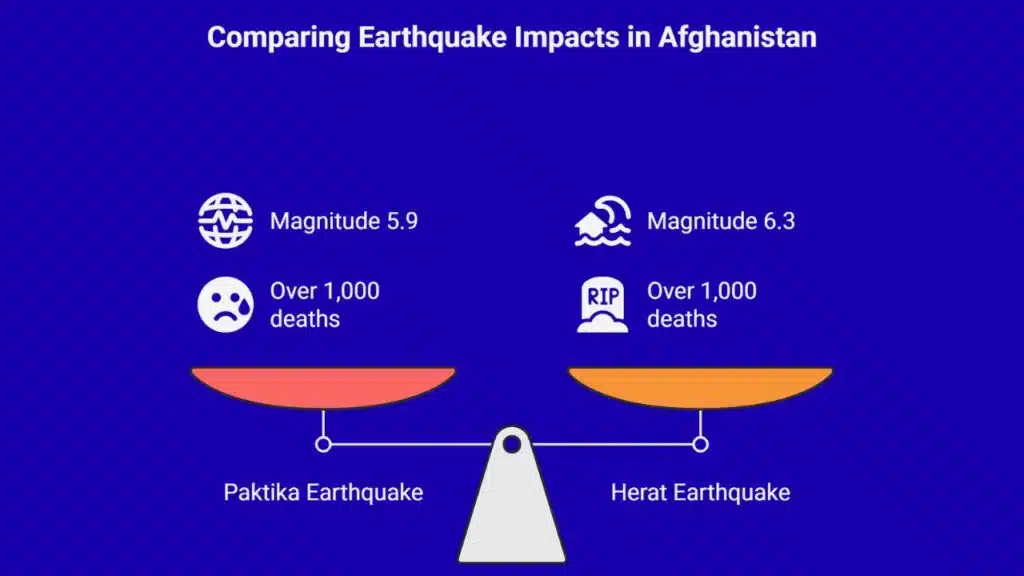
Afghanistan is no stranger to deadly earthquakes. In June 2022, a 5.9-magnitude quake in Paktika Province killed over 1,000 people. In October 2023, a 6.3-magnitude earthquake near Herat claimed more than 1,000 lives.
Experts note that Afghanistan’s vulnerability stems not only from seismic activity but also from weak infrastructure, poverty, and lack of preparedness. Most homes are not earthquake-resistant, making every tremor potentially catastrophic.
Global Condolences and Warnings
The tragedy has drawn international condolences. Richard Bennett, the U.N. Special Rapporteur for Afghanistan, expressed sorrow for the victims, saying the scale of devastation is “unbearable.”
The USGS issued a reminder that the region remains one of the most seismically active in the world, with future quakes likely. Humanitarian organizations warn that without sustained international aid, survivors could face long-term hardship, including displacement, disease outbreaks, and worsening poverty.
A Long Road to Recovery
As rescue workers continue to dig through rubble, Afghan authorities fear the death toll will climb further. Survivors face weeks of uncertainty as relief operations struggle to keep pace with urgent needs.
With thousands left homeless and aid supplies limited, the earthquakes of late August and early September mark one of the deadliest natural disasters Afghanistan has faced in recent years. The long-term challenge will be not only rebuilding destroyed homes and infrastructure but also ensuring that future disasters do not claim as many lives.
The Information is collected from ABC News and NBC News.
























