


Some things seem to go out the window the second the word divorce comes up in conversation. As soon as one partner utters the words they want a divorce, their spouse automatically seems to stop listening. Even participating in the legal process can be tough for some divorcing couples.
If the behavior continues, get ready for a potentially stormy and messy divorce. The importance of active listening and participation during a divorce can’t be overstated. There can also be some surprising benefits of participating in divorce proceedings that go beyond helping to prevent your marriage dissolution from turning into a nightmare.
Active Listening Is Key
You’re hearing everything your former spouse is saying whether you’re passively or actively listening. There’s also a time to use one approach over the other. During a divorce, you want to focus on your active listening skills. You typically only fall back on passive listening during casual conversations or when you’re listening to unrelated information.
Since your divorce isn’t a casual conversation and the information typically applies to your situation, being an active listener is usually the way to go. This means paying close attention to the speaker’s words, including the tone and meaning. You’re using responses that indicate you’re actively listening and understanding the information like head nods and giving appropriate responses.
Not only does active listening make the speaker feel a little better, but it can also help you retain and understand the information. When it comes to some divorces, understanding all of the information is often key for a relatively smooth legal process.
Benefits of Actively Participating During a Divorce
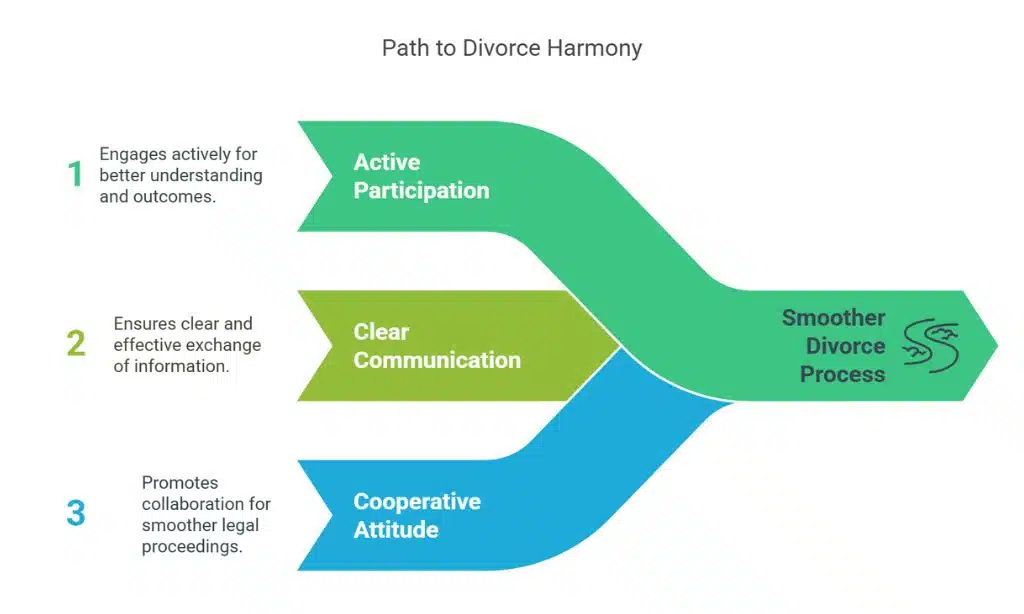
Being an active participant during your divorce can do more than help ensure you understand what your former partner is trying to get across. There can be some additional benefits that may help the legal process move along more smoothly.
1. Reduces Tension During the Divorce
Even amicable divorces can cause some tension. If nothing else, there’s some stress over the upcoming life changes. Going from a married individual back to a single can be incredibly stressful. Some surprising aspects of your life can be affected.
With active listening, you’re not focusing solely on your voice drowning out your spouse’s. You’re taking a step back to see things from your spouse’s perspective and this can make it a little easier to get on the same page. When conflict either real or imagined is resolved, stress and tension tend to disappear. This isn’t saying you’re not going to feel some stress about the life change, only that it’s a bit easier to navigate.
2. Set a Good Example for Your Children
A divorce isn’t only tough on the parents, children are also affected. They’re watching their family unit essentially fall apart and this often takes a toll on children’s mental health. Children struggling with their parents’ less-than-pleasant divorce may start acting out. They may even engage in risky behavior. Don’t forget children are a lot like little mimes. They often parrot their parents’ behavior.
If their parents aren’t actively listening, warning signs may be missed. Along with actively listening to your children, employing the same skills with your spouse has another benefit. You’re setting a good example for your children by showing them their parents can still get along even during and after a divorce. Sometimes, children just need the reassurance that both parents will stay in their lives after a divorce.
3. Better Idea of What to Expect During and After a Divorce
Yes, there’s a legal process to follow during a divorce. What steps the process involves depends on state law and the type of divorce. For example, the steps for an uncontested divorce are different compared to a contested dissolution of marriage.
You can read carefully through legal guidebooks. You may even be able to find forms to fill out online to get your divorce started. However, this doesn’t mean you’re ready for whatever the legal process decides to toss at you. If you’re only passively listening to your spouse you may miss out on some vital information.
By the time you realize this, your divorce may be well underway. To make any changes, you’re probably going to need to temporarily stop the legal proceedings. Not only does this cost time and money, but you’re also risking turning your divorce into a contentious process.
When you’re actively listening to your former spouse, you know what they expect from the divorce. Whether it’s asset division or time with shared children, you’re ready to address the issue before your divorce reaches the Family Court judge.
4. Less Pressure During Negotiations
Negotiations are usually a part of a divorce, even an amicable one. Divorcing couples usually have some shared assets like property and joint bank accounts. If children are involved, topics like custody, visitation, and child support will probably come up. You and your former partner may have some general ideas but you’re not quite at an agreement.
This is when actively listening can be extremely helpful. When both partners are actively listening to each other, it’s easier for them to see each other’s point of view. You may not get everything you want in the divorce, but this is just a part of life.
Since negotiations can be stressful and you’re under a ton of pressure to make a decision, actively listening helps ensure you have all of the necessary information. When you have the information, and understand it, making the right decision is less stressful.
Is Divorce Mediation the Right Step for You?
While there’s no reason why you can’t always participate in your divorce without outside guidance, emotions can get in the way. Divorces can be stressful and an emotional rollercoaster ride for everyone involved. Trying to actively listen and handle your emotions is tough.
If you and your soon-to-be former partner are struggling to get your viewpoints across, divorce mediation may be the answer. A neutral third party listens to you and your partner hash out your differences while helping you reach an amicable solution.





















