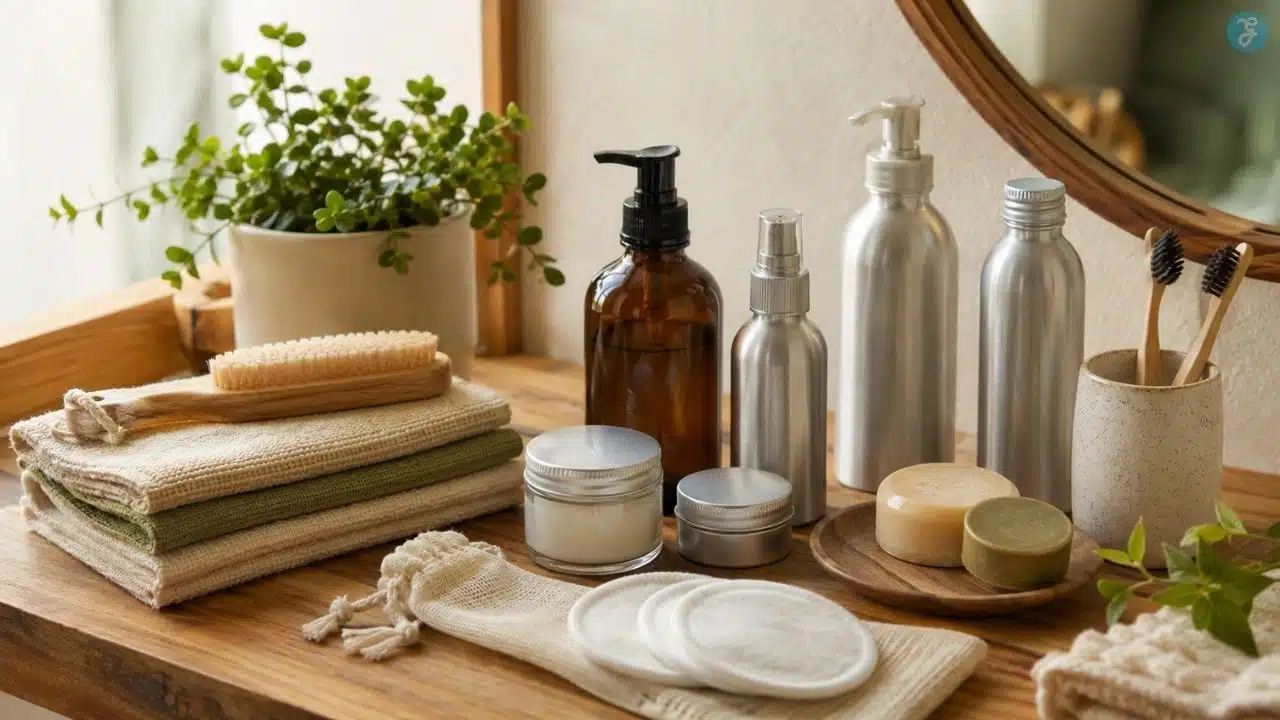
Choosing eco-friendly beauty brands should not feel this confusing. A moisturizer says clean. A shampoo says natural. A lipstick says vegan. A cleanser comes in beige packaging with a leaf on the label. Then you look for real proof, and suddenly the claim feels thin. No refill system. No sourcing details. No packaging explanation. No clear certification. Just soft words and pretty branding.
That is the problem with beauty shopping now. The category has changed, but greenwashing has changed with it.
A good sustainable beauty brand should do more than remove a few controversial ingredients. It should think about packaging, refills, product format, ingredient sourcing, manufacturing, animal testing, waste, transparency, and whether the product actually performs well enough for people to finish it.
Because the most sustainable serum is still wasteful if it sits unused in a bathroom cabinet.
This list compares 11 sustainable beauty brands across skincare, haircare, makeup, body care, refill systems, solid formats, and circular packaging. Some are better for beginners. Some are stronger for serious low-waste shoppers. Some are premium choices. Some are more accessible daily swaps.
No brand here is perfect. Beauty products still need ingredients, packaging, shipping, preservatives, water, energy, and manufacturing. But these brands are making stronger efforts than most.
The goal is not to make your bathroom shelf look greener. The goal is to help you buy fewer products, choose better ones, and stop falling for clean beauty claims that do not mean much.
How We Compared These Eco-Friendly Beauty Brands
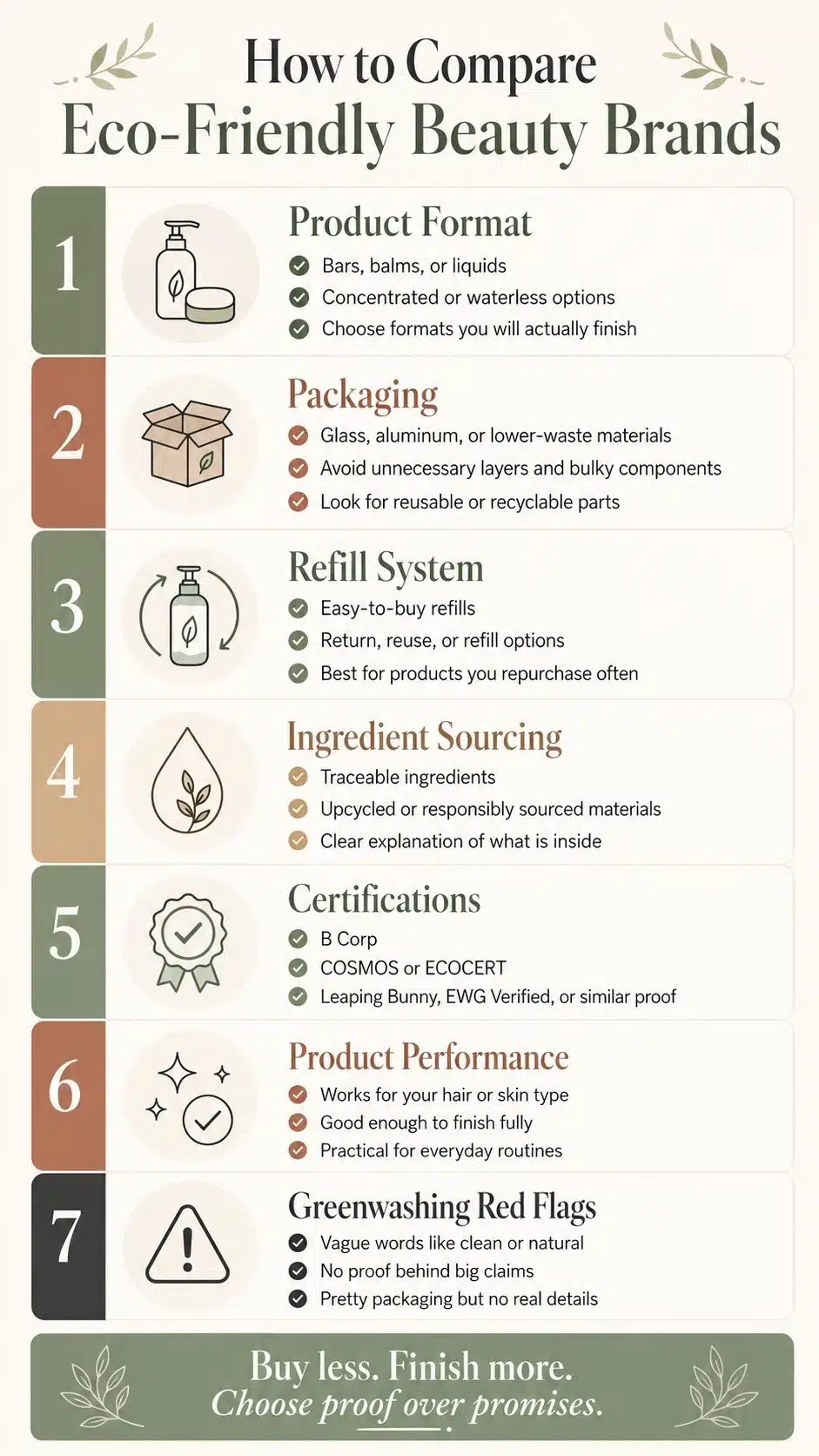
This comparison is not based on packaging aesthetics or influencer popularity. Each brand was reviewed through a practical buyer lens. I looked for signals that matter in real sustainable beauty, not just marketing language.
The main filters were:
- Product format and packaging
- Refill, reuse, take-back, or plastic-free systems
- Ingredient sourcing or upcycled ingredient use
- Certifications such as B Corp, COSMOS, EWG Verified, Leaping Bunny, PETA, or similar proof, where relevant
- Transparency around impact and sustainability claims
- Performance fit for normal routines
- Whether the brand encourages smarter use or just more buying
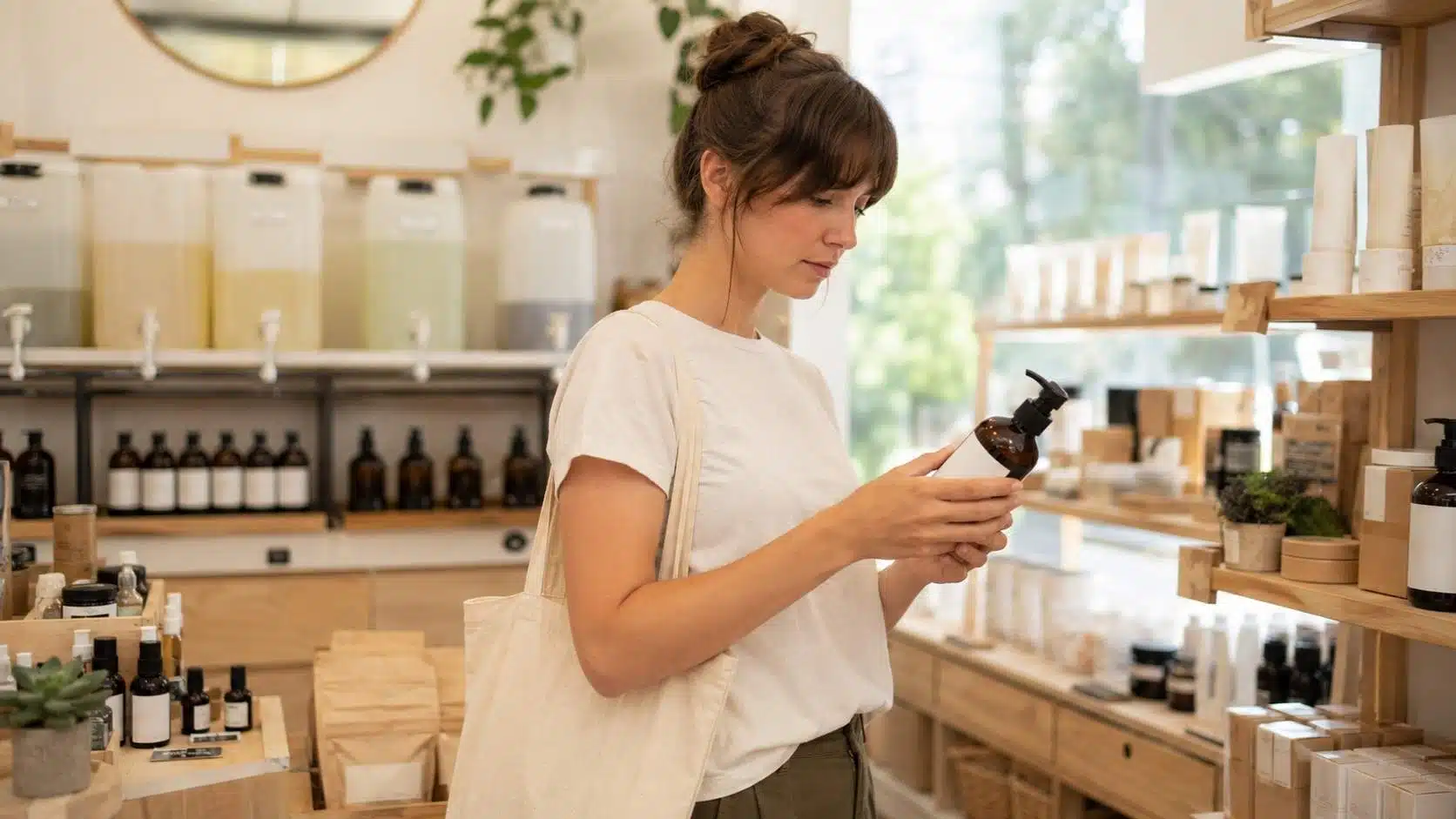
I also considered how useful the brand is for a real person. A product may be beautifully sustainable on paper, but if it is hard to use, too niche, or difficult to repurchase, many people will not stick with it.
11 Eco-Friendly Beauty Brands for Clean Beauty Choices
Sustainable beauty only works when the product is good enough to replace what you already use. Below are the 11 eco-friendly beauty brands worth mentioning for smarter clean beauty choices.
1. Ethique
Ethique is one of the easiest eco-friendly beauty brands to understand because its product format helps reduce reliance on single-use plastic.
The brand is known for solid shampoo bars, conditioner bars, face cleansers, body care, and other concentrated beauty products. Instead of shipping liquid formulas in plastic bottles, Ethique focuses on bar formats and plastic-free packaging.
This makes it a strong first step for people who want to reduce shower waste without building a complicated routine. Shampoo and conditioner bottles are common repeat purchases, so replacing them with bars can make a visible difference over time.
The real strength of Ethique is simplicity. You buy a bar, use it in the shower, keep it dry between uses, and avoid another plastic bottle. It is not glamorous, but it is practical.
That said, shampoo bars are not perfect for everyone. Some people love them immediately. Others struggle with texture, scalp feel, hard water, or storage. A bar that melts in the shower or leaves hair feeling waxy will not become a repeat purchase.
Ethique works best when you are willing to test the right formula for your hair type and store the bar properly.
Where Ethique fits: plastic-free haircare, low-waste shower swaps, solid beauty beginners.
Buyer note: Start with one shampoo or conditioner bar before replacing your full routine. Solid haircare needs a short adjustment period.
2. Plaine Products
Plaine Products is a better fit for people who want sustainability without giving up liquid shampoo, conditioner, body wash, lotion, or hand wash.
The brand uses refillable aluminum bottles. You order the product, use it, transfer the pump to the refill bottle, and return the empty bottle so it can be cleaned and reused. This matters because not everyone wants bars. Some households prefer familiar liquid products, especially for family bathrooms.
Plaine Products is strongest because it understands behavior. A refill model only works if it is easy enough for people to repeat. The return shipping system helps remove one of the biggest barriers.
It also makes sense for people who already know which products they use regularly. Refill systems are not ideal for constant experimentation. They are better for products you finish again and again.
The caution is consistency. You have to return the bottles. If you forget, the model loses some of its value. Refillable beauty requires a little more participation from the buyer.
Where Plaine Products fits: refillable haircare, body care, hand wash, and family bathroom basics.
Buyer note: Choose Plaine for products you already use often. Refill systems work best when they become a habit.
3. UpCircle Beauty
UpCircle Beauty stands out because it tackles waste at the ingredient level, not only the packaging level.
The brand uses upcycled ingredients such as coffee grounds, fruit stones, chai spices, and other byproducts in skincare and body care. That is a stronger story than a brand simply saying its formula is natural. UpCircle is asking a better question: can beauty products use valuable materials that would otherwise be wasted?
Its range includes cleansing balms, face scrubs, serums, oils, moisturizers, body creams, soaps, and haircare. The products feel approachable rather than overly clinical.
UpCircle is especially useful for people who want sustainable skincare but still enjoy textures, oils, balms, and sensorial products. It does not feel like a sacrifice brand. It feels like skincare with a circular idea behind it.
The main caution is skin type. Some formulas may feel rich, especially for oily or acne-prone skin. Upcycled does not automatically mean every product will suit everyone.
Where UpCircle fits: circular skincare, upcycled ingredients, richer textures, low-waste skincare routines.
Buyer note: Start with one product that matches your skin type. Ingredient sustainability does not replace skin compatibility.
4. Davines
Davines is a strong choice for people who want professional haircare but still care about sustainability.
Many low-waste hair products focus on bars, basic formulas, or simple packaging. Davines works differently. It sits closer to the salon world, with shampoos, conditioners, masks, treatments, styling products, and scalp care designed for performance.
The brand is a Certified B Corporation and has made sustainability part of its wider company identity. That gives it more substance than many salon brands that only add recycled packaging claims.
Davines is useful for people with specific hair needs: color-treated hair, frizz, dryness, curls, scalp issues, fine hair, or damage. If a shampoo bar does not work for you, a better-performing salon product that you finish fully may be a more realistic choice.
Still, Davines is not the lowest-waste option. Most products are not package-free. It is also more expensive than basic drugstore haircare.
Where Davines fits: salon-quality sustainable haircare, scalp care, treatments, performance-focused routines.
Buyer note: Choose Davines when performance matters. A product you actually finish is better than a low-waste product you abandon.
5. Beauty Kitchen
Beauty Kitchen is especially interesting because it has focused heavily on reusable packaging and refill systems.
The brand’s work around return, refill, and repeat models puts it among the more serious sustainable beauty brands, especially for UK shoppers. It is also listed as a Certified B Corporation, which adds another layer of accountability.
Beauty Kitchen offers skincare, body care, and personal care products. Its strongest role is not one miracle formula. It is the packaging model. The brand tries to move beauty away from single-use containers and toward reuse.
That matters because beauty packaging is a stubborn problem. Small jars, pumps, tubes, caps, mixed materials, mirrors, and applicators are often difficult to recycle.
The limitation is availability. Beauty Kitchen is most practical where its reuse systems are easy to access. If returning packaging is expensive, slow, or inconvenient in your region, the benefit drops.
Where Beauty Kitchen fits: reusable packaging, refill-minded skincare, UK sustainable beauty shoppers.
Buyer note: Check whether the return or refill system works smoothly where you live before committing.
6. Emma Lewisham
Emma Lewisham is one of the strongest premium examples of circular beauty.
The brand focuses on refillable packaging, a global take-back model, and high-end skincare. It is also B Corp certified and positions itself around circular, transparent, climate-conscious beauty.
This is not a budget brand. It is for people who already buy luxury skincare and want a better model than heavy jars, single-use packaging, and constant product turnover.
Emma Lewisham’s strength is that it tries to bring circular systems into a category where premium packaging often creates more waste, not less. Luxury beauty has a packaging problem because brands often use heavy components to feel expensive. A refillable model can help reduce that waste if customers actually keep using the product and refill it.
The caution is price and commitment. Refillable skincare only makes sense when you love the formula enough to keep refilling it. If you buy the original jar and never refill, the sustainability benefit is much weaker.
Where Emma Lewisham fits: luxury sustainable skincare, refillable packaging, circular beauty systems.
Buyer note: Buy only if you are likely to repurchase the refill. Circular skincare depends on repeat use.
7. Kjaer Weis
Kjaer Weis is known for refillable luxury makeup, especially its compacts. The brand built refillability into its identity early. Products such as foundation, cream blush, bronzer, highlighter, eyeshadow, and lip products can be used with refillable packaging, depending on the line.
Its strength is design. Kjaer Weis proves that sustainable makeup does not have to look plain or homemade. The compacts feel premium, which can encourage people to keep them instead of treating makeup packaging as disposable.
This is most useful for people who have a stable makeup routine. If you know your foundation shade, blush shade, or favorite cream product, refillable packaging makes more sense.
The weakness is cost and accessibility. Premium refillable makeup can be expensive. Also, shade matching online can be tricky, and availability may vary by market.
Where Kjaer Weis fits: refillable luxury makeup, cream products, premium compacts.
Buyer note: Refillable makeup is strongest when you know your shades and will keep using the same product.
8. Axiology
Axiology is a good brand for people who want makeup to become simpler, not larger. The brand is known for plastic-free, multi-use makeup crayons and balms that can be used on lips, cheeks, and eyes. This matters because one multi-use product can replace several separate items.
Axiology’s biggest value is minimalism. Instead of encouraging a drawer full of palettes, tubes, and compacts, it gives you a smaller routine with less packaging.
The plastic-free packaging angle also makes it useful for people who want color cosmetics without the usual makeup waste. Lip and cheek products often come in mixed packaging that is difficult to recycle. Axiology tries to simplify that.
The caution is formatted. Crayons and balm-style products are not for everyone. Some users may prefer traditional lipstick tubes, powder blushes, or long-wear formulas.
Where Axiology fits: plastic-free makeup, multi-use color, minimalist beauty routines.
Buyer note: Best for people who like creamy, simple, finger-friendly makeup and do not need a full glam routine.
9. Elate Beauty
Elate Beauty is a strong everyday option for low-waste makeup. The brand focuses on refillable, recyclable, vegan, and cruelty-free cosmetics. Its product line includes foundation, concealer, mascara, brow products, blush, eye color, lip products, and tools. It also partners with PACT Collective for beauty packaging recycling.
Elate feels more practical than some premium refillable makeup brands. It is designed for people who want a real makeup routine but do not want every product to become packaging waste.
The brand is especially useful for buyers who want pressed powders, refillable palettes, and simpler daily products. It also has a softer, less intimidating feel than luxury eco makeup.
The caution is that refillable makeup still requires discipline. You have to choose shades carefully, finish the product, buy the refill, and avoid adding unnecessary colors just because the system feels more sustainable.
Where Elate Beauty fits: everyday refillable makeup, low-waste cosmetics, vegan beauty routines.
Buyer note: Build a small refillable routine slowly. Sustainable makeup should reduce clutter, not make it prettier.
10. ATTITUDE / Oceanly
ATTITUDE is a practical choice for shoppers who want safer-feeling personal care and skincare with stronger certification signals.
The brand is known for EWG Verified products, vegan and cruelty-free positioning, and personal care formulas for families, babies, adults, and sensitive users. Its Oceanly skincare line adds a more beauty-focused angle with plastic-free solid formats.
ATTITUDE is useful because it is more accessible than many boutique green beauty brands. It covers deodorant, body care, baby care, hair care, sun care, and skincare. That makes it realistic for households, not just beauty enthusiasts.
Its strongest appeal is trust-building through recognizable standards and simple product positioning. For people overwhelmed by clean beauty claims, EWG Verified can be a useful shortcut, though it should not be the only factor.
The caution is that “clean” does not automatically mean low-impact. You still need to look at packaging, product format, shipping, and whether you will finish the item.
Where ATTITUDE fits: family personal care, sensitive-skin shoppers, EWG Verified products, plastic-free skincare formats.
Buyer note: Good for practical swaps, especially when you want personal care products that feel less risky and easier to verify.
11. MÁDARA
MÁDARA is a strong option for people who want natural and organic beauty with more scientific polish.
The Latvia-based brand offers skincare, makeup, body care, haircare, and men’s products. It is known for Nordic ingredients, dermatologically tested formulas, COSMOS / ECOCERT certification, vegan-friendly positioning, cruelty-free claims, and B Corp certification.
MÁDARA is useful because it sits between natural beauty and performance skincare. It does not feel as basic as some organic brands, but it still has credible certification signals.
This makes it a good choice for shoppers who want green beauty brands with a stronger formulation story. Products like serums, moisturizers, SPF, foundations, and targeted skincare are where the brand is most relevant.
The caution is that natural and organic formulas are not automatically better for every skin type. Sensitive skin can still react to plant extracts or fragrance components. Always patch test.
Where MÁDARA fits: certified natural and organic skincare, makeup, Nordic ingredient-led beauty.
Buyer note: Good for shoppers who want certified natural beauty but still care about texture, performance, and modern formulas.
Quick Comparison of the 11 Brands
| Brand | Strongest Category | Main Sustainability Angle | Better For |
| Ethique | Haircare and body bars | Plastic-free solid beauty | Shampoo and conditioner bar for beginners |
| Plaine Products | Hair, body, hand care | Returnable aluminum bottles | Refillable liquid product users |
| UpCircle Beauty | Skincare | Upcycled ingredients and refill-aware packaging | Circular skincare buyers |
| Davines | Professional haircare | B Corp salon-grade haircare | People who want performance hair products |
| Beauty Kitchen | Skincare and body care | Reuse and refill packaging model | UK-focused refill shoppers |
| Emma Lewisham | Premium skincare | Circular refill and take-back model | Luxury skincare users |
| Kjaer Weis | Makeup | Refillable luxury compacts | Premium refillable makeup buyers |
| Axiology | Makeup | Plastic-free multi-use crayons | Minimal makeup routines |
| Elate Beauty | Makeup | Refillable and recyclable cosmetics | Everyday low-waste makeup |
| ATTITUDE / Oceanly | Skincare and personal care | EWG Verified and plastic-free lines | Sensitive-skin and family shoppers |
| MÁDARA | Skincare and makeup | COSMOS / ECOCERT and B Corp credentials | Natural and organic skincare users |
Which Eco-Friendly Beauty Brand Should You Choose?
The right brand depends on what you want to replace.
- Want to cut shower plastic? Start with Ethique.
- Prefer liquid products but hate single-use bottles, Plaine Products is the better fit.
- Care about ingredient waste, UpCircle Beauty has the strongest upcycled story.
- Your hair needs salon-level performance. Davines is more realistic than forcing yourself into a shampoo bar.
- You are in the UK and want reusable packaging. Beauty Kitchen is worth checking.
- You already buy premium skincare; Emma Lewisham offers one of the more serious circular models.
- Want refillable luxury makeup? Kjaer Weis is the polished option.
- Want plastic-free, minimal makeup? Axiology is easier.
- Want everyday refillable makeup? Elate Beauty is practical.
- Want family-friendly personal care with recognizable verification? ATTITUDE is useful.
- Want certified natural and organic skincare with a performance edge? MÁDARA is a strong choice.
The best beauty brand is not the one with the greenest branding. It is the one you will actually use, finish, refill, recycle correctly, or repurchase responsibly.
Clean Beauty vs Sustainable Beauty: Do Not Confuse the Two
Clean beauty and sustainable beauty are related, but they are not the same thing.
Clean beauty usually focuses on ingredient safety, ingredient restrictions, transparency, and avoiding certain controversial substances. But the term is not always used consistently. One brand’s clean standard may be very different from another brand’s.
Sustainable beauty looks wider. It asks what the product is made from, how ingredients are sourced, what packaging is used, whether the container can be reused or recycled, how much waste is created, how workers and suppliers are treated, and whether the brand is honest about trade-offs.
A product can be clean but wasteful, sustainable in packaging but unsuitable for your skin. It can be natural but irritating. And refillable, but only useful if customers actually refill it.
That is why shoppers need to look beyond one label. The strongest eco-friendly beauty brands combine performance, transparency, thoughtful packaging, and responsible sourcing.
Greenwashing Red Flags in Beauty
Beauty greenwashing often hides behind soft, safe-sounding language. Be careful with claims like clean, natural, non-toxic, conscious, green, eco-luxe, earth-friendly, chemical-free, and planet-safe when the brand does not explain what those words mean.
The worst sign is vagueness. A brand may show leaves, beige packaging, glass jars, and soft lighting while giving no details about ingredients, sourcing, packaging, certifications, or end-of-life.
Look for clearer proof:
- Does the brand explain packaging materials?
- Can containers be refilled, reused, recycled, composted, or returned?
- Are certifications shown with real names?
- Does the brand publish sustainability or impact information?
- Are ingredient claims specific?
- Does the product format reduce water or packaging?
- Does the brand encourage using products fully?
- Are refills easy to buy and use?
Also, be careful with overbuying. A refillable lipstick is not sustainable if you buy six shades and use none of them. A plastic-free cleanser is not helpful if it irritates your skin and gets thrown away. A clean beauty product is not better if you already own five similar products at home.
Sustainable beauty starts with finishing what you have.
Final Verdict: Better Beauty Starts With Fewer Products
The strongest lesson from these eco-friendly beauty brands is not that you need a new shelf full of sustainable products. You probably need fewer products, better choices, and more patience.
Ethique is excellent for plastic-free shower swaps. Plaine Products is better for refillable liquid basics. UpCircle makes circular skincare feel approachable. Davines gives sustainable beauty a salon-quality option. Beauty Kitchen and Emma Lewisham show how reusable packaging can work in different price ranges. Kjaer Weis, Axiology, and Elate Beauty make makeup less wasteful in different ways. ATTITUDE makes verified personal care easier for families. MÁDARA gives natural and organic beauty a more certified, performance-minded route.
Still, none of these brands can make overbuying sustainable. Use what you have. Replace slowly. Choose proof over pretty claims. Buy the product you will finish, not the one that looks best in a flat lay. That is how green beauty becomes practical.
Frequently Asked Questions About Eco-Friendly Beauty Brands
1. What are the best eco-friendly beauty brands for beginners?
Ethique, Plaine Products, UpCircle Beauty, ATTITUDE, and Elate Beauty are good beginner-friendly options. They cover common daily products such as shampoo, conditioner, body wash, skincare, personal care, and makeup without making the routine feel too complicated.
2. Are clean beauty and eco-friendly beauty the same thing?
No. Clean beauty usually focuses on ingredient standards and avoiding certain substances. Eco-friendly beauty looks wider at packaging, waste, sourcing, refill systems, product format, transparency, and environmental impact. A product can be clean but still wasteful.
3. Are refillable beauty products actually sustainable?
They can be, but only when people actually refill them. A refillable jar or compact has a higher purpose when it replaces several single-use packages over time. If you buy the original packaging and never refill it, the benefit is much weaker.
4. Are shampoo bars better than bottled shampoo?
Shampoo bars can reduce plastic packaging and shipping weight because they are solid and concentrated. But they are only better if they work for your hair and you use them fully. Storage, hair type, water hardness, and formula choice all matter.
5. How can I tell if a beauty brand is greenwashing?
Look for proof. Stronger brands explain packaging, sourcing, certifications, refill or return systems, cruelty-free status, ingredient choices, and sustainability progress. Be cautious when a brand relies only on vague words like clean, natural, green, conscious, or non-toxic.
6. Which eco-friendly beauty product should I switch to first?
Start with the product you finish most often. Shampoo, conditioner, body wash, hand wash, cleanser, deodorant, lip balm, or mascara are practical first swaps. Replacing repeat-use products creates more impact than buying a new product you barely use.