Are you feeling stuck between wanting to work from home and missing the energy of the office? You are definitely not the only one. Companies everywhere are still struggling to figure out what works best, with some teams thriving remotely while others seem to fall apart. The truth is simple. The story of how remote work has permanently changed workplace culture is still being written.
Here is a wild fact I want to share with you. A massive 70 percent of workers now do their jobs from home at least one day per week, and companies that once forced everyone into the office five days a week now operate on a hybrid or remote workplace culture. This shift is permanent.
In this blog, I am going to show you exactly how telecommuting reshaped our daily lives, and I will share the simple steps that can make it work for you.
The Shift to Remote Work
In early 2020, companies abandoned their office-first playbooks almost overnight. Workers packed up their desks, fired up their laptops at home, and discovered a completely new way to operate.
The impact of the COVID-19 pandemic
The pandemic forced us to rethink everything we thought we knew about where work actually happens. – Fortune Magazine
The pandemic hit like a lightning bolt, forcing millions of workers out of office buildings and into their living rooms. Companies scrambled to adapt by setting up telecommuting systems in days instead of months. We saw an incredible shift in the numbers very quickly. According to a 2026 Upwork report, over 36 million Americans will be fully remote this year, which is a staggering 289% jump from 2019 levels.
Managers learned a valuable lesson during this transition. Workplace flexibility does not mean losing control or output, and remote teams can actually exceed traditional expectations.
Increased adoption of digital tools and platforms
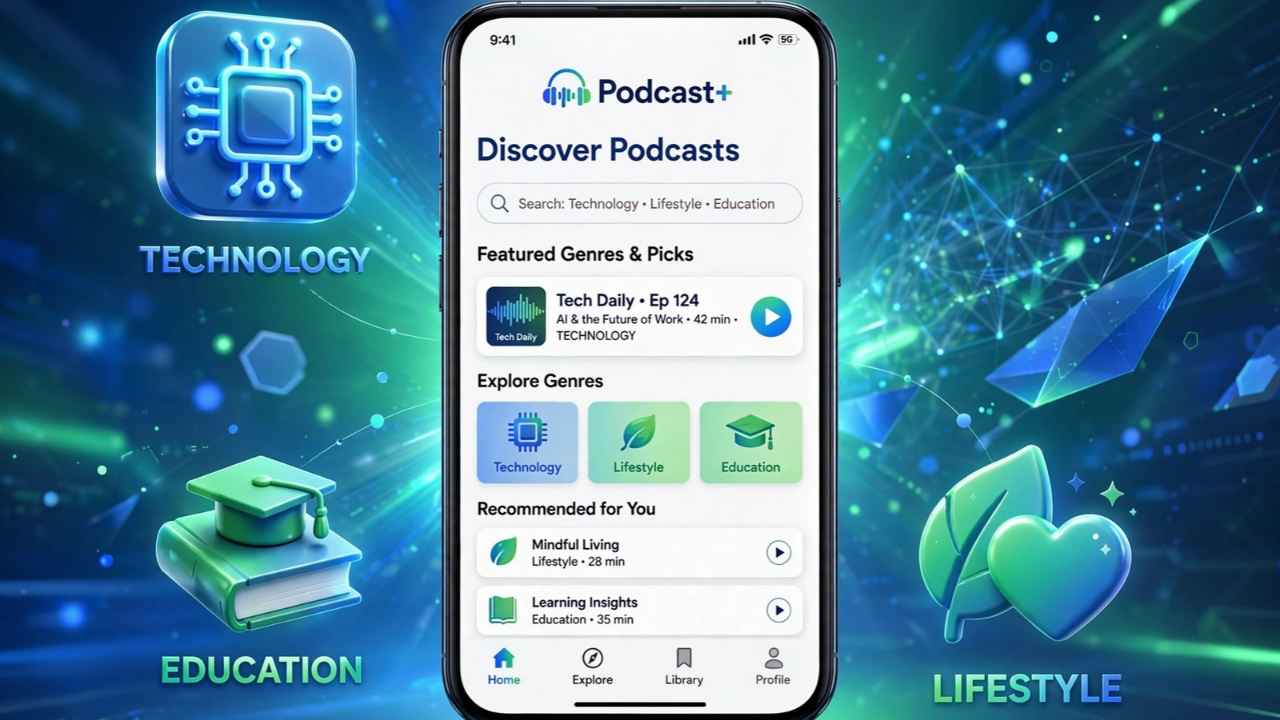
Businesses had to act fast to keep operations running. Slack, Microsoft Teams, and Zoom became household names almost instantly. The growth of these platforms is mind-blowing. Microsoft Teams jumped from 20 million daily users in 2019 to over 320 million active users globally by 2024, with the US driving a massive share of that traffic.
This tech revolution stuck around because it works, and companies discovered that digital collaboration tools actually boost productivity. Here is a quick look at the top digital communication tools many US companies use today:
| Platform | Best Feature | Average Starting Price |
|---|---|---|
| Microsoft Teams | Deep Microsoft 365 integration | $4.00/user/month |
| Zoom | High-quality video and AI Companion | $13.32/user/month |
| Slack | Instant messaging and quick audio “Huddles” | $7.25/user/month |
Managers quickly found that tracking outcomes is easier than tracking hours. Virtual collaboration replaced the old myth that people must sit in the same room to do great work.

How Remote Work Has Permanently Changed Workplace Culture
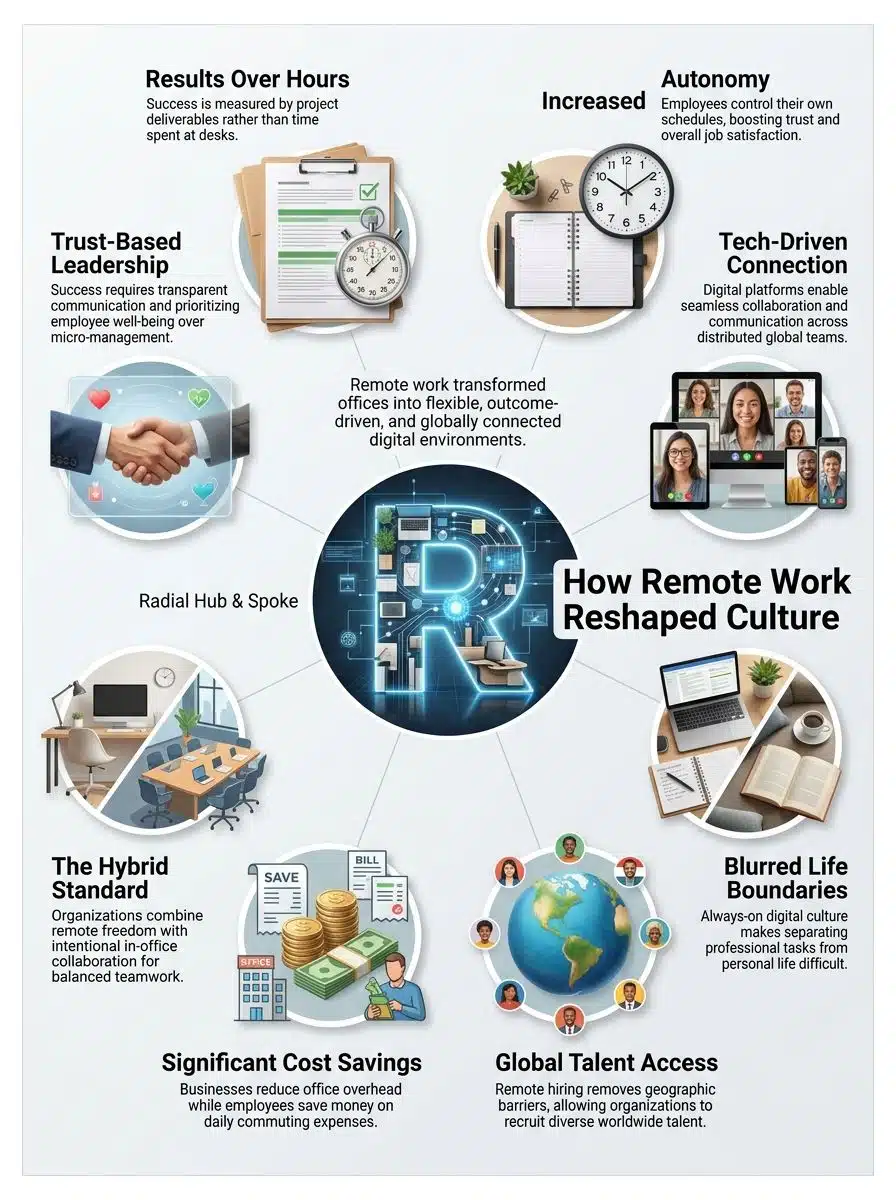
Telecommuting has flipped the script on how companies view their workers. We now measure success by what people accomplish rather than the time they spend at a desk.
Flexibility and autonomy for employees
Employees now call the shots on where and how they operate, and this shift has completely changed the game. Companies noticed that staff members produce better work when they control their own environment. This autonomy builds incredible trust, and the data backs it up. Buffer’s recent State of Remote Work report found that 98% of remote workers want to stay remote for the rest of their careers.
Here is why employee autonomy matters so much to modern workers:
- Better focus: Workers can block out distractions that plague open-plan offices.
- Life integration: Parents can pick up kids from school without feeling guilty.
- Healthier habits: People use their old commute time to exercise or cook fresh meals.
- Location independence: You can live in a cheaper US city while keeping your current salary.
The ability to work flexibly has become a non-negotiable part of what employees expect from their employers today.
Increased focus on outcomes over hours
Managers finally stopped counting hours and started measuring results. This outcome-focused approach rewards efficiency and eliminates pointless busywork. A developer finishes code by Tuesday, so they take Wednesday off. A marketer launches a campaign early, then handles personal errands without stress or guilt.
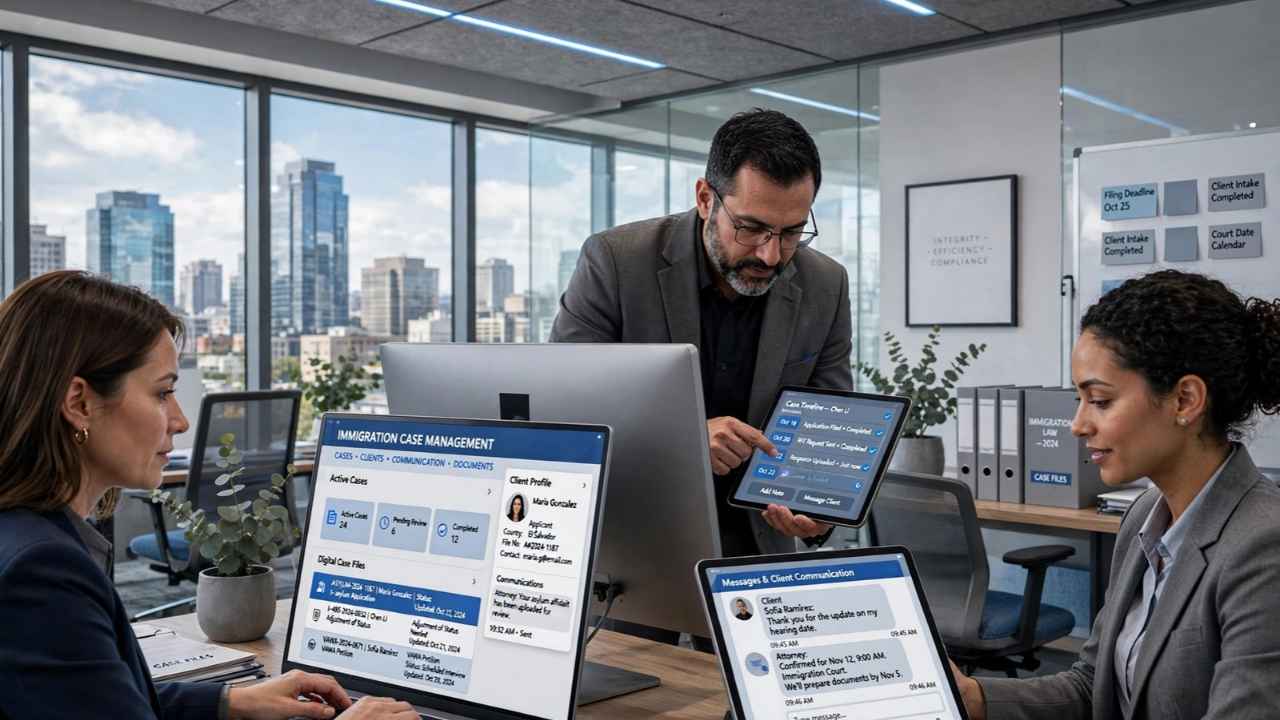
Many top US companies now use specific frameworks to track these results, such as the Objectives and Key Results system. By using software like Lattice or Asana, leaders track completion rates instead of monitoring screen time.
This transparency builds massive trust between managers and their teams. Job satisfaction improves dramatically when people feel judged fairly based on their actual work.
Blurring of work-life boundaries
This focus on results creates a strange paradox. Employees can complete tasks at any hour, which sounds great on paper but comes with a hidden cost. The line between your job and your personal life gets very fuzzy. Microsoft’s 2025 Work Trend Index revealed a startling fact: communication now consumes 60% of the average workday, and employees face interruptions every two minutes.
This constant digital communication can drain your energy fast. Here are a few insider tips to protect your time and maintain your work-life balance:
- Set hard stops: Close your laptop at the exact same time every single day.
- Use status messages: Tell your team on Slack or Teams when you are offline or doing deep work.
- Remove phone apps: Take work email and chat apps off your personal smartphone.
- Create a dedicated workspace: Try to work anywhere except your bedroom to keep rest spaces sacred.
Without these boundaries, work consumes everything, causing employee engagement to drop as people burn out.
The Role of Technology in Supporting Remote Work
Technology is the backbone of distributed teams. It keeps us connected across different time zones and physical locations.
Growth of virtual collaboration tools
Digital tools have completely transformed how we share files and complete projects. We traded messy email chains for instant messaging and real-time document editing. But there is a catch to all this connectivity. A 2026 Skedda report warns that hybrid teams often default to too many synchronous meetings, leading to serious meeting fatigue.
You have to mix real-time calls with asynchronous updates to keep your team fresh. Here is a comparison of how to use different communication styles effectively:
| Communication Type | Best Used For | Example Tool |
|---|---|---|
| Synchronous (Real-time) | Brainstorming, urgent issues, and relationship building | Zoom or a phone call |
| Asynchronous (Delayed) | Status updates, deep work, and document reviews | Google Workspace or Loom |
The right mix keeps employee engagement high. It makes everyone feel included without burning them out from too much screen time.
Enhanced cybersecurity measures
Telecommuting opened new doors for businesses, but it created fresh security risks. Hackers see scattered home networks and coffee shop Wi-Fi as easy targets. The financial impact is absolutely huge for companies that ignore this. According to the 2024 IBM Data Breach Report, the average cost of a data breach in the US reached a record $10.22 million.
Companies responded by investing heavily in Zero Trust architecture to protect their data. Tools like CrowdStrike and Zscaler became essential for verifying user identities before granting access to company files.
Protecting remote teams from cyber attacks is worth every single dollar spent. One breach can cripple a business.
Workers must now use multi-factor authentication and stronger passwords daily. These security upgrades are a core part of organizational change in the digital era.
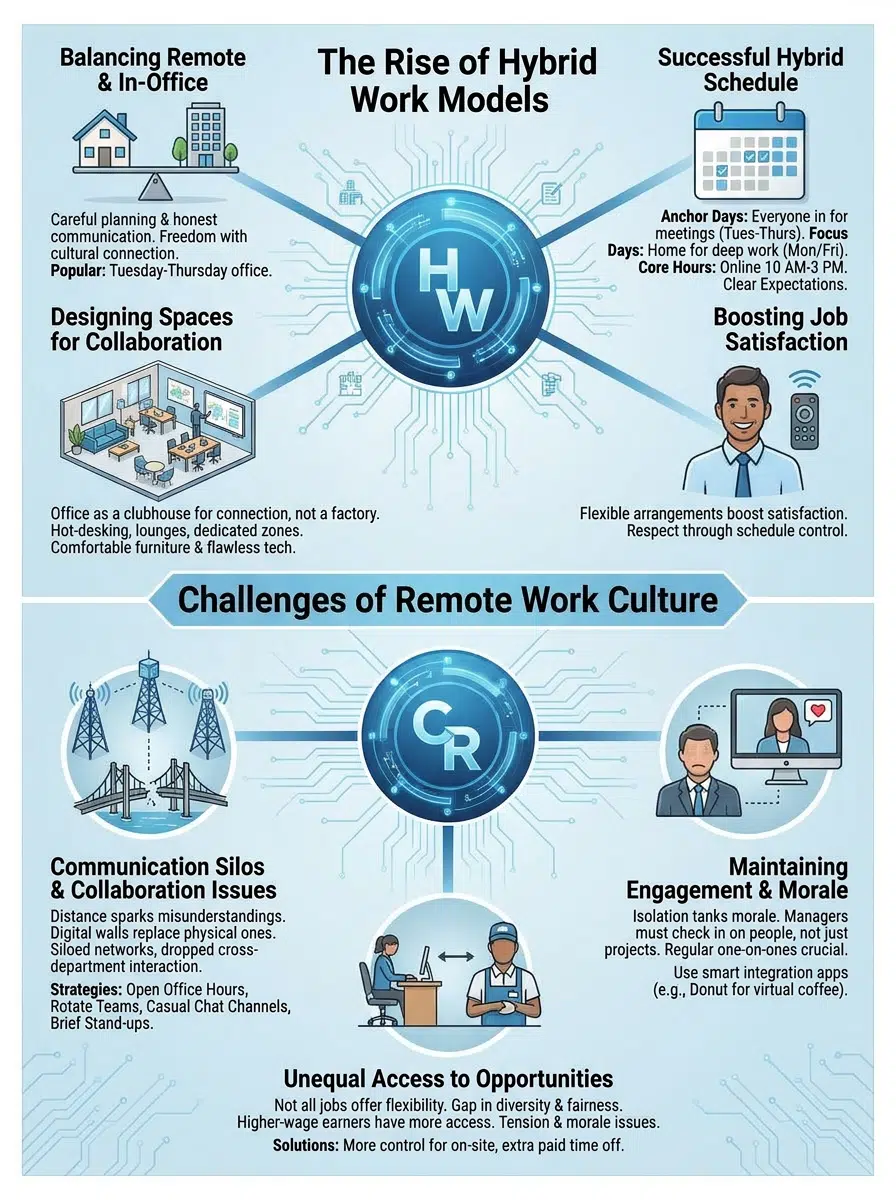
Challenges of Remote Work Culture
Flexible work sounds perfect, but it creates real friction points. Distance can spark misunderstandings and kill collaboration if you do not manage it well.
Communication silos and collaboration issues
Losing the physical office broke down old walls, but we built new digital ones in their place. Teams often work in separate silos and forget to share information. Microsoft observed in recent studies that internal communication networks became highly siloed during remote work. Cross-department interaction dropped significantly as workers stayed strictly in their own lanes.
Employees miss the quick hallway chats that sparked new ideas, so leaders must be intentional to fix this. Try these simple strategies to break down silos:
- Host open office hours: Let anyone drop into a video call to ask questions without an appointment.
- Rotate project teams: Mix up groups regularly so people meet coworkers from different departments.
- Create casual chat channels: Dedicate spaces for sharing pet photos, music, or weekend plans.
- Schedule brief stand-ups: Keep daily updates to 10 minutes to maintain alignment without wasting time.
Without intentional effort, remote collaboration suffers, and people feel isolated from the bigger picture.
Maintaining employee engagement and morale
Remote workers often feel disconnected from their peers. This isolation can tank morale incredibly fast if managers ignore the human element of work. Managers need to check in on the people, not just the projects. Regular one-on-one meetings are absolutely crucial for maintaining strong workplace relationships.
A great tip from seasoned remote managers is to use smart integration apps to force organic connections. Tools like Donut for Slack randomly pair employees for 15-minute virtual coffee breaks. These small moments build genuine friendships across departments. Job satisfaction climbs rapidly when people feel heard and valued as individuals.
Unequal access to remote work opportunities
We have to acknowledge that not all jobs offer the same flexibility. This gap creates real problems for workplace diversity and company fairness. According to the US Bureau of Labor Statistics, higher-wage earners have disproportionately more access to telework than those in service or manufacturing roles.
This divide means some employees miss out on a better work-life balance while watching their peers enjoy it. It can create serious tension within a company and hurt overall morale. Businesses must find ways to offer flexibility to everyone on the payroll. Even giving on-site workers more control over their shifts or offering extra paid time off helps build a fairer organizational culture.
Positive Impacts of Remote Work on Workplace Culture
The shift to home offices opened doors to fresh talent pools. It also cut costs in ways that shocked both business owners and employees.
Greater inclusivity in the workforce
Telecommuting breaks down geographic and physical barriers that used to block great candidates. It creates a much more level playing field for everyone. Because of this newfound flexibility, employment rates for people with disabilities in the US recently hit record highs. Companies are finally hiring the best person for the role, regardless of physical limitations or commuting challenges.
This shift brings incredible benefits to your organizational culture:
- Diverse perspectives: Teams solve problems faster when they include people from wildly different backgrounds.
- Parental support: Mothers and fathers can stay in the workforce while managing their childcare schedules.
- Reduced ageism: Older workers can extend their careers without the physical toll of a daily commute.
- Broader reach: You are no longer limited to hiring the talent that happens to live within a 30-mile radius.
Cost savings for employers and employees
Working from home keeps more money in everyone’s pockets. Employers slash overhead costs, and workers save big on gas and expensive city lunches. Data from Global Workplace Analytics shows that businesses can save an average of $11,000 per year for every half-time remote employee.
Let’s look at how these savings break down for a typical US worker every single year:
| Expense Category | Estimated Annual Savings for Employees |
|---|---|
| Gas and Car Maintenance | $1,500 – $2,000 |
| Work Wardrobe and Dry Cleaning | $500 – $1,000 |
| Lunches and Coffee Runs | $1,000 – $2,000 |
These financial wins add up quickly. Companies can redirect their real estate savings into better salaries, wellness perks, or faster laptops for their remote teams.
Opportunities for global talent acquisition
Your business can now hire the absolute best workers from anywhere on Earth. We have completely broken down the old geographic barriers. Platforms like Deel and Oyster HR make this incredibly easy for modern businesses. US companies can now legally hire a brilliant designer in Europe or South America without setting up foreign corporate entities.
Your remote teams gain cultural richness and a competitive edge. You also create a 24-hour productivity cycle as employees seamlessly hand off projects across different time zones.
The Rise of Hybrid Work Models
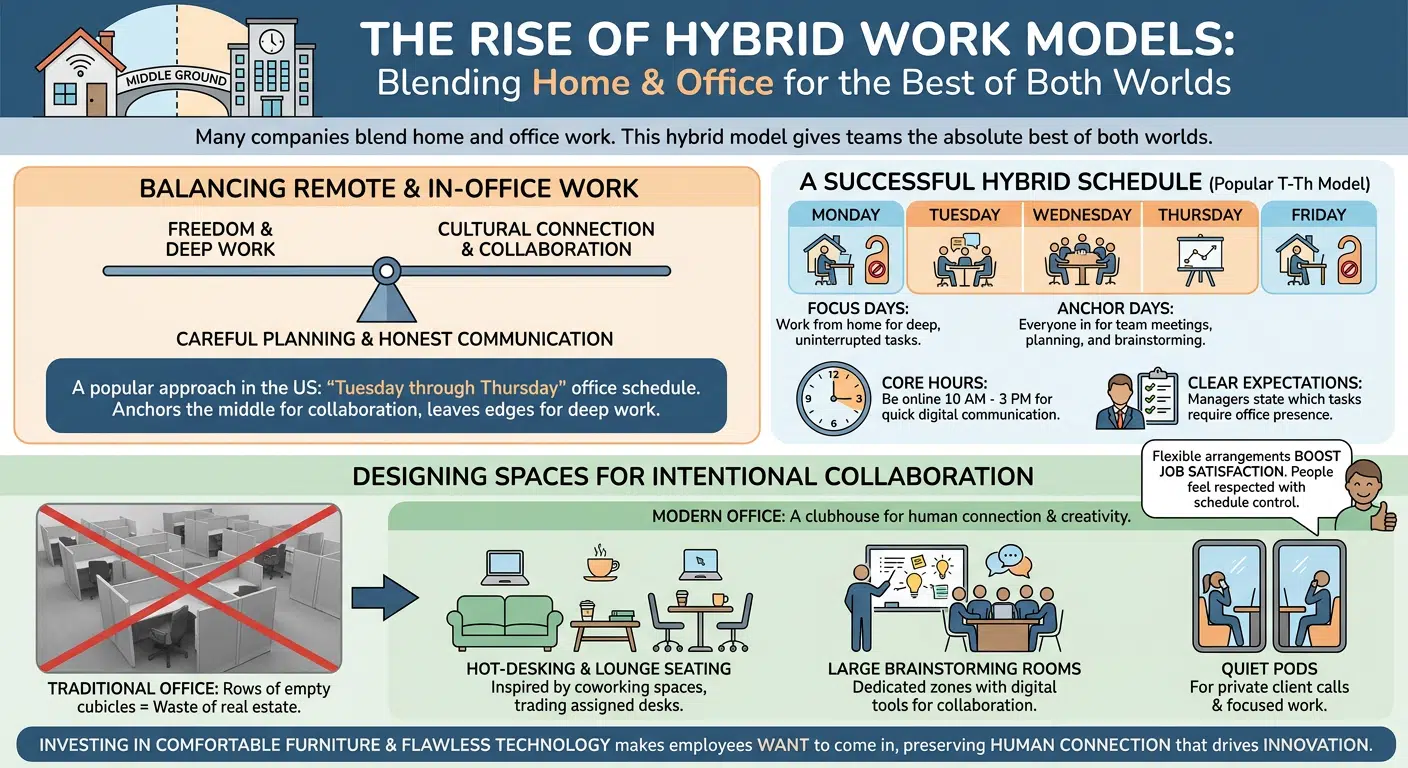
Many companies now blend home and office work to create a middle ground. This hybrid model gives teams the absolute best of both worlds.
Balancing remote and in-office work
Getting the hybrid balance right takes careful planning and honest communication. You want to give people freedom while keeping the team culturally connected. A very popular approach in the US right now is the “Tuesday through Thursday” office schedule. This anchors the middle of the week for in-person collaboration and leaves the edges for deep work.
Here is how a highly successful hybrid schedule usually works:
- Anchor days: Everyone comes in on specific days for team meetings, planning, and brainstorming.
- Focus days: Employees work from home on Mondays and Fridays to do deep, uninterrupted tasks.
- Core hours: Teams agree to be online between 10 AM and 3 PM to ensure quick digital communication.
- Clear expectations: Managers clearly state which specific tasks actually require an office presence.
Flexible work arrangements boost job satisfaction instantly. People feel respected when they have a voice in controlling their own schedule.
Designing spaces for intentional collaboration
Because people work differently now, traditional offices desperately need an upgrade. Rows of empty cubicles are a complete waste of expensive real estate.
The modern office is no longer a factory for individual tasks; it is a clubhouse for human connection and creativity.
Smart companies are aggressively redesigning their floor plans to match the hybrid workplace. They are trading assigned desks for “hot-desking” areas and comfortable lounge seating inspired by coworking spaces. Offices now focus on creating dedicated zones for different activities. You need large rooms with digital whiteboards for brainstorming and quiet pods for private client calls.
When you invest in comfortable furniture and flawless technology, employees actually want to come into the office. This intentional design preserves the human connection that drives true innovation.
Best Practices for Adapting to a Remote Work Culture
The most successful companies put real effort into making people feel valued. You have to focus on open communication, fast feedback, and genuine care.
Prioritizing trust and transparency
Trust is the absolute foundation of a healthy organizational culture. You simply cannot micromanage people you cannot see in person. Companies like GitLab, pioneers in distributed work, emphasize a strategy called “working out loud.” This means documenting every decision, policy, and process in a central, highly searchable handbook.
When you share information openly, you cut through the fog and anxiety of distance. Transparency stops workplace rumors in their tracks and builds massive trust across the team. Leaders should share both the big wins and the tough setbacks on company-wide calls. Employees make much better choices when they understand the full financial and strategic picture.
Encouraging virtual team-building activities
You have to create intentional moments for fun. Virtual team-building keeps energy high and breaks down the digital walls between departments.
Here are five simple activities that actually work for distributed teams:
- Host virtual coffee chats where small groups meet for 15 minutes to discuss non-work topics.
- Organize skill-sharing sessions where team members teach each other new hobbies, like photography or cooking.
- Launch digital scavenger hunts that inject a little humor and movement into a stressful week.
- Set up a dedicated Slack channel just for sharing peer recognition and celebrating personal wins.
- Plan quarterly virtual retreats with breakout rooms for interactive games like online trivia.
Supporting employee mental health and well-being
We absolutely must protect our people from the dangers of burnout. Remote work offers amazing flexibility, but the daily isolation is very real.
A team cannot sustain high performance if the individuals are emotionally exhausted. Mental health is a direct business priority.
Many US companies now offer subscriptions to digital wellness platforms like Spring Health or Headspace for Work. These tools give employees incredibly fast, private access to professional counseling.
Managers should actively encourage workers to take their sick days, even if it is just to clear their heads. Digital communication tools should never replace a genuine phone call to ask, “How are you really doing today?” When you prioritize human well-being, you build an incredibly loyal and happy team.
Final Thoughts
The way we do our jobs has fundamentally shifted for good. We no longer care where an employee sits; we care about the value they bring and what they accomplish. Understanding how remote work has permanently changed workplace culture is your first step toward building a stronger team. Flexibility and trust are the new pillars of success, making our organizations much more inclusive and highly productive.
You can start making improvements right now. Evaluate your current digital tools, listen to your team’s feedback, and help them set clear boundaries to protect their time.
The future belongs to leaders who adapt quickly and show genuine empathy. When you trust your people to do their absolute best work from anywhere, the results will amaze you.
Frequently Asked Questions (FAQs) on Remote Workplace Culture
1. How has remote work changed workplace culture for good?
Remote work flipped the script on office life, and it’s sticking around. According to a 2025 McKinsey study, 58% of Americans now have the option to work from home at least one day a week. People can skip long commutes and spend more time with family or pets while teams connect through screens instead of cubicles.
2. What are some challenges companies face with remote teams?
Companies often struggle to keep everyone connected when they’re miles apart, and building trust through screens can feel like trying to high-five someone through glass. A 2024 Gallup report found that 45% of remote managers say maintaining team cohesion is their biggest hurdle.
3. Has communication improved or gotten worse since moving away from offices?
It depends on who you ask! Tools like Slack and Zoom make it easier to share ideas fast without endless meetings, but sometimes messages get lost in translation, and jokes don’t land the same way over video.
4. Are there any lasting benefits of this shift for workers?
Absolutely! Many enjoy flexible hours and a better balance between work and home life now that they aren’t tied to cubicles. People can live where they want, and a 2025 FlexJobs survey showed that 65% of remote workers reported improved work-life balance compared to their office days.