


It can feel like hunting for a needle in a haystack when you search for Japan’s top blockchain companies. You might not know which firms shape public blockchain, build smart contracts, or back cryptocurrencies.
Here is one fact. EMURGO in Tokyo leads in blockchain solutions with a five star score.
We list ten top blockchain firms in Japan, and their key projects. You will see work on distributed ledger technology, decentralized applications, and Web 3.0 solutions. This guide will save you time and point you to real innovators.
Read on.
Key Takeaways
- We chose 10 blockchain firms by rates, staff size, and years in blockchain. We also used Clutch reviews and a Focus & Ability grid updated July 2, 2025.
- EMURGO in Tokyo leads with a 5.0 rating, 50–249 staff, and 100% blockchain work. They build Cardano dapps, smart contracts, and crypto wallets.
- Consensus Base (2015), Soramitsu (2008), and Quoine (2014) have 50–999 staff. They build NFT marketplaces, DeFi tools, and exchanges on Ethereum and Hyperledger Fabric.
- Other top firms range from NTT DATA (founded 1988, 10,000+ staff) to COMPDEEP (8 staff), MIICHISOFT (50–249 staff), DevSamurai (10–49 staff), Vauldex (50–249 staff, 4.9 stars), and HashPort (50–249 staff). They build NFT auctions, supply chain apps, DeFi, and private-ledger solutions.
- These investments boost finance, supply chains, gaming, and healthcare in Japan. They shape the Web 3.0 space with smart contracts and dapps.
Criteria for Selection: How We Chose the Top 10 Companies
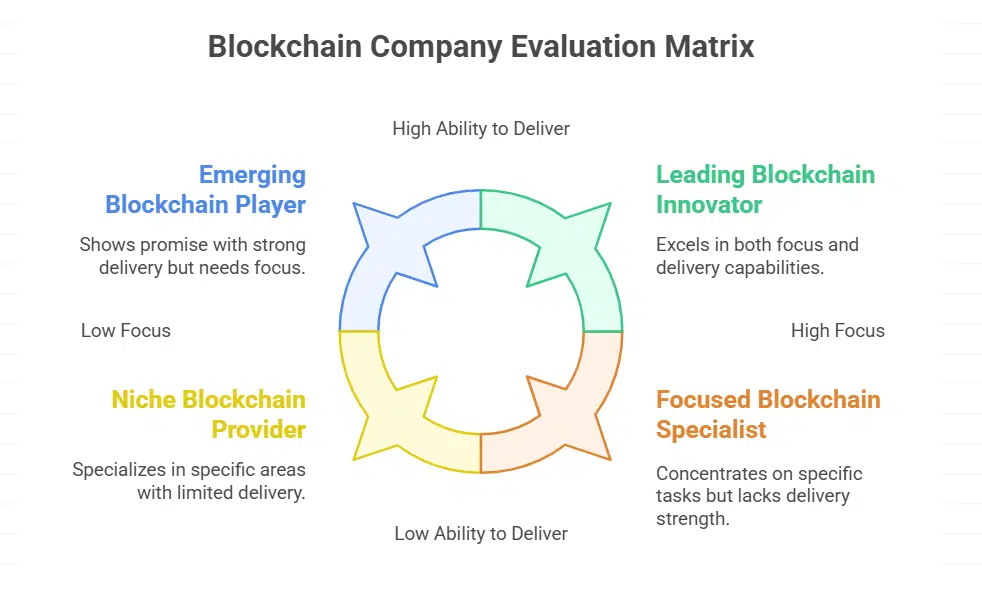
We filtered firms by hourly rates, employee count, blockchain development years, and industry sectors. We sifted through data like detectives solving a case. Our team read client feedback on the Clutch website.
Analysts used an evaluation grid that scored Focus and Ability to Deliver. We checked agile development workflows and project management success rates. All figures reflect rankings updated on July 2, 2025.
Grid scores also evaluated projects from smart contracts to decentralized finance, NFT marketplaces, and dapps. This method found leading blockchain companies in Japan. The list covers fintech, supply chains, and crypto exchanges.
We used client reviews, work history, and market presence to craft the final rankings.
The Top 10 Japanese Companies Investing in Blockchain
Japan’s top tech firms bet big on blockchain technology. They build dApps, craft smart contracts, deploy public blockchain, use permissioned ledger, chase DeFi gains and mint NFT collectibles.
Company 1: Brief description and blockchain project focus
Emurgo is a Tokyo-based firm. It has 50 to 249 staff and a perfect 5.0 rating. It founded the Cardano network. It offers 100% blockchain services and agile smart contract development.
Emurgo leads dapp creation on the Cardano network. Teams craft blockchain integration and app development services for finance. They apply agile development to speed release cycles and boost reliability.
They build digital collectibles platforms and cryptocurrency wallets with clear APIs.
Company 2: Brief description and blockchain project focus
Consensus Base began in Tokyo in 2015. It hires 50 to 249 developers for 100% blockchain services. They roll up their sleeves, building custom software for smart contract development, mobile app development, and blockchain integration.
Teams architect decentralized applications, NFT marketplace platforms, and DeFi tools. Engineers tap into Ethereum, Hyperledger Fabric, and open source frameworks to deliver results fast.
Clients include retail firms, finance groups, and tech startups. Staff also support cryptocurrency exchange builds and digital wallet integration. They test code with Truffle and Ganache to catch bugs early.
Teams boost security and transparency in every transaction.
Company 3: Brief description and blockchain project focus
Soramitsu began in 2008 in Tokyo. It has 50 to 249 blockchain developers on staff. The team devotes 80 percent of its work to blockchain services. They shape Hyperledger Iroha with new code.
They build smart contracts and run dapps for finance. They test digital currency flows on crypto wallets. The firm offers custom software development for NFT marketplace projects. Their work drives Japan’s blockchain ecosystem growth.
Company 4: Brief description and blockchain project focus
Quoine launched its Tokyo hub in 2014. It has 250 to 999 employees. It dedicates 70% of its work to blockchain technology. It runs a global cryptocurrency exchange and a decentralized exchange.
It offers liquidity mining and decentralized finance tools.
Engineers code smart contracts in Solidity on Ethereum. They also set up private chains on Hyperledger Fabric for enterprise clients. They plug in blockchain integration to web and mobile apps.
They aim to boost the blockchain ecosystem with fresh solutions.
Company 5: Brief description and blockchain project focus
NTT DATA set up in Tokyo in 1988. The firm counts over 10,000 employees now. Around forty percent of its work focuses on blockchain technology services. Teams lead blockchain integration for decentralized finance platforms and cryptocurrency exchanges.
They drive smart contract development and build decentralized applications (dapps) that handle nft items and virtual currency. The company uses custom software and mobile app development, agile methods, and analytics to speed each development cycle.
Company 6: Brief description and blockchain project focus
COMPDEEP sits in Tokyo with a lean crew of eight. They carve out 40% of their work with blockchain technology. Seasoned blockchain developers write smart contracts in a contract language on the eth network.
They build decentralized applications that track goods via a permissioned ledger network and store data on IPFS. This team blends blockchain integration into agile development sprints.
One project spins up a defi system where users stake digital coins to earn yield. Another service runs a non-fungible token auction for local artists. The crew writes code in JavaScript with Node.js and React.
They also layer a custom payment module into mobile app development. The plan calls for a fresh token index in 2024.
Company 7: Brief description and blockchain project focus
MIICHISOFT JAPAN started in 2018 in Tokyo. The firm employs fifty to two hundred forty-nine staff. Teams build smart contract solutions. Clients get mobile apps for supply chains. Blockchain integration logs every shipment.
This group runs an NFT marketplace for art tokens on Ethereum. Developers craft decentralized applications (dapps) that record sales. They use agile development for fast updates. Employees train in Hyperledger Fabric for business networks.
Staff design custom software for digital currencies.
Company 8: Brief description and blockchain project focus
DevSamurai launched in 2019 in Tokyo. It hires 10 to 49 developers who master blockchain technology. Teams build services on a cloud computing backbone. They deploy smart contracts on a public ledger platform.
Engineers stitch blockchain integration into custom software for mobile app development. Company crafts decentralized applications as agile blockchain solutions. Staff tie a private ledger framework and container orchestration tool for fast growth.
Clients praise the blend of ecosystem skills and cloud service provider support.
Company 9: Brief description and blockchain project focus
Vauldex started in 2013 in Fukuoka, Japan. It employs 50 to 249 professionals. The team brings agile development to blockchain solutions, custom software development, and mobile app development.
Project costs range from 5,000 to 999,999 dollars. They charge 25 to 49 dollars per hour. Clients scored them 4.9 stars.
They design smart contracts and decentralized applications, often called dapps. Many serve decentralized finance (defi) or nft marketplaces. Their staff blends blockchain technology with smart contract development.
Although small, they punch above their weight. They also tackle cryptocurrency exchange needs through solid blockchain integration.
Company 10: Brief description and blockchain project focus
HashPort Inc. started in 2018 in Minato City. It employs 50 to 249 blockchain developers. The firm uses blockchain technology for every project. Teams write smart contracts for Ethereum ledgers.
Clients deploy decentralized applications and NFT marketplaces. Custom software development follows agile development cycles. The firm handles seamless blockchain integration. It strengthens Japan’s blockchain ecosystem.
Impact of These Investments on Japan’s Tech Landscape

In Japanese boardrooms and garages alike, blockchain tech grabs attention as the 23rd most popular industry. Major outfits like bitFlyer, born January 2014, power new decentralized exchanges and smart contract development.
The electronics powerhouse that hires 10,000+ staff and bills $25–49 per hour also tests distributed ledgers for supply chains. Clients praise Vauldex for proactive communication, adaptability, and top-notch project management in custom software development and NFT marketplace builds.
Finance, e-commerce, gaming, and healthcare all sip from this digital well.
Teams link blockchain integration with mobile app development and web technologies to power agile development sprints. Some developers compare code reviews to sushi sessions, fresh ideas rolling fast.
New decentralized applications let businesses route orders through smart contracts in real time. Skilled blockchain developers use proxy servers and domain names to secure dapps. This shift gifts startups and giants alike a chance to remix business strategies and join a wider blockchain ecosystem.
Takeaway: The Future of Blockchain in Japan
These firms drive smart contracts, dapps, and token trading. A Tokyo blockchain firm, a web3 consultant, and a tech giant shape new services. They link with open chains like Hyperledger Iroha from the Linux Foundation.
Their mobile app development and custom software reduce risk and boost trust. View demos on YouTube or search case studies on Google. Japan’s next wave will mix finance, apps, and cloud solutions.
The scene feels like a dragon boat race, with teams synced and swift.
FAQs on Top Japanese Companies Investing in Blockchain
1. What drives Japanese firms to invest in blockchain technologies?
They want to hit the ground running with fast digital transformation. They use smart contracts and decentralized applications (dapps) and even tap into bitcoins. They build a strong blockchain ecosystem.
2. How do they use smart contract development and NFT marketplaces?
They hire blockchain developers to code smart contracts. They launch nft marketplaces to sell non-fungible tokens. They aim for new trading chances.
3. How do these companies handle blockchain integration and custom software development?
They mix blockchain integration with custom software development, mobile app development, and web development. They even build for android devices. They work in agile development sprints.
4. How can I find blockchain companies in Japan?
Use a google search or browse the internet. YouTube has videos, some made by startupsy teams. Education blogs list top blockchain companies in japan.
5. What blockchain solutions do they offer as a service?
They give you secure ledgers, crypto tools, and help with cryptocurrency exchange links. They build decentralized applications, smart contracts, and nft marketplace features, all as a service.
6. Can these services aid a firm’s digital transformation?
Yes, they can speed up your shift to new tech with deep blockchain development and blockchain integration. They work with you directly or via outsourcing to make your firm future ready.





















