

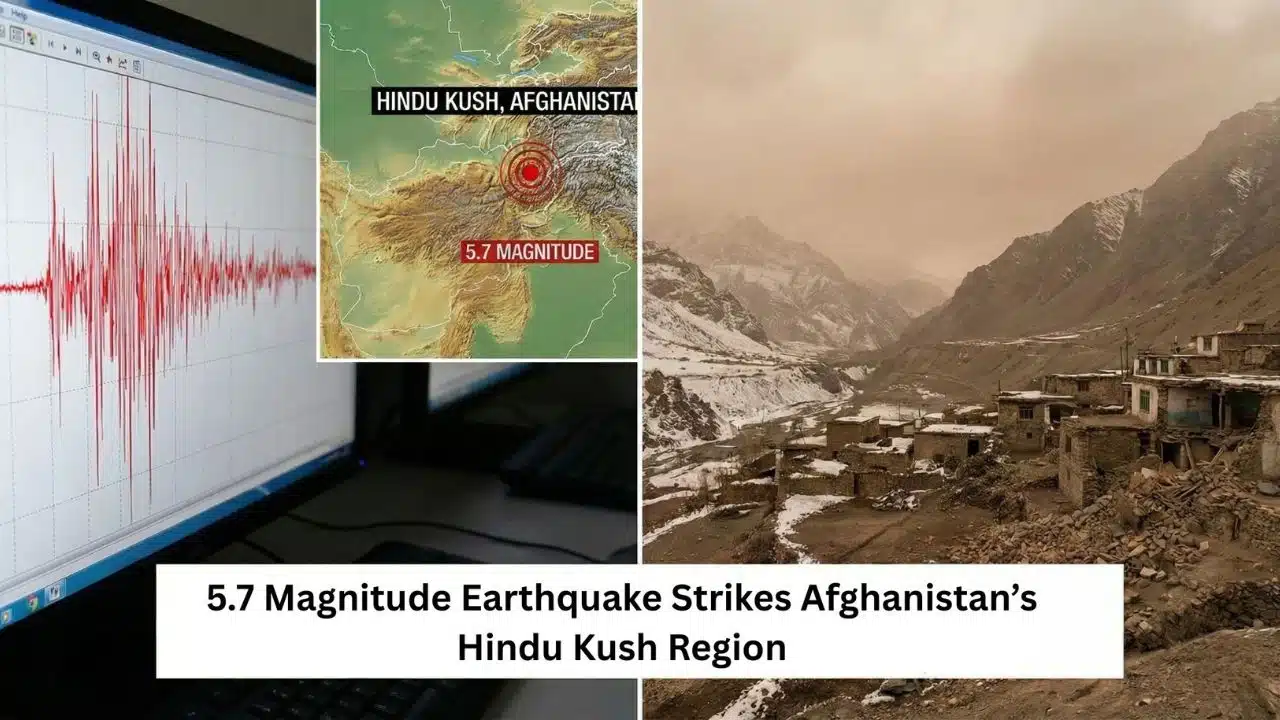
Afghanistan earthquake today: a 5.7 magnitude earthquake hit the Hindu Kush on Friday, December 19, 2025; monitoring networks later listed a mainshock near 36.20N, 69.37E (Mw 5.2). No immediate casualties were reported as authorities checked for damage and possible aftershocks.
What happened and where it was recorded
Seismological monitoring networks recorded an earthquake in the Hindu Kush region of northeastern Afghanistan on December 19. Early public alerts circulated a magnitude of 5.7 and a shallow depth estimate.
A confirmed event listing from the GEOFON program at the GFZ Helmholtz Centre for Geosciences later placed the mainshock at magnitude 5.2 (Mw), with an epicenter at 36.20N, 69.37E and a depth of about 29 km. The origin time was 05:39:09 UTC, which corresponds to 10:09 local time in Afghanistan.
About 56 minutes later, the same bulletin showed a second earthquake in the same region listed at magnitude 5.0 (mb), depth 10 km (fixed), with an origin time of 06:34:50 UTC or 11:04 local time. That later listing was labeled automatic, meaning it could be revised as more data are reviewed.
Key event data at a glance
| Item | Mainshock (confirmed listing) | Later event (automatic listing) |
|---|---|---|
| Date | Dec 19, 2025 | Dec 19, 2025 |
| Time (UTC) | 05:39:09 | 06:34:50 |
| Approx. local time | 10:09 | 11:04 |
| Region | Hindu Kush, Afghanistan | Hindu Kush, Afghanistan |
| Magnitude type | Mw | mb |
| Magnitude | 5.2 | 5.0 |
| Depth | 29 km | 10 km (fixed) |
| Coordinates | 36.20N, 69.37E | 36.22N, 69.32E |
| Status | Confirmed | Automatic, may be revised |
Why different reports showed different magnitudes and depths
It is common for early earthquake alerts to differ from later solutions. Differences can come from:
-
Different magnitude scales (for example Mw vs mb)
-
Limited initial station data, especially in mountainous areas
-
Automatic processing vs reviewed solutions, which can update depth and magnitude as additional waveforms arrive
In this case, the widely shared 5.7 figure appeared in early reporting, while the reviewed bulletin entry highlighted a Mw 5.2 solution for the main event.
Mw vs mb in simple terms
| Term | What it measures | Why it matters |
|---|---|---|
| Mw (moment magnitude) | Energy released using a physical model of the fault rupture | Commonly used for consistent comparisons across regions and quake sizes |
| mb (body wave magnitude) | Strength of certain seismic waves recorded at distance | Can be useful for quick estimates, but may differ from Mw |
Damage and casualty reports: what is known so far
As of the first widely circulated updates, there were no immediate reports of deaths, injuries, or major damage linked to the December 19 earthquake. In many parts of Afghanistan, especially in rugged terrain, damage assessments can take time because of road access challenges and patchy communications.
Why the Hindu Kush region shakes so often
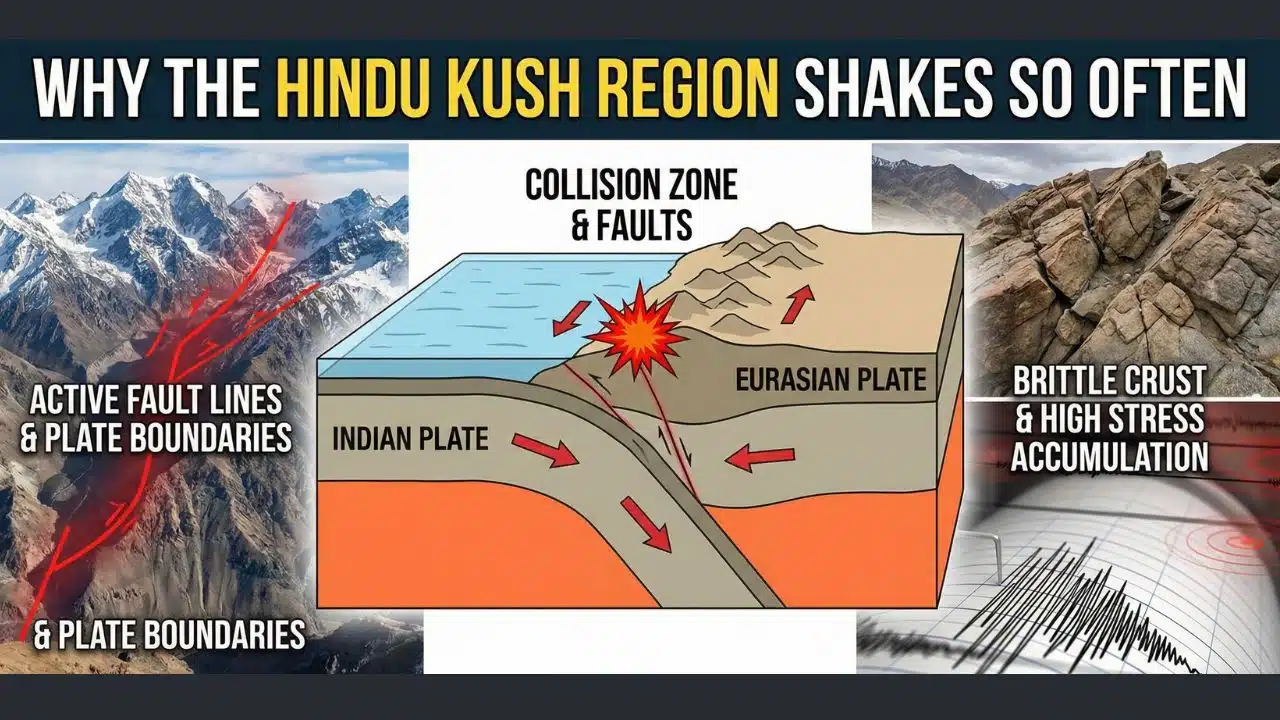
Afghanistan sits in an active collision zone where major tectonic forces build the highest mountain ranges on Earth. The Hindu Kush frequently produces earthquakes that can be felt across borders because seismic waves can travel efficiently through the region’s geology and because many events occur beneath mountainous, sparsely populated areas.
The country has experienced repeated damaging earthquakes in recent years, including a deadly late August 2025 event in the east that triggered a major humanitarian response and recovery planning ahead of winter.
Recent seismic context in and around northeastern Afghanistan
GEOFON regional bulletins show frequent moderate earthquakes in and near Afghanistan, including multiple events in the Hindu Kush and the Afghanistan Tajikistan border area in recent weeks and months.
Selected recent events from the regional bulletin
| Date (UTC) | Region label | Magnitude shown | Depth shown |
|---|---|---|---|
| Dec 19, 2025 | Hindu Kush, Afghanistan | 5.2 | 29 km |
| Dec 19, 2025 | Hindu Kush, Afghanistan | 5.0 | 10 km |
| Nov 2, 2025 | Hindu Kush, Afghanistan | 6.2 | 28 km |
| Nov 25, 2025 | Hindu Kush, Afghanistan | 4.8 | 63 km |
Why depth matters for risk on the ground
Depth affects how strong shaking feels at the surface:
-
Shallower earthquakes often produce stronger, more damaging shaking near the epicenter.
-
Deeper earthquakes can be felt across wider areas but may cause less severe surface shaking directly above the source, depending on local conditions.
The Dec 19 main listing shows a depth near 29 km, while the later automatic event lists 10 km, which is closer to the shallow range where localized damage risk can be higher.
A country still strengthening resilience after the 2025 earthquake disaster
The December 19 tremor comes within months of a major earthquake disaster in eastern Afghanistan in late August 2025 that strained health services and humanitarian capacity.
-
The United Nations coordinated a multi sector earthquake response plan for September to December 2025, targeting hundreds of thousands of people in affected eastern provinces and outlining funding needs for urgent assistance.
-
WHO situation reports described significant public health risks after that earthquake, including damaged health facilities and increased winter related vulnerability.
-
The World Bank later estimated direct physical damage from the August 2025 earthquake at about 183 million US dollars, underscoring how even moderate magnitude events can be devastating where buildings are vulnerable.
This broader context matters because repeated earthquakes can hit communities while recovery is still underway, raising concerns about shelter safety, access to care, and readiness for aftershocks or landslides in steep terrain.
What residents typically are advised to do during and after shaking
Emergency agencies generally recommend simple actions that reduce injury risk:
-
During shaking: drop to the ground, take cover under sturdy furniture, and hold on until the shaking stops.
-
If outdoors: stay in an open area away from buildings, walls, and overhead hazards.
-
After shaking: check for injuries, watch for hazards like damaged wiring or gas leaks, and be prepared for aftershocks.
The December 19, 2025 Afghanistan earthquake today was widely shared as a 5.7 magnitude event, but seismological bulletins later highlighted a Mw 5.2 mainshock in the Hindu Kush and a later nearby event listed at mb 5.0. With no immediate damage reports, attention typically shifts to verification, aftershock monitoring, and rapid checks in remote districts where assessments can take longer.





















