Have you ever wondered how a discovery in a faraway lab could possibly help build a more peaceful world? It can be tough to see the connection between complex science and real-world issues like trust, education, and global cooperation.
You might even question if all this scientific knowledge actually makes a difference in our daily lives.
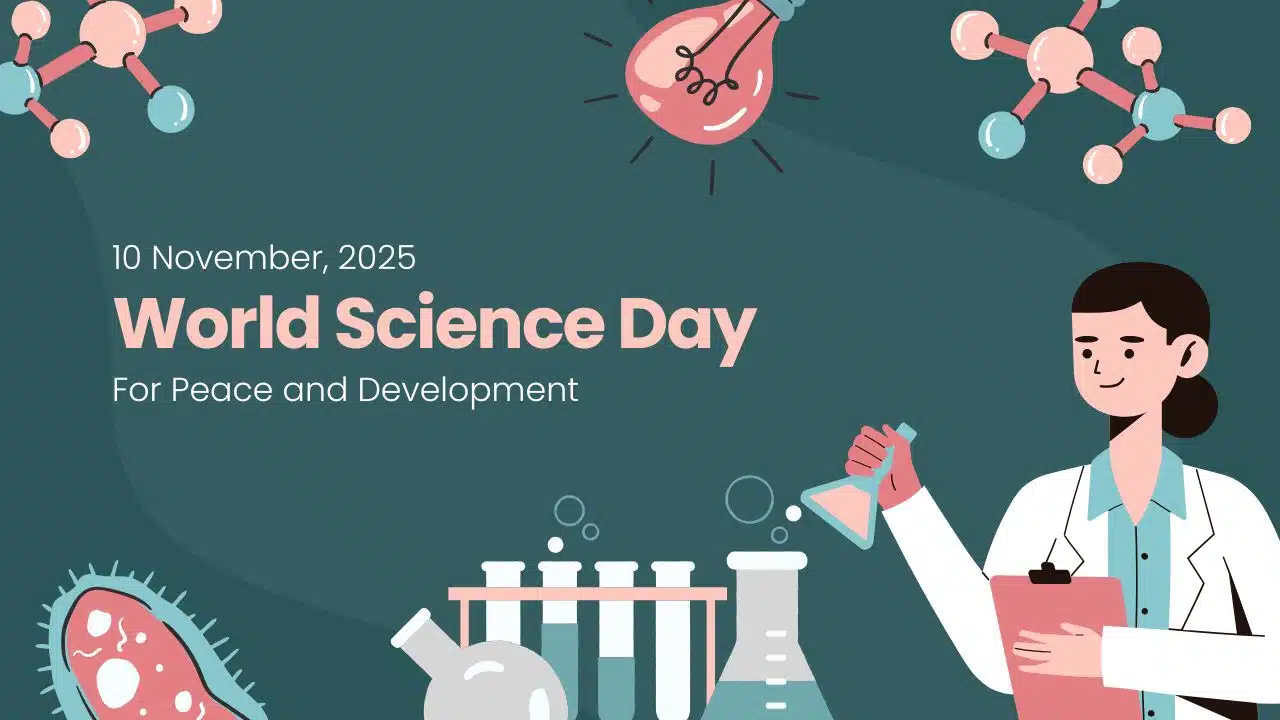
Here’s a little secret: it absolutely does. That’s exactly why UNESCO celebrates World Science Day for Peace and Development every November 10. It’s a day dedicated to showing everyone how science is woven into the fabric of our societies, helping us solve problems and work together for a better future.
So, let’s explore what makes this day so special. I’ll walk you through how scientific teamwork is tackling some of our biggest challenges and bringing people together in surprising ways.
Key Takeaways
- World Science Day for Peace and Development, celebrated every November 10, was established by UNESCO in 2001 to highlight the crucial link between science and society.
- The 2025 theme is “Trust, Transformation, and Tomorrow: The Science We Need for 2050,” focusing on building public trust and using science to prepare for future challenges.
- International scientific collaborations, like the International Space Station (ISS) and SESAME in Jordan, demonstrate how science can build bridges between nations, even in times of conflict.
- Global spending on research and development reached an estimated $3.1 trillion in 2022, with the United States and China leading the investment. However, many nations still invest less than 1% of their GDP, making international cooperation vital.
- The day is marked by various events, from ministerial roundtables hosted by UNESCO to local science fairs, lab visits, and classroom discussions designed to increase public awareness and engagement with science.
Key Goals of World Science Day for Peace and Development

World Science Day for Peace and Development is all about strengthening the ties between science and society. It’s a chance to focus on how scientific teamwork, global trust, and open learning can help us build safer, more sustainable communities for everyone.
Organizations like UNESCO and the International Council for Science use this day to champion science as a tool for positive change.
How Does Science Promote Peace?
Science has a unique way of acting as a universal language, creating common ground even in regions marked by conflict.
A great example is the Israeli-Palestinian Science Organization (IPSO), which is supported by UNESCO and brings scientists from both sides together to work on shared problems. This kind of teamwork builds trust and understanding, which are the foundations of peace. Another powerful example is the SESAME (Synchrotron-Light for Experimental Science and Applications in the Middle East) project in Jordan, where researchers from Iran, Israel, and Palestine collaborate on experiments.
UNESCO highlights these efforts every year and presents awards like the Kalinga Prize for the Popularization of Science to honor those who make scientific knowledge accessible to all. The 2023 prize was awarded to Ana María Cetto for her incredible work in promoting the science of light, including her role in establishing the International Day of Light.
By creating a shared mission, scientific collaboration helps people focus on what they have in common, reducing fear and fostering open dialogue. This directly supports global goals like SDG 4 (Quality Education) and SDG 9 (Industry, Innovation, and Infrastructure).
How Does International Science Cooperation Benefit Communities?
International science cooperation is all about connecting scientists and communities across borders to share knowledge, tools, and ideas for the greater good. This was a key takeaway from the 1999 World Conference on Science in Budapest, which led to the “Declaration on Science and the Use of Scientific Knowledge” and set the stage for today’s global teamwork.
This collaboration is more important than ever. While global research and development spending hit an estimated $3.1 trillion in 2022, with the U.S. and China accounting for over half of that, many countries still struggle to fund their own research. According to a 2023 OECD report, only nine countries exceed the 3% R&D-to-GDP spending threshold, with Israel (6.35%) and South Korea (4.96%) leading the way.
International partnerships bring crucial funding and expertise to areas that need it most, helping to solve real-world problems like ensuring clean water or developing sustainable farming methods. Projects like the International Space Station, a joint effort by 16 nations, show what’s possible when we work together, advancing research that benefits all of humanity.
Events and Engagements

On World Science Day, people from all walks of life come together to celebrate science. From students and teachers to leading researchers, everyone gets a chance to share ideas and get inspired.
What Debates and Symposia Are Held on World Science Day?
Each year, World Science Day sparks conversations on important and timely topics. These events bring fresh perspectives and connect scientific progress with our everyday lives.
Here’s a look at the kinds of discussions you might find:
- High-Level Roundtables: In 2023, UNESCO hosted a ministerial roundtable focused on “Building Trust in Science,” a theme that continues to be central to the day’s mission.
- Public Lectures: Experts often discuss how scientific knowledge can drive sustainable development and support peace, tying into the year’s specific theme.
- Classroom Debates: Schools and universities encourage students to discuss emerging scientific issues, like the ethics of AI or solutions for our fragile planet.
- Online Dialogues: Virtual events allow people from around the world to discuss everything from open science to scientific cooperation, making the celebration truly global.
- Film Screenings: Documentaries and films are used to tell powerful stories about the real-world impact of science, making complex topics accessible and engaging for everyone.
What Education and Awareness Initiatives Take Place?
Education is at the heart of World Science Day, with a wide array of initiatives designed to bring science to people of all ages.
These activities are all about making science hands-on, fun, and relevant.
- School Activities: Many schools organize special classroom discussions, science fairs, and even essay contests to get students excited about science and its role in society.
- Museum and Lab Visits: Research centers and museums often open their doors to the public, offering behind-the-scenes tours and hands-on workshops.
- Community Outreach: Local groups host events at libraries and community centers, with presentations and flyers that connect global scientific themes to local issues.
- Digital Campaigns: Through podcasts, social media, and online quizzes, organizations share fascinating scientific facts and stories, reaching a broad audience.
- Art-Science Collaborations: Some events creatively blend art and science through performances and exhibitions, offering a fresh way to explore complex scientific ideas.
These efforts are part of a larger movement to promote open science, ensuring that everyone has the chance to participate in the discoveries that shape our future.
Impact of Science on Society Empowerment

Science empowers us to find clever solutions to new and old problems alike. When communities have access to scientific knowledge and tools, they can build a brighter and more secure future for themselves.
How Does Scientific Innovation Address Global Challenges?
Scientific innovation is key to tackling some of the biggest challenges we face as a global community, from climate change to public health crises.
For example, a 2025 report from the World Economic Forum and Frontiers highlighted ten emerging technologies with the potential to improve planetary health. These include innovations like green ammonia production, which uses renewable energy to create sustainable fertilizer, and precision fermentation, which can produce proteins with a minimal environmental footprint. Other exciting developments include modular geothermal energy systems that can provide clean power almost anywhere and carbon-capturing microbes that turn emissions into useful products like biofuels.
During the COVID-19 pandemic, international scientific cooperation was on full display as scientists around the world shared data to develop vaccines in record time. These examples show how a shared scientific endeavor can lead to powerful solutions that help build more peaceful and sustainable societies.
How Does Science Strengthen Local Community Connections?
Science isn’t just for labs and universities; it can be a powerful tool for bringing local communities together. This is often done through “citizen science,” where the public participates in scientific research.
These projects empower people to address issues that matter to them. For example, the NOISE Project is a community-led initiative where residents collect data on noise pollution and its health impacts. In another project in Australia called Cat Tracker, pet owners used GPS devices to track their cats, helping researchers understand their impact on local wildlife.
By getting involved in hands-on research, people can connect with their neighbors, learn new skills, and make a real difference in their own backyards. Events like public lectures, workshops, and science fairs held on World Science Day further strengthen these connections, creating a space for open conversation and shared learning.
Takeaways
Every year on November 10, World Science Day for Peace and Development reminds us just how deeply scientific knowledge is connected to building stronger and more sustainable societies.
From classroom discussions to global collaborations, the day is a celebration of curiosity and progress.
By fostering open and honest conversations, we can build trust in the facts and ideas that are shaping our world for the better. Through international scientific cooperation, we can continue to work together, sparking hope for a safer and smarter tomorrow for everyone.
FAQs on World Science Day for Peace and Development
1. What is World Science Day for Peace and Development?
Established by UNESCO in 2001, this day is celebrated every November 10th to highlight the crucial link between science and society. It aims to raise public awareness and strengthen global scientific cooperation to address shared challenges. The theme for 2025 is “Trust, Transformation, and Tomorrow: The Science We Need for 2050,” focusing on building trust and preparing for the future.
2. How does this day support sustainable development?
It connects scientific advancements directly to the UN’s Sustainable Development Goals by showcasing solutions for global challenges. For example, climate modeling research supports SDG 13 (Climate Action), while innovations in clean energy contribute to SDG 7 (Affordable and Clean Energy). This focus promotes open science as a tool to build more equitable and sustainable societies for everyone.
3. Why is trust important in science communication?
According to research from centers like the Pew Research Center, public trust is essential for turning scientific discoveries into meaningful action that benefits society.
4. What role do international efforts play during World Science Day?
International efforts are key, as seen in the UN’s “International Decade of Sciences for Sustainable Development” (2024-2033), which promotes global collaboration. Frameworks like the UNESCO Recommendation on Open Science also guide countries to work together, ensuring that scientific knowledge is shared openly to benefit all of humanity.
5. How can we use science to shape tomorrow’s world?
Science provides powerful tools, from AI in healthcare that predicts diseases to gene-editing technologies like CRISPR that could cure genetic conditions. By supporting initiatives such as UNESCO’s STEM education programs, we can empower the next generation to use these innovations to solve future challenges like climate change and food security.