


The human metapneumovirus (HMPV), a respiratory virus that causes symptoms similar to the flu or common cold, is showing a decline in infections across northern China. This announcement, made on Sunday, January 12, by health officials, has helped alleviate concerns sparked by recent reports of crowded hospitals and fears of a potential pandemic. With new details and reassurances from health experts and organizations, the situation is becoming clearer.
Understanding Human Metapneumovirus (HMPV)
HMPV belongs to the same viral family as respiratory syncytial virus (RSV), which is known to cause respiratory infections. The symptoms of HMPV typically include fever, cough, nasal congestion, and sometimes fatigue. In most cases, these symptoms are mild and resolve on their own. However, in some instances, the virus can lead to severe lower respiratory tract infections, particularly in vulnerable groups such as:
- Children, especially those under five years of age.
- Older adults, particularly those over the age of 65.
- Individuals with weakened immune systems due to underlying conditions or treatments.
Wang Liping, a researcher with the Chinese Center for Disease Control and Prevention (China CDC), addressed the public during a press briefing held by the National Health Commission (NHC), saying, “The human metapneumovirus is not a new virus and has been circulating among humans for decades.” Wang’s statement underscores that this is not an emergent pathogen, but rather one that has been present and studied for many years.
Improved Detection Methods Leading to Higher Reported Cases
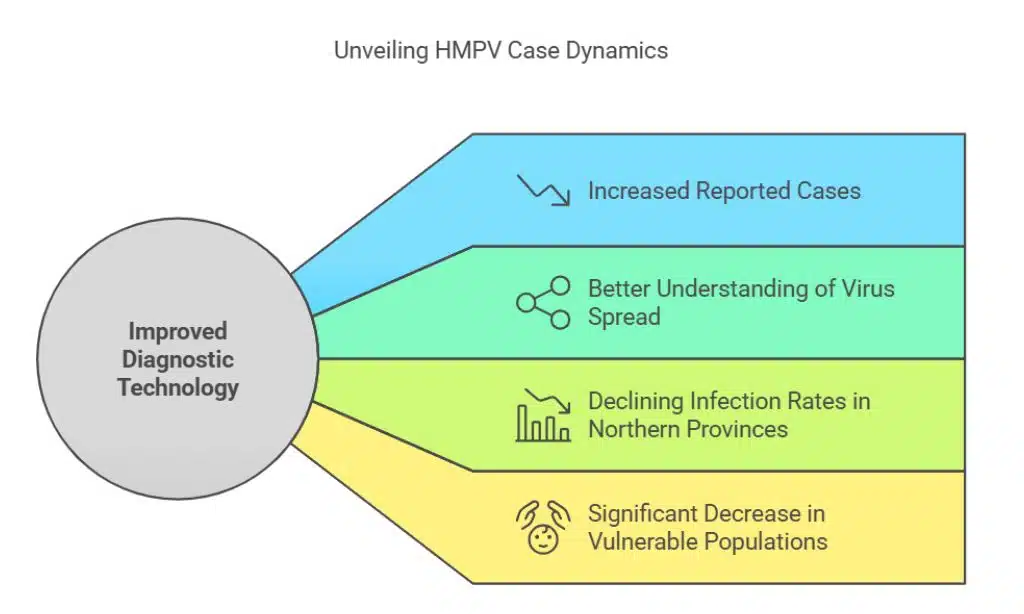
Health experts have noted that the apparent rise in HMPV cases can largely be attributed to advancements in diagnostic technology. In recent years, laboratory testing and viral identification techniques have become more accessible and accurate. These improvements have enabled healthcare providers to detect HMPV infections that may have gone unnoticed or been misattributed to other respiratory illnesses in the past.
“Thanks to better laboratory capabilities, we’re identifying more cases that may have gone undetected in the past,” Wang explained. She added that while these advances have led to an increased number of reported cases, they also provide better insights into how the virus spreads and affects different populations.
Notably, infection rates in northern provinces, where the virus has been most prevalent, are now declining. Children under the age of 14, a demographic particularly susceptible to respiratory illnesses, have seen the most significant decrease in infection rates.
No Cause for Alarm: Comparing HMPV to COVID-19
Recent images of crowded hospitals in northern China circulating on social media fueled fears of a new pandemic. However, both national and international health authorities have clarified that the current situation is not comparable to the early days of COVID-19:
- World Health Organization (WHO): The WHO has confirmed that it has not received reports of unusual outbreaks related to HMPV in China or any other country.
- National Health Commission (NHC): Gao Xinqiang, the deputy director of the Department of Medical Emergency Response, reassured the public, stating, “The number of patients visiting fever clinics and emergency departments remains below the levels observed during the same period last year. There is no obvious shortage of medical resources.”
Wang Liping also emphasized that all respiratory diseases currently being reported in China are caused by known pathogens. “There is no evidence to suggest the emergence of any new infectious diseases,” she said.
Current Trends and Outlook
The NHC has projected a continued decline in respiratory infections, including flu cases, across China in the coming weeks. According to spokesperson Hu Qiangqiang, the number of infections is expected to drop significantly by mid-to-late January. This aligns with seasonal trends, as respiratory viruses typically see a natural decline during this time of year.
The decline in HMPV cases in particular is a positive sign, especially as it eases the strain on healthcare facilities. Reports from hospitals indicate that the current patient load, while higher than usual in some regions, is manageable and does not indicate a crisis.
Preventative Measures to Combat HMPV
One of the challenges in managing HMPV is the lack of a vaccine or specific antiviral treatment. However, there are effective preventative measures individuals can take to reduce their risk of infection. These include:
- Regular Handwashing: Wash hands thoroughly with soap and water for at least 20 seconds, especially after being in public spaces or coming into contact with potentially contaminated surfaces.
- Avoiding Crowded Places: Limit time spent in crowded or poorly ventilated environments, particularly during peak seasons for respiratory illnesses.
- Wearing Masks: Use face masks in crowded areas to reduce the risk of inhaling airborne particles carrying the virus.
- Practicing Good Respiratory Hygiene: Cover your mouth and nose with a tissue or your elbow when coughing or sneezing to prevent the spread of droplets.
Addressing Public Concerns
Health officials have been working diligently to address public fears and misinformation surrounding HMPV. The virus is not new, and most children are exposed to it by the age of five, leading to some degree of natural immunity. While the virus can cause severe illness in vulnerable populations, it is generally manageable with supportive care.
“We are confident in our ability to manage this situation effectively,” said Gao Xinqiang. He highlighted the importance of public cooperation in following preventative measures and seeking timely medical attention if symptoms worsen.
Respiratory Illnesses in China
The current wave of respiratory illnesses in China includes a mix of flu, RSV, and HMPV. Health authorities have reiterated that these infections are seasonal and expected during the colder months. Improved public health infrastructure and diagnostic capabilities have helped ensure that resources are allocated effectively.
The decline in HMPV cases is a testament to the efforts of healthcare workers, researchers, and public health officials who continue to monitor and respond to the evolving situation.
While HMPV infections initially raised concerns due to rising cases and hospital visits, the situation is now under control. Health experts stress that this virus is not a new threat and has been part of the respiratory disease landscape for decades. With no evidence of a pandemic-level threat and infection rates now declining, the focus remains on preventative measures and public education to keep the population healthy.
Residents are encouraged to stay informed through credible sources and to adopt simple but effective practices to protect themselves and their communities. For now, China’s healthcare system is well-prepared to manage the ongoing seasonal wave of respiratory illnesses, including HMPV.






















