


In today’s world, where environmental challenges are becoming increasingly urgent, technology plays a critical role in creating solutions.
But what is meant by sustainable technology? It refers to innovations designed to meet present needs without compromising the ability of future generations to meet theirs. Sustainable technology focuses on minimizing environmental impact, conserving resources, and promoting a healthier planet.
The Core Principles of Sustainable Technology
Sustainable technology is built on three fundamental pillars:
- Environmental Protection: Minimizing negative impacts on ecosystems and natural resources.
- Social Responsibility: Ensuring equitable access to resources and promoting human well-being.
- Economic Viability: Creating sustainable business models that balance profitability with environmental and social concerns.
These principles guide the development and implementation of sustainable technologies across various sectors, from energy production to waste management.
Key Areas of Sustainable Technology
Renewable Energy
One of the most prominent areas of sustainable technology is renewable energy. This includes:
- Solar power
- Wind energy
- Hydroelectric power
- Geothermal energy
- Biomass
These technologies aim to reduce reliance on fossil fuels and decrease greenhouse gas emissions. For example, the global renewable energy market is projected to reach $1,977.6 billion by 2030, growing at a CAGR of 8.4% from 2021 to 2030.
Energy Efficiency
Sustainable technology also focuses on improving energy efficiency in various applications:
- Smart buildings with automated energy management systems
- Energy-efficient appliances and lighting
- Improved insulation materials
- Heat recovery systems
These technologies can significantly reduce energy consumption. For instance, energy-efficient gadgets can cut energy use by up to 40%.
Sustainable Transportation
The transportation sector is a major contributor to greenhouse gas emissions. Sustainable technologies in this area include:
- Electric and hybrid vehicles
- Hydrogen fuel cell technology
- Sustainable aviation fuels
- Smart traffic management systems
The adoption of electric vehicles is rapidly increasing, with global sales expected to reach 10.7 million units in 2025.
Waste Management and Recycling
Sustainable technology plays a crucial role in managing waste and promoting a circular economy:
- Advanced recycling technologies
- Waste-to-energy systems
- Biodegradable materials
- E-waste management solutions
For example, companies that manage products well and recycle them can make a significant dent in electronic waste.
Sustainable Agriculture
Technology is transforming agriculture to make it more sustainable:
- Precision farming techniques
- Vertical farming
- Drought-resistant crop varieties
- Sustainable irrigation systems
The crop monitoring segment in sustainable technology is expected to grow with the highest CAGR in the coming years.
The Impact of Sustainable Technology
Sustainable technology is not just beneficial for the environment; it also offers significant economic and social advantages:
1. Economic Benefits:
- Job creation in green industries
- Cost savings through improved efficiency
- New market opportunities
2. Environmental Benefits:
- Reduced greenhouse gas emissions
- Conservation of natural resources
- Biodiversity protection
3. Social Benefits:
- Improved public health
- Enhanced quality of life
- Increased access to clean energy and water
Challenges and Future Outlook
While sustainable technology offers immense potential, it also faces several challenges:
- High initial costs
- Technological limitations
- Regulatory hurdles
- Resistance to change
Despite these challenges, the future of sustainable technology looks promising. The global green technology and sustainability market is projected to grow from USD 20.90 billion in 2024 to USD 105.26 billion by 2032, exhibiting a CAGR of 22.4%.
Key Players in Sustainable Technology
Several companies are at the forefront of developing and implementing sustainable technologies:
| Company | Focus Area |
| Tesla | Electric vehicles, solar energy |
| Vestas | Wind turbines |
| First Solar | Solar panels |
| Orsted | Offshore wind farms |
| Beyond Meat | Plant-based meat alternatives |
These companies are driving innovation and setting new standards for sustainability in their respective industries.
The Role of AI and Data Analytics in Sustainable Technology
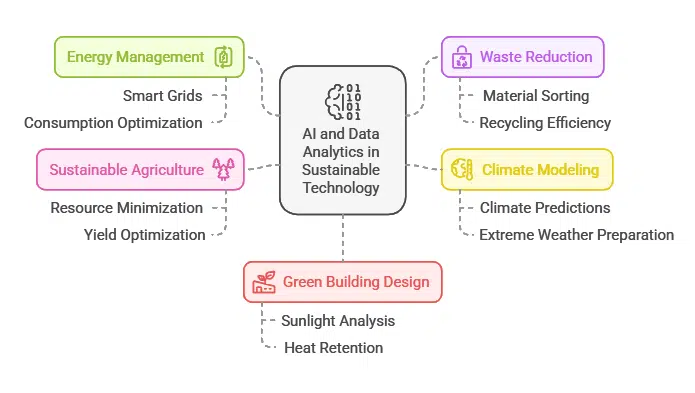
Artificial Intelligence (AI) and data analytics are playing an increasingly important role in advancing sustainable technology:
- Energy Management: AI algorithms can optimize energy distribution and consumption in smart grids.
- Waste Reduction: Machine learning can improve recycling processes by accurately sorting materials.
- Climate Modeling: AI can enhance climate predictions, helping in better preparation for extreme weather events.
- Sustainable Agriculture: AI-powered systems can optimize crop yields while minimizing resource use.
- Green Building Design: AI can assist in designing energy-efficient buildings by analyzing various factors like sunlight exposure and heat retention.
Sustainable Technology in IT
The IT sector, while a significant contributor to global energy consumption, is also at the forefront of developing sustainable solutions:
- Green Data Centers: Companies are designing data centers that use renewable energy and have improved cooling systems. For example, Google aims to run all its data centers on carbon-free energy by 2030.
- Energy-Efficient Hardware: Manufacturers are producing computers and other devices that consume less power and are made from recyclable materials.
- Cloud Computing: By centralizing computing resources, cloud services can significantly reduce energy consumption. Initial cloud migrations alone can reduce carbon emissions by more than 84% compared with conventional infrastructure.
- E-Waste Management: IT companies are implementing take-back programs and improving the recyclability of their products to address the growing e-waste problem.
The Future of Sustainable Technology
As we look to the future, several trends are shaping the landscape of sustainable technology:
- Increased Integration of Renewable Energy: As storage technologies improve, we can expect to see a higher percentage of our energy coming from renewable sources.
- Circular Economy: There will be a greater focus on designing products for longevity, repairability, and recyclability.
- Smart Cities: Urban areas will increasingly use technology to optimize resource use and improve quality of life.
- Sustainable Transportation: Electric and hydrogen-powered vehicles will become more prevalent, along with improved public transportation systems.
- Biotechnology: Advances in this field will lead to more sustainable materials and processes in various industries.
Takeaways
What is meant by sustainable technology encompasses a broad range of innovations and practices aimed at creating a more sustainable world. It represents a crucial pathway towards addressing environmental challenges while promoting economic growth and social well-being.
As we continue to innovate and implement these technologies, we move closer to a future where economic progress and environmental protection go hand in hand.





















