

Meal prepping and food storage have become essential parts of modern kitchens, but traditional plastic bags contribute significantly to environmental pollution. Silicone food storage bags offer a game-changing alternative that enhances meal prep while reducing waste.
These durable, reusable, and eco-friendly bags provide numerous benefits, from keeping ingredients fresh to cutting down on single-use plastics.
With more people seeking sustainable solutions in their daily lives, silicone food storage bags are gaining popularity. They not only help in meal organization but also in cost savings and reducing kitchen clutter.
In this comprehensive guide, we’ll explore 7 ways silicone food storage bags simplify meal prep and reduce waste, making your kitchen more efficient, organized, and environmentally responsible.
Whether you’re looking to improve food preservation, minimize clutter, or embrace a sustainable lifestyle, silicone bags are the perfect solution.
Why Choose Silicone Food Storage Bags?
Silicone food storage bags are an excellent alternative to plastic and glass containers due to their flexibility, durability, and sustainability.
Unlike disposable plastic bags, which contribute to landfills, or bulky glass containers that take up space, silicone bags provide a balance of convenience and eco-consciousness.
They are made from food-grade silicone, a non-toxic material resistant to extreme temperatures, making them ideal for various storage and cooking needs.
Comparison Table: Silicone vs. Plastic vs. Glass Storage Bags
| Feature | Silicone Bags | Plastic Bags | Glass Containers |
| Reusable | Yes | No | Yes |
| BPA-Free | Yes | No | Yes |
| Leakproof | Yes | No | Yes |
| Freezer Safe | Yes | No | Yes |
| Microwave Safe | Yes | No | Yes |
| Durable | Yes | No | Yes |
| Space-Saving | Yes | Yes | No |
With these features in mind, let’s explore the 7 ways silicone food storage bags simplify meal prep and reduce waste.
1. Keep Ingredients Fresh for Longer
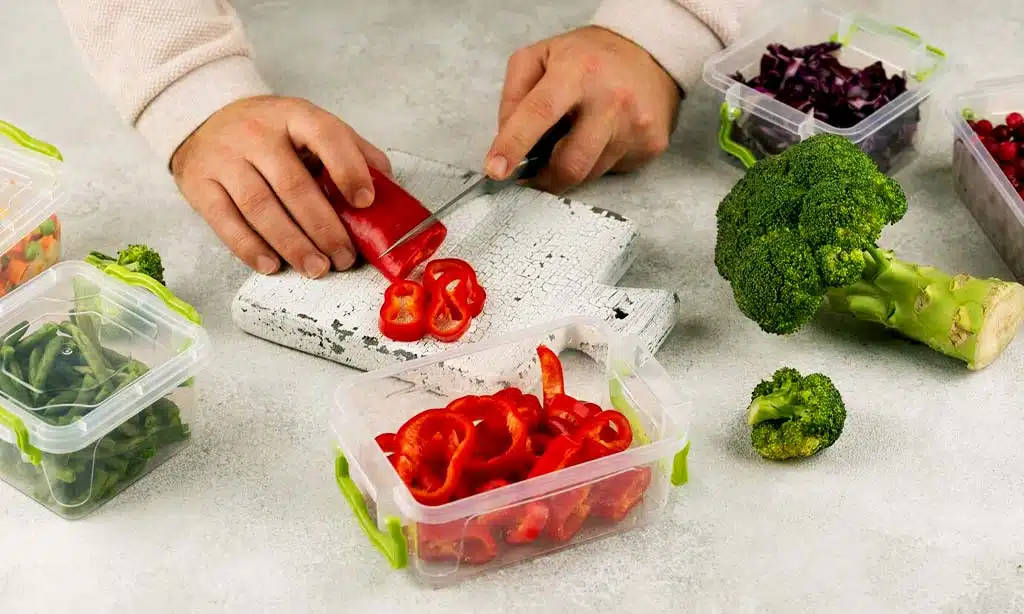
One of the biggest challenges in meal prepping is ensuring ingredients stay fresh. Silicone food storage bags create an airtight seal, preventing oxidation and keeping food fresh for extended periods.
Unlike traditional plastic storage, which allows air and moisture to seep in, silicone bags lock in freshness and extend the shelf life of perishable foods.
How They Help:
- Lock in moisture and prevent food from drying out.
- Reduce exposure to air, which slows down spoilage.
- Preserve the taste and texture of perishable items like fruits, vegetables, and meats.
Storage Tips:
| Food Type | Recommended Storage Duration (Silicone Bag) |
| Fresh Vegetables | 7-10 days in the refrigerator |
| Meat & Poultry | 3-6 months in the freezer |
| Cheese | 2-3 weeks in the refrigerator |
| Berries | 5-7 days in the refrigerator |
2. Reduce Plastic Waste and Promote Sustainability
Single-use plastic bags contribute significantly to environmental pollution, often ending up in landfills or oceans.
Silicone food storage bags are reusable, drastically cutting down plastic waste. A single silicone bag can replace hundreds of plastic bags over its lifetime, reducing plastic dependency and its harmful environmental impact.
Why It Matters:
- Reduces reliance on disposable plastics, lowering household waste.
- Helps decrease plastic pollution and its harmful effects on marine life.
- Supports an eco-friendly lifestyle with minimal environmental impact.
- Saves money in the long run by eliminating the need for frequent plastic bag purchases.
Plastic Waste Statistics:
| Type of Plastic Waste | Annual Global Production (Million Tons) |
| Single-Use Plastics | 130 |
| Plastic Packaging | 141 |
| Recycled Plastics | Only 9% globally |
Pro Tip: Keep a set of silicone bags handy in your kitchen to completely eliminate the need for plastic storage bags.
3. Easy Portioning for Meal Prepping
Portion control is essential for effective meal prepping, whether you’re managing your diet or planning meals for the week. Silicone food storage bags make it easy to portion ingredients in advance, helping you avoid food waste and excessive eating.
How They Help:
- Pre-measure and store portions for grab-and-go meals.
- Keep snacks, nuts, and protein servings organized.
- Label bags with a marker or use color-coded silicone bags for easy identification.
- Prevent cross-contamination by using separate bags for meats, veggies, and grains.
Meal Prepping Ideas:
| Meal Type | Suggested Portion Size |
| Breakfast Oats | 1 cup per bag |
| Chicken Breast | 6 oz per serving |
| Rice/Grains | 1 cup cooked |
| Smoothie Packs | 1 banana, 1/2 cup berries, spinach |
Best Practices:
- Use quart-sized silicone bags for meal-sized portions.
- Freeze smoothie ingredients in separate bags for quick, hassle-free blending.
- Divide proteins into daily portions before freezing for quick meal preparation.
4. Safe for Freezing, Microwaving, and Cooking
Silicone food storage bags withstand extreme temperatures, making them ideal for freezing, microwaving, and even cooking. Their versatility allows for easy transitions from freezer to microwave or even boiling water.
Temperature Resistance:
- Freezer-safe down to -40°F (-40°C).
- Microwave-safe and heat-resistant up to 446°F (230°C).
- Perfect for sous-vide cooking.
Tips for Different Uses:
| Usage Method | Best Practices |
| Freezing | Lay bags flat for efficient storage and faster thawing. |
| Microwaving | Leave the bag slightly open to allow steam to escape. |
| Sous-Vide | Use an airtight seal and submerge in hot water. |
5. Leakproof and Mess-Free Storage
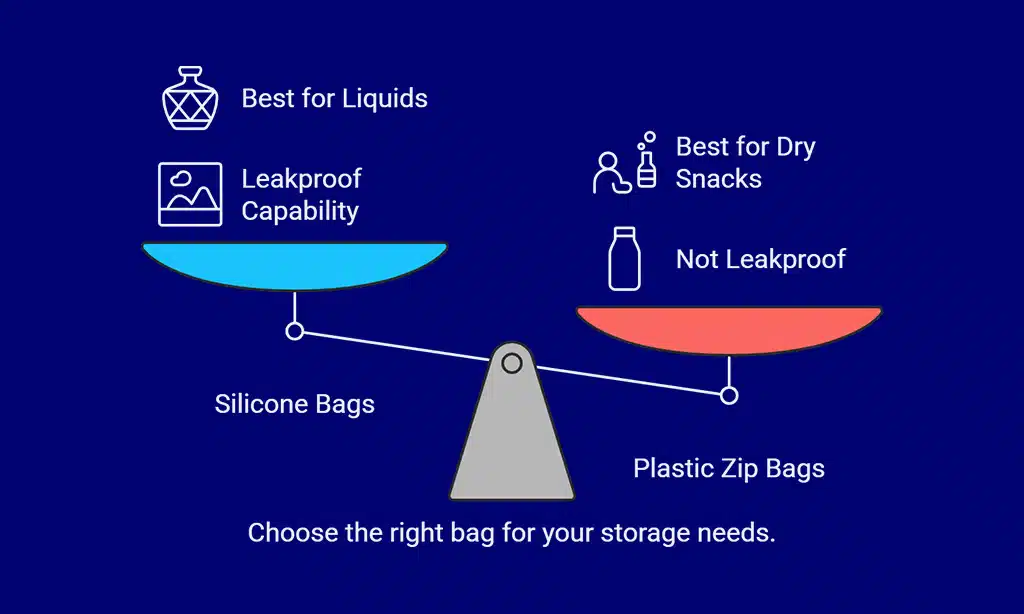
One of the standout features of silicone food storage bags is their ability to create an airtight, leakproof seal. This makes them perfect for storing liquids, marinades, soups, and even prepared meals without the risk of spills or messes.
Key Benefits:
- Ensures that food stays fresh without leaking juices or odors.
- Prevents spills inside the refrigerator, lunch bag, or travel case.
- Keeps sauces, broths, and even baby food safely stored.
Leakproof Storage Comparison:
| Storage Type | Leakproof? | Best Use Cases |
| Silicone Bags | Yes | Soups, marinades, pre-cut fruits |
| Plastic Zip Bags | No | Dry snacks, sandwiches |
| Glass Containers | Yes | Large meal storage, leftovers |
Pro Tip: To test the leakproof seal, fill a silicone bag with water, seal it, and turn it upside down. No spills? You’re good to go!
6. Dishwasher-Safe and Easy to Clean
Unlike plastic bags that are difficult to clean and often discarded after one use, silicone food storage bags can be washed and reused indefinitely. Their non-porous surface makes them resistant to stains and odors, ensuring they remain fresh after multiple uses.
Cleaning Tips:
- Rinse with warm water and soap immediately after use to prevent stains.
- Turn the bag inside out and use a bottle brush for deep cleaning.
- Place the bags on the top rack of a dishwasher for hands-free cleaning.
Odor & Stain Removal Guide:
| Issue | Solution |
| Stubborn Stains | Soak in a mixture of baking soda and vinegar. |
| Lingering Odors | Place in boiling water with lemon slices. |
| Greasy Residue | Use a little dish soap and warm water soak. |
7. Cost-Effective Alternative to Single-Use Plastics
While the initial investment in silicone food storage bags may be higher than disposable plastic bags, the long-term savings make them a cost-effective choice.
Over time, the cost of replacing disposable bags adds up, making reusable silicone bags a smarter financial and environmental decision.
Cost Comparison:
| Storage Type | Average Cost | Lifespan | Cost Over 5 Years |
| Disposable Plastic Bags | $5 per 100-pack | 1 use | $125+ |
| Silicone Storage Bags | $10 per bag | 5+ years | $10-20 |
With proper care, silicone food storage bags can last several years, reducing the need for constant repurchasing and helping households save money in the long run.
Takeaways
Silicone food storage bags are a simple yet impactful solution for improving meal prep while reducing waste.
From keeping food fresh longer to cutting down on plastic pollution, these reusable bags offer a wealth of benefits for an eco-friendly and organized kitchen.
By incorporating silicone food storage bags into your routine, you can enjoy a cleaner, more efficient kitchen while contributing to a healthier planet.
Ditch plastic and invest in high-quality silicone food storage bags today! Your meals (and the environment) will thank you.























