


In its March 2025 update, the U.S. Department of State has reaffirmed or added 22 countries to its Level 4: Do Not Travel advisory list. This level represents the highest travel advisory, issued in response to serious risks such as armed conflict, terrorism, civil unrest, arbitrary detention, health emergencies, or lack of consular assistance. U.S. citizens are strongly advised against traveling to these countries due to life-threatening dangers.
Below is the full list of countries and a detailed breakdown of why each is considered highly dangerous for American travelers:
1. Afghanistan
-
Risks: Armed conflict, terrorism, kidnapping, civil unrest, and crime.
-
The U.S. Embassy in Kabul suspended operations in August 2021 following the Taliban’s takeover. The Taliban government is not officially recognized, and the U.S. has no diplomatic presence on the ground.
-
Armed groups frequently target foreigners and government officials, and the healthcare system has collapsed.
2. Belarus
-
Risks: Arbitrary detentions, civil unrest, and the ongoing Ukraine conflict.
-
Belarus remains Russia’s closest ally and plays a strategic role in the war against Ukraine.
-
U.S. citizens have been arbitrarily detained. Protests are often violently suppressed, and foreign nationals are not exempt from prosecution.
3. Burkina Faso
-
Risks: Terrorism, kidnapping, and violent crime.
-
Jihadist insurgent groups operate across the country and frequently target Westerners.
-
Government control is minimal in rural regions, and travel outside of the capital, Ouagadougou, is extremely dangerous.
4. Central African Republic (CAR)
-
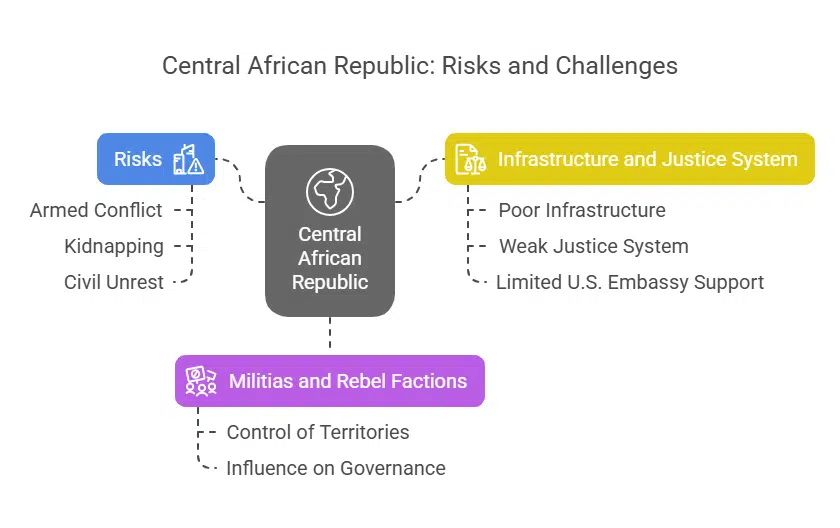
Risks: Armed conflict, kidnapping, civil unrest.
-
Militias and rebel factions control large portions of the country.
-
Infrastructure is poor, the justice system is weak, and the U.S. Embassy has limited ability to help citizens in crisis.
5. Democratic Republic of the Congo (DRC)
-
Risks: Ongoing violence between rebel groups and the government, crime, and health hazards.
-
The eastern provinces are hotspots for armed violence, often involving sexual violence and child soldiers.
-
Ebola outbreaks and other health risks further compound travel dangers.
6. Haiti
-
Risks: Widespread kidnapping, gang violence, political instability, and healthcare shortages.
-
Armed gangs control large portions of Port-au-Prince and other key cities.
-
The U.S. has issued repeated evacuation orders for non-essential embassy staff due to the risk of kidnapping and lawlessness.
7. Iran
-
Risks: Wrongful detention of U.S. nationals, terrorism, and civil unrest.
-
The U.S. does not maintain a diplomatic mission in Iran. Dual U.S.-Iranian citizens are especially vulnerable to arrest.
-
Foreigners have been used as political leverage in negotiations.
8. Iraq
-
Risks: Terrorism, kidnapping, militia activity, and political violence.
-
Anti-U.S. sentiment remains high, particularly among Iranian-backed militias.
-
The embassy in Baghdad operates under restricted conditions and offers limited services to travelers.
9. Lebanon
-
Risks: Armed conflict, terrorism, economic collapse, and civil unrest.
-
Border areas with Syria and parts of southern Lebanon are controlled by Hezbollah and other armed groups.
-
Electricity blackouts, banking failures, and shortages of fuel and medicine have worsened living conditions dramatically.
10. Libya
-
Risks: Armed conflict, terrorism, kidnapping, and landmines.
-
Rival governments and militias frequently clash, and airports and public buildings are often attacked.
-
The U.S. Embassy in Tripoli has been closed since 2014.
11. Mali
-
Risks: Terrorist attacks, kidnapping, armed robbery.
-
Jihadist groups linked to al-Qaeda and ISIS operate in northern and central Mali.
-
Attacks target hotels, embassies, and other places Westerners might visit.
12. Mexico (Specific States Only)
-
Risks: Organized crime, kidnapping, extortion, and homicide.
-
The U.S. State Department classifies the following states as Level 4:
-
Colima
-
Guerrero
-
Michoacán
-
Sinaloa
-
Tamaulipas
-
Zacatecas
-
-
Drug cartels are active, and targeted killings and shootings are common.
13. Myanmar (Burma)
-
Risks: Armed conflict, civil unrest, arbitrary arrests.
-
Since the military coup in 2021, pro-democracy protests and violent crackdowns have led to widespread instability.
-
Landmines, poor healthcare, and the detention of foreigners have prompted the U.S. to discourage travel entirely.
14. North Korea

-
Risks: Arbitrary arrest, lack of consular assistance, and state surveillance.
-
U.S. passports are not valid for travel to North Korea without a special validation, which is rarely granted.
-
Detained Americans have faced years of imprisonment with no legal recourse.
15. Russia
-
Risks: Wrongful detention, military mobilization, anti-American sentiment.
-
Since invading Ukraine in 2022, Russia has cracked down on dissent and foreign influence.
-
U.S. citizens are advised to leave Russia immediately as diplomatic tensions rise.
16. Somalia
-
Risks: Terrorism, piracy, kidnapping, and civil war.
-
The terrorist group al-Shabaab frequently targets foreigners and government facilities.
-
Piracy remains a threat along the Somali coast, and there is no functional central government.
17. South Sudan
-
Risks: Intercommunal violence, armed clashes, and humanitarian crises.
-
Although a peace agreement was signed in 2018, violence continues across many regions.
-
On March 8, 2025, the U.S. ordered all non-emergency personnel to leave the country.
18. Sudan
-
Risks: Military conflict, civil unrest, and violent demonstrations.
-
Fighting between rival military factions erupted in 2023, leading to the closure of the U.S. Embassy in Khartoum.
-
Aid agencies have withdrawn, and basic services are almost nonexistent.
19. Syria
-
Risks: Armed conflict, terrorism, kidnapping, and chemical weapons.
-
Although Bashar al-Assad’s regime fell in December 2024, the country remains unstable.
-
Foreigners risk being kidnapped or killed, and U.S. consular services are unavailable.
20. Ukraine
-
Risks: Full-scale war with Russia, missile strikes, and military activity.
-
Active combat continues across eastern Ukraine, with Russian missile strikes targeting civilian areas.
-
All travel to Ukraine is strongly discouraged, especially near the frontlines.
21. Venezuela
-
Risks: Crime, political instability, wrongful detentions, and lack of healthcare.
-
The authoritarian government has detained foreign nationals and restricted press freedom.
-
Widespread poverty, unreliable electricity, and food shortages contribute to the humanitarian crisis.
22. Yemen
-
Risks: Civil war, terrorism, famine, health emergencies, and landmines.
-
The conflict between Houthi rebels and the Yemeni government has devastated the country.
-
The U.S. Embassy has not operated in Yemen since 2015, and consular help is not available.
What Should Travelers Do?
-
Avoid travel to these countries under all circumstances.
-
Enroll in STEP (Smart Traveler Enrollment Program) for real-time alerts from U.S. embassies.
-
Monitor travel.state.gov regularly for updates on all international advisories.
-
If you are in any of these countries and need emergency help, contact the nearest U.S. embassy or consulate, or reach out to the U.S. Department of State at +1-202-501-4444.
Takeaways
The U.S. State Department’s Level 4: Do Not Travel advisories for these 22 countries are not issued lightly. They reflect serious and credible threats to the safety, security, and freedom of American citizens abroad. Whether it’s war zones, terrorist hotspots, governments known for arbitrary detention, or areas suffering complete breakdowns in civil order, these destinations pose extreme risks.
If you are considering international travel, it’s crucial to prioritize your safety by:
-
Reviewing the latest travel advisories at travel.state.gov,
-
Registering with the STEP program to stay informed of emergencies,
-
And avoiding regions where the U.S. government has little or no ability to assist.
In today’s unpredictable global climate, staying informed and cautious isn’t just wise—it’s essential. No destination is worth risking your life or freedom. When in doubt, choose safer, more stable regions for your travels, and consult with both government advisories and local experts before making plans.





















