Most people want to travel in a way that feels responsible. The problem is that sustainability is often marketed like a luxury upgrade. You see “eco” labels, premium stays, and expensive add-ons that make it look like doing the right thing costs more. In practice, the opposite is often true. The easiest sustainable choices are usually the ones that reduce waste, avoid unnecessary spending, and keep you in control of your trip.
Travel Sustainably Without Spending Extra? is a practical question with practical answers. You do not need to buy a new wardrobe, book an expensive retreat, or pay extra fees just to feel better about traveling. You can make smarter decisions that lower your impact while keeping your budget stable, and in many cases, those decisions will save you money.
This guide is written as a true how-to. It focuses on actions you can take before you leave and while you are on the road. Each step is designed to be simple, realistic, and easy to apply, even if you are traveling with family, on a short schedule, or visiting a destination for the first time.
Travel in the Shoulder Season to Lower Crowds, Costs, and Impact
If you want a sustainability upgrade that usually costs less, change when you travel. Peak season touring concentrates crowds into a small window, which pushes up prices and strains local water, energy, waste systems, and transport networks. Shoulder season (just before or after peak) spreads demand out, lowers pressure on infrastructure, and makes your trip calmer.
You do not need to become a travel calendar expert to use this. Small timing shifts often unlock real savings:
-
Move your trip 1–3 weeks earlier or later than the “most popular” dates
-
Travel midweek instead of weekend-heavy schedules
-
Visit big attractions early morning or late in the afternoon to avoid peak congestion
-
Consider “secondary cities” near famous places (often cheaper, less crowded, and easier to explore on foot)
Shoulder season also reduces the “panic spending” that happens when everything is sold out or overwhelmed. When a destination is less crowded, you waste less time in lines, you take fewer last-minute rides, and you’re less likely to overpay for convenience.
A simple rule: if your destination has a known “high season,” don’t default to it. Start by asking, “What’s the week right before or right after that?” That small shift can cut costs, reduce your footprint, and improve the experience at the same time.
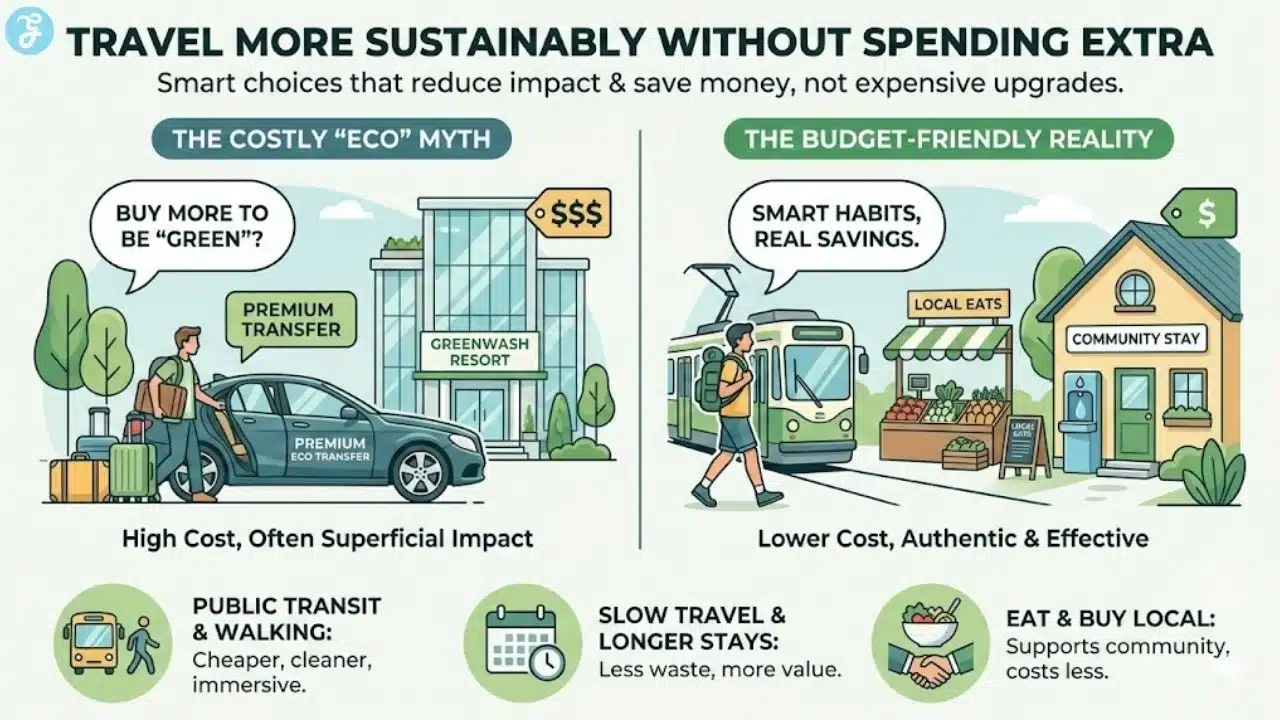
Avoid Greenwashing So You Don’t Pay for “Eco” Labels That Don’t Matter
“Sustainable travel” becomes expensive when it turns into a shopping problem. Many businesses use green language that sounds responsible but does not change the real impact. Your goal is not to chase labels. Your goal is to avoid paying extra for marketing.
Here are common greenwashing patterns that can quietly inflate your budget:
-
Vague claims like “eco-friendly” with no clear actions
-
“Green packages” that cost more but don’t change operations (example: paid “eco upgrades” that should be standard)
-
A focus on aesthetics (leaf logos, bamboo décor) instead of basics like waste reduction and resource use
-
Offsetting as the “main solution” while daily waste and energy use remain high
Instead of looking for perfect proof, use practical signals that usually cost nothing:
-
Linen/towel reuse is normal and encouraged (not awkward or guilt-based)
-
Daily cleaning is optional, not pushed
-
Refill options exist (water stations, bulk soap/shampoo, or fewer single-use items)
-
Waste reduction is visible (less packaging, simple sorting, fewer disposables)
If a place charges more because it says “eco,” but the only difference is branding, skip it. The most reliable low-cost sustainability choices are the boring ones: reuse, waste less, consume less, move less, and support local operations without paying a premium for a label.
Use the Impact–Effort–Savings Framework to Choose Habits You’ll Actually Keep
Most travelers fail at sustainability because they try to do everything at once. A simple framework keeps your plan realistic and budget-friendly: choose actions that are high impact, low effort, and likely to save money.
Use this quick guide to prioritize:
| Category | What it means | Best examples |
|---|---|---|
| High Impact + Low Effort | Big difference, easy to repeat | Fewer destinations, more walking/public transport, staying longer |
| Medium Impact + Low Effort | Small actions that add up | Towel/linen reuse, refill bottle, avoid daily disposables |
| High Effort + Low Savings | Often causes burnout | Buying new “eco gear,” over-planning, perfection rules |
How to apply it on your next trip (without overthinking):
-
Pick 2 “daily defaults” you will do no matter what (example: walkable clusters + refill bottle).
-
Pick 1 “situational habit” you do when it fits (example: markets for snacks, laundry rewear routine).
-
Ignore the rest until your next trip.
This keeps sustainability consistent instead of stressful. Consistency beats intensity. If you only do a few things well—every day—you will reduce waste and spending more than someone who tries everything once and quits.
Here Are 8 Practical Ways to Travel Sustainably Without Spending Extra
Sustainable travel becomes much easier when you focus on habits that cut waste and reduce unnecessary consumption. Here are eight realistic ways to do it without increasing your budget.
1. Slow Down Your Itinerary Instead of Packing in Too Many Stops
One of the most sustainable and budget-friendly decisions you can make is to travel more slowly. When you try to visit too many places in a short time, you spend more money on transport, you create more emissions, and you end up rushing through experiences that could have been more meaningful.
A slower itinerary reduces costs because you pay fewer transfer fees. You also avoid repeated local transport costs, repeated check-in and check-out charges, and the impulse spending that often happens when you are stressed and short on time. From a sustainability angle, fewer travel legs typically mean fewer emissions and less strain on local infrastructure.
If you are unsure how to slow down, start by cutting one location from your trip. Stay one extra night in a place you already planned to visit. You will likely notice that the trip feels calmer, more affordable, and more satisfying.
2. Use Public Transport and Walk More Than You Think You Can
Public transport is one of the best examples of a choice that is both cheaper and more sustainable. It is built for efficiency. It moves many people with fewer resources, which is why it usually costs far less than taxis, ride-hailing, or private drivers.
Walking more also changes the way you experience a destination. It helps you notice neighborhood details, find small local shops, and discover places that do not appear in tourist guides. It costs nothing and reduces emissions at the same time.
A simple approach is to plan your day around walkable clusters. Choose two or three nearby attractions instead of jumping across the city repeatedly. When you need to travel farther, use buses, trains, trams, or metro systems. Many cities offer day passes that quickly become cheaper than multiple single rides.
Make Your Trip Transit-Friendly Without Doing Complicated Research
Public transport is cheap and efficient, but many travelers avoid it because it feels confusing. You can fix that with a 10-minute setup that makes transit feel automatic.
Do this once at the start of your trip:
-
Save an offline map (or screenshot) of the main lines that connect your area to the city center
-
Identify three anchors: your accommodation, one central hub, and your main attraction area
-
Learn the local “payment method” (card, ticket, app, cash) so you don’t panic-buy expensive rides
-
Find one “backup route” in case a line is delayed
Then use this daily rule to avoid waste and overspending:
-
Plan your day in walkable clusters, and treat transit as the connector between clusters (not a constant back-and-forth)
A common budget leak is the end-of-day taxi. When you’re tired, you pay more and create more emissions. To prevent that, try ending your last stop closer to where you’re staying, or finishing near a major transit hub.
This approach keeps transport costs stable, reduces emissions, and makes your trip feel easier—without turning you into a transit expert.
3. Pick Accommodation That Helps You Waste Less
You do not need an expensive eco-resort to make your stay more responsible. Most of the sustainability impact of accommodation comes down to resource use, waste, and the way money flows through the local economy.
If you want a budget-friendly, low-impact approach, focus on practical signs of responsible operations:
-
A place that allows you to reuse towels and linens
-
A place that does not push daily room servicing
-
A place that has refill stations or basic waste sorting
-
A place that uses natural light and ventilation well
Small guesthouses and family-run stays often fit these criteria naturally. They typically cost less than large chain hotels and keep money inside the community. The sustainability benefit is not only environmental. It is also economic, because your spending supports local livelihoods rather than leaving the destination.
4. Stay Longer in One Place to Cut Both Costs and Footprint
Moving frequently creates a hidden budget drain. Every relocation costs time and money. You pay for transfers, you often pay for meals on the move, and you lose hours that could have been spent enjoying the place you are visiting.
From a sustainability view, frequent movement increases transport emissions and increases accommodation turnover, which often increases energy and water use. Staying longer reduces those effects.
This is also where you can unlock real savings. Many accommodations offer weekly discounts. Some destinations have affordable monthly stays. Even a small change, like staying three nights instead of two, can reduce the per-day cost of your trip and make it feel less rushed.
5. Eat Local Food More Often Than “Familiar” Imported Options
Food is an area where sustainability and savings often align. Imported cuisine, international chains, and tourist-focused menus can cost more because they rely on long supply chains and higher overhead. Local food options, especially those made for local customers, often use seasonal ingredients and cost less.
Eating local also supports local farmers, markets, and small business owners. It strengthens the destination economy in a way that mass chains do not. You also tend to get fresher meals and a better sense of local culture.
If you are nervous about finding good local food, start simple. Look for busy places where residents eat. Visit markets during peak hours. Choose dishes that are common in the region. Even small shifts in your food choices can reduce waste and cut costs.
6. Reduce Food Waste Without Turning Your Trip Into a “Rules” Checklist
A surprisingly large amount of travel waste comes from over-ordering. Portions can be unpredictable, and travelers often order extra “just to be safe.” The result is wasted food, wasted money, and unnecessary environmental impact.
You can avoid this with a few easy habits:
-
Order smaller portions first and add more only if needed
-
Share dishes when traveling with others
-
Avoid buffet waste by taking less and returning if you want more
-
Carry snacks you actually finish instead of buying random extras
These choices do not make your trip less enjoyable. They usually make meals better, because you are choosing intentionally instead of ordering out of uncertainty.
7. Pack Reusable Basics That Prevent Small Daily Purchases
You do not need to buy a full “sustainable travel kit.” You only need a few reusable basics that stop you from repeatedly buying disposable items.
The most useful items are simple:
-
A refillable water bottle
-
A lightweight tote bag
-
A compact container for snacks or leftovers when appropriate
These items reduce plastic waste and reduce spending at the same time. Buying bottled water every day adds up. Buying bags adds up. Buying random packaged snacks because you forgot a container adds up. Small repeat purchases are one of the biggest ways travelers quietly overspend.
Packing a little smarter also helps you carry fewer things overall. Lighter luggage can reduce transport costs in places that charge by weight, and it makes moving around easier.
8. Choose Experiences That Benefit Locals Without Paying “Tourist Premiums”
Supporting local communities does not require expensive shopping. In many destinations, local experiences cost less than big packaged tours and offer a better understanding of the place.
Some low-cost, high-value options include:
-
Walking tours led by local guides
-
Community workshops and craft classes
-
Food markets and cooking demonstrations
-
Nature walks run by local groups
You can also support local businesses by choosing independent cafés, local transport providers, and small shops. The goal is not to spend more. The goal is to spend more thoughtfully, so the money stays in the destination and helps the people who live there.
How to Keep These Habits Easy While You Travel
Good intentions often fail when travelers feel overwhelmed. The simplest way to maintain sustainable habits is to make them automatic.
Start by choosing just three actions from the list above and commit to them for your next trip. For example, you might decide to:
-
Take public transport most days
-
Eat local food at least once a day
-
Stay longer in one place instead of moving constantly
Once those habits feel normal, add more. This is the same way healthy routines work at home. Progress comes from consistency, not perfection.
You can also reduce friction by planning lightly in advance. Save a map of transit lines. Identify a couple of walkable neighborhoods. Note local markets or food areas. These small preparations help you avoid expensive last-minute decisions.
Mistakes That Make “Sustainable” Travel More Expensive Than It Needs to Be
Many people accidentally make sustainability expensive because they treat it as a shopping list. They buy new products they do not need, they chase premium eco-brands, or they pay for “green” upgrades without changing the core habits that actually drive impact.
Common mistakes include:
-
Buying a new travel wardrobe instead of using what you already own
-
Booking expensive “eco” stays without checking what they actually do
-
Taking unnecessary flights or transfers because the itinerary is rushed
-
Over-ordering food and wasting it
-
Doing sustainable actions once, then giving up because it feels complicated
Sustainability works best when it is boring and consistent. Walking, reusing, staying longer, and eating local are not glamorous. They are effective.
Buy Fewer Souvenirs, Bring Home Better Ones (Without Spending More)
Souvenirs don’t have to be wasteful. The waste comes from cheap, mass-produced items that break quickly, get tossed, or don’t benefit local makers.
Use a simple souvenir strategy:
-
Buy one meaningful item instead of many small items
-
Prioritize useful souvenirs (spices, tea, a small kitchen item, a locally made textile)
-
Avoid heavy packaging unless it’s truly necessary
-
If you wouldn’t buy it at home, don’t buy it on vacation
Better souvenir categories that often cost less than tourist-shop clutter:
-
Consumables you’ll use (coffee, spices, snacks)
-
Small locally made goods (prints, ceramics, handicraft basics)
-
A photo + a written travel note (free, meaningful, zero waste)
This approach supports local businesses while reducing clutter, waste, and regretful spending.
What You Should Do First If You Want the Biggest Impact Fast?
If you want a simple starting point, focus on transportation and pace. Transportation is often the biggest footprint category, and pace affects everything else. A slower trip usually means fewer transfers, less stress, and fewer wasteful purchases.
A strong first move is to reduce the number of destinations on your itinerary and use public transport as your default. That alone can cut costs and impact without requiring any extra spending.
This is also where How Can I Travel Sustainably Without Spending Extra? becomes easier to answer. The best “how-to” is not a fancy upgrade. It is better planning and calmer travel.
Final Takeaway on Traveling Sustainably Without Spending Extra?
Sustainable travel does not need to cost more, and it does not need to feel complicated. When you slow down, walk more, use public transport, waste less food, and choose local options, you reduce your impact while keeping your spending under control. Travel More Sustainably Without Spending Extra? is achievable when you treat sustainability as smarter travel behavior, not a premium upgrade.