

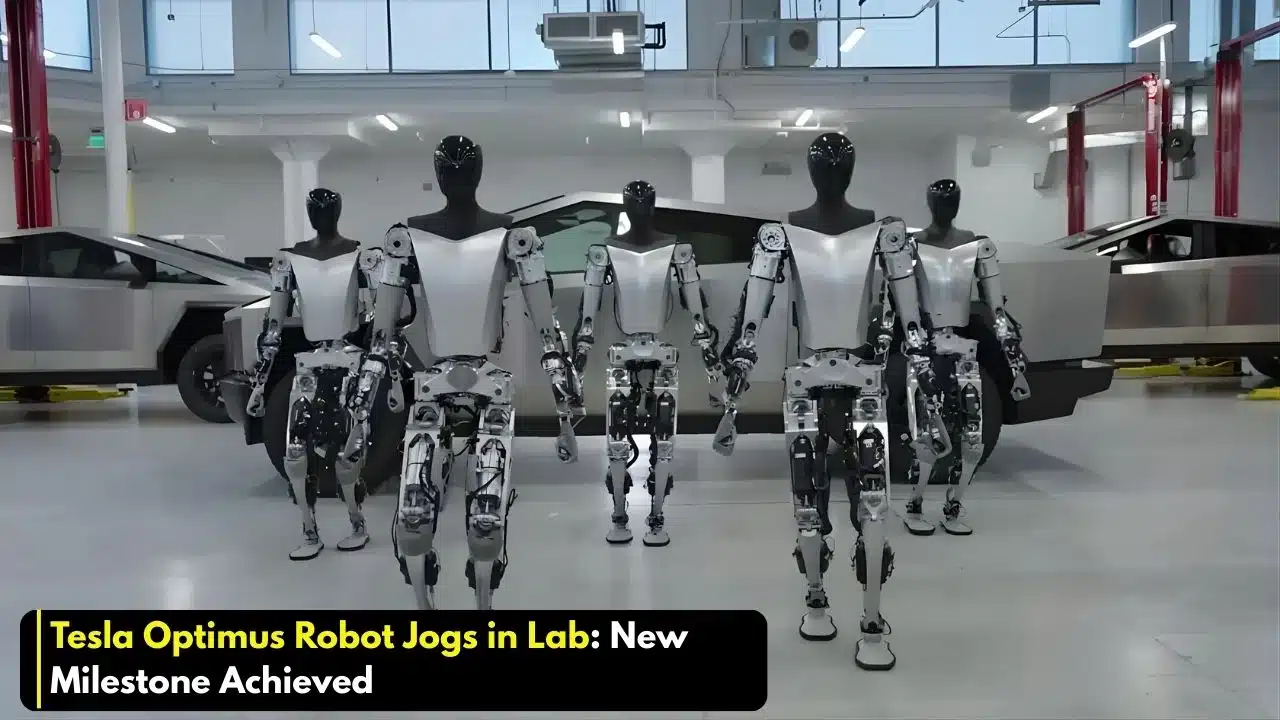
Tesla’s Optimus robot has reached a significant new milestone—demonstrating a stable jog across a lab floor. This achievement marks a pivotal advance in humanoid robotics and highlights Tesla’s rapid progress toward highly capable, general-purpose robots for the real world.
Tesla’s Breakthrough in Humanoid Robotics
Previously, Tesla Optimus was shown carefully walking, performing simple chores, and maintaining balance. This latest demonstration elevates Optimus’ abilities, showing smooth, coordinated jogging—a feat that has challenged the robotics industry for years. The company shared a video of Optimus maintaining a steady jog, passing other units and showcasing improved gait, balance, and overall agility.
How the Demonstration Was Unveiled
Elon Musk shared the viral clip on X (formerly Twitter), captioning it “Running robot.” The post immediately drew widespread attention, with millions viewing in the first few hours. The official Tesla Optimus account highlighted the achievement as a “new performance record,” signaling that the team had set an internal best for robot speed and fluidity.
Social media reactions ranged from awe to humor, with robotics researchers lauding the technical prowess that made the robot’s running motion possible, and others joking about future “robot races” or pop culture comparisons. These community discussions underscore the growing visibility and expectations for Tesla’s robotics division.
The Technical Challenge: Making Robots Jog
For decades, creating a bipedal robot that can jog without assistance has remained a high bar due to challenges in balance, real-time adaptation, and hardware durability. Tesla’s recent progress demonstrates advances in:
-
Dynamic balance during fast movement
-
Advanced AI-driven motion planning
-
Stronger, lighter actuators to maintain joint control while running
Each of these improvements is necessary to go beyond simple, slow walking and set the stage for eventual real-world applications, from advanced manufacturing to logistics and even home assistance.
Steady March Toward Deployment
According to Tesla’s production roadmap, Optimus is scheduled to enter low-volume production for internal factory use in 2025, with wider availability planned for 2026. Tesla anticipates deploying a “legion” of thousands of Optimus robots across its own factories as the technology matures. Industry observers note that the pace of development—especially from walking to running—could accelerate mass adoption in sectors requiring repetitive or hazardous human labor.
Optimus Features: What Makes It Unique?
Optimus stands about 5 feet 8 inches tall and weighs roughly 56 kilograms. Key features include:
-
Fully autonomous navigation with environment mapping
-
Ability to lift and transport objects
-
Advanced computer vision and sensor integration
-
Interconnected AI and hardware, enabling rapid adaptation and learning
The upgrade to jogging shows major improvement in real-time balance correction and terrain handling.
Impact on Industry and Everyday Life
Musk has repeatedly stated that Optimus will eventually take on tasks that are “repetitive, unsafe, or boring” in industrial and household settings. Potential applications include:
-
Assembly line automation
-
Hazardous material handling
-
Elderly or healthcare support
-
Household chores and delivery
As the robot’s physical abilities and intelligence increase, Tesla envisions Optimus evolving from a factory assistant to a household helper, possibly challenging established players in both industrial robotics and consumer tech.
Responding to Skepticism and Safety Concerns
Not all responses have been universally positive. Some experts and social media users raised questions about robot safety, referencing previous worries about limiting robot speed until full stability and fail-safes are tested. Tesla has publicly emphasized a gradual approach, restricting maximum speed and operational autonomy until every aspect is thoroughly validated.
There are active debates about the social impact of humanoid robots—will they augment human labor or trigger job displacement? Tesla positions Optimus as an augmentation tool, with Musk making bold claims that such robotics could “actually eliminate poverty,” leveraging new technology to free humans from drudgery and focus on more meaningful pursuits.
Public Reaction and Broader Significance
The news of Optimus jogging has energized the tech community. Prominent AI researchers and tech leaders have commented positively, underscoring this as a leap forward in narrowing the gap between science fiction and practical robotics. The successful jog also intensifies competition among robotics companies, with Tesla now one of the clear leaders in humanoid automation.
The Road Ahead: Mass Market and AI Integration
Looking forward, Tesla’s vision is to develop Optimus into a platform—akin to its cars—where software and hardware upgrades will continuously improve capability. Future features teased by Musk and his team include:
-
Improved dexterity for complex tasks
-
Seamless integration with Tesla’s AI ecosystem
-
Lower production costs, targeting a price below $30,000 per unit
If successful, Optimus could become a fixture in homes, businesses, and public infrastructure by the late 2020s, representing a step change in how society interacts with intelligent machines.
























