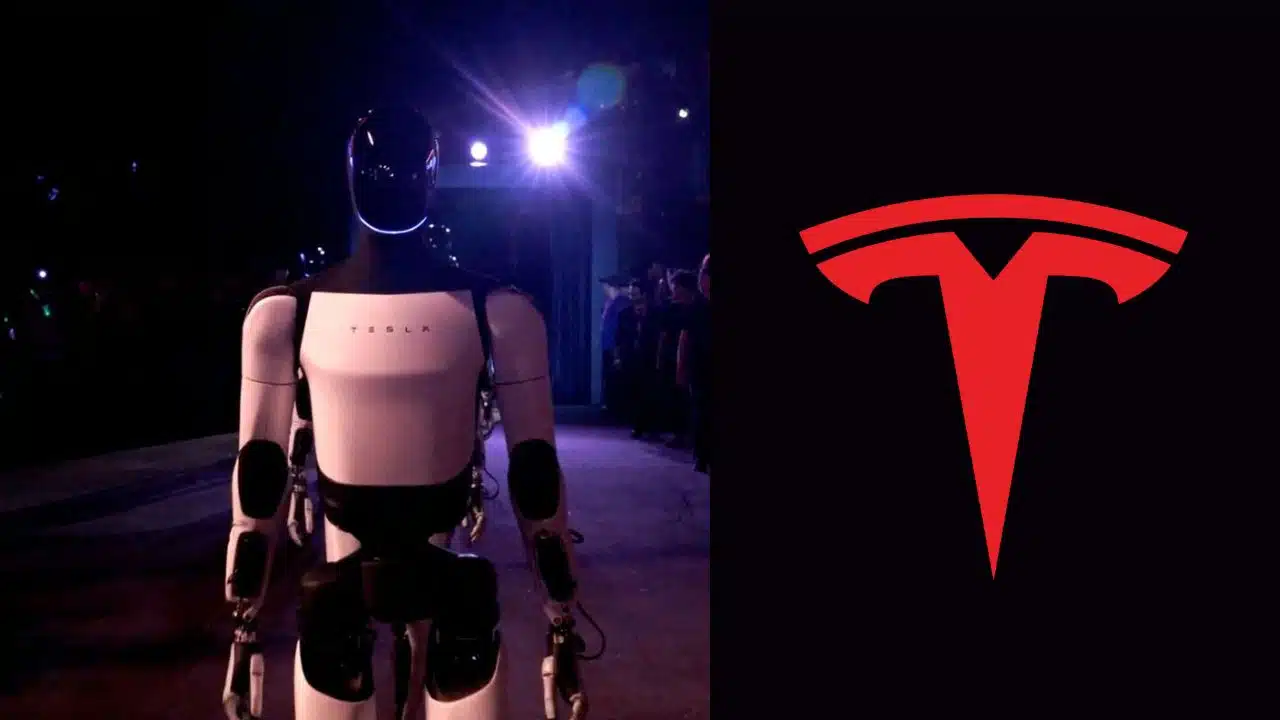
At last week’s “We, Robot” event, Elon Musk revealed his long-term vision for autonomous humanoid robots, painting an exciting picture of the future. However, while the Optimus prototypes mingled with guests, it turns out that they were far from fully autonomous. Multiple reports have now confirmed that human teleoperators were controlling many of the robots’ actions during the event, raising questions about how close Tesla really is to achieving true autonomy in its robots.
Human Operators Behind the Curtain: A Closer Look at Tesla’s Optimus Robots
During the highly anticipated event, Musk avoided discussing the current level of autonomy for the Optimus prototypes. However, reports from Bloomberg and several other sources indicate that human controllers were working behind the scenes, puppeting the robots for many of their demonstrated activities. While Musk highlighted the potential of these robots to revolutionize labor with their ability to “do anything you want,” it appears Tesla still has a way to go before this vision is realized.
According to Bloomberg, which cited unnamed “people familiar with the matter,” Tesla used human teleoperators to remotely control some of the Optimus robots’ capabilities at the event. However, the report did not specify exactly which tasks required human assistance. Interestingly, the report did mention that the robots “were able to walk without external control using artificial intelligence (AI),” a statement that seems to highlight a distinction between walking and other robot actions that night. The fact that walking was singled out as AI-powered—without mention of AI for other activities—implies that humans were likely controlling those other tasks.
This observation aligns with information shared by technology blogger Robert Scoble, who attended the event and spoke with a Tesla engineer. Scoble revealed on social media that AI was running the robots when they walked. However, for other interactions—such as pouring drinks, playing Rock Paper Scissors, and conversing with guests—human assistance was required. Scoble noted that while the walking showcased AI autonomy, tasks involving more dexterity and communication were managed by human operators.
The Robots Walk, But What Else Can They Do?
Footage from the “We, Robot” event shows several Optimus robots entering the party venue in single file, slowly walking without any apparent assistance. The robots’ ability to walk autonomously without tripping or needing external control was an impressive feat, considering the complexities involved in creating bipedal movement for humanoid robots.
However, observers quickly noted that the robots’ movements were limited. In the video, Optimus units walk in a straight line with little deviation, avoiding obstacles. Tesla minders can be seen ensuring a clear path by standing on either side of the walking robots, enforcing a wide berth for the machines. This visual presentation suggests that while the robots may have been able to walk on their own, they were operating in a controlled environment designed to minimize the risk of error. The simplicity of the walking patterns—essentially forward movement without turns or changes in direction—indicates that this was a very specific demonstration of the robots’ current AI capabilities.
Moreover, as reported by Electrek, video footage from the event shows Tesla employees hovering near the robots, holding signaling devices. These devices seemed to play a role in monitoring and possibly guiding the robots’ movements. This adds further evidence to the theory that, while the robots were walking autonomously to an extent, the overall display was carefully managed to showcase specific functions in a controlled manner.
In an investor note shared by Morgan Stanley analyst Adam Jones, the presence of human controllers was further confirmed. Jones stated that the robots were not operating entirely on their own, explaining that “these robots were not operating entirely autonomously—but relied on tele-ops (human intervention) so it was more a demonstration of degrees of freedom and agility.” The investor note suggests that Tesla’s focus at the event was on showcasing the robots’ range of movement rather than full independence from human control.
Human-Assisted Conversations Raise Eyebrows
One of the standout features of the “We, Robot” event was the ability of the Optimus prototypes to engage in conversations with attendees. Videos posted on social media show the robots talking to partygoers, responding to questions, and even participating in games like Rock Paper Scissors. At first glance, this might seem like a breakthrough in human-robot interaction, as AI technology has advanced rapidly in recent years, particularly in areas like speech recognition and natural language processing.
However, many attendees noted the surprising smoothness of these conversations, especially given the noisy, crowded environment of the party. AI models capable of natural-sounding dialogue have made great strides, but the Optimus robots’ ability to quickly respond to questions and hold fluid conversations in such conditions raised suspicions.
When asked about the robots’ autonomy, Robert Scoble decided to confront one of the Optimus prototypes directly. In a video he shared on social media, he asked the robot about how much of its actions were controlled by AI. The robot’s response was coy: “I can’t disclose just how much [is controlled by AI]. That’s something you’ll have to find out later.” While the response added a layer of mystery, it hinted that human operators might have been more involved than Tesla was letting on.
Indeed, other attendees were more successful in their questioning. In one video, a drink-serving Optimus robot admits to a guest, “Today, I’m assisted by a human. I’m not yet fully autonomous.” This direct admission confirmed what many had suspected—that while the robots were impressive, they were still far from operating independently.
Musk’s Focus on the Future, Not the Present
During his keynote at the event, Musk was careful not to get into the details of the current Optimus prototypes’ autonomy. Instead, he emphasized the potential of the robots, describing a future where affordable, fully autonomous humanoid robots could handle nearly any task. “The Optimus robots will walk among you… I mean, it’s a wild experience just to have humanoid robots, and they’re there, just in front of you,” Musk said.
While Musk’s presentation was designed to showcase Tesla’s progress and ignite excitement for the future, it appears that the current Optimus prototypes are still very much in development. Musk spent much of his time discussing the “rapid progress” being made in robot development and how it could lead to widespread applications in industries ranging from manufacturing to healthcare.
However, the juxtaposition of Musk’s bold claims about the future and the relatively limited capabilities of the robots on display led to some confusion. Many attendees and experts, including Deepwater Asset Management Managing Partner Gene Munster, initially believed that the robots were operating largely autonomously. Munster even posted on social media about how the event was “just the start of mega AI use cases.” However, after learning about the human involvement in controlling the robots, Munster admitted, “Fooled me.”
The Road Ahead for Tesla’s Optimus Robots
The revelation that human teleoperators were assisting Tesla’s Optimus prototypes throughout the “We, Robot” event doesn’t take away from the impressive advancements that were demonstrated. Achieving bipedal movement for humanoid robots is a significant milestone, and Tesla’s ability to demonstrate that Optimus can walk using AI is a notable achievement.
However, Tesla’s vision of fully autonomous humanoid robots capable of handling complex tasks without human intervention remains a work in progress. The Optimus prototypes may be able to walk and perform simple tasks with assistance, but the road to creating robots that can think, learn, and operate independently will require significant advancements in AI, robotics, and machine learning.
For now, Tesla’s Optimus robots are impressive feats of engineering, but they are still very much dependent on human oversight. Musk’s vision of a future filled with affordable, fully autonomous robots is exciting, but it’s clear that there is still a long way to go before that vision becomes a reality.