

The modern bathroom is a significant source of household plastic pollution. From the liquid shampoo bottles lining the shower shelf to the multi-layered tubes of toothpaste on the sink, the products used for daily grooming are heavily dependent on single-use fossil fuel derivatives. While many consumers have adopted reusable shopping bags and discarded plastic straws, adopting a routine centered on sustainable personal care is rarely as straightforward as swapping out a single item.
The primary challenge lies in the complex formulation and specialized packaging required to keep cosmetic and hygiene items stable, sanitary, and easy to dispense. Liquid products are mostly water, requiring thick plastic jugs for transport, while automated pumps rely on internal metal springs that ruin municipal recycling sortation machines.
Shifting toward alternative habits requires looking past corporate marketing promises, understanding the raw materials in your products, and managing the practical adjustments that happen when you remove synthetic texturizers and disposable packaging from your morning routine.
The Invisible Waste Crisis in the Bathroom
The scope of municipal waste generated by consumer hygiene habits is staggering. Industry data compiled by the British Beauty Council shows that the global cosmetics and personal care sector generates roughly 120 billion units of packaging every single year.
The vast majority of this packaging is single-use, designed to be thrown away the moment the product runs dry. Furthermore, estimations show that up to 95 percent of beauty packaging is discarded annually, with a mere 14 percent actually making its way to recycling facilities.
This low recovery rate is driven by consumer behavior and mechanical sorting limitations:
The Sorting Failure of Small Formats
Items like lip balm tubes, travel-sized lotion bottles, makeup compacts, and sample pouches are too small for commercial recycling facilities to process. During the automated screening process, these small items slip through the gaps in sorting grates, falling into the residual waste pile destined straight for landfills or incineration.
The Bathroom Recycling Gap
Consumer research conducted by Garnier indicates a stark divide between kitchen recycling and bathroom recycling habits. While the majority of households routinely sort kitchen items like milk jugs and soda cans, roughly 56 percent of consumers admit they do not recycle products used in the bathroom. This is frequently due to a lack of dedicated sorting bins in the bathroom or confusion over whether greasy, product-smeared plastics are acceptable.
Multi-Material Complications
A standard bottle of liquid body wash or lotion often uses multiple types of plastic. The main bottle might be high-density polyethylene, while the cap is polypropylene, and the pump assembly contains a hidden internal stainless steel spring. Because these distinct materials cannot be melted down together, processing them requires manual disassembly—a step that is financially impossible for municipal recycling programs to scale.
The concept of sustainable personal care must extend beyond the outer box. True waste reduction requires evaluating both the packaging housing the product and the chemical formulation that flows down the bathroom drain into local water systems.
Deciphering Formulations: Microplastics, Palm Oil, and Chemical Runoff
When a liquid soap or facial scrub is rinsed down the drain, it does not simply vanish. It enters the municipal wastewater treatment system, where standard filtration methods often fail to catch ultra-fine synthetic particulates.
The Microplastic Problem
While many regions have legally banned solid plastic microbeads in exfoliating scrubs, liquid polymers remain common in mainstream personal care items. These synthetic chemicals are often listed on labels as polyethylene, polyacrylate, or polyurethane—are added to liquid formulations to alter viscosity, create a smooth texture, or give hair care products a glossy sheen.
According to marine pollution research, only a small fraction of cosmetic formulations are completely free from microplastics or liquid polymers. Once these chemicals enter marine environments, they act as persistent pollutants, absorbing toxic heavy metals from the water column and entering the food chain via fish and marine organisms.
The Deforestation Impact of Palm Oil Derivatives
Another major ingredient conflict involves the use of palm oil and its derivatives. Industry assessments reveal that approximately 70 percent of personal care products contain some element of palm oil or its chemical byproducts, such as sodium lauryl sulfate, cetyl alcohol, or stearic acid.
Unregulated Palm Oil Sourcing ➔ Tropical Deforestation ➔ Habitat Loss & High Carbon Emissions
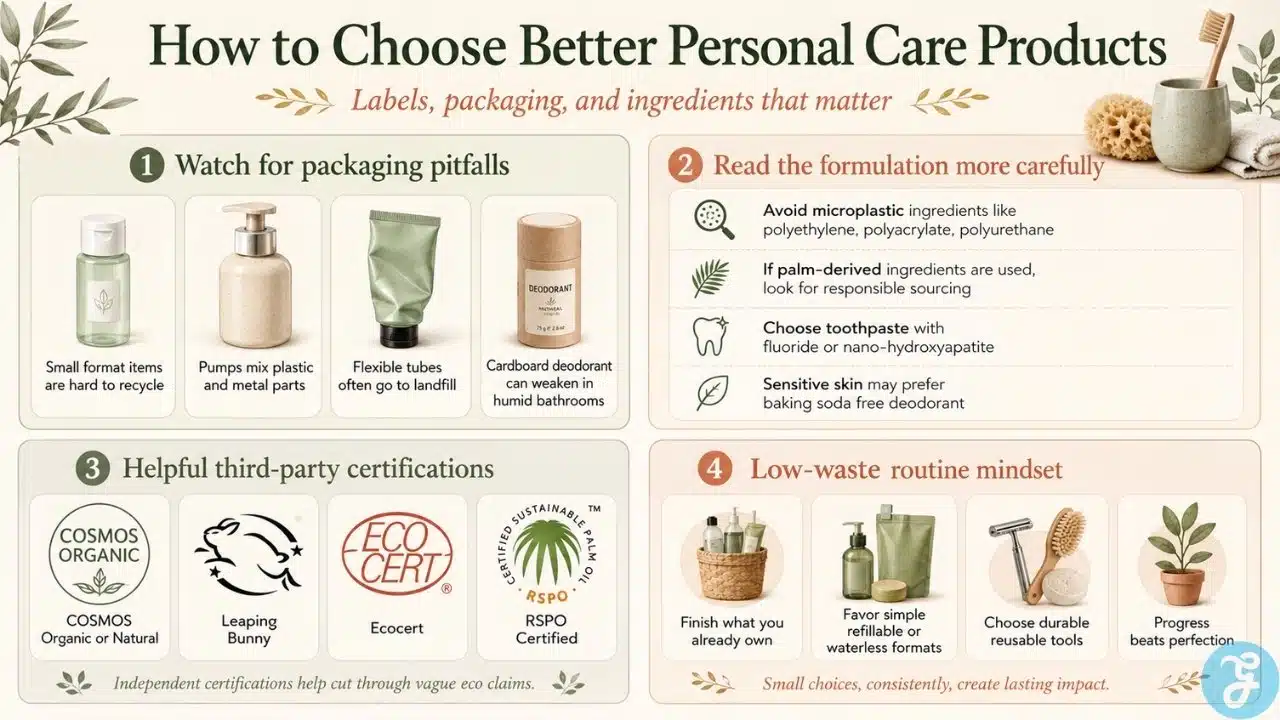
The expansion of palm oil plantations has historically driven large-scale deforestation in tropical regions of Southeast Asia and South America, destroying critical habitats for endangered species and releasing massive amounts of carbon dioxide into the atmosphere. When seeking out natural beauty products, consumers must look beyond simple organic claims and check if palm-derived ingredients are certified by international sustainability bodies that enforce strict forest conservation rules.
The Operational Framework of Sustainable Personal Care
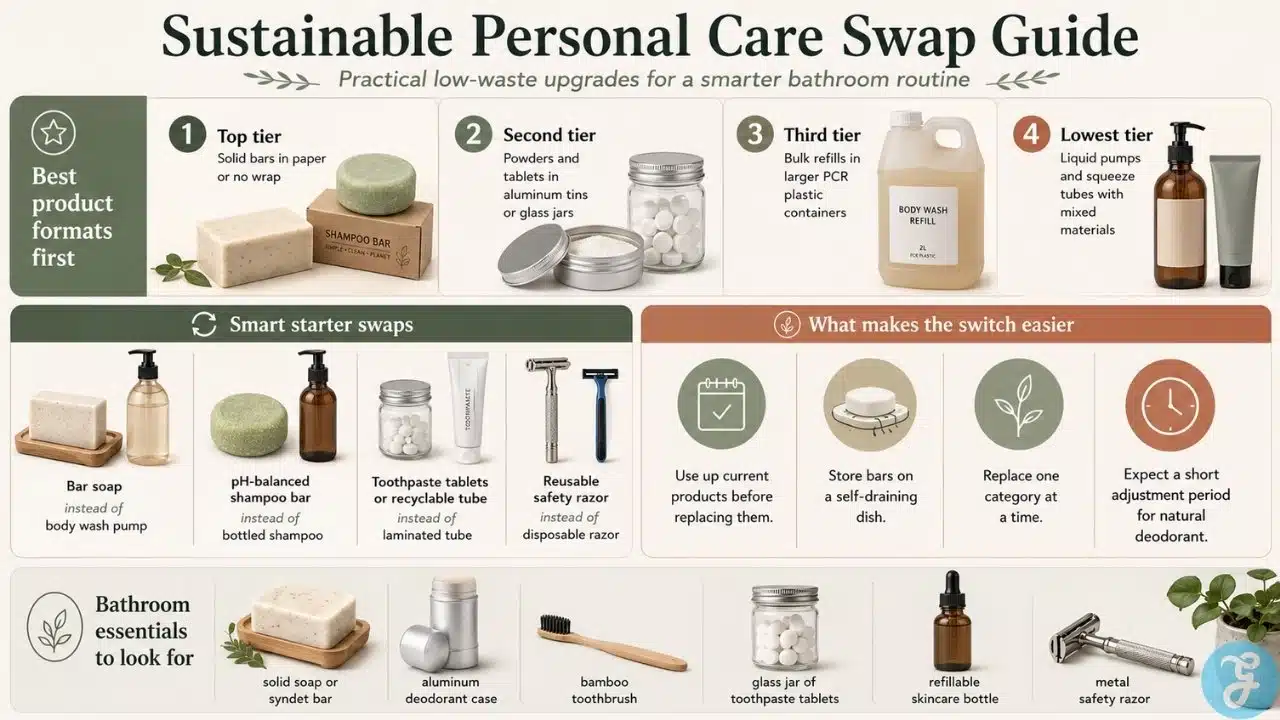
Shifting toward an eco-personal care routine requires evaluating alternatives based on their true life-cycle impact. Use this material priority hierarchy when selecting new hygiene items:
| Priority Level | Product Format | Primary Material Used | Disposal Path |
| Top Tier | Solid bars (shampoo, soap, shave bars) | Unwrapped or plain, unlined paper | Backyard compost or curbside paper recycling |
| Second Tier | Concentrated powders or waterless tablets | Aluminum tins or glass jars | Infinite domestic metal/glass recycling |
| Third Tier | Bulk fluid refills | Large post-consumer recycled plastic jugs | Standard municipal rigid plastic sorting |
| Worst Tier | Standard liquid pumps and flexible squeeze tubes | Fused multi-layer plastics with metal components | Landfill only |
Shifting to Plastic-Free Hygiene: Hair and Body Care
Replacing liquid cleansers with solid alternatives is one of the most effective ways to practice plastic-free hygiene. Because liquid shampoo and body wash are composed of up to 80 percent water, shipping them requires heavy plastic bottles and immense transportation fuel. Solid bars eliminate the water content entirely, allowing manufacturers to pack the concentrated active ingredients in simple, lightweight paper wrapping.
Switching from a traditional liquid shampoo bottle to a solid bar can introduce unexpected physical friction. Many consumers buy a natural bar, use it twice, and abandon it because their hair feels heavy, sticky, or coated in a strange waxy residue. This problem stems from a fundamental chemical difference between two distinct types of solid bars:
Saponified Soap Bars: These are traditional soaps made by reacting plant oils with an alkali like sodium hydroxide. While excellent for the skin, saponified bars have a high pH level, typically between 8 and 10. When applied to hair, this alkalinity causes the hair cuticle to swell and rough up. If you live in an area with hard municipal water, the minerals in the water bind to the soap molecules, creating an insoluble residue that leaves hair feeling waxy and stiff. Overcoming this requires an acidic rinse, such as diluted apple cider vinegar, to lower the hair pH and smooth the cuticle flat.
Syndet Bars (Synthetic Detergent Bars): These bars are formulated using solid, plant-based surfactants rather than traditional soap. They are specifically engineered to match the natural acidic pH of human hair and skin, which sits between 4.5 and 5.5. Syndet bars rinse away completely clean without requiring an acid rinse, making them a far easier choice for individuals transitioning away from conventional liquid products.
Saponified Bar + Hard Water ➔ Waxy Residue (Requires Acidic Vinegar Rinse)
Syndet Bar + Any Water Type ➔ Rinses Completely Clean (No Transition Period)
Extending Product Life in Humid Bathrooms
Solid bars require specific physical care to keep them from dissolving on the shower shelf. If left sitting in a puddle of water or under a direct shower spray, a high-quality shampoo bar can turn into a soft, unusable mush within a matter of days.
To prevent this waste, store your bars on a self-draining dish outside the direct splash zone of the showerhead. Soap dishes made of natural slatted wood, porous stone, or raised stainless steel wire grids allow air to circulate around the entire surface of the bar, drying it completely between uses and extending its lifespan significantly.
Oral Care and the Single-Use Plastic Problem
Traditional dental routines produce a high volume of plastic waste. Standard toothbrushes are made from fused polypropylene handles with nylon bristles that cannot be recycled, meaning every single brush used over a lifetime still exists somewhere in the environment. Similarly, standard laminated toothpaste tubes are impossible to separate mechanically, resulting in millions of empty tubes being sent directly to landfills.
The Reality of Alternative Toothbrushes
Bamboo toothbrushes have become a highly visible symbol of plastic-free hygiene, but they come with their own practical design limitations. The main handle of a bamboo brush is fully biodegradable and can be placed in a backyard compost pile. However, almost all commercial bamboo brushes still use standard nylon-6 bristles because alternative plant-based materials like pig hair are unappealing to most consumers, and bioplastic bristles often fail to meet clinical dental safety standards.
To dispose of a bamboo toothbrush correctly, you cannot simply throw the whole item into the compost. You must use a pair of pliers to manually pull the nylon bristles out of the wooden head or use a small saw to slice off the bristled head entirely. The remaining raw bamboo handle can then be safely composted, while the tiny nylon fibers must go into the trash.
Toothpaste Tablets vs. Recyclable Tubes
To eliminate toothpaste packaging waste, look for toothpaste tablets stored in reusable glass jars or aluminum tins. These dry tablets are chewed slightly to create a paste before brushing with a wet toothbrush.
When choosing a toothpaste alternative, check the ingredient list for fluoride or a clinically proven enamel remineralizer like nano-hydroxyapatite. Many early natural beauty products completely omitted these active ingredients, leading to increased cavity risks for users who switched away from conventional dental brands.
If toothpaste tablets do not fit your personal preferences, look for mainstream brands that have transitioned to mono-material tubes made exclusively from high-density polyethylene. These specific tubes can be placed directly in standard household recycling bins alongside milk jugs, provided they are cut open and thoroughly rinsed of all residual paste before disposal.
Skincare and Deodorants: Managing Formulations and Refill Models
The skincare and deodorant sectors have seen massive innovation in refillable packaging systems. However, balancing user convenience with genuine plastic reduction introduces noticeable real-world challenges.
The Metal Pump and Refill Dilemma
Many skincare brands now sell facial serums and moisturizing lotions in heavy glass jars with a refillable internal plastic pod system. While this reduces the overall volume of plastic used per purchase, the mechanical pump dispensers remain a critical structural issue.
Most cosmetic pumps contain a small, highly compressed metal spring hidden inside the plastic housing. Because consumers cannot pull this spring out at home, the entire pump mechanism is rejected by recycling sortation plants.
When using refillable skincare lines, choose brands that use simple, thread-on metal caps for their refill refills, allowing you to clean and reuse your original pump mechanism across multiple years of use.
The Deodorant Transition Period and Baking Soda Reactions
Moving from a conventional antiperspirant to a natural, sustainable personal care deodorant often causes initial physical discomfort. Mainstream antiperspirants rely on aluminum salts to physically block sweat glands and prevent perspiration. Natural deodorants do not stop sweating; instead, they use absorbent powders and antibacterial plant oils to manage the odor caused by skin bacteria.
During the first two to three weeks of making the switch, your underarm skin undergoes an adjustment phase. As the aluminum plugs naturally clear from your sweat glands, you may notice a temporary increase in moisture and odor. This is a normal physiological process, not a failure of the product.
Furthermore, many natural deodorants rely heavily on sodium bicarbonate (baking soda) to neutralize body odor. Because baking soda is highly alkaline, it can disrupt the skin’s natural acid mantle, leading to painful red rashes, chaffing, or hyperpigmentation for individuals with sensitive skin. If you experience this skin reaction, switch immediately to a baking soda-free formula that utilizes gentler alternatives like magnesium hydroxide, zinc ricinoleate, or dietary arrowroot powder.
The Failure of Cardboard Deodorant Packaging
Many zero-waste brands pack their solid deodorants in fully compostable cardboard push-up tubes. While excellent in theory, these cardboard containers can suffer from significant durability issues in hot, humid bathroom environments:
Absorbing Oil and Moisture: Over weeks of use, the natural plant oils and butter bases within the deodorant can seep into the raw paper walls, causing the outer packaging to become greasy, structurally weak, and prone to tearing.
The Push-Up Mechanism Jam: Unlike plastic twist-up sticks that use an internal threaded plastic screw, cardboard tubes require you to physically push the bottom of the tube upward with a finger. If the internal product gets cold and contracts, it can lock against the sides, causing the bottom disk to punch right through the center of the stick.
To bypass these paper frustrations, a highly reliable alternative is a heavy-duty, reusable aluminum casing that holds replaceable deodorant blocks. This keeps your bathroom counter clean while removing single-use plastic from your routine.
Demystifying “Eco” Labels and Avoiding Greenwashing
Evaluating sustainable personal care products requires a critical look at marketing claims. Because terms like “natural,” “clean,” and “eco-friendly” are completely unregulated by global advertising authorities, brands can legally place these words on their front labels even if the product contains only a tiny fraction of plant extracts.
To cut through this marketing noise, look for reputable third-party certifications that require strict, independent auditing of supply chains and manufacturing facilities:
COSMOS Organic / Natural: This strict European standard guarantees that a minimum percentage of ingredients are derived from organic farming, forbids synthetic chemical additives, and ensures that packaging materials are fully recyclable or biodegradable.
Leaping Bunny Certified: This global standard ensures that a personal care product, along with its raw material suppliers, has undergone rigorous independent checking to verify that no animal testing occurred at any stage of development.
Ecocert: An international certification body that inspects cosmetic products to confirm sustainable sourcing of ingredients, clean manufacturing processes, and the absence of microplastics or synthetic silicones.
RSPO Certified (Roundtable on Sustainable Palm Oil): If a product contains palm-derived ingredients, look for the RSPO label to confirm that the raw material oil was tracked through a verified sustainable supply chain that protects primary rainforests.
Avoid products that list vague claims like “chemical-free.” Everything from pure water to natural coconut oil is composed of chemical structures. True sustainability focuses on chemical safety, environmental persistence, and non-toxic degradation rather than relying on scientifically inaccurate scare tactics.
Practical Step-by-Step Transition Roadmap
Transitioning your household to sustainable personal care does not require throwing away your entire current inventory. In fact, discarding half-empty plastic bottles of conventional products creates unnecessary material waste. The most sustainable action is to use up every ounce of your existing items before seeking out an alternative.
Use this simple, step-by-step framework to manage your household transition smoothly over time:
-
Step One: Complete an Inventory Audit: Look through your cabinets and note down what products you use regularly. Identify which items generate the most non-recyclable plastic film or small-format waste, such as disposable razors or small travel tubes.
-
Step Two: Target the Simplest Swaps First: Begin by replacing traditional liquid hand soaps and body washes with unwrapped bar soaps. This simple switch removes multiple heavy plastic pump containers from your household footprint with zero lifestyle disruption.
-
Step Three: Transition to Solid Hair Care: Once your current liquid shampoo runs empty, evaluate your hair needs and select a pH-balanced syndet bar. Pair it with a proper self-draining dish to maximize its shelf life.
-
Step Four: Address Oral Care and Deodorant: Move toward a bamboo brush or a reusable aluminum deodorant stick once your current conventional items are completely used up. Allow two to three weeks for your skin to adjust to natural deodorant formulations.
Final Thoughts
Building a successful sustainable personal care routine requires patience, observation, and a willingness to step away from the convenience of single-use plastics. By focusing on concentrated waterless formulations, understanding the structural differences between traditional soaps and syndet bars, and learning to read labels for genuine third-party environmental certifications, you can significantly reduce your daily household waste stream. True progress is built on making small, practical, and lasting adjustments that respect both your personal health and the broader global environment.





















