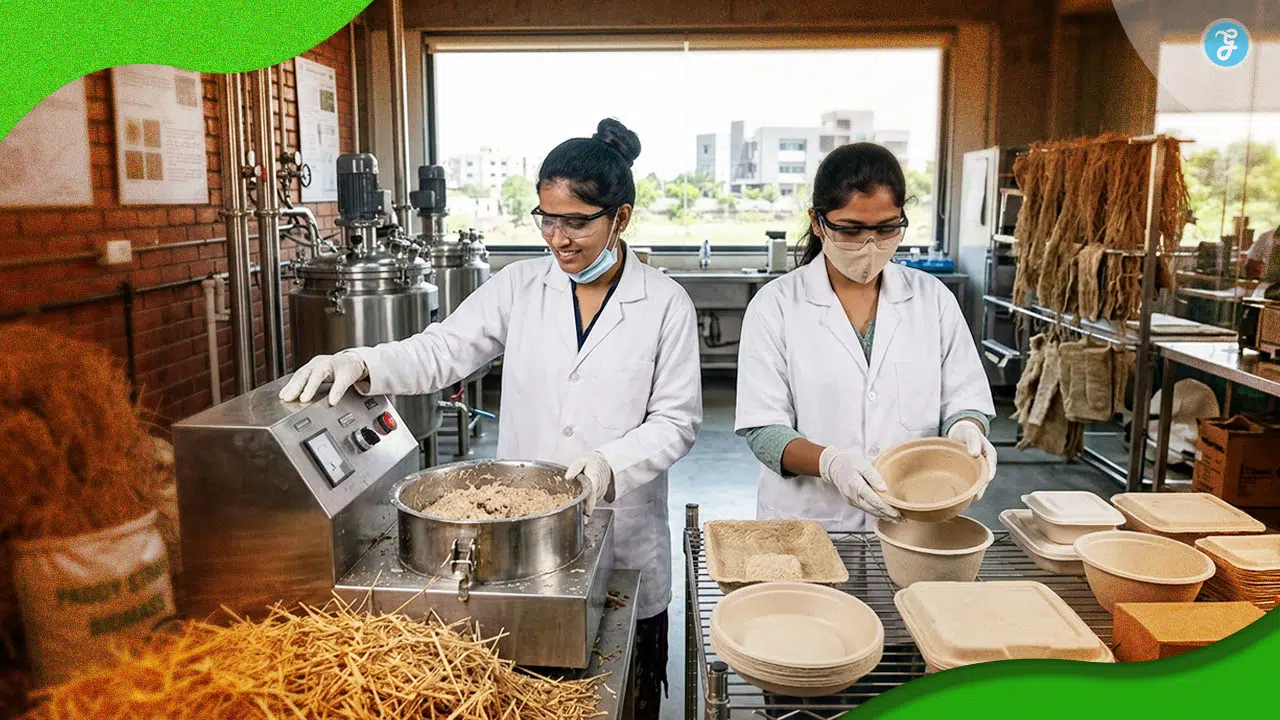
The sky over New Delhi usually turns a toxic gray by November. For years, this “Smoke over Delhi” narrative defined the winter months as millions of tons of paddy straw were set ablaze across North India. This annual stubble burning crisis contributes to nearly 30% of the city’s winter smog. The problem is not confined to the capital. From the plains of Punjab to the farm belts near Chandigarh, the haze lingers over entire regions. But by early 2026, the story changed. What was once a pollutant is now a strategic raw material for Sustainable Bio-Packaging in India initiatives.
This marks a significant shift in green manufacturing. In this new era, agricultural residue is the cornerstone of a global $10 billion industry. The transformation is not just about clearing the air. It is a massive economic pivot from waste to wealth. Farmers who once saw stubble as a liability now view it as a secondary income stream. They are the frontline suppliers for a high tech manufacturing boom. Instead of fire, they now see profit.
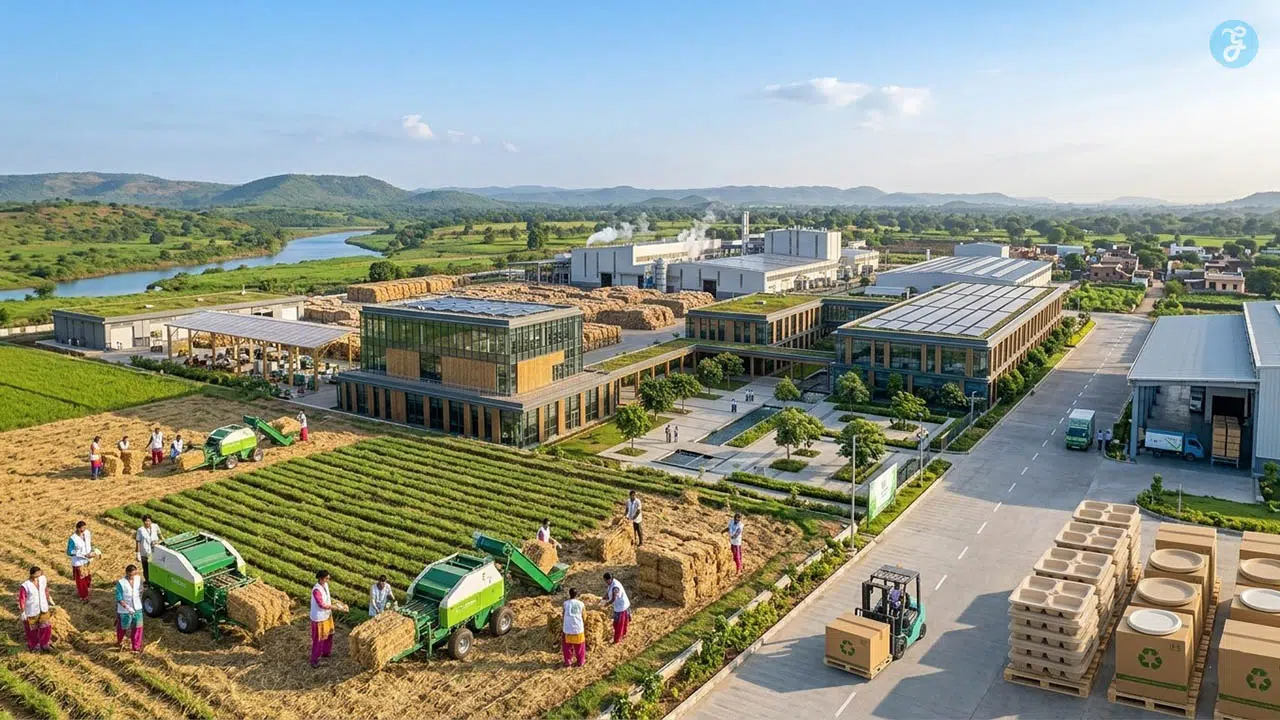
The catalyst for this change arrived on April 1, 2026. New Extended Producer Responsibility or EPR rules came into full effect. These regulations mandate a 70% recycling target for all packaging materials. This legal requirement forced FMCG giants to abandon traditional plastics almost overnight. Large companies needed alternatives that were scalable and compliant. They found those solutions in the labs and factories of India’s top tech hubs.
Engineering has replaced matches. Instead of burning straw, these hubs use molecular biology and mechanical engineering to create sturdy, compostable solutions. The goal is a truly circular economy. This means every food container or shipping mailer can eventually return to the soil as nutrients. It is a pragmatic response to a regulatory and environmental crisis. India is proving that the end of plastic does not mean the end of convenience.
The Landscape of Innovation: Why Hubs Matter
Understanding the shift toward sustainable bio-packaging in India requires looking beyond individual companies. While “startup” is a popular term, it often misses the sheer scale of the current movement.
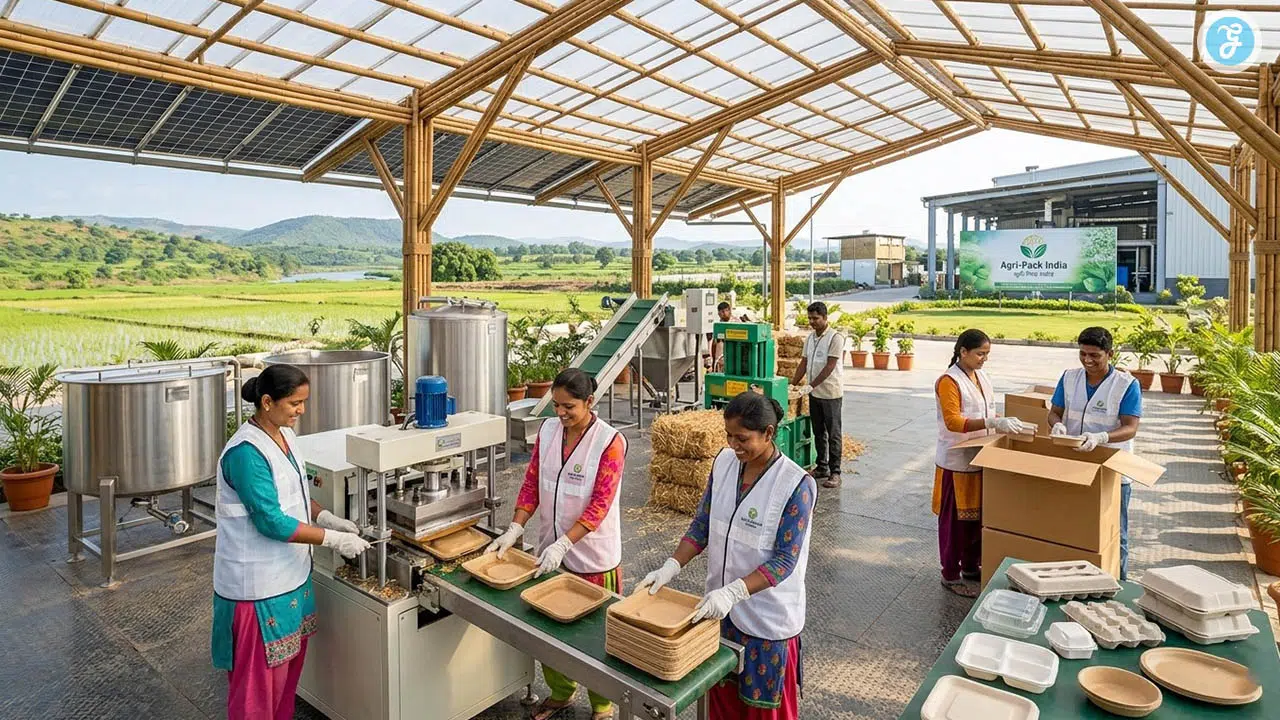
These are not isolated businesses but complex ecosystems where specialized knowledge and massive capital meet.
Academic Foundations as Intellectual Engines
The revolution starts in the lab. Institutions like the various IITs act as the primary research engines for the country. They file the patents and perfect the molecular science needed to soften tough crop fibers. Without this high level research, agricultural residue would lack the strength required for commercial packaging. These academic centers provide the technical blueprint that makes the entire industry possible.
Industrial Scaling and Manufacturing Muscle
Industrial giants provide the necessary power to move beyond prototypes. Companies like Balrampur Chini Mills represent the critical scaling phase. Many small firms struggle to cross the gap between lab success and mass production. By integrating new technology into existing massive industrial plants, India has bypassed this bottleneck. These hubs turn small ideas into thousands of tons of market-ready products.
Digital Verification and Supply Chain Trust
The final layer involves ensuring transparency and accountability. In a market where false environmental claims are common, digital hubs provide the necessary verification. Entities like Scarbon use technology to track the entire supply chain. They ensure a bag is actually made from stubble and holds the correct certifications. This digital oversight creates the trust required for large corporations to make the switch from plastic.
The Science of Strength: Solving the Durability Dilemma
The primary hurdle for sustainable bio-packaging in India has always been the physical limitation of organic fibers. Conventional plastic is valued for being lightweight, waterproof, and nearly indestructible. In contrast, early plant-based alternatives often turned soggy or brittle when exposed to moisture or heat. Overcoming this was not a matter of simple manufacturing but of intense molecular engineering within the hubs.
Scientists at these innovation centers are now utilizing nanotechnology to reinforce cellulose fibers. By rearranging the molecular structure of wheat straw and bagasse, they have created a material that matches the tensile strength of low-density polyethylene. This is why a 2026 bio-mailer can survive a monsoon delivery in Mumbai without tearing. Furthermore, the development of natural, plant-based coatings has solved the grease-resistance problem. These coatings, often derived from fruit peels or seaweed, create a non-toxic barrier that prevents oil from seeping through food containers. It is this specific technical bridge that allows a biryani container made of sugarcane waste to remain sturdy for over an hour. This engineering shift has moved bio-packaging from a “luxury eco-option” to a high-performance industrial requirement.
Leading the Charge: 15 Hubs Redefining Sustainable Bio-Packaging in India
The transition to a plastic free future is being driven by a network of specialized innovation centers across the country. These facilities act as the nerve centers for the new circular economy by bridging the gap between raw agri waste and industrial grade materials.
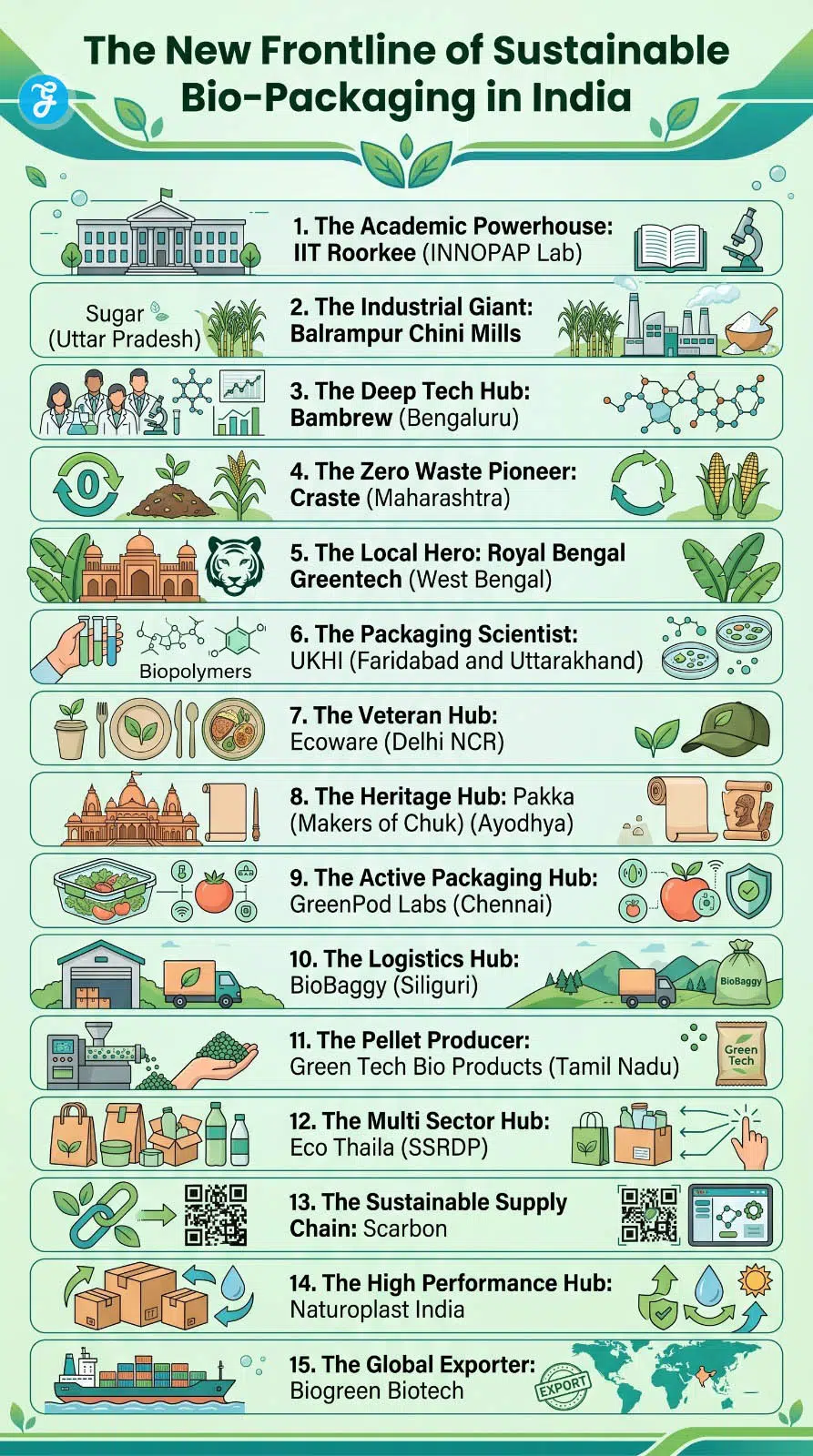
Each hub focuses on a unique technical challenge, from molecular durability to high speed manufacturing logistics. Together, they form a robust infrastructure that ensures sustainable bio-packaging in India is both scalable and economically viable.
1. The Academic Powerhouse: IIT Roorkee (INNOPAP Lab)
Spearheading research in the academic sector, the INNOPAP Lab or Innovations in Paper and Packaging cemented its position in early 2026 through a landmark partnership with Amazon India. They are pioneering non-wood paper technology that successfully converts crop residues like wheat straw and bagasse into high strength paper mailers. Their autoclave digester technology is setting the industrial scale gold standard. This creates a circular economy loop that directly addresses the stubble burning crisis while supplying scalable solutions to e-commerce giants.
2. The Industrial Giant: Balrampur Chini Mills (Uttar Pradesh)
Operating on a scale that transcends the typical startup ecosystem, Balrampur Chini Mills is launching India’s first large-scale Polylactic Acid (PLA) plant in October 2026. Backed by an estimated investment of over ₹2,000 crore, this Kumbhi-based facility will transform sugarcane derivatives into 75,000 tonnes of bioplastic annually under the new brand name Bioyug. Designed as a closed-loop sustainability model entirely powered by renewable energy, the plant serves as a watershed moment for scaling bioplastics within the national manufacturing infrastructure.
3. The Deep Tech Hub: Bambrew (Bengaluru)
Situated in India’s Silicon Valley, Bambrew leverages proprietary plant fiber technology. They utilize bamboo, sugarcane, and seaweed extracts to manufacture packaging that mirrors the durability of conventional plastic. Their products remain 100 percent home compostable. They have successfully positioned themselves as the go to deep tech supplier for major e-commerce platforms. They bridge the gap between high volume logistics requirements and zero waste sustainability goals.
4. The Zero Waste Pioneer: Craste (Maharashtra)
Craste addresses the critical issue of crop residue burning through its patented Fumasolv process. This is a groundbreaking technique for lignin extraction. They convert 100 percent of procured agricultural waste into engineered boards and food-grade molded packaging. What sets this hub apart is its Zero Liquid Discharge or ZLD pulping process. This eliminates the massive water waste traditionally associated with conventional paper and pulp mills.
5. The Local Hero: Royal Bengal Greentech (West Bengal)
Anchoring the eastern innovation hub, this Kolkata based company pioneered BhavisyaPlast. This is a breakthrough thermosetting biodegradable plastic that remains rigid under heat unlike traditional meltable polymers. Beyond being fully compostable, this material is heat-resistant up to 200°C and does not melt. This makes it a high-performance swap for FMCG brands looking to replace flexible PE, PET, and high-temperature packaging films.
6. The Packaging Scientist: UKHI (Faridabad and Uttarakhand)
Operating in collaboration with IIT Mandi, UKHI has developed a highly versatile biopolymer platform known as EcoGran. While they have made significant strides replacing single use plastics in railway zones, their polymer adaptability extends into healthcare for biodegradable medical waste bags. They are currently scaling operations through a massive mother plant located in Faridabad.
7. The Veteran Hub: Ecoware (Delhi NCR)
As one of the earliest entrants to the Indian market, Ecoware has perfected the conversion of sugarcane bagasse into 100 percent compostable tableware. Operating out of the NCR region, their hub commands a massive share of the hospitality supply chain. They currently provide sustainable packaging solutions to nearly every major Quick Service Restaurant or QSR chain operating across the country.
8. The Heritage Hub: Pakka Ltd. (Makers of Chuk) (Ayodhya)
Located in Uttar Pradesh’s traditional paper-making belt, Pakka Ltd. (formerly Yash Pakka) utilizes locally sourced sugarcane waste for its flagship brand, Chuk. The facility manufactures modular, oil-resistant, and microwave-safe tableware.
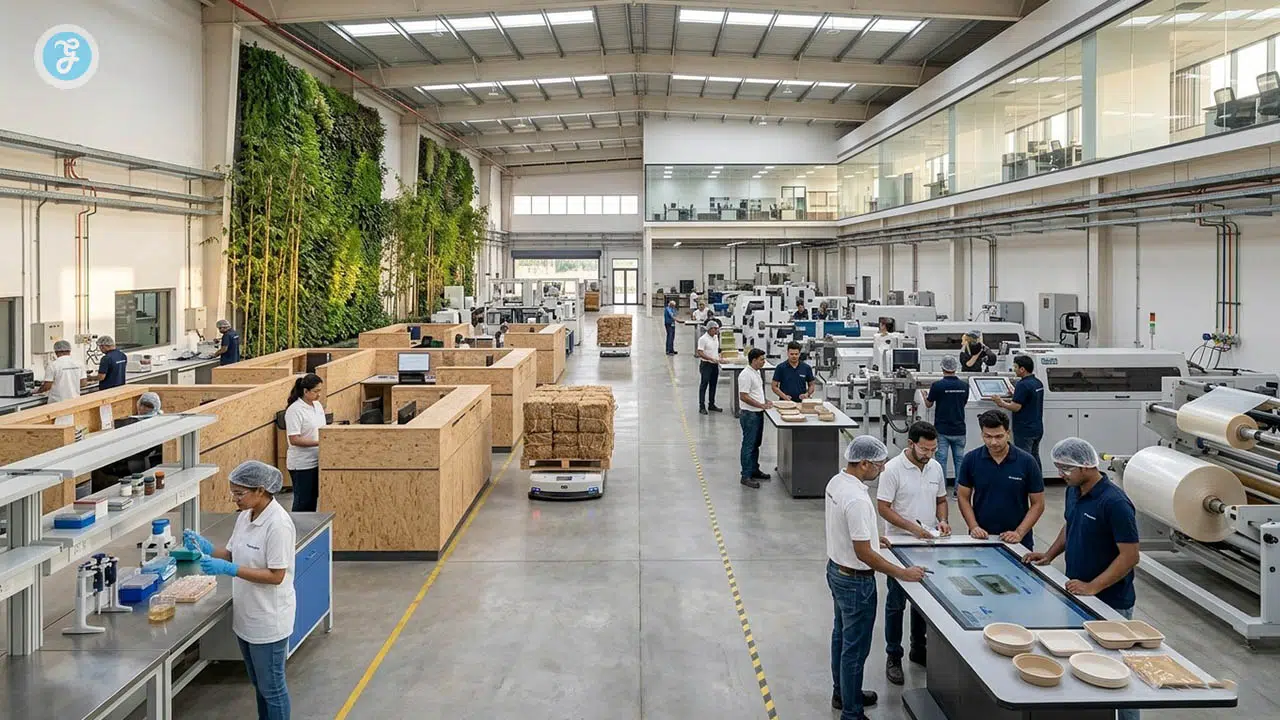
This localized approach to sourcing and production has driven significant operational scale, providing lightweight, toxin-free packaging alternatives tailored specifically to the high-volume demands of the food delivery and hospitality sectors.
9. The Active Packaging Hub: GreenPod Labs (Chennai)
Moving beyond passive containment, Chennai based GreenPod Labs focuses on smart or active packaging. By infusing packaging with specialized natural plant extracts, they create an environment that actively slows down the ripening process. This inhibits microbial growth. This chemical free innovation significantly extends the shelf life of fresh fruits and vegetables. It directly combats agricultural food loss during transit.
10. The Logistics Hub: BioBaggy (Siliguri)
Consistently ranked as a top logistics supplier, BioBaggy has captured the market for heavy duty compostable grocery and mailer bags. Operating from a strategic logistics corridor, they have successfully proven that agri waste derivatives can withstand the intense rigors of the Indian supply chain. Their products handle varied climates and rough handling without failing.
11. The Pellet Producer: Green Tech Bio Products (Tamil Nadu)
Rather than focusing solely on end consumer products, Green Tech Bio Products innovates at the raw material level. They manufacture the foundational biodegradable polymer pellets that countless other sustainable startups rely upon to mold their own products. By strengthening the top of the supply chain, they are instrumental in driving down the overall cost of bio packaging nationwide.
12. The Multi Sector Hub: Eco Thaila (SSRDP)
Eco Thaila seamlessly integrates technological manufacturing with rural empowerment initiatives. They produce plant-based, water soluble starch bags that are actively utilized across diverse industries. These include healthcare, hospitality, and textiles. Their decentralized hub model helps eliminate thousands of tons of conventional plastic while providing sustainable livelihoods in rural sectors.
13. The Sustainable Supply Chain: Scarbon
Functioning as a digital tech hub, Scarbon provides the software and verification infrastructure needed to scale the bio packaging industry. They connect a curated network of verified agri waste packaging vendors directly to large corporate buyers. This ensures that all materials moving through the platform meet stringent quality control standards and hold valid CPCB or ISO certifications.
14. The High Performance Hub: Naturoplast India
Naturoplast tackles the strength gap often associated with early generation bioplastics. This hub specializes in engineering high performance bags from plant waste. These bags are capable of carrying up to 10 kilograms without tearing or degrading under stress. Their products serve as a direct functional replacement for the heavy duty plastic shopping bags used in large retail and grocery chains.
15. The Global Exporter: Biogreen Biotech
Serving as a bridge to international markets, this biotech focused hub manufactures fully compostable materials that adhere strictly to Indian CPCB regulations. They also meet rigorous international standards including EU and US certifications. Their high grade production puts Indian agri waste technology on the global stage. They facilitate large-scale sustainable exports.
The Economics of Agricultural Waste: A Market Deep Dive
The shift away from single-use plastic is not just an environmental win. It represents a massive restructuring of rural economics. Agricultural residue is now a traded commodity with a clear market value. This creates a tangible ripple effect across the entire supply chain.
For decades, clearing fields was a financial burden for farmers in Punjab, Haryana, and Uttar Pradesh. Burning stubble was simply the cheapest way to prepare for the winter harvest. Today, procurement networks have turned this liability into a reliable second income stream. Aggregators now buy baled paddy straw directly from the fields. This puts direct cash into the rural economy. It provides a clear financial incentive to stop the fires. Farmers are no longer just growing food. They are active participants in the green manufacturing supply chain. The machinery required for baling also creates a new micro-industry of equipment operators. The rural workforce benefits directly from the logistics of moving this new commodity.
Achieving Cost Parity With Plastic
The adoption of sustainable bio-packaging historically stalled on one major issue. Price. Conventional plastic was always cheaper to produce. However, that economic reality is shifting rapidly. Since 2023, the price gap between virgin plastic and bio-packaging has narrowed by nearly 40 percent. This change is driven by better extraction technology and massive economies of scale. Raw material costs are dropping as local pellet production increases. Companies are also avoiding steep regulatory fines by switching materials early. For major consumer brands, the switch is no longer a premium expense. The long-term financial math now favors sustainable choices over traditional petrochemical plastics. It is a viable and practical financial strategy.
The Reverse Logistics Revolution
The economic viability of these hubs depends entirely on the efficiency of the “Reverse Logistics” network. In the past, agricultural waste remained in the fields because the cost of transporting it to a factory was higher than the value of the material itself. 2026 has seen the rise of decentralized “Pre-Processing Clusters” across Punjab and Haryana. These smaller units act as feeder hubs where loose straw is compressed into high-density bales or processed into crude pulp before being sent to large plants like Balrampur Chini.
This decentralized model has slashed transportation costs by nearly 50 percent. It has also created a new tier of rural entrepreneurship. Local aggregators now use specialized GPS-tracked machinery to map out surplus stubble across thousands of hectares. By treating agricultural waste with the same logistical precision as Amazon treats a package, India has created a stable commodity market. This supply chain reliability is what allows the bio-packaging industry to offer long-term price contracts to FMCG brands. When the raw material supply is guaranteed and the logistics are optimized, the financial risk for the manufacturer disappears.
The Regulatory Compliance Engine: Beyond EPR
While the EPR rules are the primary driver, other regulatory shifts are fortifying the Sustainable Bio-Packaging in India sector. The 2026 Bureau of Indian Standards (BIS) updates have introduced mandatory “Compostability Certification” for all commercial food packaging. This move has effectively killed the “Oxo-biodegradable” market, which was often just plastic that broke into microplastics.
Current regulations also provide tax incentives for companies that achieve a 100 percent plastic-free supply chain within a single fiscal year. This has turned sustainability into a competitive race. Large retail chains are now auditing their vendors with the same intensity they once used for quality control. They are looking for the CPCB-verified QR codes that prove a product’s origin. This regulatory environment does not just punish the use of plastic; it actively rewards the early adopters of agri-waste technology. It has turned a moral choice into a profitable corporate strategy that satisfies both shareholders and government inspectors.
Beyond the Bag: A Blueprint for the World
The corporate world has completely changed its approach to the environment. Sustainability used to be a simple marketing buzzword, a comfortable corporate social responsibility initiative meant to look good on annual reports. That era has concluded. Today, adopting sustainable packaging in India is a clear regulatory necessity. Strict government mandates force action, requiring large consumer brands to adopt these new materials or face heavy financial penalties.
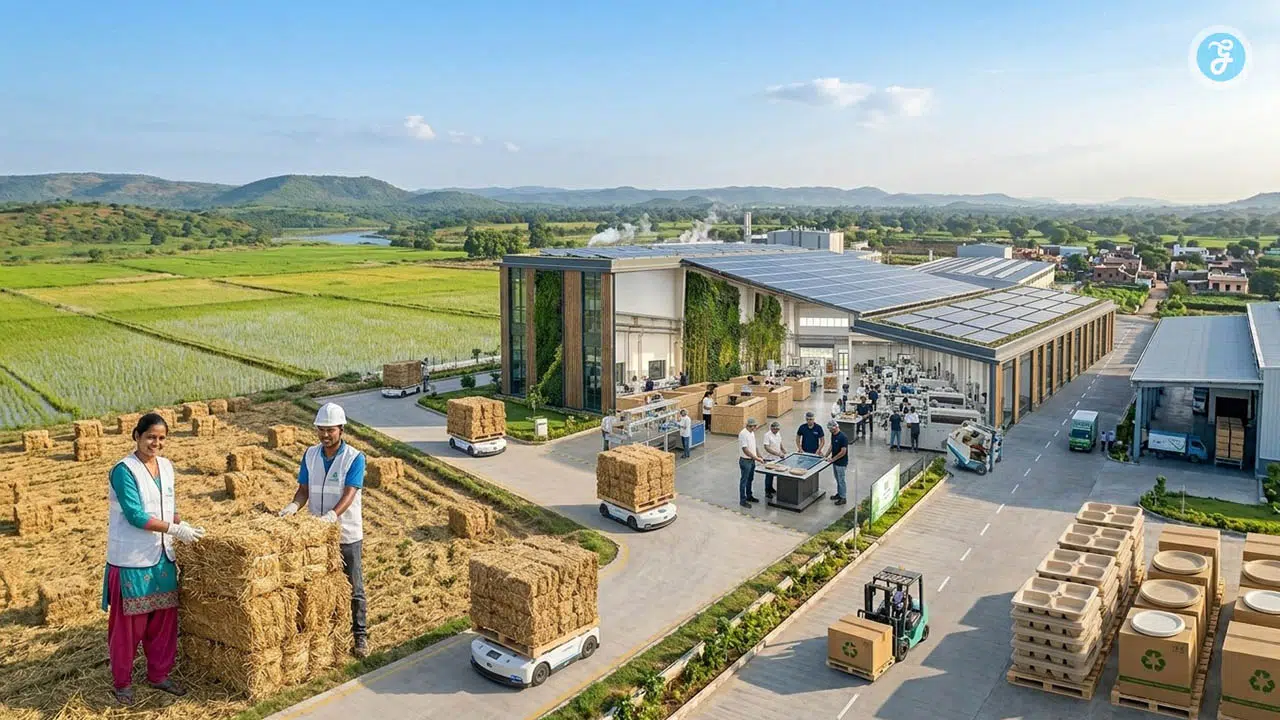
This transition represents a massive shift in how global supply chains operate, with India sitting at the center of this change. The country is doing much more than just clearing the winter smog from its own cities; it is completely redefining how we think about waste. By turning agricultural residue into a valuable commodity, these hubs are creating a highly scalable model that proves economic growth and environmental repair can occur simultaneously. India is not simply solving a local waste problem; it is actively building the global blueprint for the circular economy.
The rise of these innovation clusters signifies a transition from linear consumption to a resilient, self-sustaining loop. It is a strategic move that shields Indian exporters from impending international carbon taxes and green border regulations. By securing a dominant position in the global supply chain for bio-polymers, India is effectively future-proofing its manufacturing sector. This transformation is fueled by a workforce that has mastered the synthesis of biology and logistics, causing the reliance on volatile petrochemical imports to drop. What started as a localized solution has matured into a sophisticated export of intellectual property and high-performance materials. India is no longer just a participant in the circular economy; it is the architect of its modern execution.
Frequently Asked Questions (FAQs) on Sustainable Bio-Packaging in India
Does EPR compliance apply to small cloud kitchens and restaurants?
Yes. Under the April 2026 guidelines, any brand owner putting packaged food into the market is responsible for its end of life management. While small entities may have different reporting frequencies, the obligation to use traceable or compostable materials remains a legal requirement.
How do I verify if a bio-bag is genuine or just “greenwashed” plastic?
In 2026, all authentic compostable packaging in India must carry a unique QR code linked to the Central Pollution Control Board (CPCB) database. If a bag claims to be “biodegradable” but lacks this traceable code or an IS 17088 certification mark, it is likely conventional plastic with additives, which remains banned.
What is the technical difference between starch-based and cellulose-based packaging?
Starch-based packaging is often made from corn or potato waste and is highly effective for dry goods, though it can be sensitive to moisture. Cellulose based packaging, derived from stalks like wheat straw or bagasse, offers much higher mechanical strength and heat resistance. This makes cellulose the preferred “hub” technology for hot food delivery and heavy duty shipping mailers.
Are these materials safe for direct contact with hot Indian foods?
Absolutely. Modern bio-packaging from hubs like Chuk or Ecoware is engineered to be oil resistant and microwave safe. Unlike some plastics that leach chemicals when heated, these plant-based fibers remain stable up to 200°C. They do not melt or release toxins into fatty or acidic foods.
Why is “compostable” better than “recyclable” for food packaging?
Recycling food contaminated plastic is notoriously difficult and expensive because the oil and spices ruin the batch. Compostable packaging solves this by allowing the container and the food waste to be processed together in a single organic waste stream. This simplifies the logistics for both the consumer and the waste processor.
Note on Methodology: This ranking reflects the extensive industry research and supply chain analysis conducted by the Editorialge team. While we have numbered these hubs for clarity, this list does not represent a strict hierarchy or a definitive judgment on the value of one organization over another. Every entity featured here provides unique technical innovations within the Sustainable Bio-Packaging in India sector.