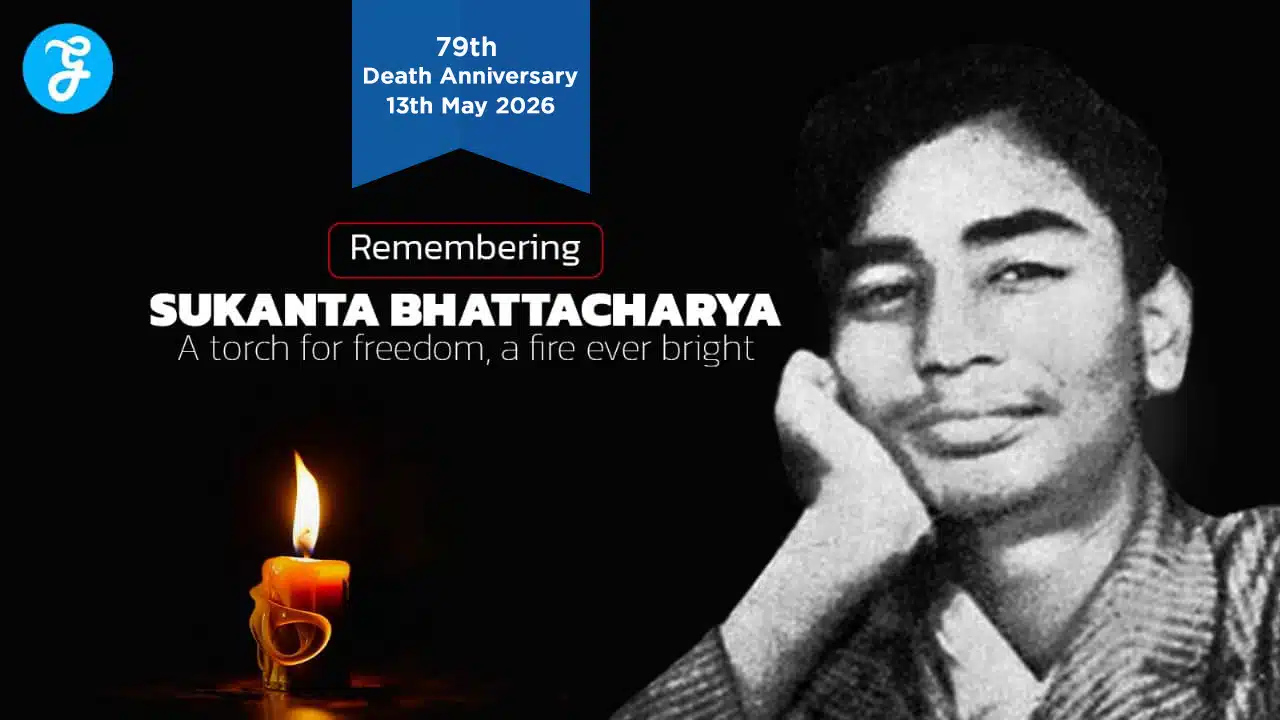
Many people love reading and writing poems. They look for stories that touch their hearts and words that speak to their souls. However, sometimes, they feel like something is missing. They search for poets who have made a big difference but whose stories are not widely known. Sukanta Bhattacharya is one such poet.
Sukanta Bhattacharya was born in 1926 in British India and died very young, at the age of 20, from tuberculosis, just before India got its independence. Despite his short life, he left behind poems that still move people today. Today, May 13, is his 79th death anniversary. This article will show how his work touches our lives and why we should remember him. Keep reading to discover more about this unforgettable talent.
Who was Sukanta Bhattacharya?

Sukanta Bhattacharya was born in Kolkata, West Bengal, India, in 1926. He quickly made a name for himself as a Bengali poet. He was well-liked and received the title “Juvenile Poet” for his sophisticated writing at such a young age.
His life was sadly short; tuberculosis took him away at just 20 years old.
His work deeply reflected on social issues and the struggles of common people in India during his time. Despite his early death, Sukanta’s poetry left a lasting mark on Bengali literature and beyond.
| Full Name | Sukanta Bhattacharya |
| Birth Date | August 15, 1926 |
| Birth Place | Kolkata, India (at his maternal uncle’s home) |
| Parents | Nibaran Chandra Bhattacharya (father), Suniti Devi (mother) |
| Education | Studied at Kamala Vidyamandir and Beleghata Deshbandhu High School in Kolkata |
| Notable Works | Chharpatra (Discarded Letters), Ghum Nei (No Sleep), Purbabhas (Premonition), Abhijan (Expedition), Mithe-Kadha (Sweet and Bitter) |
| Awards | None Known |
| Death Date | May 13, 1947 |
| Death Place | Kolkata, India |
| Famous For | Revolutionary and progressive Bengali poetry |
His voice still speaks to those who read his works today, making him remembered as an unforgettable talent in the arts of poetry and music from West Bengal.
Early Life of Sukanta Bhattacharya
Sukanta Bhattacharya was born into a world of words and struggles. His family loved literature, but they also knew hardship. As a young boy, he saw what life was like for those who had little.
This early exposure shaped his views and his poetry from the start. He went to school, where ideas about fairness and justice filled his mind.
During his school years, Sukanta didn’t just focus on studies; he got involved in politics too. He believed in fighting for the rights of peasants and workers. The year 1943 brought a terrible famine, and Sukanta stepped up as a relief worker to help feed starving people.
Around this time, between 1933 and 1937, with creativity buzzing inside him, he started “Sanchay,” a handwritten periodical that became an outlet for his thoughts and feelings about the world around him.
Sukanta Bhattacharya: The Young Poet with a Matured Hand
People called him “Young Nazrul” and “Kishore Bidrohi Kobi” because his poetry was so powerful. Even while he was still alive, his poems reached people far away in other countries.
This young poet had a skill for writing that seemed beyond his years. His words touched on deep topics like freedom and the struggles of common people.
His collections were not just books; they were treasures filled with emotion and wisdom. People from different backgrounds could find something in his words that spoke to them personally.
Sukanta Bhattacharya did more than write poems; he painted pictures with his words, making readers see and feel the world through his eyes.
Sukanta Bhattacharya’s Works
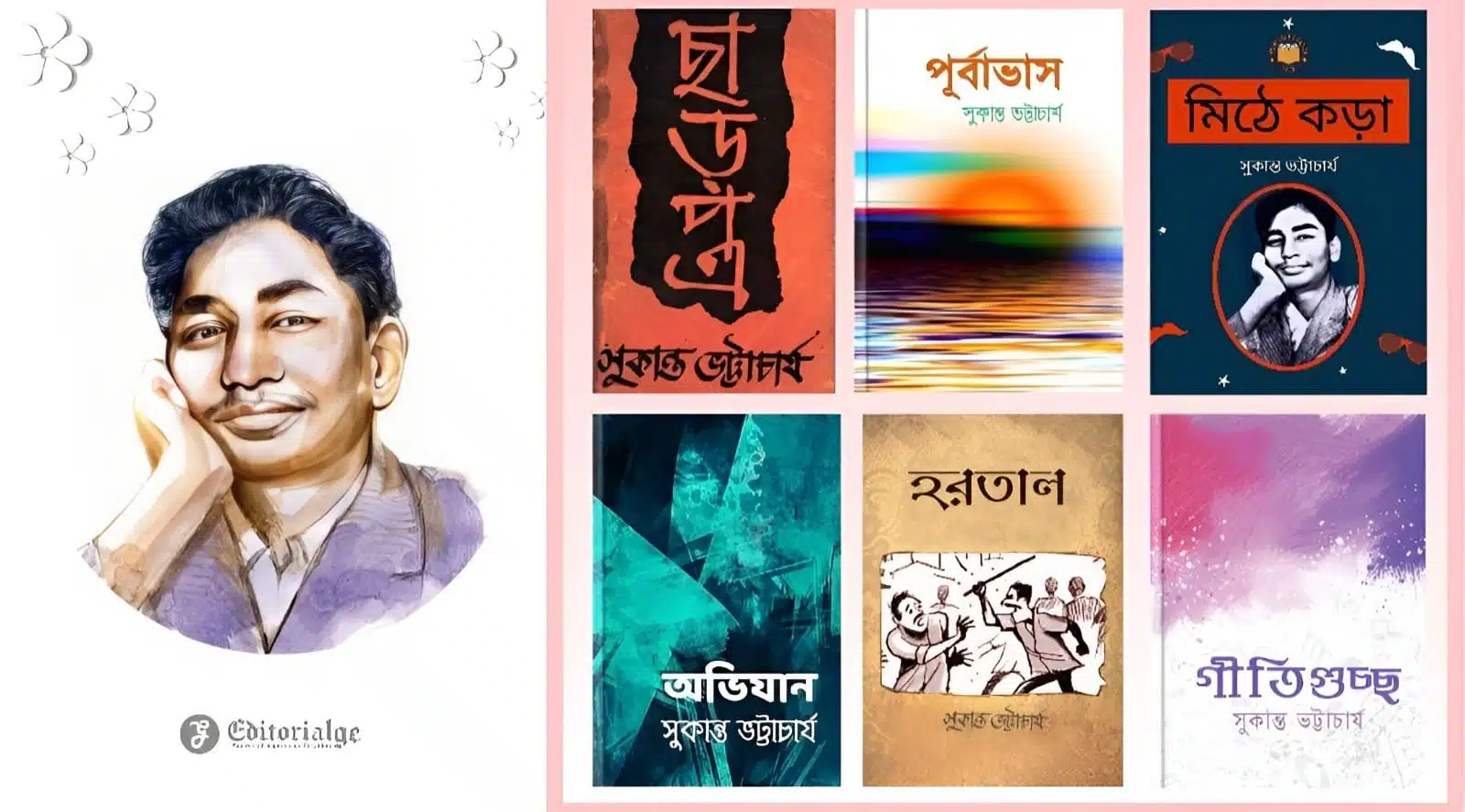
Sukanta Bhattacharya wrote poems that touched people’s hearts. He shared his thoughts on life, struggles, and hope in words that still move us today.
Collections
Sukanta Bhattacharya left behind a treasure trove of poems. His collections continue to inspire and educate readers about life, struggles, and the human condition.
- “Chharpatra” (1948): This collection was one of his first, showcasing his skill in capturing the essence of society’s struggles.
- “Purbabhas” (1950): Translated to ‘Early Signs,’ this set of poems offered insights into post-independence societal changes.
- “Mithekada” (1951): Here, Bhattacharya delves into myths and realities, questioning commonly held beliefs through his verse.
- “Abhijan” (1953): Meaning ‘The Campaign,’ this work reflects Bhattacharya’s commitment to social reform through poetic expression.
- “Ghum Nei” (1950): It addresses the restlessness brought on by societal injustices and personal turmoil.
- “Hartal” (1962): This collection comments on political protests and strikes, revealing the poet’s activist side.
- “Gitiguchchha” (1965): A compilation that translates to ‘A Bouquet of Songs,’ showing Bhattacharya’s softer, lyrical side.
- His most notable poem, “Atharo Bochor Boyosh,” touches on the fleeting nature of youth amidst political upheaval.
In 1967, his works were gathered together in an anthology, securing Sukanta Bhattacharya’s place as a voice for change and reflection long after his time. Each collection serves as a window into different aspects of life and thought processes as a young mind matures beyond its years. Through these works, readers gain access to education not just in literature but in empathy, societal roles, and the power of the written word as a tool for change.
The Influence and Impact of Sukanta Bhattacharya’s Poetry
Sukanta Bhattacharya’s poetry touched many hearts and opened eyes to new views. His words shed light on the struggles of everyday life, pushing readers to think deeply about society and their roles within it.
He wrote with a clarity that made complex thoughts accessible to all, not just those well-versed in literature or social sciences. Through his poems, people found a voice for their own feelings and frustrations.
This connection between his writing and the public’s emotions helped spread his influence far beyond the borders of Bengal.
His work didn’t stay locked in textbooks; it traveled across countries and was shared among people from different walks of life. In 1967, anthologists recognized its value by including it in collections that reached international readers.
This move put him on the map as a pivotal figure in Bengali literature, showing how powerful poetry can bridge gaps between diverse groups of people. The vivid images he painted with simple words invited everyone into conversations about change and hope, making his impact timeless.
The Tragic Early Death of Sukanta Bhattacharya
Sukanta Bhattacharya fought a tough battle with tuberculosis. Before his death, doctors admitted him to Jadavpur T.B. Hospital for treatment. This disease took him away at the tender age of 20 on May 13, 1947.
His fight against this illness shows his strength but also highlights the harsh truths about health challenges during that time.
His early departure left a void in the literary world and among those who loved his work. At such a young age, he had already shown what an extraordinary mind can do with words and ideas.
Sukanta’s passing not only marked the loss of a great poet but also reminded us of how fragile life can be, especially when faced with serious health issues like tuberculosis.
Sukanta Bhattacharya’s Legacy
Sukanta Bhattacharya’s work lives on, touching hearts and sparking minds years after his early departure. His poems are taught in schools, a true testament to their lasting value and impact.
“Sukanta Samagra” collects his writings, serving as a bridge between past wisdom and current inspiration.
His nephew, Buddhadeb Bhattacharjee, continues the literary journey, showing how deep roots of creativity can influence future generations. Sukanta’s poetry encourages young readers and writers to reflect on social issues with a critical eye.
They find guidance in his words for exploring fields of study or starting scientific research. Through classrooms and YouTube discussions, Sukanta Bhattacharya remains a mentor from history, demonstrating the power of careful observation mixed with the artistry of words.
Sukanta Bhattacharya: A Talent Unforgettable
People still talk about a young poet from Bengal, even though years have passed since he wrote his powerful words. This poet, often called a “Juvenile Poet” or “Young Nazrul,” made an unforgettable mark with his poetry.
His name was Sukanta Bhattacharya. He looked at the world around him and used his pen to share what he saw and felt. Even as a young person, his words showed deep thoughts and strong feelings.
His writings were not just poems; they were sparks that lit up people’s minds. They talked about tough stuff like fighting for freedom and caring for those without much power or money.
Everyone who reads his work can see how special it was. Sukanta Bhattacharya might have left us early, but the poems he left behind keep talking to new generations, guiding them like lights in the dark.
Takeaways
Sukanta Bhattacharya left us too soon, but his poetry still shines bright. He wrote with heart about the struggles of common folks and dreams of a fair world. His words, full of hope and fight, touch many even today.
Let’s keep reading him and sharing his vision. Sukanta’s voice, strong and clear, inspires us to look at the world around us with caring eyes and to speak out for what is right.