

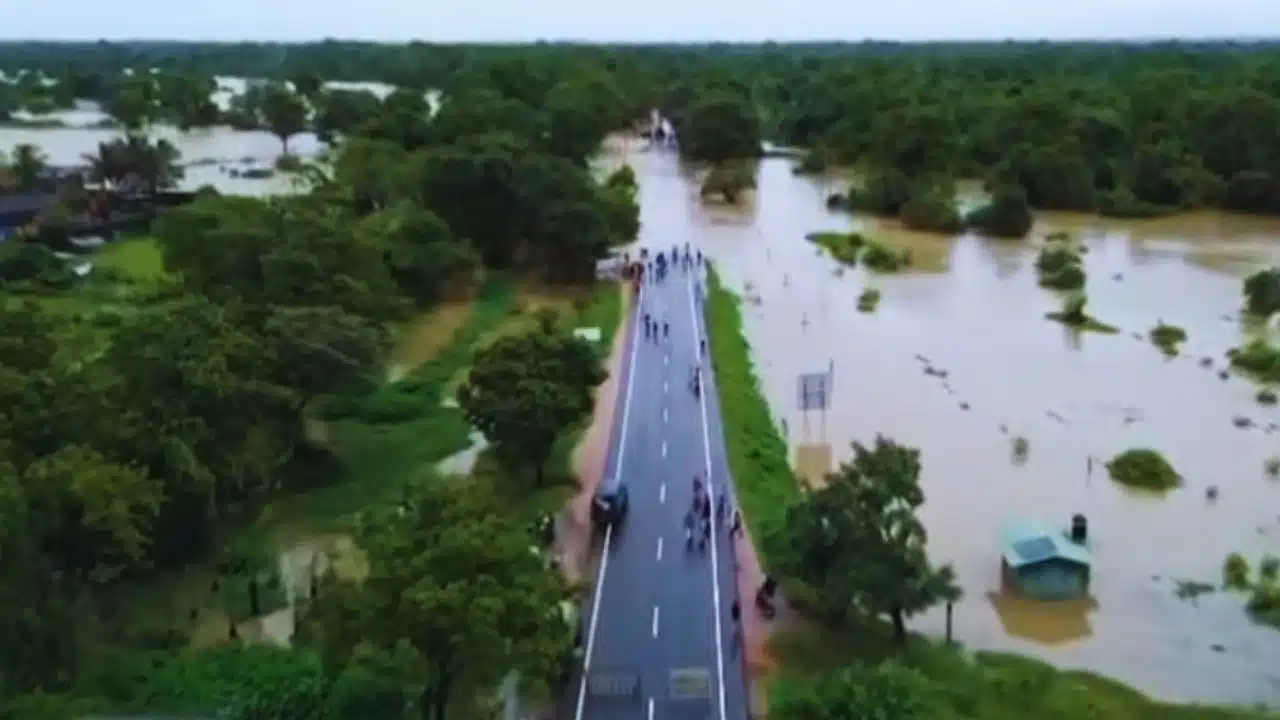
Sri Lanka is reeling from one of the most destructive weather disasters it has experienced in recent years, with at least 56 people confirmed dead and 21 still missing after days of relentless heavy rainfall. The downpours triggered widespread flooding, overflowing rivers, and deadly landslides, leaving communities in chaos and thousands displaced across the island.
The worst incident reported so far occurred in the central tea-growing district of Badulla, where a massive landslide crashed down a hillside overnight, burying homes beneath tons of mud and debris. Twenty-one people were killed in this single event as entire households were swept away without warning. Rescue workers continue to dig through the wreckage, but unstable ground and continuous rainfall have made search operations extremely dangerous.
Elsewhere in the country, floodwaters surged through towns and villages, sweeping away houses, vehicles, and farmland. Videos shared online show strong currents ripping through residential areas, destroying everything in their path. Residents were seen climbing onto rooftops and trees as they waited for help, while emergency crews struggled to reach isolated communities due to washed-out roads and rising river levels.
Authorities report that nearly 44,000 people have already been affected by the extreme weather. Homes, businesses, and infrastructure have suffered substantial damage, compounding the hardships many communities have been facing during the ongoing monsoon season. Although heavy rainfall is common during this time of year, the current scale of destruction is highly unusual and has prompted renewed concerns about the increasing intensity of climate-driven weather patterns in South Asia.
Transportation has also been severely disrupted. Major highways that connect key provinces have been closed due to flooding or landslides, causing significant challenges for emergency responders attempting to deliver aid. The Railway Department announced the suspension of almost all train services after tracks were submerged or damaged, affecting thousands of commuters and stranding travelers across the country.
Authorities Issue Red Alerts as Cyclone Ditwah Intensifies and Approaches
Complicating the ongoing emergency, Sri Lanka is now preparing for even more severe weather as Cyclone Ditwah moves along the island’s eastern coast. The storm began earlier in the week as a deep depression but has since strengthened into a cyclone, fueled by warm ocean temperatures and sustained wind patterns. Forecasters warn that the system could produce strong winds, heavy rain, and storm surges as it continues toward India, potentially worsening the already dangerous conditions in Sri Lanka.
The Irrigation Department has issued a red-level flood warning for the low-lying areas along the Kelani River valley, including parts of the capital Colombo. Water levels in major rivers continue to rise due to nonstop rain, prompting authorities to urge residents living in flood-susceptible zones to evacuate immediately to higher ground or stay in secure shelters.
Meteorologists say some central and northern districts could receive more than 200 millimeters of additional rainfall, heightening the risk of renewed flooding, river overflows, and fresh landslides. With soil already heavily saturated, even moderate rainfall could trigger further collapses in hilly and mountainous regions.
To manage the intensifying situation, the government has deployed more than 20,500 army personnel to assist with rescue missions and relief distribution. Troops are helping evacuate trapped families, reinforce riverbanks, clear debris-filled roads, and transport urgent supplies to communities cut off by rising water. Emergency shelters have been set up in various districts to house displaced families, while health services prepare for potential outbreaks of waterborne diseases commonly seen after severe flooding.
Schools, including those hosting the advanced level (A-level) examinations, have suspended or postponed their schedules due to unsafe conditions. Examination centers in affected regions have been flooded or made inaccessible, forcing authorities to reschedule the tests to protect student safety.
A Rare but Alarming Weather Event Raises Concerns for the Future
Sri Lanka’s monsoon seasons typically bring heavy rainfall, but disasters of this magnitude are considered highly unusual for this time of year. The last worst flooding event of this scale occurred in June 2003, when over 250 people were killed and hundreds of thousands displaced. The current situation, while not yet reaching those numbers, marks one of the most severe natural disasters the island has faced in the past two decades.
Experts note that extreme weather events are becoming more frequent and more intense in the region. Rapid urban development, deforestation in hilly areas, and aging infrastructure have all increased the risks associated with landslides and flash floods. Communities built on steep slopes or near riverbanks are especially vulnerable, and authorities have repeatedly urged residents to relocate—warnings that often go unheeded due to economic hardship, land scarcity, or reluctance to abandon ancestral homes.
Humanitarian agencies are now assessing the full extent of the damage. Early reports indicate significant destruction to agricultural land, prompting concerns over food supply disruptions for farmers and rural communities in the coming months. Local markets have already seen transportation delays and shortages as key roads and supply routes remain blocked.
The government has emphasized the importance of disaster preparedness, urging the public to remain alert, follow evacuation orders, and avoid crossing flooded areas. Emergency hotlines have been opened, and disaster response teams are coordinating efforts with regional authorities to ensure that relief reaches the most affected areas quickly.
As Cyclone Ditwah continues to move along the coast, the coming days will be crucial. Authorities warn that even if the cyclone does not make direct landfall on Sri Lanka, its associated rainfall bands could still trigger additional floods and landslides. Communities across the island remain on high alert as the nation braces for the next phase of extreme weather.





















