

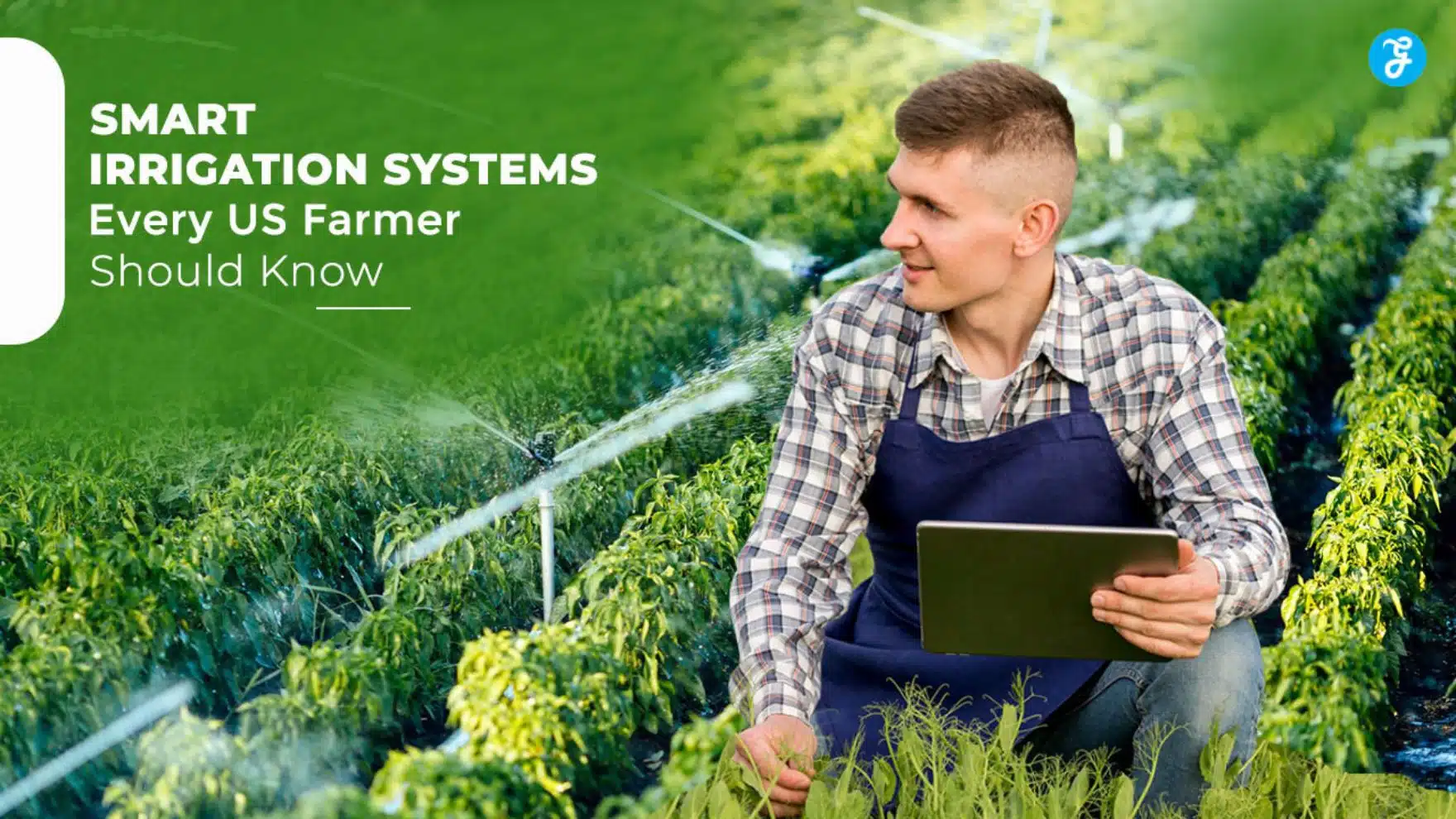
Farming in the 21st century is undergoing a technological revolution. As water conservation becomes critical, farmers are turning to smart irrigation systems to efficiently manage water resources.
These systems are not only environmentally friendly but also help reduce costs and increase productivity. For US farmers, adopting smart irrigation technology is a step toward sustainable and profitable agriculture.
In this article, we explore what smart irrigation systems are, their benefits, and how to choose the right one for your farm. We also provide a detailed list of the top 10 Smart Irrigation Systems For US Farmer that can help optimize water usage and improve crop yield.
What Are Smart Irrigation Systems?
Smart irrigation systems use advanced technology to optimize water usage for agricultural or landscaping purposes. Unlike traditional systems that follow fixed schedules, smart systems adjust watering based on real-time data such as weather conditions, soil moisture, and crop requirements.
Key Benefits:
- Water Conservation: Reduce water wastage by up to 30-50%.
- Cost Efficiency: Lower utility bills by using water only when needed.
- Improved Crop Health: Provide consistent and precise watering for better yields.
- Environmental Impact: Promotes sustainable farming by reducing over-irrigation.
| Benefit | Explanation |
| Water Conservation | Systems use sensors to apply water only where and when needed. |
| Cost Efficiency | Reduces water bills and energy costs. |
| Crop Health Improvement | Delivers precise moisture levels for optimal growth. |
| Environmental Impact | Minimizes water waste and protects local ecosystems. |
Key Features of a Smart Irrigation System
Understanding the key features of smart irrigation systems can help farmers choose the most suitable solution for their needs:
- Automated Scheduling
- Systems automatically schedule watering based on pre-set conditions, saving time and effort.
- Weather-Based Adjustments
- Sensors monitor local weather data to prevent overwatering during rainy periods or drought stress during dry conditions.
- Soil Moisture Sensors
- Measures soil’s water levels and triggers irrigation only when necessary to maintain ideal conditions for crops.
- Smartphone Control
- Allows farmers to control and monitor systems remotely, ensuring flexibility in farm management.
- Data-Driven Insights
- Systems provide detailed reports on water usage and efficiency, helping farmers make informed decisions.
| Feature | Description | Benefits |
| Automated Scheduling | Adjusts watering times based on conditions. | Saves time and reduces manual intervention. |
| Weather Integration | Tracks weather data to adjust watering. | Prevents overwatering during rain or drought. |
| Soil Moisture Sensors | Measures and maintains optimal soil hydration. | Improves plant health and reduces water waste. |
| Smartphone Control | Enables remote access and monitoring of the system. | Provides flexibility and ease of management. |
| Data Analytics | Collects and analyzes water usage data. | Offers insights to improve water management. |
Top 10 Smart Irrigation Systems Every US Farmer Should Know
Here are the best smart irrigation systems currently available, with detailed features and benefits:
| System | Key Features | Ideal For |
| Rain Bird ESP-TM2 | Weather-based programming, smartphone compatibility. | Medium-sized farms. |
| Netafim Precision | Soil and nutrient monitoring, drip irrigation. | High-value crops (fruits, vines). |
| Rachio 3 | Wi-Fi enabled, eco-friendly scheduling, Alexa integration. | Small-medium farms. |
| Hydrawise by Hunter | Cloud-based monitoring, leak detection, zone management. | Large farms. |
| Toro Evolution Series | Modular design, advanced sensors. | Farms with diverse crops. |
| Orbit B-Hyve XR | Smart weather sensing, voice control. | Tech-savvy, budget-conscious. |
| Calsense ET2000e | Detailed water-use reporting, eco-friendly design. | Institutional farming. |
| Jain Logic | Advanced analytics, IoT-enabled predictive irrigation. | Large-scale farms. |
| BlueSpray Controller | Multi-zone support, wireless connectivity. | Multi-crop farms. |
| FarmBot Genesis | Open-source precision farming technology. | Innovative small-scale farming. |
Here is the complete list of the best smart irrigation systems currently available:
1. Rain Bird ESP-TM2
The Rain Bird ESP-TM2 offers advanced weather-based programming, enabling efficient watering schedules tailored to local conditions.
It’s equipped with a smartphone-compatible interface, making remote access and adjustments convenient for farmers.
Designed for ease of use, it suits medium-sized farms with multiple crop types.
Key Features:
- Weather-based programming.
- Smartphone compatibility.
- User-friendly interface.
Ideal For: Medium-sized farms with diverse crops.
Price Range: $200-$300.
| Feature | Details |
| Programming | Weather-based, tailored to local conditions |
| Remote Access | Smartphone-compatible |
| Ease of Use | Intuitive and user-friendly |
2. Netafim Precision Irrigation
Netafim Precision Irrigation excels in drip irrigation technology, featuring advanced soil moisture sensors and nutrient monitoring systems.
Its precision ensures water and nutrients are delivered directly to the root zones, maximizing crop yield and minimizing wastage.
Key Features:
- Soil moisture sensors.
- Nutrient monitoring.
- Drip irrigation technology.
Ideal For: High-value crops like fruits, vegetables, and vineyards.
Price Range: Custom pricing based on farm size.
| Feature | Details |
| Moisture Monitoring | Advanced soil moisture sensors |
| Nutrient Integration | Real-time nutrient tracking |
| Irrigation Method | Drip irrigation for precision |
3. Rachio 3 Smart Sprinkler Controller
A highly efficient system, the Rachio 3 integrates Wi-Fi technology and eco-friendly scheduling for water conservation.
Its compatibility with smart home devices like Alexa adds a layer of convenience. Perfect for small to medium farms or home gardens.
Key Features:
- Wi-Fi enabled.
- Eco-friendly scheduling.
- Alexa and smart device integration.
Ideal For: Small to medium farms and home-based gardens.
Price Range: $200-$250.
| Feature | Details |
| Connectivity | Wi-Fi and Alexa integration |
| Scheduling | Eco-friendly and automated |
| Application | Small to medium farms |
4. Hydrawise Smart Controller by Hunter
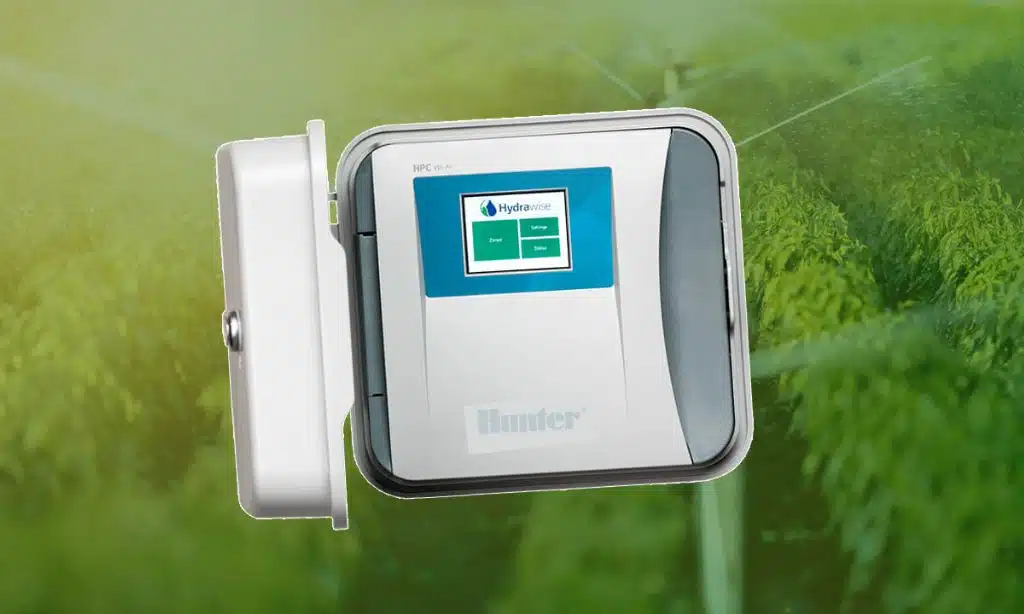
This robust system uses cloud-based technology for real-time monitoring and leak detection, ensuring maximum water efficiency.
Its customizable zone management makes it a versatile choice for large farms with varied irrigation needs.
Key Features:
- Cloud-based monitoring.
- Advanced leak detection.
- Customizable zone management.
Ideal For: Large farms with diverse irrigation needs.
Price Range: $400-$500.
| Feature | Details |
| Monitoring | Cloud-based for real-time updates |
| Leak Detection | Advanced system to prevent water wastage |
| Zone Customization | Tailored for multiple irrigation zones |
5. Toro Evolution Series
The Toro Evolution Series is renowned for its modular expandability and compatibility with advanced sensors.
Its customizable schedules make it ideal for farms with diverse crop types requiring precise control over-irrigation.
Key Features:
- Customizable schedules.
- Sensor integration.
- Modular expandability.
| Feature | Details |
| Scheduling | Fully customizable |
| Sensor Compatibility | Works with advanced agricultural sensors |
| Scalability | Modular and expandable |
Ideal For: Diverse crop types requiring precise irrigation control.
Price Range: $300-$400.
6. Orbit B-Hyve XR
A budget-friendly option, the Orbit B-Hyve XR combines smart weather sense with voice control functionality.
Its affordability and modern features make it an excellent choice for tech-savvy farmers with smaller budgets.
Key Features:
- Smart weather sense.
- Voice control compatibility.
- Affordable pricing.
| Feature | Details |
| Weather Adjustments | Smart weather-based functionality |
| Voice Control | Compatible with smart devices like Alexa |
| Cost | Affordable and efficient |
Ideal For: Modern, tech-savvy farmers looking for value.
Price Range: $150-$200.
7. Calsense ET2000e
Designed for institutional farming, the Calsense ET2000e prioritizes sustainability with detailed reporting features.
It is perfect for large-scale operations aiming to maximize resource efficiency.
Key Features:
- Sustainable design.
- In-depth reporting.
- Supports institutional farming needs.
| Feature | Details |
| Sustainability | Environmentally focused design |
| Reporting | Detailed analytics and water usage reports |
| Application | Commercial and institutional use |
Ideal For: Institutional and commercial agriculture operations.
Price Range: $500-$600.
8. Jain Logic
Jain Logic leverages advanced IoT integration and predictive irrigation to optimize water usage for large-scale farms.
Its robust data analytics provide actionable insights for improving efficiency.
Key Features:
- IoT integration.
- Predictive irrigation.
- Advanced data analytics.
| Feature | Details |
| IoT Integration | Connects seamlessly with farm networks |
| Predictive Analytics | Forecasts and optimizes irrigation needs |
| Scalability | Suitable for large-scale applications |
Ideal For: Large-scale farms focused on efficiency.
Price Range: Custom pricing.
9. BlueSpray Controller
Featuring wireless connectivity and multi-zone support, the BlueSpray Controller is ideal for farms with varying irrigation requirements.
Its scalable design ensures flexibility for different crop types.
Key Features:
- Wireless connectivity.
- Multi-zone support.
- Scalable design.
| Feature | Details |
| Wireless Control | Operates without physical connections |
| Zone Management | Supports multiple irrigation zones |
| Scalability | Adaptable for diverse crop types |
Ideal For: Multi-crop farms with varying irrigation needs.
Price Range: $300-$400.
10. FarmBot Genesis
A revolutionary system for precision farming, FarmBot Genesis combines open-source technology with full customization.
It’s ideal for innovative farmers seeking to integrate technology with sustainable practices.
Key Features:
- Open-source technology.
- Precision farming tools.
- Fully customizable settings.
| Feature | Details |
| Technology Base | Open-source and highly customizable |
| Precision Farming | Offers tools for exact irrigation needs |
| Sustainability | Promotes innovative, eco-friendly farming |
Ideal For: Innovative farmers seeking high-tech solutions.
Price Range: $2,000-$3,000.
How to Choose the Right Smart Irrigation System
Selecting the right system involves evaluating specific factors to ensure optimal performance for your farm:
1. Farm Size and Crop Type
Larger farms require systems with greater coverage, while smaller farms may need more focused solutions. Different crops have unique water needs that should guide your selection.
2. Budget and ROI
Consider both the initial investment and the long-term savings in water and energy costs. Look for systems that offer maximum efficiency for your budget.
3. Ease of Use
Systems with intuitive interfaces make it easier for farmers to manage and troubleshoot their irrigation setup.
4. Maintenance and Support
Choose manufacturers that offer reliable support and warranties to ensure long-term usability.
Future Trends in Smart Irrigation Technology
| Trend | Description |
| AI and Machine Learning | Predictive watering schedules based on crop and weather data. |
| IoT Integration | Sensors and controllers are interconnected for seamless operation. |
| Solar-Powered Systems | Renewable energy solutions for irrigation in remote areas. |
| Blockchain Integration | Transparent water usage records for regulatory compliance. |
Takeaway
Smart irrigation systems are revolutionizing US agriculture. With their ability to conserve water, reduce costs, and enhance crop yields, they are indispensable for modern farming.
By choosing the right system tailored to your farm’s needs, you can achieve both economic and environmental benefits.
Explore the systems listed here and take a step toward sustainable farming today.





















