
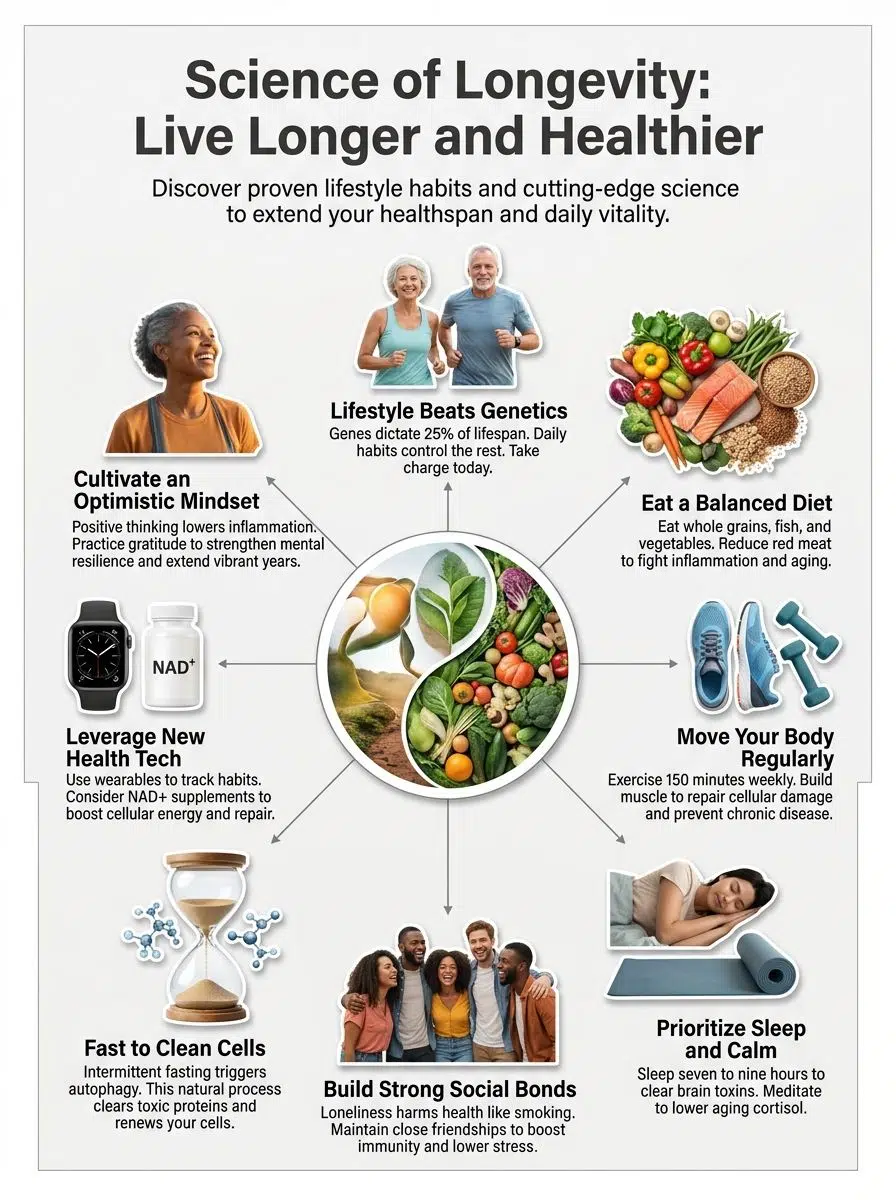
Do you ever wonder what it really takes to slow down the clock? Most people want to stay active and full of energy as the years pass by. We read conflicting advice online and try fad diets that just do not stick. You might feel confused about which daily habits actually make a difference. You are definitely not alone in this struggle. Here is a surprising fact. Scientists have discovered that your genes control only about 25 percent of how long you live. Your daily choices and habits control the rest of the equation.
You hold far more power over your health than you probably thought. The Science of Longevity reveals exactly what research shows about living well. I am going to walk you through proven lifestyle changes that actually work.
We will cover everything from the foods you eat to how much you move and sleep. You will get simple, practical steps you can start using today.
Grab a cup of coffee, and let’s go through it together. I will show you everything you need to know to add good years to your life.
Understanding the Science of Longevity
Living longer means living better. Longevity focuses on extending your life while keeping your mind sharp and your body active. Scientists look at genetics, nutrition, and wellness habits to help people thrive. You can influence this process through smart daily decisions.
What is Longevity?
Health and vitality go hand in hand when you pursue longevity. Researchers have found that the people who live the longest share common traits. They focus on a few key areas of their daily routines.
- They move their bodies regularly.
- They eat nutritious foods and sleep well.
- They manage stress effectively.
- They build strong social connections.
Fitness and mental wellness play starring roles in your story. The goal is reaching old age with energy and purpose. Your habits today shape your health tomorrow.
The Difference Between Lifespan and Healthspan
Most people mix up two different concepts. Lifespan is simply the total number of years you live. Healthspan is the number of years you actually feel good and stay active.
You could live to ninety but spend the last twenty years dealing with disease and pain. Scientists now focus on healthspan because a long life means very little if you spend those years struggling with illness.
According to a report from the CDC, the average US life expectancy reached 79 years. Yet, the average American spends the last 10 to 15 years of their life managing chronic health conditions.
Extending your healthspan requires action right now. Exercise strengthens your body, and a balanced diet fuels your cells properly. Quality sleep repairs your tissues each night. These wellness practices add real life to your years.
The Genetics of Longevity
Your genes set the baseline for your aging process. However, your lifestyle choices determine how those genes behave. Scientists have found that your DNA holds powerful clues about aging. Understanding these clues helps you take real control of your life.
Longevity Genes and Their Role
Your genes act like a blueprint for how long you might live. Certain genes control how your cells repair damage and fight inflammation at the cellular level.
Some people inherit versions of these genes that help them live healthier lives. For example, many centenarians carry a specific variation of the FOXO3 gene. This gene helps protect cells from stress and damage.
| Gene Family | Primary Function in Longevity |
|---|---|
| FOXO3 | Protects cells from stress and supports healthy aging. |
| Sirtuins | Regulates cellular health and slows disease development. |
Epigenetic Mechanisms and DNA Repair
Genes set the stage for longevity. Epigenetic mechanisms act like switches that turn those genes on and off. Your DNA experiences damage every single day from stress and pollution. Fortunately, your cells contain repair systems that fix this damage. People with strong DNA repair systems tend to live longer lives.
You can actually track how fast your body is aging on the inside. Companies like InsideTracker offer epigenetic testing in the US. These tests analyze your blood and DNA to give you a biological age score.
- Exercise activates genes that boost cellular repair.
- A diet rich in antioxidants helps fix damage quickly.
- Quality sleep strengthens repair processes during rest.
- Chronic stress damages your epigenetic switches.
Key Lifestyle Factors for a Longer Life
Your daily choices shape your lifespan more than your genetics do. Small changes in how you move and rest can add vibrant years to your life.
The Role of a Balanced Diet
Food choices shape how long you live. The Mediterranean diet stands out as a powerful tool for extending your healthspan. In 2025, US News and World Report ranked it as the number one top-ranked diet for the eighth year in a row. This eating pattern emphasizes specific, nutrient-dense foods.
- Olive oil provides polyphenols that fight inflammation.
- Fish delivers omega-3 fatty acids for brain function.
- Colorful vegetables offer fiber for healthy digestion.
People who follow this diet show lower rates of heart disease and cognitive decline. Making these dietary shifts today creates a healthier future for yourself.
Importance of Regular Exercise and Physical Activity
Your body thrives on movement. Regular physical activity strengthens your heart, builds muscle, and helps control weight. People who exercise consistently show sharper thinking and lower rates of chronic disease.
The US Centers for Disease Control and Prevention recommends 150 minutes of moderate physical activity each week. Brisk walking, swimming, or cycling makes a real difference in your wellness journey.
Exercise works like a fountain of youth at the cellular level. Strength training builds the lean muscle mass that naturally declines as you age. Lifting weights twice weekly protects your vitality and independence.
Sleep and Stress Management
Sleep acts as your body’s overnight repair shop. During deep sleep, your brain clears out toxic proteins that build up during waking hours. The National Sleep Foundation advises adults to get seven to nine hours of sleep every night.
Poor sleep sabotages longevity efforts faster than almost anything else. Adults who sleep six hours or less face higher risks of heart disease and diabetes.

Going to bed at the exact same time every night is a pro-tip. Consistent sleep schedules train your body to fall asleep faster and reach deep, restorative sleep stages more easily.
Stress management directly impacts how fast you age. Chronic stress floods your body with cortisol, a hormone that damages DNA. Meditation and deep breathing exercises lower these stress hormones significantly.
Building Strong Social Connections
Your social life plays a powerful role in your longevity journey. The connections you build with others directly impact how well you live. Strong relationships act as a buffer against daily challenges. They reduce stress levels and keep your mind sharp as you age. People with strong social networks simply live longer.
The US Surgeon General, Dr. Vivek Murthy, recently issued a national advisory on this topic. He highlighted some startling facts about social isolation.
- One in two American adults experiences measurable levels of loneliness.
- Social isolation increases the risk of premature death by 29 percent.
- Lacking connection carries the same health risk as smoking 15 cigarettes a day.
Joining clubs or volunteering creates meaningful relationships that support your health goals.
Emerging Scientific Strategies to Boost Longevity
Scientists test cutting-edge methods that could add years to your life. Keep reading to discover the practical tools you can use right now.
Fasting and Cellular Autophagy
Your cells have a built-in cleaning crew. Fasting activates this natural recycling program, which is called autophagy. During fasting periods, your cells break down damaged parts and rebuild themselves stronger.
This cellular renewal reduces inflammation and improves metabolism. Intermittent fasting involves eating within a specific window. A popular method is the 16:8 protocol, where you fast for 16 hours and eat all your meals within an 8-hour window.
Many people use apps like Zero to track their daily fasting windows. Research shows this approach removes toxic proteins linked to age-related diseases. Your cells essentially hit the reset button to clear out the junk.
Advanced Wearable Healthcare Technologies
Smartwatches and fitness trackers have become powerful tools for monitoring your health. These devices track your heart rate, sleep patterns, and physical activity in real time. Wearable technology helps you spot health trends before problems develop.
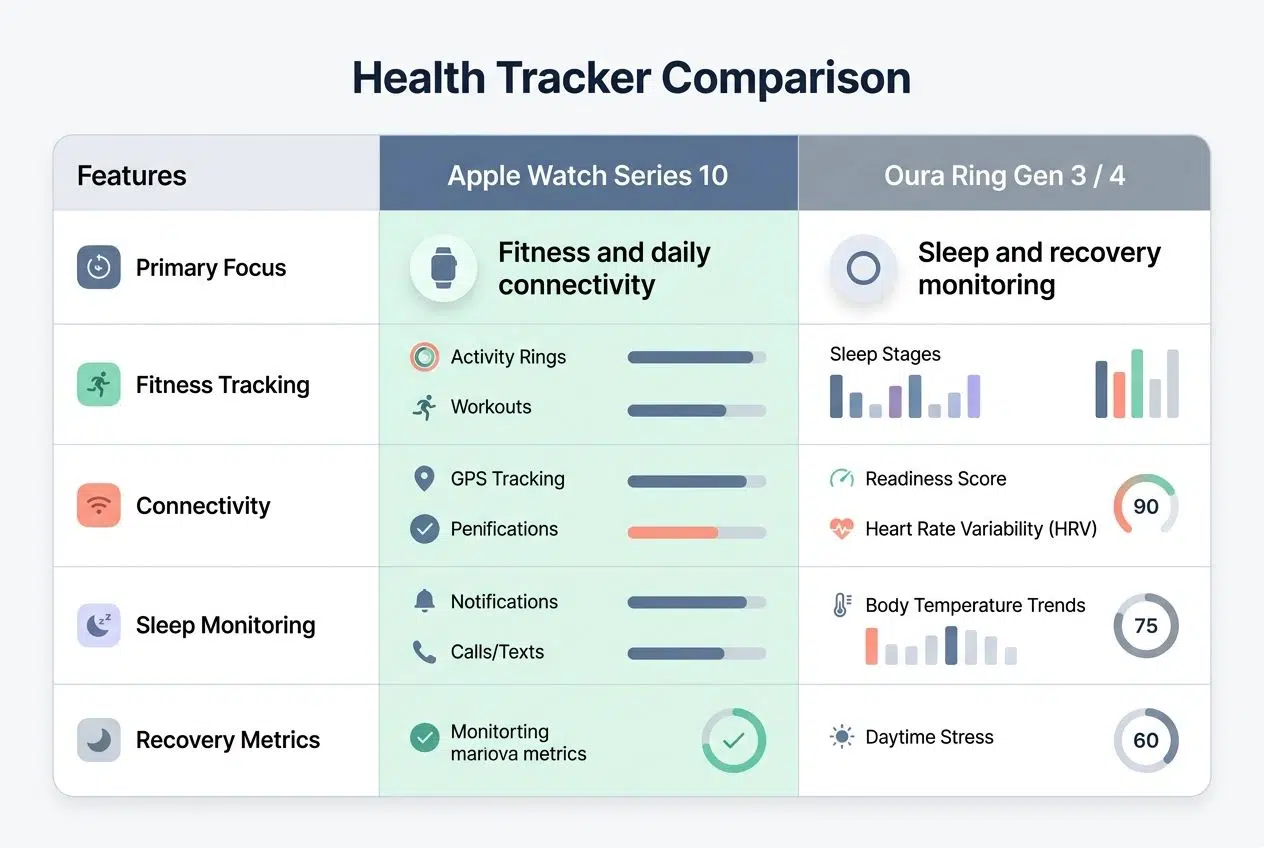
Choosing the right device depends on your specific goals. Let us look at a quick comparison between two of the most popular options on the market.
| Device Name | Best Used For | Key Advantage |
|---|---|---|
| Apple Watch Series 10 | Fitness and daily connectivity. | Dominates workout tracking with real-time heart rate zones. |
| Oura Ring Gen 3 / 4 | Sleep and recovery monitoring. | Provides highly accurate sleep stage data and lasts up to a week per charge. |
Doctors increasingly use wearable data to catch early signs of disease. The technology transforms passive health monitoring into active disease prevention.
Nutraceuticals: NAD+ Precursors and Spermidine
Scientists study specific compounds to fight aging at the cellular level. NAD+ precursors like nicotinamide mononucleotide (NMN) and nicotinamide riboside (NR) boost energy production. These molecules help your mitochondria keep you moving.
Your body uses NAD+ to repair DNA damage. Research shows that your natural NAD+ levels drop as you get older. Supplement companies like Elysium Health and Tru Niagen offer clinically tested NR capsules to help replenish these levels.
Spermidine is another compound found in aged cheese and mushrooms. It triggers the cellular cleaning process called autophagy. Many wellness experts recommend these compounds as part of a complete longevity strategy.
Experimental Approaches to Slow Aging
Researchers test therapies that target the root causes of aging. These methods show promise in extending both lifespan and healthspan.
Senolytic Therapies
Senolytic therapies target stubborn cells that have stopped dividing. These zombie-like cells are called senescent cells. They accumulate in your body as you age and cause serious issues.
- They trigger chronic inflammation.
- They cause tissue damage.
- They accelerate the onset of disease.
Clearing out these cellular troublemakers can slow aging and improve your health. Early studies show promise with compounds like dasatinib and quercetin. Researchers at the Mayo Clinic have led several trials to see how well these work in human tissues.
Your body’s natural cleanup crew gets sluggish over time. These therapies give your body a boost to take out the trash.
Pharmacological Interventions
Scientists have started testing common drugs that target aging. Metformin is a widely used diabetes medication that shows promise in slowing the aging process. Rapamycin is another pharmaceutical compound that activates pathways to extend lifespan.
Researchers at UT Health San Antonio are currently running the PEARL clinical trial. They are testing rapamycin on hundreds of healthy older adults. Early animal studies found that rapamycin reliably increased mouse lifespans by up to 20 percent.
These approaches work by mimicking what happens in your body during fasting or exercise. Doctors want to slow down aging and extend your healthspan. Your lifestyle habits still matter more than any pill, but these treatments offer exciting hope.
The Future of Longevity Science
Labs around the world race to turn aging research into real treatments. These new medicines and technologies could reshape how we grow older.

Pioneering Strategies in Anti-Aging Treatments
Artificial intelligence is changing the game for longevity research. Companies like Insilico Medicine use AI to spot new compounds that extend lifespan.
Using advanced technology cuts drug discovery and research time down from years to just a few months.
Stem cell therapies are creating new opportunities to repair damaged tissues. Clinics worldwide offer experimental treatments that inject regenerative cells into joints and organs to restore function.
Personalized medicine uses your genetic data to create custom wellness plans. The fitness and nutrition industries offer specialized programs based on your unique DNA profile.
Potential Limitations and Ethical Considerations
Longevity science faces real obstacles that we cannot ignore. Cost stands as a major barrier for most people. Access to cutting-edge therapies creates inequality. Wealthy individuals gain benefits that the everyday population cannot afford.
- Advanced NAD+ IV drip therapies can cost hundreds of dollars per session in the US.
- Testing new anti-aging drugs takes decades to complete safely.
- Insurance companies often refuse to cover experimental approaches.
Ethical questions complicate our pursuit of extended lifespans. Should society invest billions in aging research when other diseases still plague millions? These moral dilemmas require honest conversations between doctors, patients, and communities.
Social and Emotional Well-being
Your relationships shape how long you live just as much as your workout routine. People with strong friendships tend to live years longer than isolated folks. Your mental state is a critical piece of the longevity puzzle.
The Impact of Social Connections
Loneliness acts like a silent killer. It shortens your lifespan just as much as obesity does. Your friendships and community involvement trigger positive changes in your body.
The Harvard Study of Adult Development has tracked people for over 85 years. The researchers found a clear answer to what makes us thrive. Good relationships keep us happier and healthier.
Meaningful relationships give your health a real advantage. Talking with friends activates your brain’s reward centers and reduces anxiety. Building these bonds is essential medicine for living longer.
Optimism and Mental Health as Longevity Enhancers
Strong social bonds create a foundation for mental wellness. Your mindset acts as a powerful tool for extending your lifespan. People who maintain optimistic outlooks experience lower stress levels and better cardiovascular health.
A recent study from Boston University found that highly optimistic people have a much greater chance of living past age 85.
Optimism directly impacts your body’s ability to fight disease and recover from illness. Mental health works like a powerful fitness regimen for your mind. Practicing gratitude leads your body to release beneficial hormones. Investing in your mental health today means you are actively building a more vibrant life tomorrow.
The Closing Thoughts
Living longer means nothing if you spend those years feeling tired, sick, or unhappy. The Science of Longevity: How To Live A Healthier, Longer Life shows us that lifespan and healthspan go hand in hand, so focus on both.
You control many factors that shape your future, from the food on your plate to the people in your life. Exercise keeps your body strong, sleep repairs your cells, and good nutrition fuels everything you do.
Social connections matter just as much as any pill or supplement ever could. Your mental health, your stress levels, and your outlook on life all influence how many healthy years you get to enjoy. Start small if the whole picture feels overwhelming. Pick one habit to change this week, then add another next month. Maybe you eat more vegetables, take a daily walk, or call an old friend.
These actions compound over time, building a foundation for wellness that lasts decades. Aging happens to everyone, but how you age is largely up to you. Science gives us the tools and knowledge, yet you must do the work. Your future self will thank you for the choices you make today.
Frequently Asked Questions (FAQs) on The Science of Longetivity
1. What is longevity, and why does it matter?
Longevity means living a longer life while staying healthy and active, not just adding years full of illness. It’s about extending your healthspan, the period you can enjoy life without major health problems. According to the CDC, the average American now lives to about 76 years, but many of those later years are spent managing chronic diseases.
2. How do daily habits affect how long I live?
Your daily choices have a massive impact on how long and how well you live. A 2023 study in the American Journal of Clinical Nutrition found that people who followed five healthy habits, like eating vegetables and exercising regularly, lived up to 14 years longer than those who didn’t. Even small changes, like swapping soda for water or taking a 20-minute walk each day, compound over time to protect your heart and brain.
3. Can science really predict who will live longer?
Science can’t predict your exact lifespan, but researchers have identified patterns that strongly correlate with living longer. Studies tracking thousands of people over decades, like the famous Blue Zones research by Dan Buettner, show that factors like strong social connections, plant-based diets, and regular movement are common among those who live past 100. Your genes play a role, but they account for only about 20 to 30 percent of longevity; lifestyle does the heavy lifting.
4. Are there simple steps I can take right now for better health as I age?
Start with the basics that scientists know work. Drink more water, aim for 7 to 8 hours of sleep each night, and move your body for at least 30 minutes most days, walking counts! A 2024 Harvard study found that people who walked briskly for just 30 minutes a day reduced their risk of early death by 20 percent compared to those who were inactive.