

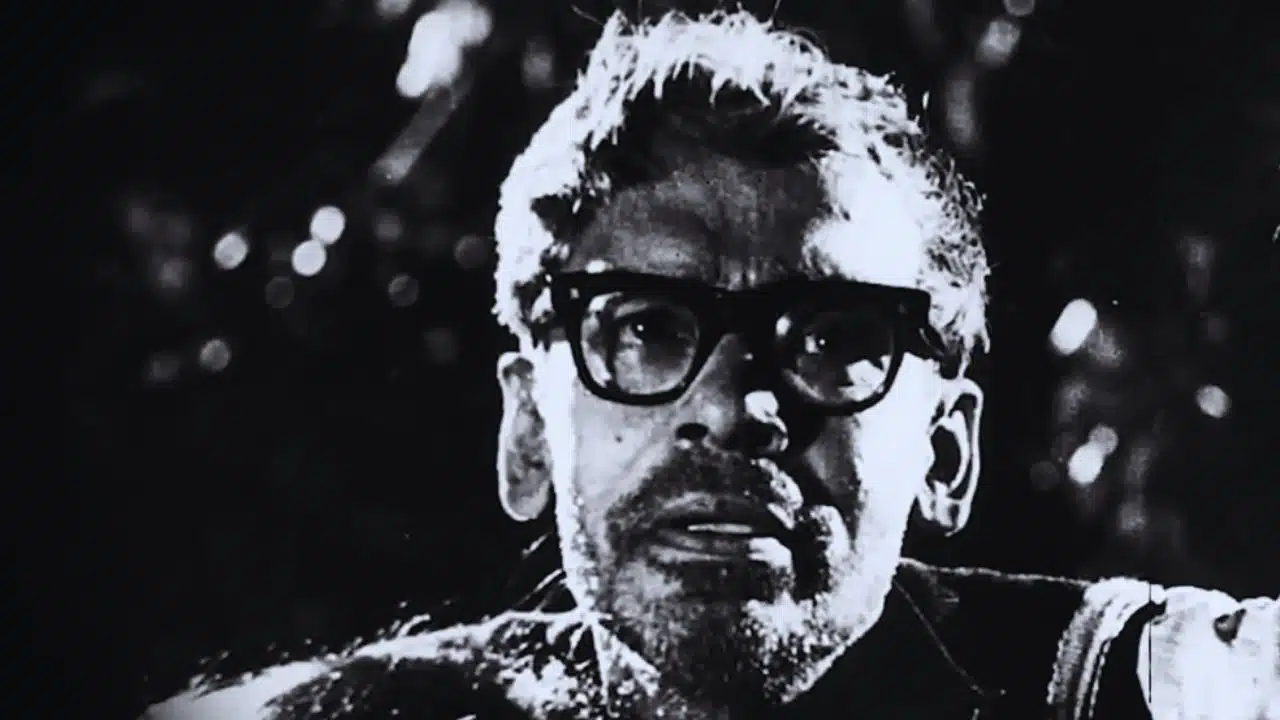
Today marks the birth centenary of Ritwik Kumar Ghatak, one of the most influential filmmakers, screenwriters, and actors in the history of Indian cinema. Widely known for his innovative storytelling and deep engagement with socio-political themes, Ghatak’s works have left a lasting impact on not only Indian cinema but also global cinema. To commemorate his significant contribution to the world of film and theater, various cultural and artistic institutions are coming together to celebrate his life and legacy.
A Day of Tribute: Commemorative Programs in Dhaka
To mark the centenary of Ghatak’s birth, several organizations in Bangladesh are organizing special programs in tribute to the filmmaker. These events aim to highlight his artistic contributions, as well as his role in capturing the struggles of the marginalized and dispossessed.
- Bangla Academy will be holding a seminar at 4:00 pm at the Poet Shamsur Rahman Seminar Room. This event will bring together academics, filmmakers, and cinema enthusiasts to discuss Ghatak’s influence on Bengali and Indian cinema.
- Bangladesh Shilpakala Academy, in partnership with the Bangladesh Federation of Film Societies and Bangladesh Short Film Forum, will host a program at 5:00 pm at the National Art Gallery in Dhaka. This program will include screenings, discussions, and reflections on the impact of Ghatak’s films and his unique cinematic vision.
These events will serve as an opportunity to celebrate his life and to explore the themes of his films, including displacement, partition, social struggle, and human resilience.
Early Life and Education: The Formative Years
Ritwik Ghatak was born on November 4, 1925, in what is now Bangladesh. His early life was marked by the traumatic experiences of the Partition of India in 1947, which displaced millions of people, including Ghatak’s family. Following the Partition, Ghatak and his family moved to Kolkata, which became the backdrop for many of his films. The social, cultural, and political upheavals that followed Partition had a profound effect on Ghatak’s worldview and his artistic pursuits.
Ghatak’s academic journey began in Kolkata, where he attended school and later graduated from Krishnath College in Baharampur in 1958. Although he enrolled at Calcutta University for a Master’s degree, he chose to abandon formal education in favor of pursuing a career in writing. He believed that his true calling lay in creative expression rather than in academic degrees. This decision marked the beginning of his career as a writer, playwright, and later, a filmmaker.
From Theatre to Film: Ghatak’s Creative Beginnings
Ritwik Ghatak’s entry into the world of theater laid the foundation for his cinematic journey. He became a member of the Indian People’s Theatre Association (IPTA) in 1951, which was a platform for left-wing artists and intellectuals to express social issues through theater. Ghatak quickly became known for his powerful and thought-provoking plays.
In 1952, Ghatak wrote his first significant play, Nabanna, which explored the hardships faced by a rural Bengali family. The play’s success cemented his reputation as a writer with a deep understanding of human suffering and resilience.
By 1955, Ghatak had formed his own theater troupe, Group Theatre, which staged several of his plays, including Sanko (1955). His theatrical work, characterized by emotional depth and social critique, laid the groundwork for his eventual foray into filmmaking.
Pioneering Filmmaker: The Beginning of Ghatak’s Cinematic Journey
Ritwik Ghatak’s career as a filmmaker began in 1952 with the making of his first film, Nagarik, a poignant drama that portrayed the struggles of a common man. Though the film was not a commercial success at the time, it marked Ghatak as a filmmaker with a unique voice and vision. The film was a powerful critique of the social realities of post-independence India, particularly the lives of urban migrants and refugees.
In 1958, Ghatak made his first commercially successful film, Ajantrik, which is considered one of the earliest films in Indian cinema to treat an inanimate object—an automobile—as a central character. This was a groundbreaking approach to storytelling, which Ghatak used to highlight the deep emotional connection between man and machine.
Simultaneously, Ghatak made his mark as a scriptwriter with his work on the Hindi film Madhumati (1958), directed by Bimal Roy. The film, which dealt with the theme of reincarnation, was a commercial success and earned Ghatak the prestigious Filmfare Best Story award. It was a significant achievement for Ghatak, who had begun his career in the shadow of the Partition and the struggles it caused for millions.
The Masterpieces: Ghatak’s Unforgettable Films
Ritwik Ghatak’s most significant contributions to cinema came in the form of his feature films. He directed a total of eight full-length films, each one more powerful and socially relevant than the last. His works addressed the human cost of displacement, the psychological toll of Partition, and the social injustices faced by marginalized communities.
One of Ghatak’s best-known films, Meghe Dhaka Tara (1960), is often regarded as a classic of Indian cinema. The film tells the story of a refugee family and the struggles of the elder daughter, who is forced to bear the burden of her family’s poverty. The film’s exploration of sacrifice, duty, and family dynamics has resonated with audiences worldwide.
Other notable films include Bari Theke Paliye (1958), which portrays Kolkata through the eyes of a runaway boy, and Komal Gandhar (1961), a semi-autobiographical film that reflects Ghatak’s personal life and his artistic philosophy.
His film Titas Ekti Nadir Naam (1973), about a community of fishermen living along the Titas River, received international acclaim and was included in the British Film Institute’s list of the top 10 films.
Ghatak’s last film, Jukti Takko Aar Gappo (1974), was a deeply introspective and philosophical work that explored issues of identity, self-doubt, and the meaning of existence.
Documentaries and Short Films: Ghatak’s Experimental Side
Apart from his feature films, Ghatak was also a prolific maker of documentaries and short films. His documentaries, such as Adivasis (1960), Scientist of Tomorrow (1960), and Amar Lenin (1972), were experimental in nature and often explored themes related to socio-political issues, human rights, and the impact of modernization on traditional communities. These works further solidified Ghatak’s commitment to addressing pressing social issues through the medium of film.
A Legacy of Art and Influence
Ritwik Ghatak’s influence on Indian cinema and global filmmaking remains immeasurable. He was a filmmaker who defied conventions and explored themes that were often considered too controversial or complex for mainstream cinema. His films were characterized by their emotional depth, their commitment to social realism, and their innovative use of cinematic techniques.
Ghatak’s legacy is not just confined to his films but also to his impact on future generations of filmmakers. His works continue to be studied in film schools and celebrated by cinephiles around the world. His ability to convey profound emotional and political truths through cinema remains unmatched.
Ghatak’s Final Years: A Life Cut Short
Tragically, Ritwik Ghatak passed away on February 6, 1976, at the age of 50. Despite his relatively short life, Ghatak’s artistic contributions continue to resonate across generations. His films remain a testament to his vision, his dedication to his craft, and his unflinching commitment to telling the stories of the dispossessed and the marginalized.
Remembering Ritwik Ghatak
As the world celebrates the birth centenary of Ritwik Ghatak today, his films and contributions to cinema remain as relevant and powerful as ever. Through his works, Ghatak was able to capture the struggles, hopes, and dreams of ordinary people in a way that transcends time and place. Today, as we pay tribute to this visionary filmmaker, we are reminded of the transformative power of cinema and the enduring legacy of Ritwik Ghatak. His cinematic voice, filled with compassion, depth, and social consciousness, continues to inspire filmmakers, artists, and audiences across the globe.





















