

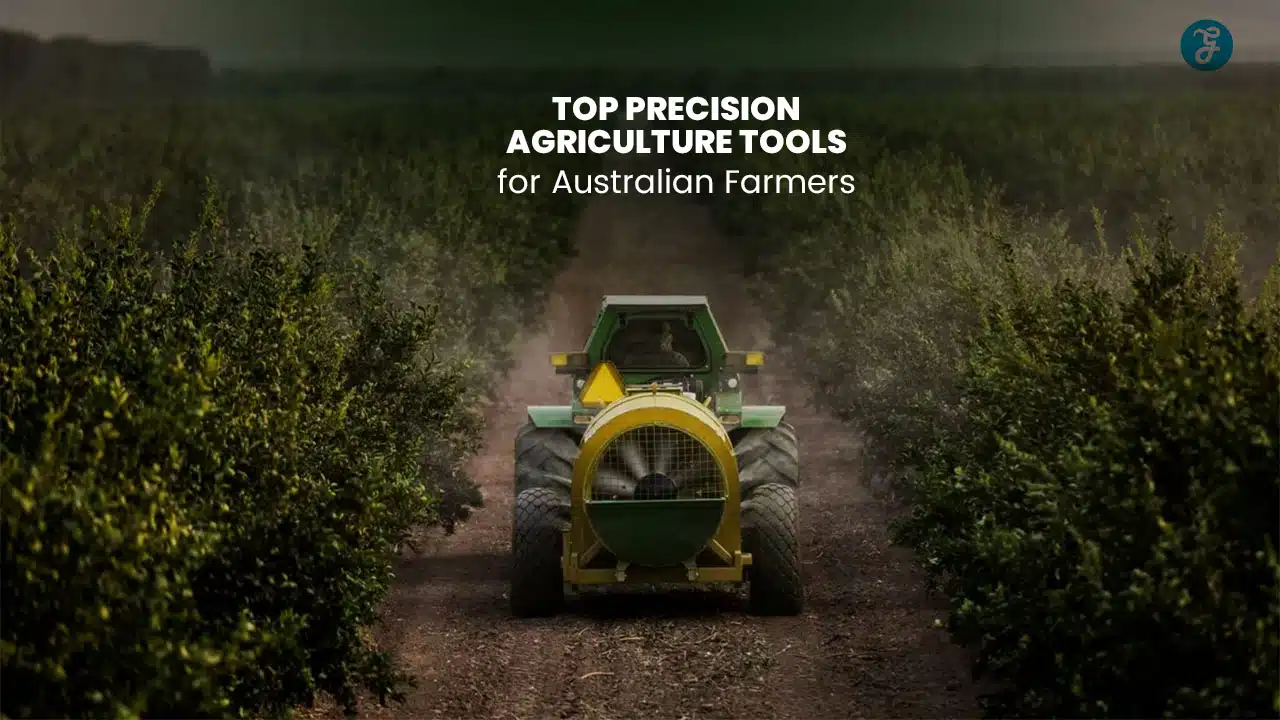
The agriculture industry in Australia is evolving rapidly with the integration of advanced technologies. As the global demand for food grows, farmers are facing increasing pressure to boost productivity, conserve resources, and adapt to environmental challenges.
Precision agriculture tools are emerging as a transformative solution, enabling Australian farmers to make data-driven decisions and optimize every aspect of their farming operations.
Precision agriculture focuses on using technology to monitor and manage crops, livestock, and farm resources more efficiently. By integrating tools such as GPS-guided equipment, drones, soil sensors, and AI-powered software, farmers can achieve higher yields, reduce costs, and promote sustainability.
This article highlights the top 5 precision agriculture tools that are set to revolutionize Australian farming in 2025. From real-time monitoring to predictive analytics, these tools empower farmers to work smarter, not harder.
Table of the Top 5 Precision Agriculture Tools
Let’s take a look.
| Tool Name | Key Features | Primary Benefits | Applications |
| GPS-Guided Tractors | Precise navigation, auto-steering systems | Reduced fuel and labor costs, improved accuracy | Planting, harvesting, soil mapping |
| Drones | Aerial imaging, crop health monitoring | Quick data collection, reduced scouting time | Crop health, irrigation, pest control |
| Soil Sensors | Real-time soil condition monitoring | Improved water use, better fertilization | Soil moisture, pH, and nutrient levels |
| Variable Rate Technology (VRT) | Targeted input applications | Reduced waste, optimized input usage | Fertilizer, pesticide, and seed distribution |
| AI and Data Analytics Software | Predictive insights, farm management dashboards | Better decision-making, yield forecasting | Farm operations management |
1. GPS-Guided Tractors
GPS-guided tractors are transforming the way Australian farmers manage their field operations by combining cutting-edge navigation technology with automation. These tractors utilize satellite-based GPS systems to achieve unparalleled precision in tasks such as planting, harvesting, and spraying.
This precision eliminates the overlap that often occurs with manual driving, reducing fuel consumption, labor costs, and input wastage.
For Australian farmers, who often deal with large farms and diverse terrains, GPS-guided tractors ensure optimal field utilization.
Additionally, these tractors improve productivity by enabling farmers to work efficiently during long hours and in varying weather conditions. Whether it’s a large-scale grain farm or a small vineyard, GPS-guided tractors make farming smarter, more sustainable, and cost-effective.
| Feature | Details |
| Cost Savings | Reduced fuel, labor, and input costs |
| Efficiency | Increased productivity and time management |
| Sustainability | Lower chemical runoff and optimized land use |
2. Drones
Drones have emerged as indispensable tools for precision agriculture, offering Australian farmers a bird’s-eye view of their fields.
These unmanned aerial vehicles (UAVs) are equipped with high-resolution cameras and sensors, enabling farmers to monitor crop health, irrigation efficiency, and pest infestations in real time. By providing detailed aerial imagery, drones save hours of manual labor and help farmers address potential issues before they escalate.
In Australia, where vast agricultural landscapes often require extensive monitoring, drones provide a cost-effective and efficient solution.
From detecting water-stressed areas to identifying pest hotspots, drones allow farmers to take a proactive approach to crop management. This results in improved yields, reduced input costs, and a more sustainable farming operation.
| Feature | Details |
| Imaging Capabilities | High-resolution photos and thermal sensors |
| Monitoring Efficiency | Large areas covered in minimal time |
| Cost Effectiveness | Reduced need for manual field inspections |
3. Soil Sensors
Soil sensors are at the forefront of precision farming, offering Australian farmers real-time insights into soil health. These sensors measure critical parameters such as soil moisture, pH levels, and nutrient content, providing the data needed to optimize irrigation and fertilization practices.
For farmers operating in regions with scarce water resources, soil sensors help prevent over-irrigation and ensure every drop is used efficiently.
The data collected by soil sensors enables targeted interventions, leading to healthier crops and reduced input costs. By integrating these sensors with farm management systems, farmers can automate irrigation schedules and monitor soil conditions remotely. Soil sensors are not just tools—they are the foundation of sustainable farming practices in Australia.
| Feature | Details |
| Real-Time Monitoring | Instant updates on soil moisture and nutrients |
| Water Conservation | Reduces water waste through precise irrigation |
| Crop Optimization | Ensures optimal soil conditions for planting |
4. Variable Rate Technology (VRT)
Variable Rate Technology (VRT) is revolutionizing Australian agriculture by enabling targeted application of inputs such as seeds, fertilizers, and pesticides.
This technology uses field-specific data collected from soil sensors, drones, and GPS systems to apply the right amount of input in the right place. By addressing the unique needs of each section of the field, VRT minimizes waste and maximizes efficiency.
In Australia’s diverse farming landscapes, where soil quality and crop requirements can vary significantly, VRT provides a tailored approach to resource management. It not only boosts crop performance but also aligns with environmental sustainability by reducing chemical runoff and soil degradation. With VRT, farmers can achieve higher yields while lowering costs.
| Feature | Details |
| Targeted Application | Inputs applied based on field variability |
| Input Efficiency | Reduced waste of fertilizers and seeds |
| Environmental Benefits | Minimizes chemical runoff and pollution |
5. AI and Data Analytics Software
Artificial intelligence (AI) and data analytics software are transforming Australian agriculture by providing predictive insights and actionable recommendations.
These tools analyze data collected from various sources, including drones, soil sensors, and weather forecasts, to help farmers make informed decisions. From yield forecasting to pest prediction, AI-powered software enables proactive farm management.
For Australian farmers dealing with unpredictable weather patterns and fluctuating market conditions, AI offers invaluable support. By consolidating complex data into easy-to-read dashboards, these tools simplify decision-making and improve efficiency.
Whether it’s optimizing planting schedules or managing resources, AI and data analytics are empowering farmers to embrace precision agriculture like never before.
| Feature | Details |
| Predictive Analytics | Provides insights into crop performance |
| Resource Optimization | Ensures efficient use of water and inputs |
| Decision Support | Simplifies farm management with dashboards |
Final Thoughts
Precision agriculture tools are revolutionizing farming practices in Australia, offering innovative solutions to maximize productivity, reduce costs, and promote sustainability. From GPS-guided tractors and drones to advanced AI software, these technologies empower farmers to make smarter, data-driven decisions.
Investing in precision agriculture tools not only enhances operational efficiency but also prepares farmers for future challenges, including climate change and resource scarcity.
As the agricultural landscape evolves, these tools will play a crucial role in ensuring the long-term success of Australian farming.
By adopting these advanced tools, farmers can achieve greater yields, conserve resources, and contribute to sustainable food production. The future of farming is here, and it’s driven by precision technology.






















