The perfume industry is a world of scent, beauty, and value. In 2025, it remains one of the most dynamic global trades. Countries rich in culture, craftsmanship, and strong trade networks lead exports. Perfume exporters are shipping billions of dollars across borders, driven by growing demand in luxury, niche, and daily-use fragrances.
This article will highlight the top 10 perfume-exporting countries in 2025. You’ll find clear data, simple tables, and easy-to-read points. I’ll walk you through the trends, key players, and future outlook. This article is not just about rankings—it’s about what makes each country tick in the fragrance trade.
Methodology – How We Ranked the Top Exporters
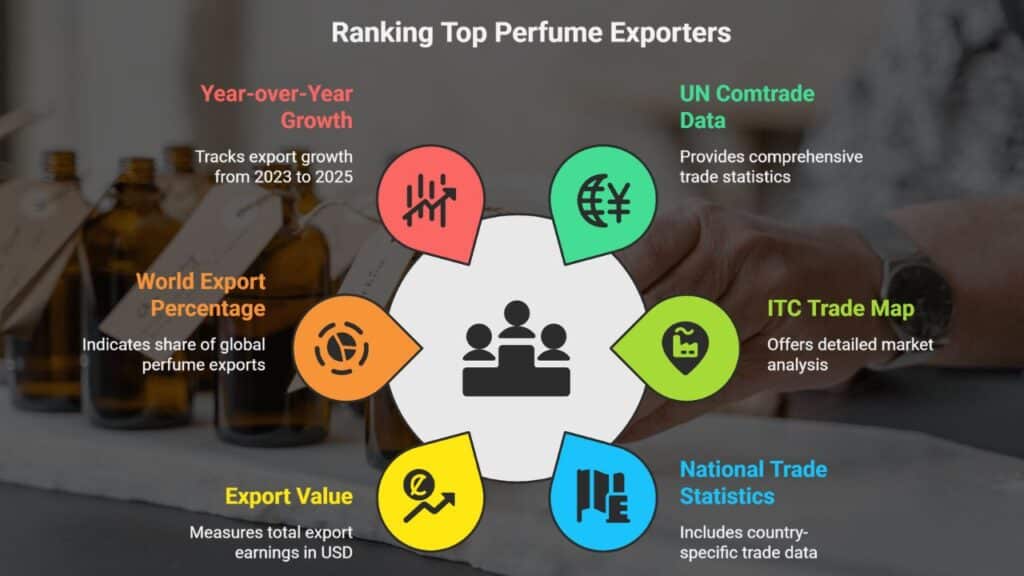
To rank the top exporters, we used data sources like UN Comtrade, ITC Trade Map, and national trade statistics.
We focused on:
- Export value in USD
- Percentage of world perfume exports
- Year-over-year growth from 2023 to 2025
Whenever possible, we distinguished between perfume concentrates and finished fragrances, though many countries report combined figures.
Global Perfume Export Trends in 2025
Key Trends at a Glance:
- Eco-friendly formulations are on the rise—fragrances marked as sustainable are gaining share.
- Celebrity and influencer-backed perfumes are driving export volume.
- Emerging niche brands, especially from Asia and the Middle East, are finding global buyers.
- Free trade agreements and shifts in tariffs are shaping trade flows.
These trends set the stage for today’s leading exporters.
The Top 10 Perfume Exporters of the World in 2025
Perfume exports are not only about numbers—they tell a story of culture, branding, and consumer preferences. The top 10 perfume-exporting countries in 2025 showcase a balance between heritage brands that have been crafting fragrances for centuries and modern exporters that rely on smart marketing, celebrity endorsements, and global logistics. Each country has its own approach—some focus on artisanal production, others on mass-market appeal, and a few specialize in high-value re-exports.
These leaders also reflect regional strengths: Europe continues to dominate luxury and designer fragrances, while the Middle East shines in oud and exotic scents, and Asia grows as a re-export and niche perfume hub. The following rankings highlight the diversity and creativity that drive the global perfume industry forward.
1. France – The Global Fragrance Powerhouse
France is the undisputed leader in perfume exports, thanks to centuries of tradition and the prestige of “Made in France” on a perfume label. Cities like Grasse are internationally recognized as the cradle of perfumery, supplying not only finished fragrances but also key ingredients and training for perfumers worldwide.
French perfumes have a unique positioning—they are not just scents, but works of art. Marketing strategies focus heavily on brand heritage, storytelling, and exclusive collaborations. France also invests heavily in research and innovation, ensuring that its products remain relevant to modern tastes while preserving traditional craftsmanship.
| Metric | Value (2025) |
| Export Value (USD) | ~$12 billion |
| % of Global Market | ~25% |
| Growth 2023–2025 | ~5% annual |
Major brands like Chanel, Dior, and L’Oréal shape French exports and carry strong appeal worldwide. Buyers trust French names for their artistry and timeless appeal.
2. Spain – Europe’s Rising Perfume Export Giant
Spain has experienced rapid growth in perfume exports over the past decade. Its strength lies in producing a wide range of fragrances—from luxury designer brands to affordable yet high-quality perfumes aimed at younger and emerging markets.
Spanish perfume houses often merge classic perfumery skills with modern branding and packaging, making them attractive to a broad audience. Their competitive pricing allows them to penetrate markets in Latin America, the Middle East, and parts of Asia. With continued investment in innovation, Spain is steadily climbing the ranks in global fragrance trade.
| Metric | Value (2025) |
| Export Value (USD) | ~$3.8 billion |
| % of Global Market | ~8% |
| Growth 2023–2025 | ~6% annual |
Spanish exporters often combine modern marketing with local craftsmanship. Fast-growing in niche segments, Spain is a country to watch.
3. Italy – The Luxury & Fashion-Driven Exporter
Italy is synonymous with elegance, and its perfumes reflect the country’s deep connection to fashion and lifestyle. Many high-end Italian fashion houses release fragrance lines as natural extensions of their clothing and accessory collections, ensuring that the scents carry the same prestige.
Italian perfume exports thrive on craftsmanship, luxury, and design aesthetics. From delicate floral scents inspired by Mediterranean gardens to bold, modern fragrances, Italy caters to a diverse international audience. The country also benefits from tourism, as visitors often purchase Italian perfumes as souvenirs, boosting brand awareness worldwide.
| Metric | Value (2025) |
| Export Value (USD) | ~$3.3 billion |
| % of Global Market | ~7% |
| Growth 2023–2025 | ~4% annual |
Italy’s strength comes from its blend of design, luxury appeal, and artisanal style—especially in high-end and artisan fragrances.
4. United Arab Emirates – The Middle East Fragrance Hub
The UAE has transformed itself into a central hub for perfume re-exports and luxury niche fragrance production. The country’s strategic location between Europe, Asia, and Africa gives it an unmatched advantage in global trade.
Oud-based perfumes remain a signature export, but the UAE is also diversifying into fresh and contemporary blends to appeal to Western markets. Dubai’s luxury retail scene plays a key role in promoting global brands and providing a launchpad for emerging perfume houses targeting international buyers.
| Metric | Value (2025) |
| Export Value (USD) | ~$2.9 billion |
| % of Global Market | ~6% |
| Growth 2023–2025 | ~7% annual |
Dubai, in particular, is a crossroads of trade. Its souks and malls carry perfume lines that appeal all the way to South Asia and Africa.
5. Germany – Precision, Quality & Niche Perfumery
Germany’s perfume industry might not have the historic glamour of France or Italy, but it excels in quality, precision, and innovation. German perfume makers often focus on niche markets, producing high-quality, hypoallergenic, or environmentally sustainable fragrances.
The country’s strong manufacturing infrastructure supports large-scale production, while its reputation for reliability helps attract consistent international buyers. German brands also experiment with modern scent technologies, including longer-lasting formulations and sustainable ingredient sourcing.
| Metric | Value (2025) |
| Export Value (USD) | ~$2.5 billion |
| % of Global Market | ~5% |
| Growth 2023–2025 | ~3% annual |
Germany’s emphasis on purity, innovation, and quality attracts markets in Europe and North America.
6. United States – Celebrity & Designer Brand Export Leader
The United States’ perfume export strength lies in its powerful pop culture influence. Celebrity-branded perfumes from musicians, actors, and influencers dominate shelves worldwide, often backed by massive marketing campaigns.
The U.S. is also home to designer brands that blend American style with global fragrance trends. Many American perfume companies rely heavily on e-commerce, enabling them to sell directly to international customers and bypass traditional retail limitations. This online-driven strategy has become a major growth engine in recent years.
| Metric | Value (2025) |
| Export Value (USD) | ~$2.3 billion |
| % of Global Market | ~5% |
| Growth 2023–2025 | ~4% annual |
Brands like Ariana Grande, Rihanna, and Tom Ford help push U.S. exports globally—especially in Canada and Asia-Pacific.
7. United Kingdom – Heritage Brands with Global Appeal
The UK perfume industry combines traditional craftsmanship with an adventurous approach to scent creation. Heritage brands focus on timeless elegance, while new niche players experiment with bold, unconventional combinations that appeal to fragrance collectors.
Post-Brexit, UK exporters have adapted their trade strategies, building stronger direct connections with non-EU markets such as the U.S., the Middle East, and Asia. The storytelling behind British fragrances—often inspired by history, literature, and nature—adds emotional value for global consumers.
| Metric | Value (2025) |
| Export Value (USD) | ~$1.8 billion |
| % of Global Market | ~4% |
| Growth 2023–2025 | ~2% annual |
UK perfumes often carry a story, a heritage angle, or artisan craftsmanship that appeals in global markets.
8. Singapore – The Asian Perfume Gateway
Singapore’s perfume export industry is driven by its role as a regional re-export hub and its growing domestic niche perfume scene. Its ports and free-trade policies make it an attractive distribution center for global brands targeting Southeast Asia and beyond.
Luxury brands use Singapore as a launch platform for new products in Asia due to its affluent consumer base and strong retail presence. The country is also fostering local artisanal brands that blend Asian botanical elements with global perfume-making techniques.
| Metric | Value (2025) |
| Export Value (USD) | ~$1.2 billion |
| % of Global Market | ~2.5% |
| Growth 2023–2025 | ~8% annual |
Strong logistics, state-of-the-art ports, and high-end retail in Singapore make it a key fragrance node.
9. Switzerland – High-End & Artisanal Fragrances
Switzerland’s perfume exports focus on exclusivity and refinement. Many Swiss perfume houses operate on a small scale, producing limited editions that command high prices. These fragrances often incorporate rare, high-quality ingredients sourced globally.
Switzerland benefits from its broader luxury goods reputation, with perfumes marketed alongside watches and jewelry as symbols of sophistication. This positioning appeals to elite buyers in the Middle East, Asia, and parts of Europe.
| Metric | Value (2025) |
| Export Value (USD) | ~$1.0 billion |
| % of Global Market | ~2% |
| Growth 2023–2025 | ~3% annual |
Switzerland sells perfumes like jewelry—small batches, high prices, and exceptional craftsmanship.
10. Netherlands – Europe’s Fragrance Distribution Center
The Netherlands is a logistical powerhouse for the European perfume market. Rotterdam, one of the world’s largest ports, plays a key role in distributing fragrances from both European producers and global brands.
While the Netherlands produces some domestic perfumes, its main strength is in warehousing, customs efficiency, and re-export capabilities. This makes it an essential link in the supply chain for getting perfumes quickly and efficiently to retailers across Europe and beyond.
| Metric | Value (2025) |
| Export Value (USD) | ~$0.9 billion |
| % of Global Market | ~2% |
| Growth 2023–2025 | ~4% annual |
Dutch exporters focus less on creating perfumes and more on smart shipping, warehousing, and seamless EU reach.
Emerging Perfume Exporters to Watch in 2026 and Beyond

Looking ahead, several countries are building momentum:
- Brazil: Rising middle-class demand and local niche brands.
- Turkey: Regional designs and affordable luxury gaining traction.
- South Korea: K-beauty style fragrances making soft waves abroad.
- India: Traditional attars and floral scents growing in exports.
These countries are showing strong growth potential and could reshape the rankings soon.
Challenges Facing the Perfume Export Industry
- Raw material constraints: Scarce ingredients like rose oil and oud face supply and price pressure.
- Regulatory burdens: IFRA compliance and EU cosmetic directives add costs and delays.
- Counterfeit threats: Fake perfume markets can hurt brands and consumer trust.
Countries and brands are adapting with synthetic alternatives, better tracking, and strict quality controls.
Takeaways
2025’s top perfume exporters mix heritage, fashion, strategic trade hubs, and artisan appeal. France continues to lead. Spain, UAE, and Singapore grow fast thanks to niche focus and re-export power.
Looking toward 2030, we expect more fragrance trade from Brazil, India, and South Korea. Eco-conscious and artisan perfumes will likely lead growth. The global perfume trade seems set to become more diverse and innovative.