

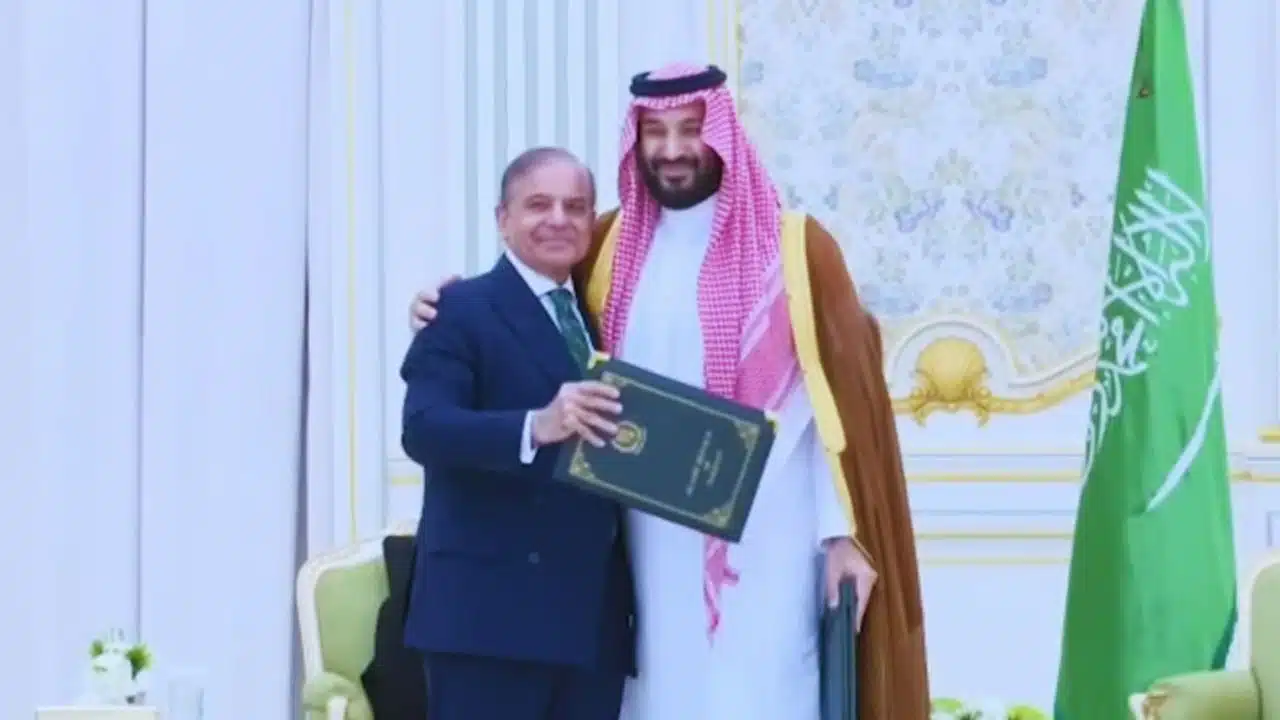
Saudi Arabia and Pakistan have formalized a Strategic Mutual Defence Agreement during the state visit of Pakistan’s Prime Minister Shehbaz Sharif to Riyadh. The signing, which took place at the Al-Yamamah Palace with Crown Prince Mohammed bin Salman present, represents one of the most significant defence partnerships in recent years between two long-time allies.
At the heart of the agreement lies a powerful clause: “Any aggression against either country shall be considered an aggression against both.” This mutual defence commitment underlines the intent of both nations to strengthen their joint deterrence capacity and ensure collective security in a volatile regional environment.
Historical Context of Saudi-Pakistan Defence Relations
Saudi Arabia and Pakistan have shared a close bond for almost eight decades. Pakistan has long played a supportive military role for the Kingdom, including sending troops in advisory capacities and providing military training. The two countries have regularly collaborated in defence exercises, intelligence sharing, and security partnerships.
Saudi Arabia, for its part, has been a consistent ally for Pakistan in financial, diplomatic, and political matters. Both countries also emphasize their relationship is rooted in Islamic solidarity, shared cultural ties, and mutual strategic interests.
This new pact represents a formal institutionalization of what had previously been an informal arrangement. For decades, it was widely assumed that Pakistan, as a nuclear power, would stand by Saudi Arabia in the event of an external threat. Now, that assumption is spelled out in a legally binding defence agreement.
The Details of the Pact
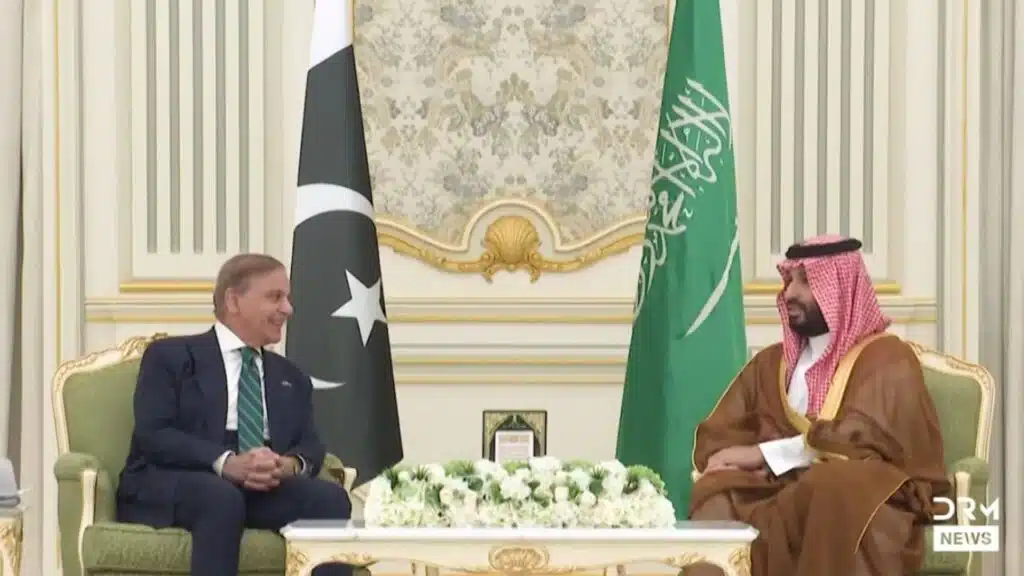
According to the official joint statement:
- The agreement builds on the historic partnership extending over nearly 80 years.
- It seeks to develop aspects of defence cooperation and establish a stronger joint mechanism to respond to external threats.
- The pact stresses bonds of brotherhood, Islamic solidarity, and shared defence interests.
- Both sides agreed that regional and global security and stability require stronger alliances between trusted partners.
Field Marshal Asim Munir, Pakistan’s Army Chief, was present during the signing, highlighting the strong role of the Pakistani military in this bilateral defence framework. His presence underlined that the pact is not only political but also rooted in direct military cooperation.
Why Now? Timing and Geopolitical Context
The timing of this defence agreement is particularly notable. It comes shortly after the Pahalgam terror attack in India and India’s subsequent counter-strike known as Operation Sindoor, which has significantly worsened India-Pakistan relations.
At the same time, the Middle East is undergoing rapid strategic shifts, with conflicts in Gaza, tensions around Iran’s regional influence, and Saudi Arabia’s balancing act between regional security and global partnerships.
By deepening defence ties with Pakistan, Saudi Arabia strengthens its security architecture while also signaling to other powers in the region that it has reliable military partnerships beyond its traditional Western alliances.
India’s Official Response
The Indian government reacted cautiously but firmly. In a measured statement, the Ministry of External Affairs (MEA) said:
- India had been aware that such a pact was under discussion between Saudi Arabia and Pakistan for some time.
- While the agreement formalizes a long-standing arrangement, New Delhi will closely study the implications for national security, regional stability, and global geopolitics.
- India reaffirmed that it remains committed to comprehensive national security in all domains—diplomatic, economic, and military.
Importantly, India also emphasized that it continues to maintain strong ties with Riyadh. Prime Minister Narendra Modi has made three visits to Saudi Arabia, and relations have steadily improved, particularly in trade, energy cooperation, and counter-terrorism dialogue.
India-Saudi Arabia Relations in Recent Years
Despite the growing Saudi-Pakistan alignment, India and Saudi Arabia have built a strong bilateral partnership over the past decade:
- Economic Ties: India is currently the second-largest trading partner of Saudi Arabia. Trade spans oil imports, investments in infrastructure, and technology cooperation.
- Counter-Terrorism: During Modi’s state visit to Riyadh in April 2025, Saudi Arabia strongly condemned the Pahalgam terror attack. Both countries jointly declared that there can be no justification for any act of terrorism under any circumstances.
- Recognition: In 2016, Prime Minister Modi was awarded Saudi Arabia’s highest civilian honor—the King Abdulaziz Sash—reflecting the strategic value Riyadh places on ties with New Delhi.
This dual approach by Riyadh—maintaining strong ties with both India and Pakistan—shows Saudi Arabia’s careful balancing in South Asian geopolitics.
Implications for Regional and Global Security
The pact introduces several key implications:
- Stronger Saudi-Pakistan Alignment: The agreement formalizes Pakistan’s role as a potential security guarantor for Saudi Arabia. This includes conventional defence cooperation and possibly a nuclear deterrence umbrella, though neither side has explicitly confirmed nuclear commitments.
- Impact on India-Pakistan Rivalry: With India-Pakistan relations at a low point, this pact may increase Indian security concerns. New Delhi will likely intensify defence and intelligence coordination with both Middle Eastern and Western allies to monitor potential shifts.
- Middle East Power Dynamics: For Saudi Arabia, the deal signals diversification of its defence partnerships. While Riyadh continues defence cooperation with the United States, strengthening ties with Pakistan offers an additional layer of security in case of regional escalations, particularly involving Iran or proxy conflicts.
- Global Counter-Terrorism Dimension: Both India and Saudi Arabia have condemned terrorism in recent joint statements. However, Pakistan’s position on cross-border terrorism has often been a point of contention with India. How this new pact addresses counter-terrorism cooperation remains to be seen.
A Regional Balancing Act
Saudi Arabia’s leadership is keen to maintain its role as both a protector of the Islamic world and a global strategic power broker. By bringing Pakistan into a closer defence arrangement, Riyadh sends a clear message of unity within the Islamic bloc, while still preserving strong ties with India and other global partners.
For Pakistan, the agreement strengthens its international standing, giving it not only a political win but also potential access to greater Saudi financial and military support at a time when its economy faces challenges.
The Pakistan-Saudi Arabia Strategic Mutual Defence Pact marks a turning point in regional security cooperation. By declaring that an attack on one is an attack on both, the two countries have raised the stakes in South Asian and Middle Eastern geopolitics.
For India, the development is cause for careful monitoring but not panic, as New Delhi’s strong ties with Riyadh remain intact. The coming months will show whether this pact leads to concrete new defence activities—such as joint military exercises, weapons procurement, or intelligence integration—or whether it remains more of a symbolic reaffirmation of old commitments.
What is clear is that this agreement strengthens the long-standing bond between Islamabad and Riyadh, while adding a new dimension to the already complex security landscape of Asia and the Middle East.
The Information is Collected from The Hindu and NDTV.





















