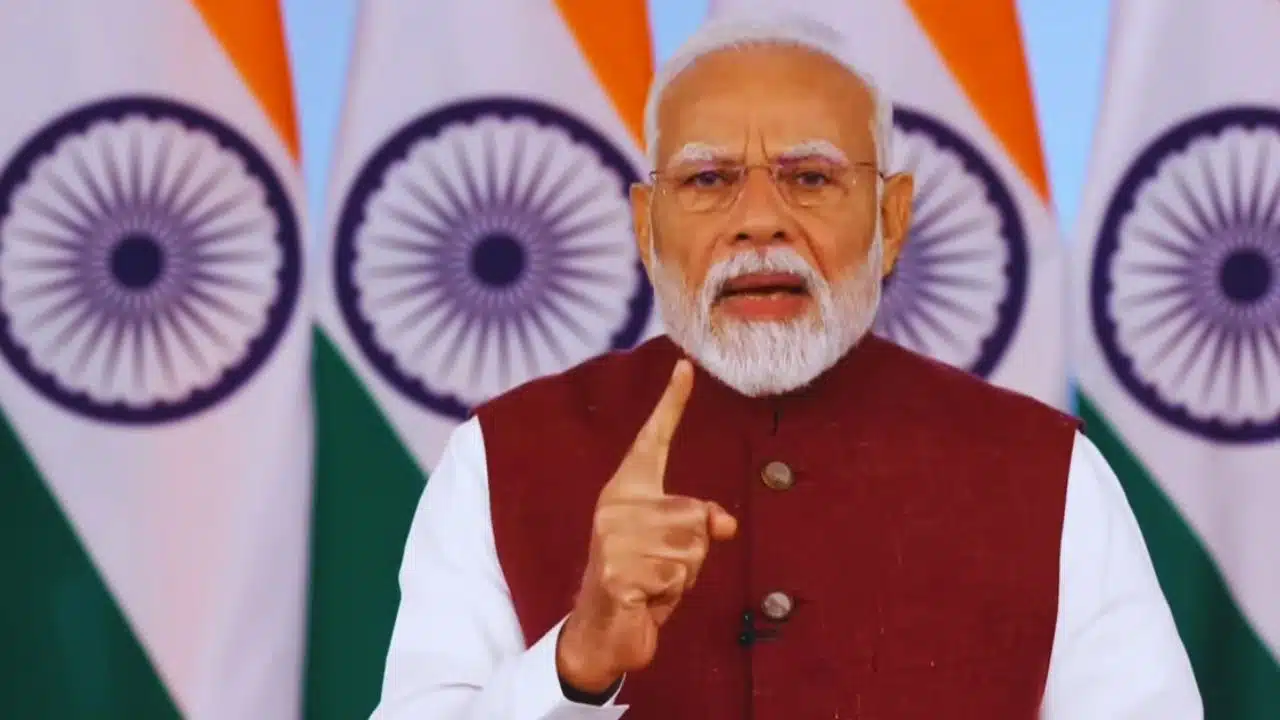
In his first national address since intense fighting erupted between India and Pakistan, Indian Prime Minister Narendra Modi delivered a strong and solemn message to the nation. He warned of firm retaliation if another terrorist attack occurs on Indian soil, stating:
“This is not an era of war, but this is also not an era of terror.”
His statement came after four days of intense military activity, sparked by a deadly attack in Indian-administered Kashmir. The April 22 attack in the Pahalgam valley left 26 people dead. India blamed the assault on a Pakistan-based militant group, though Islamabad has denied any involvement, calling the accusation unfounded and politically motivated.
Ceasefire Holds After U.S.-Backed Mediation
Following the escalation, a U.S.-brokered ceasefire was reached between the two nuclear-armed neighbors over the weekend. The truce appears to be holding for now, with both countries reporting a cessation of cross-border shelling and aerial assaults as of Monday.
The White House confirmed that President Donald Trump played a behind-the-scenes diplomatic role, urging both sides to end hostilities. Trump stated:
“It was time to stop the current aggression that could have led to the death and destruction of so many, and so much.”
Indian and Pakistani military officials held a high-level conversation on Monday, reaffirming their commitment to de-escalation. According to an Indian Army statement:
“Both sides agreed to refrain from aggressive actions and take immediate measures to reduce troop presence along the border and forward areas.”
Modi: “Terror and Trade Cannot Go Hand in Hand”
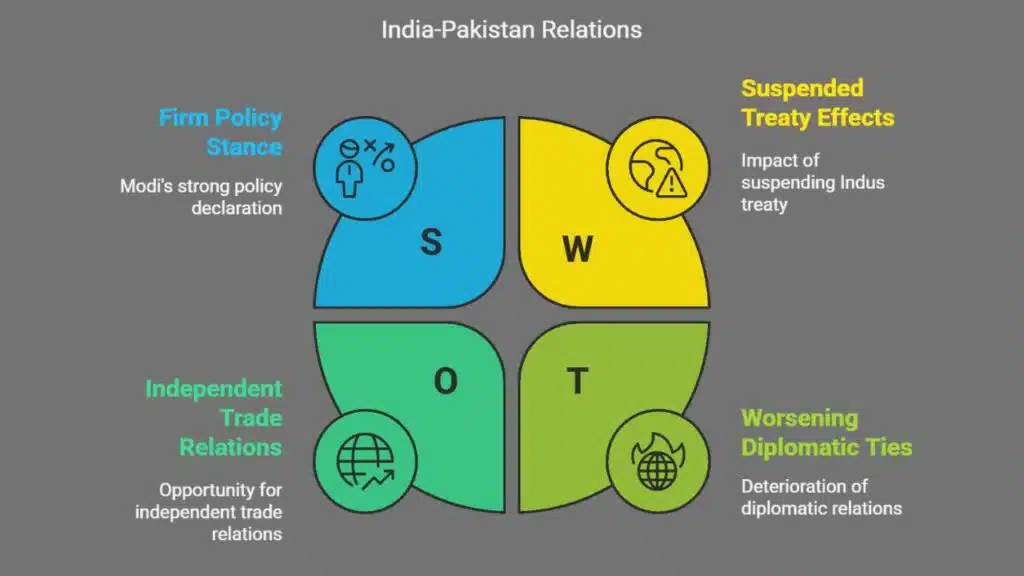
During his address, Prime Minister Modi laid out a hardline stance on future diplomatic and economic ties with Pakistan, saying:
“Terror and trade talks cannot happen together.”
This statement was widely seen as a rebuttal to earlier comments made by President Trump, who had indicated that the U.S. would condition trade with India and Pakistan on the resolution of the ongoing conflict.
Modi also referenced India’s decision to suspend parts of the Indus Waters Treaty, a historic water-sharing agreement between the two nations. In a firm declaration, he said:
“Water and blood cannot flow together.”
This marks a significant policy signal, as India has often threatened to leverage its upper riparian status in response to cross-border tensions.
Airstrikes, Drones, and Heavy Shelling: What Happened During the Conflict
Over the course of four days, the India-Pakistan border region became a flashpoint, with both sides conducting aggressive military operations. India carried out strikes against what it claimed were terrorist training camps and Pakistani military infrastructure.
According to Indian defence officials:
- Nine targets were hit inside Pakistan and Pakistan-administered Kashmir.
- These included militant camps and Pakistan Air Force (PAF) bases, with one strike reportedly near Rawalpindi, close to the capital Islamabad.
- Indian intelligence claimed that over 100 militants were killed in the strikes.
India also alleged that Pakistan lost 35–40 personnel along the Line of Control (LoC) and confirmed some of its own aircraft were downed in retaliatory fire.
In response, Pakistan claimed to have:
- Targeted 26 Indian military installations, including airfields and command posts.
- Deployed drones over Delhi and other strategic sites.
- Shot down five Indian aircraft, including three French-made Rafales, though India has neither confirmed nor denied this.
Pakistan’s military spokesperson denied that an Indian pilot had been captured, a claim that had circulated widely. India, on its part, reiterated that:
“All our pilots are back home.”
Civilian Impact and Airport Closures
As hostilities intensified, dozens of civilian deaths were reported on both sides of the border, largely due to heavy artillery shelling in populated areas near the LoC. Many families were displaced, and essential services were disrupted.
India had shut down 32 civilian airports over safety concerns. On Monday, after the ceasefire announcement, the government confirmed that all airports would reopen, resuming normal air travel operations.
Pakistan’s Response: “Our Dignity Is Above All”
Pakistan’s Prime Minister Shehbaz Sharif, in a public statement on Saturday, acknowledged the truce and emphasized his country’s desire for peace—but not at the cost of sovereignty. He stated:
“Our honour, our dignity and our self-respect are more precious to us than our lives.”
He also expressed hope that the water-sharing dispute with India could be resolved through peaceful negotiations, though Pakistan remains alert to future threats.
Military Dialogue Signals De-escalation
Senior military officials from both nations engaged in multiple rounds of discussions over the weekend and Monday. The focus was on:
- Reducing troop deployment near high-conflict zones.
- Avoiding provocative actions, including drone incursions.
- Establishing a hotline for real-time conflict de-escalation.
Both nations agreed that miscommunication must be avoided to prevent future flare-ups.
Strategic and Political Fallout
While both India and Pakistan have claimed “military success” following the ceasefire, international observers have warned that the underlying tensions, especially over Kashmir, remain unresolved.
Political analysts suggest that:
- Modi’s speech was aimed at domestic audiences, emphasizing national strength and security ahead of potential elections.
- Pakistan’s military response was calculated to avoid full-scale war while asserting its own defence capabilities.
- The role of the U.S. as a mediator may deepen its diplomatic involvement in South Asian affairs.
What’s Next?
While the ceasefire brings temporary relief, tensions remain just beneath the surface. International organizations, including the United Nations, have urged both sides to:
- Re-engage in peace talks.
- Restore diplomatic channels.
- Address Kashmir-related disputes through legal and diplomatic frameworks.
As of May 13, 2025, the situation at the LoC remains calm, but military preparedness on both sides is still high. The coming days will be critical in determining whether the ceasefire marks a turning point or merely a pause in a long-standing and volatile rivalry.