

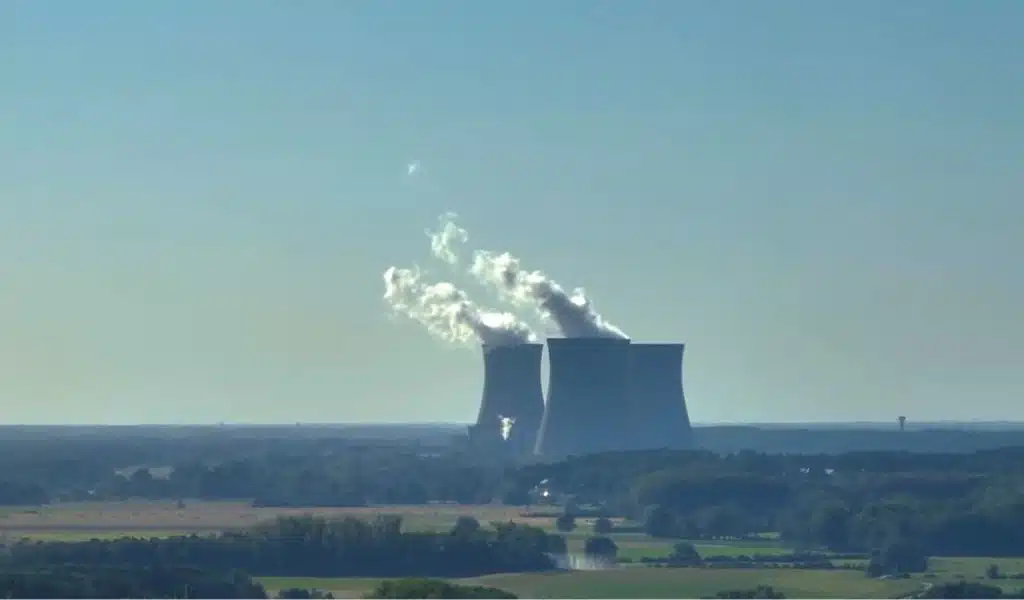
NASA Selects 3 Nuclear Power Plant Manufacturers for the Moon

Nuclear Power Plant On The Moon

In an exciting development for lunar exploration, NASA has selected three design concepts for the creation of a fission surface power system on the Moon.

This endeavor is a significant component of the Artemis mission and is slated for launch within this decade. The companies behind these innovative design concepts have been awarded contracts collectively worth around $5 million.

NASA has Set its Sights on Constructing Nuclear Power Plants for the Moon

NASA has selected three partnerships for the design of a fission surface power system on the Moon. These include Lockheed Martin with BWXT and Creare, Westinghouse with Aerojet Rocketdyne, and IX with Maxar and Boeing. The contracts, valued at approximately $5 million each, span a period of 12 months.

NASA’s announcement reveals that the funding will go towards the initial design stages of a 40-kilowatt class fission power system. The system is intended to operate on the Moon for at least a decade. John Wagner, Director of Idaho National Laboratory, described the Fission Surface Power project as a significant initial step in establishing US nuclear power on the Moon.

The appeal of fission systems lies in their compact size and lightweight nature compared to other power systems. They also provide a continuous power supply that isn’t dependent on location, sunlight, or other environmental conditions. This makes them an ideal choice for extended missions on Mars and the Moon, and also for the development of ‘nuclear propulsion systems that rely on reactors for power generation.’

Jim Reuter, the associate administrator for NASA’s Space Technology Mission Directorate, stressed the significance of new technology in driving exploration of the Moon, Mars, and beyond. “Developing these early designs will help us lay the groundwork for powering our long-term human presence on other worlds,” he said.

For this initiative, NASA has joined forces with the Department of Energy (DOE). The DOE believes that the Fission power system will bolster NASA’s ability to carry out deep space exploration missions. The potential of these plans is vast and exciting – what do you think about this development? Feel free to share your thoughts in the comments below.



Subscribe to Our Newsletter

Related Articles

Top Trending

How to Teach Letters to Kids
8 Ways to Teach Letters to Kids Who Hate Sitting Still
Alphabet Magic vs 123 Magic Number Fun
Alphabet Magic vs 123 Magic Number Fun: Which Skill Does Each App Actually Target?
How to Promote a Blog Post After Publish
10 Best Ways to Promote a Blog Post After Hitting Publish
How to Help a Child Who Refuses to Count Aloud
Articleify 7th anniversary
Happy 7th Anniversary of ArticleIFY: The Journey from a Small Room to Global Horizons

Technology & AI

SEO Agency vs In-House SEO vs Freelancer
SEO Agency vs In-House SEO vs Freelancer: A Decision Framework for Small Teams
ImagineLab Voice Lab vs Murf AI
ImagineLab Voice Lab vs Murf AI: I Tried Multilingual Narration from the Same Script
Best Document Collaboration Tools
10 Best Online Document Collaboration Tools for Teams
Important Signs When Should Raise Prices on Your SaaS
10 Signs It's Time to Raise Prices on Your SaaS
Nostalgia economy
The Nostalgia Economy Is Selling Us a Past We Never Lived

GAMING

Intentional Screen Time
How to Spend Your Screen Time More Intentionally
Complete Guide on Game Programgeeks
Game Programgeeks: A Complete Guide on PC, Game Dev, and Tech
Online Color Game Philippines
Online Color Game Philippines: What Every Beginner Should Know Before Playing
Ways to Reduce Game Development Costs
12 Ways Studios Cut Game Development Costs
NFT game development cost
How Much Does NFT Game Development Cost? A Realistic Budget Breakdown

Business & Marketing

Email Marketing Agency vs DIY Platform
Email Marketing Agency vs DIY Platform: When Outside Help Adds Value
Critical Path Method
The Critical Path Method Explained in Plain English
Time to Value: How SaaS Teams Can Reach Results Faster
How to Onboard New Team Members With a Self-Serve Wiki
How to Document Team Processes for Better Teamwork

EdTech & E-Learning

How to Teach Letters to Kids
8 Ways to Teach Letters to Kids Who Hate Sitting Still
Alphabet Magic vs 123 Magic Number Fun
Alphabet Magic vs 123 Magic Number Fun: Which Skill Does Each App Actually Target?
Alphabet Magic vs ABC Kids: Which Offers Clearer Letter Practice
Alphabet Magic vs ABC Kids: Which Gives Clearer Uppercase and Lowercase Practice?
Alphabet Magic vs LetterSchool comparison review
Alphabet Magic vs LetterSchool: Letter-Tracing Accuracy on the Same Letters [A Hands-on Review]
Alphabet Magic Trace and Phonics vs Teach Your Monster to Read
Alphabet Magic Trace and Phonics vs Teach Your Monster to Read: Which Is Best?

Software & Apps

Best Document Collaboration Tools
10 Best Online Document Collaboration Tools for Teams
Important Signs When Should Raise Prices on Your SaaS
10 Signs It's Time to Raise Prices on Your SaaS
Best CRM Tools for Small Marketing Teams
10 CRM Tools for Small Marketing Teams Worth Using
SaaS partnership tools
10 Best Tools for Managing SaaS Partnerships and Integrations
White-Label SaaS Platform to Resell
8 Best White-Label SaaS Platforms to Resell



















