

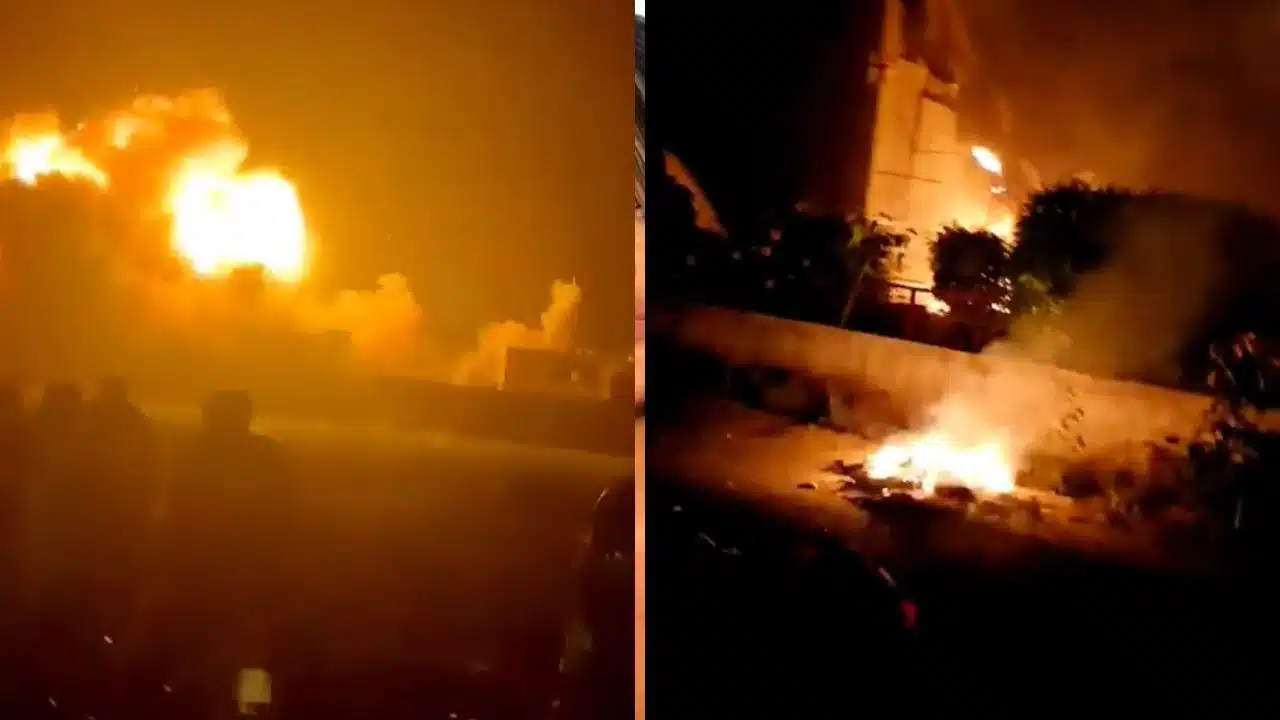
On May 7, 2025, India launched a significant military operation named “Operation Sindoor”, striking nine sites within Pakistan and Pakistan-administered Kashmir. This came just weeks after a deadly attack on tourists in Pahalgam, a town in Indian-administered Kashmir, that left 26 people dead. The Indian government accused Pakistan-based terror outfits of orchestrating the massacre—a claim Pakistan firmly denies.
In response to India’s strikes, Pakistan retaliated with counterattacks, claiming to have shot down multiple Indian military aircraft and taken soldiers into custody. The dramatic escalation has resulted in mounting casualties, cross-border shelling, and strong reactions from global leaders urging restraint between the two nuclear-armed nations.
Operation Sindoor: What Happened?
India’s Ministry of Defence released a statement early Wednesday confirming that the Indian Armed Forces carried out “precision strikes” targeting terrorist infrastructure believed to be responsible for cross-border attacks.
Indian Government’s Statement
“Our actions have been focused, measured, and non-escalatory in nature. No Pakistani military facilities have been targeted. India has demonstrated considerable restraint in the selection of targets and the method of execution.”
According to defense analysts and multiple reports, Indian Air Force Rafale jets equipped with SCALP and AASM Hammer missiles were used in the operation. The nine sites struck included locations in Muzaffarabad, Kotli, Sialkot, Bhimber, Bahawalpur, Muridke, and Tehra Kalan—areas long suspected of harboring terrorist training camps, including those linked to Lashkar-e-Taiba (LeT) and Jaish-e-Mohammed (JeM).
The airstrikes were reportedly completed within 23 minutes, signaling a swift and coordinated mission.
Casualties and Civilian Damage
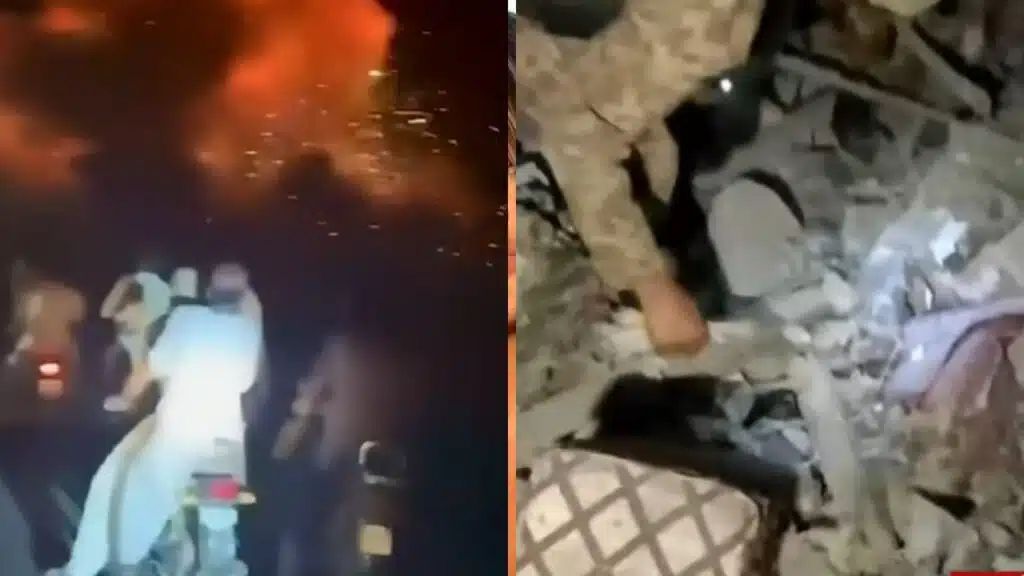
Pakistan’s response to the Indian strikes painted a grim picture. Officials claimed that the Indian missiles killed at least 26 people and injured more than 45 civilians, including children. Local authorities in Bahawalpur said that a missile struck a mosque, killing a child and wounding two civilians during evening prayers.
Targeted Civilian Zones?
The Pakistani military accused India of targeting non-combat zones, including residential buildings and religious sites. This includes claims that two mosques were hit in Kotli and Bahawalpur. Indian authorities, however, insist that the strikes were aimed solely at terrorist infrastructure, not civilian areas.
These claims have not yet been independently verified due to restricted access to some of the impacted areas.
Pakistan’s Military Response
Soon after the Indian strikes, Pakistan launched a counteroffensive. According to Pakistani Defence Minister Khawaja Asif, Pakistan responded by hitting Indian military targets and shooting down at least five Indian aircraft, including:
- 3 Rafale jets
- 1 Sukhoi Su-30
- 1 Mig-29
Pakistani media outlets also claimed that Indian soldiers were captured, although this has not been confirmed by independent sources or acknowledged by the Indian government.
The Pakistani military’s Inter-Services Public Relations (ISPR) unit stated that the country’s air defense systems and retaliatory air missions were activated “within minutes of India’s aggression.”
Violence Escalates on the Line of Control (LoC)
Following the aerial assaults, intense artillery shelling and gunfire exchanges erupted along the LoC, the de facto border dividing Kashmir between India and Pakistan. These exchanges were reported at multiple points including Poonch, Kupwara, and Rajouri on the Indian side, and Kotli, Muzaffarabad, and Bhimber on the Pakistani side.
Reported Casualties on Both Sides
- On the Indian side, officials reported that three civilians were killed, and multiple others injured due to incoming shelling from Pakistan.
- On the Pakistani side, media reports suggested dozens of civilian casualties, especially in villages near Muzaffarabad and Bhimber.
Evacuations have begun in many border villages, with emergency shelters being set up by local governments on both sides.
The Trigger: Pahalgam Tourist Attack
This conflict comes in the wake of the April 22 attack in Pahalgam, a scenic town in Indian-administered Kashmir, where 26 Hindu pilgrims and tourists were killed. Indian intelligence agencies accused Pakistan-based terror groups, naming Lashkar-e-Taiba and Jaish-e-Mohammed as prime suspects.
Despite India’s claims, Pakistan denied any involvement and called the allegations “politically motivated” and “baseless.” However, the incident fueled public outrage in India, where many were calling for a strong military response.
International Concerns and Reactions
The outbreak of hostilities between India and Pakistan, both nuclear-armed powers, has drawn urgent calls for de-escalation from around the world.
UN Secretary-General António Guterres
“The Secretary-General is deeply concerned about the Indian military operations across the Line of Control and urges both nations to exercise maximum restraint. The world cannot afford a military confrontation between India and Pakistan.”
U.S. President Donald Trump
“It’s a shame. I hope both countries find a way to resolve this quickly. No one wins in war, especially between nuclear powers.”
China and Russia, while not publicly taking sides, have called for diplomatic channels to be reopened immediately.
Expert Opinions: A Dangerous Path
Dr. Nitasha Kaul, Director at the Centre for the Study of Democracy, warned:
“Once again, the worst affected are going to be the people in the region—the Kashmiris—caught in the middle of nationalist posturing from both governments.”
Kaul emphasized that growing hyper-nationalist rhetoric within India and a desire to project military strength ahead of possible elections may have added pressure to escalate.
She concluded, “This was a countdown to escalation. Let’s hope it stops here.”
A Fragile Peace Under Threat
The Kashmir dispute, one of the world’s most dangerous territorial conflicts, has seen numerous flare-ups over the years. However, the 2025 standoff following Operation Sindoor marks one of the most serious military escalations in recent times.
With both sides engaged in active military operations, diplomatic relations strained, and innocent civilians caught in the crossfire, the region stands on a knife’s edge. The global community watches closely, urging both India and Pakistan to step back from the brink of war.
What’s Next?
As of now, both militaries remain on high alert, and the LoC continues to witness intermittent shelling. The potential for further escalation remains, particularly if retaliatory measures continue.
Peace in South Asia hangs in a delicate balance, and the coming days will be critical in determining whether this dangerous escalation ends in dialogue—or disaster.

























