

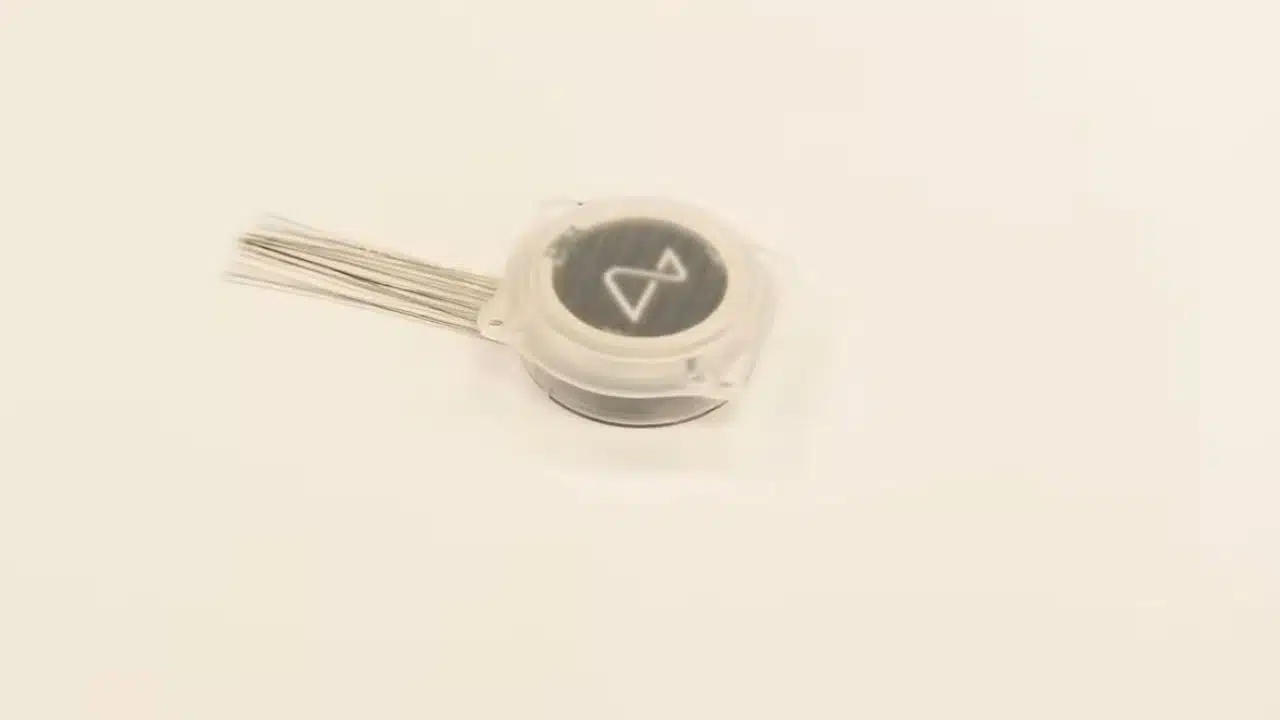
In a groundbreaking medical achievement, an Arizona man with advanced ALS has become the third person in the world to receive a Neuralink brain implant — and the results are nothing short of remarkable. Thanks to Elon Musk’s brain-computer technology and artificial intelligence system Grok, he can now communicate again using his own voice.
Brad Smith’s Journey: Overcoming Silence Through Technology
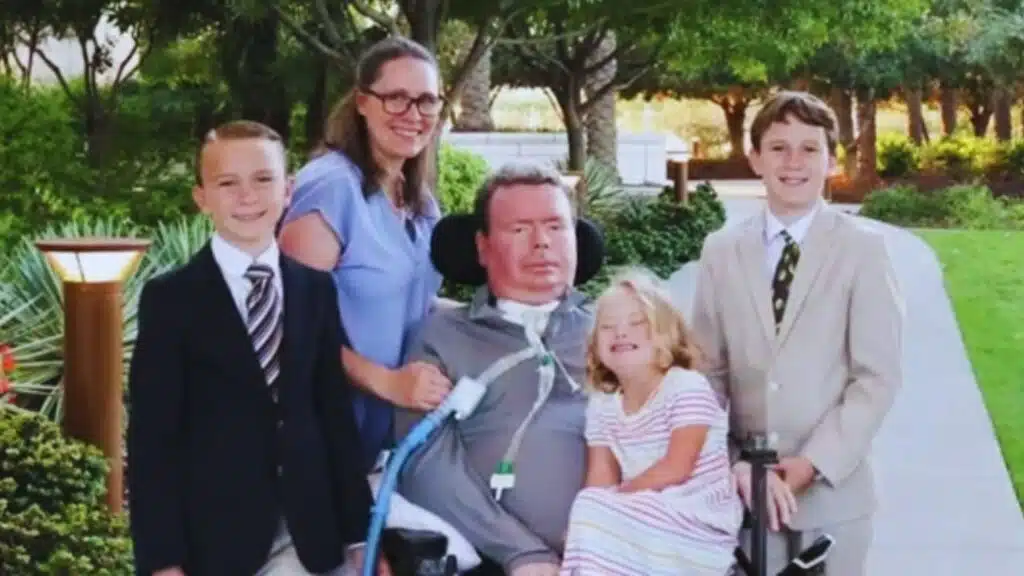
Brad Smith, a former engineer in Arizona, suffers from amyotrophic lateral sclerosis (ALS), a devastating neurological disorder that slowly paralyzes muscles throughout the body while leaving cognitive functions intact. Smith had lost the ability to move, speak, and even breathe independently — surviving only with the help of a ventilator.
Until recently, his only form of communication was through an eye-tracking computer system, which worked best in dark environments and severely limited his independence. Outdoor mobility, social interaction, and quality of life were dramatically impaired.
But thanks to Neuralink’s implant, combined with AI-generated voice replication, Smith has now regained a way to interact with the world. In a video shared on X (formerly Twitter), he triumphantly declared:
“I can control the computer with telepathy — life is good.”
Importantly, Smith clarified that the Neuralink device does not read his innermost thoughts:
“Neuralink does not read my deepest thoughts or words I think about.”
How Neuralink’s Implant Works: Turning Thought into Action
The Neuralink device, roughly the size of five stacked U.S. quarters, is a brain-computer interface (BCI). It interprets the brain’s electrical activity — neuron firings — and translates those signals into digital commands.
During the procedure, a robotic surgical system precisely inserted ultra-thin threads into Smith’s brain, targeting the motor cortex — the region responsible for initiating voluntary movement. These threads avoid major blood vessels, dramatically reducing surgical risks like bleeding.
The implant captures brain signals every 15 milliseconds and sends the data wirelessly via Bluetooth to a MacBook Pro. Specialized AI software processes the vast amount of neural data, decoding Smith’s intentions to move a cursor across the screen in real-time.
Once he types sentences using only his mind, Musk’s AI program Grok, trained on recordings of Smith’s pre-ALS voice, reads them aloud — effectively giving him back his ability to “speak” in a familiar tone.
Before this breakthrough, Smith was restricted to an eye-gaze communication system, which was sensitive to light conditions. Now, with Neuralink’s interface, he can communicate even in bright environments, allowing him to enjoy the outdoors again.
What Is Neuralink?

Neuralink, founded by Elon Musk in 2016, is a neurotechnology startup focused on developing implantable BCIs. Its ambitious goal is to create a direct communication pathway between the human brain and external devices.
The Neuralink device consists of a small chip embedded with over a thousand electrodes. These electrodes detect the electrical activity of neurons and send data to external computers for interpretation.
The potential applications Musk envisions are transformative:
- Restoring sight to the blind.
- Giving superhuman senses, such as infrared or ultraviolet vision.
- Allowing telepathic communication between individuals.
- Enhancing memory and learning capabilities.
Speaking about the broader vision, Musk said:
“We want to give people superpowers.”
Other Human Trials: Building on Early Success
Brad Smith is the third person to undergo Neuralink’s human implantation program, approved under an FDA Investigational Device Exemption (IDE) in 2023.
- First Patient: Noland Arbaugh: Implanted earlier in January 2025, Arbaugh, a quadriplegic paralyzed from a diving accident, used his Neuralink device to control a computer, play Nintendo’s Mario Kart, and even start learning Japanese and French — all through thought alone. However, during surgery, Arbaugh suffered complications, facing a life-threatening condition that required emergency intervention.
- Second Patient: Alex: A man with a spinal cord injury, Alex, became the second recipient of the implant later in 2025. Limited public details have emerged about his recovery, but early reports suggest positive outcomes in cursor control and communication.
In each case, Neuralink has demonstrated that its BCI technology can translate thought into digital commands — a potential life-changing development for millions suffering from neurological impairments.
The Broader BCI Race: Neuralink vs. Synchron
Neuralink isn’t the only player in the brain-computer interface field. Synchron Inc., a rival company based in the U.S. and Australia, is developing a less invasive device called the Stentrode, which is delivered via blood vessels rather than open brain surgery.
Synchron’s technology has already enabled several paralyzed patients to control computers and send emails through thought. Unlike Neuralink’s approach, Synchron’s system reduces surgical risks, making it an appealing option for early adoption.
While Synchron’s devices have had notable success, Neuralink’s high data capture rates and Musk’s aggressive innovation timeline give it a different kind of advantage — potentially enabling more complex neural decoding over time.
Ethical Concerns and Animal Testing Controversies
Despite the promising breakthroughs, Neuralink has faced mounting criticism over its ethical practices, particularly regarding its animal testing programs.
Animal Welfare Allegations
The Physicians Committee for Responsible Medicine (PCRM) filed complaints with the U.S. Department of Agriculture, alleging that Neuralink’s early experiments caused significant suffering among test animals:
- Reports claimed monkeys exhibited self-mutilation behaviors, lost fingers or toes, and suffered brain hemorrhages.
- Several test subjects had to be euthanized due to health complications arising from surgical implantations.
In response, Neuralink acknowledged that some animals had died during trials but denied claims of mistreatment. The company argued that animal studies were essential for ensuring human safety.
Despite public reassurances, animal welfare groups and bioethicists continue to call for stricter oversight of Neuralink’s preclinical research practices.
Privacy Risks of Brain Implants
Alongside ethical debates, concerns over privacy loom large. Experts like Dr. Susan Schneider, a cognitive scientist and AI ethics researcher, have warned that commercial brain implants could lead to the monetization of human thought.
In an interview with the Daily Mail in 2021, Schneider cautioned:
If the widespread use becomes hooking us to the cloud, not just as therapies but as enhancements, then the economic model will be to sell our data.
The idea of corporations or governments accessing and monetizing brain activity raises profound ethical, legal, and human rights questions.
Looking Ahead: What’s Next for Neuralink?
Neuralink plans to continue refining its technology:
- Future implants will place electrodes at varying depths to maximize brain signal detection.
- Machine learning algorithms will become more sophisticated, improving the speed and accuracy of mental communication.
- Implants may become smaller, more durable, and capable of wireless recharging.
Musk has expressed optimism that future versions of Neuralink will allow not just physical restoration — like speech or movement — but cognitive enhancements, such as improved memory retention and faster learning.
While the road ahead is filled with challenges — regulatory, ethical, and technological — Brad Smith’s story offers a glimpse of a future where neurological diseases no longer mean complete isolation from the world.
As Musk himself noted:
“It’s only going to get better from here.”
The Information is Collected from MSN and Fox Business.
























