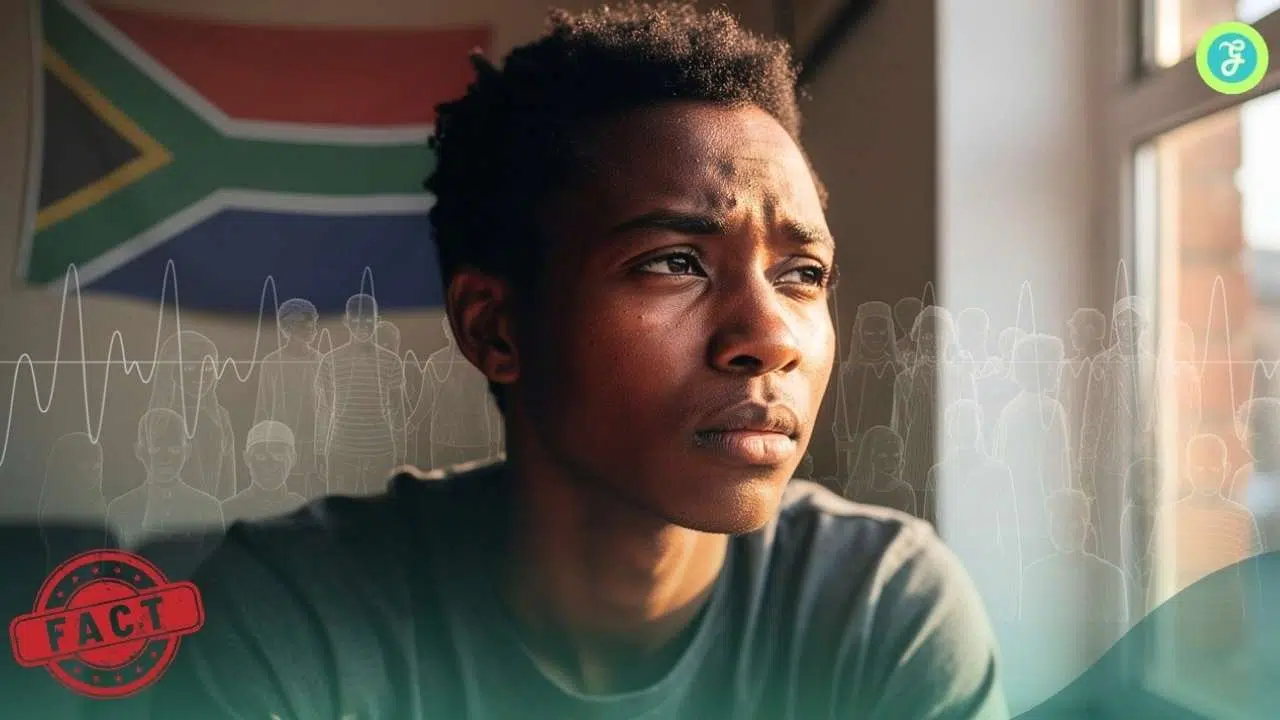
South Africa is famous across the globe for its breathtaking landscapes, vibrant diversity, and the undeniable resilience of its people. But just beneath the surface of the Rainbow Nation, a silent and massive crisis is taking place every single day. The reality of mental health in South Africa is far more complicated than what you might see on the news. We are talking about a society where historical trauma, soaring unemployment, and an overburdened healthcare system collide.
This collision leaves millions of everyday people carrying a heavy psychological load just trying to survive. We rarely openly discuss what happens to a person’s mind when it faces constant pressure from poverty, high crime rates, and heavy societal expectations. It is time we pull back the curtain and look at the raw data and real-life experiences. Understanding the true scope of this situation is the absolute first step toward finding solutions that actually work for the people on the ground. Let us walk through fifteen facts that expose the current state of psychological wellbeing across the country.
The Scope of the Crisis: Prevalence and Demographics
The true scale of psychological distress here is staggering, and the numbers paint a picture we can no longer ignore. Recent studies show that a massive chunk of the population is walking around with untreated conditions while trying to hold their lives together. This crisis does not care about your background, though it definitely hits the youth and vulnerable, poorer populations the hardest because they lack access to immediate help. Looking closely at these demographics helps us understand exactly who is hurting and why immediate intervention is critical.
1. A High Prevalence of Depression
If you walk down any busy street in Johannesburg, Cape Town, or a local township, chances are high that several people passing by are silently battling depression. Recent research shows that more than a quarter of South Africans report experiencing moderate to severe symptoms of probable depression. Let that sink in for a moment. Over 25 percent of the population is carrying an invisible weight, yet they still have to show up to work, look after their kids, and manage their daily chores while feeling entirely overwhelmed.
Because there are so few resources available, many people end up relying on incredibly unhealthy coping mechanisms just to get through the week. Substance abuse, particularly alcohol, often goes hand in hand with untreated depression, creating a destructive cycle that ruins families and tears communities apart. The sheer volume of people affected makes depression one of the leading health burdens in the country today, far outpacing many physical illnesses.
| Feature | Key Detail |
| Affected Population | Over 25% of South Africans. |
| Common Symptoms | Persistent sadness, fatigue, feeling overwhelmed. |
| Coping Mechanisms | High rates of substance and alcohol abuse. |
| Overall Impact | One of the top health burdens in the country. |
2. The Growing Youth Mental Health Emergency
Our young people are in serious trouble, and the pressures they face are completely different from past generations. You might think childhood and adolescence are carefree times, but modern South African youth face an incredible amount of stress. Recent surveys indicate that around 60 percent of young people felt they desperately needed psychological support over the past year alone. These kids are dealing with intense academic stress, toxic social media environments, bullying, and massive anxiety about their future in a stagnant economy.
The absolute worst part is that many of them never speak up about what is happening inside their heads. They hide their dark thoughts from their parents and teachers until the pressure reaches a boiling point. We are currently seeing a massive increase in teenagers needing emergency crisis intervention because they have simply reached the end of their emotional rope.
| Feature | Key Detail |
| Support Needed | 60% of youth reported needing help recently. |
| Primary Stressors | Academics, social media, uncertain economic future. |
| Communication Gap | Most hide their struggles from parents and teachers. |
| Consequence | Sharp rise in emergency crisis interventions for teens. |
3. The Lasting Impact of Intergenerational Trauma
You simply cannot discuss the psychological state of this country without looking back at its painful history. Apartheid did way more than just segregate a nation physically; it inflicted deep, bleeding psychological wounds that have not fully healed. The systemic violence, forced removals, and daily oppression experienced by older generations created a baseline of severe trauma. This kind of trauma does not just magically disappear when laws change or new politicians take over. It gets passed down biologically and behaviorally.
Parents who lived in constant survival mode often pass those stress responses, fears, and anxieties onto their children, creating what we call intergenerational trauma. Today, many young people who never actually lived through Apartheid are still dealing with its psychological fallout in their daily lives. Healing this requires more than just a quick therapy session; it requires deep, community-wide acknowledgement and structural healing.
| Feature | Key Detail |
| Root Cause | Systemic oppression and violence from Apartheid. |
| Transmission | Stress responses passed from parents to children. |
| Current Reality | Youth deal with trauma from events they did not experience. |
| Healing Need | Requires community-wide and structural interventions. |
Systemic Barriers and Healthcare Shortages
Knowing that millions of people need help is one thing, but actually getting that help to them is a total logistical nightmare. The national healthcare system is severely unequipped to handle the sheer volume of patients walking through public clinic doors every single morning. We have a massive shortage of trained professionals, and the resources we do have are unevenly split between those who have money and those who do not.
4. A Severe Shortage of Mental Health Professionals
Imagine going to an emergency room with a broken arm and being told there are no doctors available to set the bone. That is exactly what happens every single day with psychological emergencies in our public system. The South African public sector operates with an incredibly low number of specialists to handle a massive population. Current estimates show there are roughly 0.35 functional psychiatrists for every 100,000 people relying on public health.
To make matters worse, the overall number of specialized professionals has actually dropped in recent years due to high emigration rates and severe burnout. We are also critically lacking in clinical psychologists, occupational therapists, and specialized psychiatric nurses. When clinics are this wildly short-staffed, professionals only have the time and energy to treat the most severe, life-threatening cases. Everyone else gets put on a waiting list that stretches on for months, leaving them to suffer without support.
| Feature | Key Detail |
| Psychiatrist Ratio | 0.35 per 100,000 public sector patients. |
| Contributing Factors | Emigration of professionals and severe staff burnout. |
| Staffing Deficits | Lack of psychologists, therapists, and specialized nurses. |
| Patient Experience | Months-long waiting lists for non-critical cases. |
5. The Stark Public vs. Private Sector Divide
Healthcare in this country basically tells a tale of two entirely different worlds living side by side. If you have comprehensive medical aid and a good salary, you can easily book a private therapist, check into an upscale wellness clinic, and receive world-class care almost immediately. However, only a tiny fraction of the population actually has that luxury. Around 80 percent of citizens rely entirely on the underfunded, overcrowded public healthcare system. The real tragedy is that the vast majority of trained mental health professionals work exclusively in the lucrative private sector.
This means the struggling masses are forced to share a tiny pool of government-employed specialists. This glaring inequality turns basic psychological care into a luxury item instead of a human right. Hardworking, everyday people are left to navigate a broken system where getting a consistent hour of weekly talk therapy is virtually impossible.
| Feature | Key Detail |
| Public Reliance | 80% of the population depends on public healthcare. |
| Professional Split | The majority of specialists work in the private sector. |
| Access Inequality | High-quality care is treated as a luxury for the wealthy. |
| Therapy Availability | Consistent talk therapy is incredibly rare for public patients. |
6. A Massive Treatment Gap for the Uninsured
The treatment gap statistic is perhaps the most devastating reality check of all when we look at the national data. According to extensive national health surveys, a shocking 92 percent of the uninsured population who actually need mental healthcare do not receive any form of treatment whatsoever. That means out of every ten uninsured people struggling with severe anxiety, bipolar disorder, or major depression, nine are completely left in the dark.
They are slipping right through the massive cracks of a failing public system. Without proper medication, counseling, or monitoring, their conditions inevitably deteriorate over time. This lack of care directly leads to massive job losses, homelessness, and an increased burden on community leaders and local police. Closing this 92 percent gap has to become the ultimate, non-negotiable priority for the national department of health.
| Feature | Key Detail |
| The Gap | 92% of uninsured patients receive zero psychological care. |
| Affected Conditions | Severe anxiety, bipolar disorder, major depression. |
| Downstream Effects | Job loss, homelessness, increased strain on police. |
| Policy Goal | Closing this gap is the top priority for public health. |
7. Geographic Disparities Between Urban and Rural Areas
Where you happen to be born and where you live dictates whether you survive a psychological crisis in this country. Nearly 40 percent of the South African population lives in rural areas, yet almost all specialized psychiatric facilities and professionals are securely located in major urban hubs like Johannesburg, Cape Town, and Durban. If you live in a remote village in the Eastern Cape or deep in Limpopo, getting help means spending money you do not have on multiple taxis just to travel for hours to a city hospital.
Even your local rural clinics rarely have a dedicated psychological nurse on staff to handle basic assessments. This extreme geographic isolation forces rural families to deal with severe psychotic episodes or suicidal ideation entirely on their own. Families often resort to locking sick relatives in back rooms just to keep them safe because no ambulance or doctor is coming to help them.
| Feature | Key Detail |
| Rural Population | Nearly 40% of South Africans live outside urban hubs. |
| Facility Location | Almost all specialized care is in major cities. |
| Travel Burden | High transport costs and long hours to reach care. |
| Family Impact | Rural families manage severe episodes entirely unassisted. |
Socioeconomic Drivers and Modern Challenges
You cannot separate a person’s mind from the environment they are forced to live in every day. In South Africa, the daily environment for millions of people is incredibly stressful and chaotic. Economic instability, a total lack of basic necessities, and the ongoing fallout from global events have created a perfect storm for anxiety and depression.
8. Poverty and Widespread Food Insecurity
There is an undeniable, direct link between an empty stomach and a struggling, exhausted mind. You cannot honestly expect someone to practice mindfulness or stay positive when they literally do not know where their next meal is coming from. Poverty keeps the human nervous system locked in a constant, damaging state of fight-or-flight. Studies consistently show that individuals experiencing household hunger display significantly higher levels of depressed moods and aggressive behavior.
The unending stress of trying to pay for electricity, transport, and basic food items grinds a person’s spirit down to nothing. When you are completely broke, you also cannot afford private doctors or even the taxi fare to get to free public clinics. This creates a vicious cycle where poverty causes psychological illness, and that very illness makes it even harder to find a job and escape the poverty trap.
| Feature | Key Detail |
| Core Issue | High levels of household hunger and poverty. |
| Nervous System | Keeps the body locked in chronic fight-or-flight mode. |
| Vicious Cycle | Poverty causes illness, illness prevents employment. |
| Mental Impact | Drastic increase in depressed moods and aggression. |
9. The Post-Pandemic Aftermath
The global pandemic hit this country like a sledgehammer and changed the social landscape completely. While the physical threat of the virus has mostly faded from the headlines, the psychological hangover is very much alive and well. During the heavy lockdowns, we saw a massive spike in domestic violence, sudden job losses, and extreme, terrifying isolation. People lost entire sections of their families to the virus and could not even attend the funerals properly due to strict government restrictions.
This unnatural grieving process resulted in complicated grief and widespread post-traumatic stress across all communities. Healthcare workers, who were already stretched incredibly thin before the virus, were pushed far past their breaking points. We are essentially dealing with a severely traumatized population, and the pandemic poured gasoline on a mental health crisis that was already burning.
| Feature | Key Detail |
| Lockdown Effects | Spikes in domestic violence, job loss, and isolation. |
| Grieving Process | Funeral restrictions caused widespread complicated grief. |
| Healthcare Workers | Frontline staff pushed to extreme levels of burnout. |
| Current State | A population dealing with lingering post-traumatic stress. |
10. The Economic Cost of Absenteeism

Mental illness is not just a sad personal issue; it is a massive financial crisis tearing through the national economy. When we talk about the economic impact, we are looking at billions of Rand lost every single year in productivity. This happens through direct absenteeism, where employees take endless sick days because they physically cannot get out of bed due to crippling depression.
It also happens through presenteeism, which is when people physically show up to work but are completely unproductive because their minds are clouded by severe anxiety. Unfortunately, the corporate culture in many local companies still treats psychological struggles as a cheap excuse for laziness. Employees are absolutely terrified to disclose their condition to human resources, fearing they will be passed over for promotions or unfairly fired.
| Feature | Key Detail |
| Financial Loss | Billions of Rand lost annually to the national economy. |
| Absenteeism | Employees missing work due to severe depressive episodes. |
| Presenteeism | Showing up to work but lacking focus due to anxiety. |
| Corporate Culture | Stigma makes employees afraid to disclose illness to HR. |
11. High Youth Unemployment and Future Anxiety
South Africa currently holds one of the highest youth unemployment rates in the entire world, and this statistic is a tragedy. Imagine studying incredibly hard, taking out loans to get a degree, and then sitting at home for three years sending out hundreds of applications without a single reply. That is the harsh daily reality for millions of bright young graduates. This massive lack of opportunity is actively destroying their psychological health and self-worth.
Young people report that their primary source of daily anxiety is the agonizing fear of never finding a stable job. This constant rejection breeds a deep, dark sense of worthlessness and inadequacy. Without the basic dignity of work and the ability to earn an independent living, severe depressive episodes become almost inevitable for these young adults.
| Feature | Key Detail |
| Global Ranking | One of the highest youth unemployment rates globally. |
| Daily Reality | Graduates facing years of unanswered job applications. |
| Primary Anxiety | The intense fear of never achieving financial stability. |
| Psychological Result | Deep feelings of worthlessness and severe depression. |
Cultural, Societal, and Environmental Influences
The way we talk about, view, and treat psychological issues is heavily influenced by our rich local cultures and the media we consume daily. In a country as incredibly diverse as ours, traditional beliefs, societal stigmas, and an ongoing epidemic of violence play huge roles in shaping the crisis.
12. Persistent Stigma and Societal Misunderstanding
Despite all the trendy awareness campaigns we see on social media, deep-rooted stigma still chokes real progress on the ground. In many local communities, admitting you have a psychological struggle is viewed as a sign of profound personal weakness. People are absolutely terrified of being labeled as crazy. They worry constantly that their friends will distance themselves, their families will be deeply ashamed, and their bosses will find a reason to fire them.
Because there are no visible physical wounds, like a cast on a broken leg or a bandage, ignorant people often tell sufferers to just snap out of it or pray a little harder. This brutal, unforgiving stigma is exactly why so many teenagers and adults suffer in total silence until it is too late.
| Feature | Key Detail |
| Community View | Mental illness is often seen as a profound personal weakness. |
| Sufferer’s Fear | Terrified of being labeled, losing friends, or being fired. |
| Lack of Empathy | Sufferers are often told to simply snap out of it. |
| Ultimate Danger | Stigma forces people to suffer in silence until breaking point. |
13. The Influence of Traditional and Religious Beliefs
Our cultural diversity is beautiful, but it completely changes how psychological illnesses are understood and treated by the masses. In some indigenous languages, there is not even a direct, single-word translation for the Western medical concept of clinical depression. Severe behavioral changes or psychotic episodes are frequently attributed to ancestral displeasure, bad luck, curses, or witchcraft. Consequently, families usually consult traditional healers long before they ever step foot in a Western medical clinic.
Similarly, deeply religious communities often frame depression as a spiritual attack or a lack of faith, telling individuals they just need to pray their illness away. Western medicine cannot just ignore these deeply held beliefs. Doctors and psychologists must learn to collaborate respectfully with traditional healers to provide care that makes actual sense to the patient.
| Feature | Key Detail |
| Language Barrier | No direct translation for depression in some languages. |
| Alternative Causes | Symptoms blamed on ancestral displeasure or witchcraft. |
| First Responders | Traditional healers are consulted before Western doctors. |
| Required Approach | Doctors must collaborate with traditional/religious leaders. |
14. Gender-Based Violence as a Catalyst for Trauma
We cannot talk about psychological health without confronting the dark, heavy shadow of gender-based violence in this country. The local rates of domestic abuse, rape, and violent assault are horrifying and unacceptable. This ongoing epidemic of violence is a massive factory for creating severe psychological trauma. Women and children who survive these brutal attacks are left with deep psychological scars, including complex post-traumatic stress disorder.
When a person is constantly afraid of being attacked in their own home or while simply walking to the local taxi rank, their nervous system never gets a single chance to relax. They live in a state of chronic, exhausting hyper-vigilance. You cannot fix this specific psychological crisis with just talk therapy; it requires an aggressive crackdown on violent crime.
| Feature | Key Detail |
| The Epidemic | Unacceptably high rates of domestic abuse and assault. |
| Resulting Trauma | Causes complex post-traumatic stress disorder (PTSD). |
| Nervous System | Survivors live in chronic, exhausting hyper-vigilance. |
| Required Solution | Strict law enforcement paired with specialized trauma care. |
15. The Media Representation Gap
The media tells us what to care about, but when it comes to mental wellbeing, local television and news outlets often drop the ball completely. Mainstream media frequently misrepresents psychological conditions, opting for drama over facts. They either completely ignore the topic because it does not get clicks, or they sensationalize it, portraying people with schizophrenia or bipolar disorder as highly dangerous, unpredictable criminals.
This kind of reckless, lazy broadcasting reinforces the very stigmas health workers are trying so hard to fight. There is a massive lack of educational content explaining the early warning signs of simple anxiety or workplace burnout. If everyday people never see accurate representations of what depression actually looks like on their screens, they will never realize they need help.
| Feature | Key Detail |
| Media Action | Ignores mental health or chooses sensationalism over facts. |
| Harmful Stereotypes | Portrays individuals with disorders as dangerous criminals. |
| Missing Content | Lack of education on early warning signs like burnout. |
| Result of Gap | Public fails to recognize their own treatable symptoms. |
The Path Forward: Hope, Solutions, and Interventions
While the facts we have just covered are incredibly heavy, the situation on the ground is far from hopeless. There are passionate, driven people fighting on the frontlines every single day to turn the tide. Local organizations are working tirelessly to run toll-free crisis lines, set up community support groups in townships, and push the government for better, more inclusive policies. We are seeing a powerful push to train lay-counselors and community healthcare workers to bridge the massive professional gap in rural areas.
Moving forward requires a totally united front from all sectors of society. The government simply must increase the budget allocated to psychiatric services and build more facilities outside the major, wealthy cities. Schools need to start teaching emotional intelligence and basic coping skills from grade one so kids have a vocabulary for their feelings. Corporations have to step up and provide real, confidential employee assistance programs rather than just corporate lip service. Most importantly, as ordinary citizens, we have to start talking. We need to check on our strong friends, openly discuss our own struggles without shame, and create safe spaces in our homes. Change will not happen overnight, but through relentless advocacy and human compassion, we can definitely build a healthier nation.
Final Thoughts
Looking closely at mental health in South Africa forces us to confront some deeply uncomfortable truths about severe inequality, historical pain, and systemic government neglect. The numbers simply do not lie, and the stories of those suffering cannot be ignored any longer. With millions of people hurting and a healthcare system buckling under the pressure, we can no longer afford to push this critical conversation to the sidelines.
However, within this immense challenge lies a profound opportunity for real societal growth. By breaking down the stigmas in our own living rooms, supporting local non-profits, and demanding better resources from policymakers, we can rewrite the narrative. We have survived monumental challenges in the past by standing together, and bringing the mind out of the shadows is without a doubt our next great frontier.
Frequently Asked Questions (FAQs) About Mental Health in South Africa
1. What is the most common mental illness in South Africa?
Depression and various anxiety disorders take the top spot by a wide margin. A massive portion of the population suffers from probable depression, heavily driven by the intense socioeconomic pressures of poverty, high crime rates, and unemployment. Substance use disorders are also incredibly widespread, as many people use cheap alcohol and drugs to self-medicate their untreated trauma.
2. How does the legacy of Apartheid still affect psychological health today?
The violent and oppressive systems of Apartheid created severe trauma for entire generations. This trauma is passed down through families, known as intergenerational trauma. It means that young people today often inherit the chronic stress responses, deep anxieties, and survival behaviors of their parents and grandparents, making them highly vulnerable to modern stressors.
3. Are mentally ill people in South Africa dangerous?
This is one of the most damaging and factually incorrect myths perpetuated by society and the media. People living with psychological conditions are rarely dangerous to others. In reality, they are far more likely to be the victims of violence, abuse, and exploitation than the perpetrators. The vast majority of people with conditions live peaceful, albeit difficult, lives.
4. How do traditional healers play a role in psychological care?
Because many local communities attribute sudden behavioral changes to spiritual causes or ancestral callings, traditional healers are often the very first point of contact for someone in severe distress. Health experts now agree that integrating traditional healers into the broader healthcare strategy is vital. When Western doctors and traditional healers collaborate, patients receive care they actually trust.
5. Why is the treatment gap so high for uninsured citizens?
The public healthcare system, which 80 percent of the population relies on, is drastically underfunded and severely short on specialized staff. Most psychiatrists and psychologists work in the private sector for higher pay. This leaves the public sector overwhelmed, meaning uninsured patients face impossible waiting lists and often receive no care at all until it becomes a life-threatening emergency.