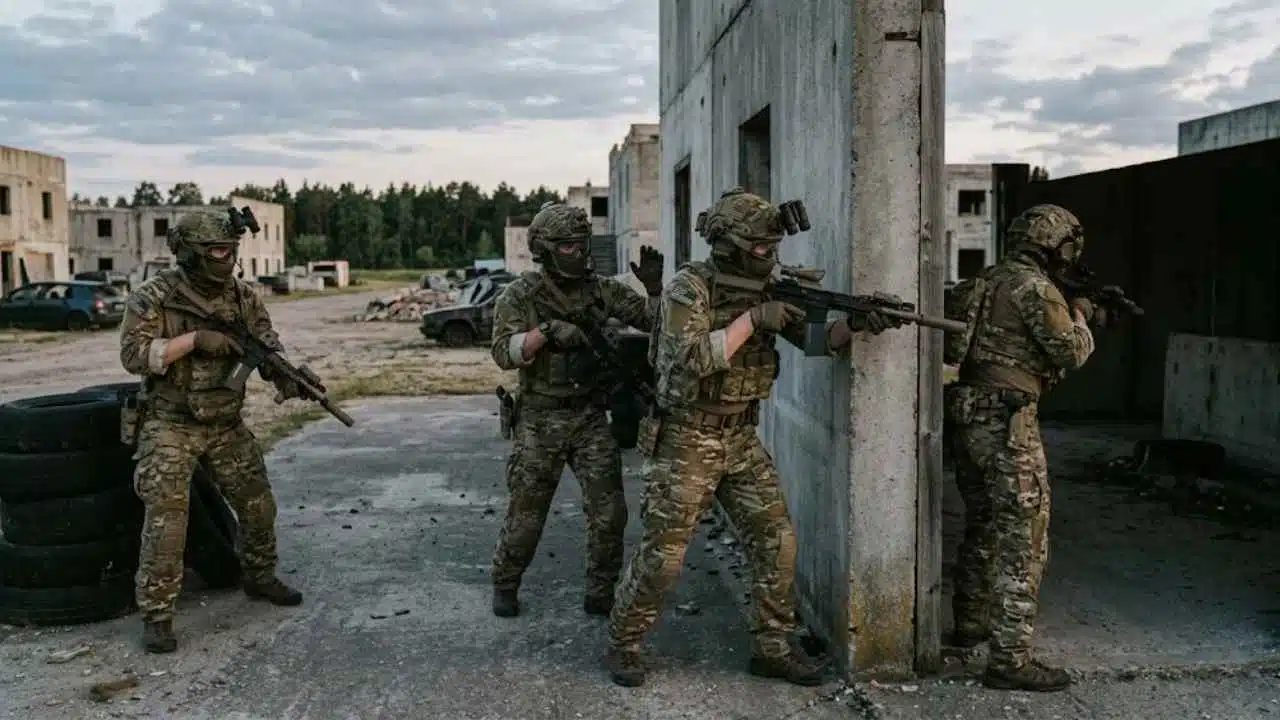
Airsoft has changed dramatically over the past two decades. While some people still associate it with backyard games and casual recreation, today’s airsoft community increasingly consists of military simulation enthusiasts, firearms hobbyists, and people looking for affordable ways to reinforce tactical skills. As equipment has become more realistic and gameplay has grown more sophisticated, airsoft has evolved into an activity that appeals to those who appreciate discipline, strategy, and realistic training environments.
For many participants, the attraction is not simply shooting plastic projectiles. It is the opportunity to practice decision-making, movement, communication, and weapon handling in dynamic scenarios that would be difficult or expensive to replicate with live firearms. That shift has helped airsoft earn a place alongside other skill-based hobbies that blend recreation with practical learning.
Realistic Equipment Creates a Better Training Experience
One of the biggest reasons airsoft continues to grow among tactical enthusiasts is the realism of modern equipment. Many airsoft platforms closely mirror the dimensions, controls, weight distribution, and handling characteristics of their real-world counterparts. This allows users to build familiarity with equipment in a way that feels authentic.
A quality BB gun with features like adjustable sights, realistic ergonomics, smoothbore barrels can provide a training experience that feels remarkably close to handling a firearm. Users can practice presentations, reloads, transitions, target acquisition, and movement drills without the cost associated with live ammunition.
For firearm collectors, the appeal goes even further. Airsoft replicas often recreate iconic military and tactical platforms with impressive attention to detail. Collectors enjoy owning and operating versions of firearms that may be difficult, expensive, or impossible to acquire in their original form. The result is a hobby that combines historical appreciation, technical interest, and practical skill development.
Military Simulation Rewards Teamwork and Planning
Competitive MilSim (military simulation) has become one of the fastest-growing segments of the airsoft community. These events often involve large teams, extensive objectives, realistic command structures, and missions that can last for several hours or even multiple days.
Success rarely comes from individual performance alone. Teams must coordinate movement, gather intelligence, manage resources, and communicate effectively under pressure. Participants learn quickly that charging forward without a plan usually ends badly.
Many players enjoy the challenge because it rewards preparation and discipline rather than raw athletic ability. A well-organized team with a clear strategy frequently outperforms opponents who rely solely on speed or aggression. This emphasis on teamwork creates a unique environment where leadership, communication, and decision-making become just as important as marksmanship.
Strategy Matters as Much as Accuracy
Airsoft appeals to people who enjoy thinking several moves ahead. A successful player constantly evaluates terrain, cover, sight lines, and enemy movement while adapting to changing conditions.
In that sense, airsoft shares characteristics with many competitive activities. Tactical positioning, resource management, and coordinated teamwork often determine outcomes like other strategy games, even though the action unfolds in real time.
Players must balance risk and reward. Advancing aggressively may secure an objective, but it can also expose a team to counterattacks. Holding a strong defensive position may preserve resources, yet it can allow opponents to control key areas of the field. These decisions create a level of mental engagement that keeps experienced participants coming back. Every match presents a new puzzle to solve.
Cost-Effective Tactical Practice Has Expanded the Audience
The rising cost of ammunition and range time has encouraged many firearm owners to explore supplemental training methods. Airsoft offers an opportunity to practice numerous skills at a fraction of the cost associated with live-fire sessions.
Movement drills, room clearing exercises, communication techniques, and force-on-force scenarios can all be conducted using airsoft equipment. While airsoft cannot replace live-fire training, many participants view it as a valuable complement to traditional practice.
The ability to train repeatedly without consuming expensive ammunition makes airsoft particularly attractive to people who want to sharpen tactical fundamentals between range visits. As a result, the hobby increasingly attracts individuals who value skill development as much as recreation.
Safety Culture Remains Central to the Community
One misconception about airsoft is that it encourages careless behavior. In reality, experienced players and event organizers typically place enormous emphasis on safety.
Responsible participants treat every replica with respect. Muzzle awareness, trigger discipline, eye protection requirements, and strict field rules are standard expectations at reputable events. Players who consistently disregard safety practices often find themselves removed from games or excluded from organized groups.
That culture appeals to many tactical enthusiasts because it mirrors the mindset taught in responsible firearms training. Participants learn that safe handling habits should remain consistent regardless of whether the equipment uses compressed air, gas, or live ammunition.
Airsoft has grown far beyond its recreational roots. For tactical enthusiasts, MilSim competitors, collectors, and skill-focused hobbyists, it offers a realistic environment where strategy, teamwork, and weapon handling skills can be developed in an engaging and affordable way. The combination of realism, discipline, and problem-solving continues to attract participants who value much more than simply pulling a trigger.