Lunar Mission Success Rate: 62 Out of 111 According to NASA Database

Lunar Mission Success Rate

According to the NASA database on Moon missions, of the 111 lunar missions over the past seven decades, 62 were successful, 41 failed, and eight had some degree of success.

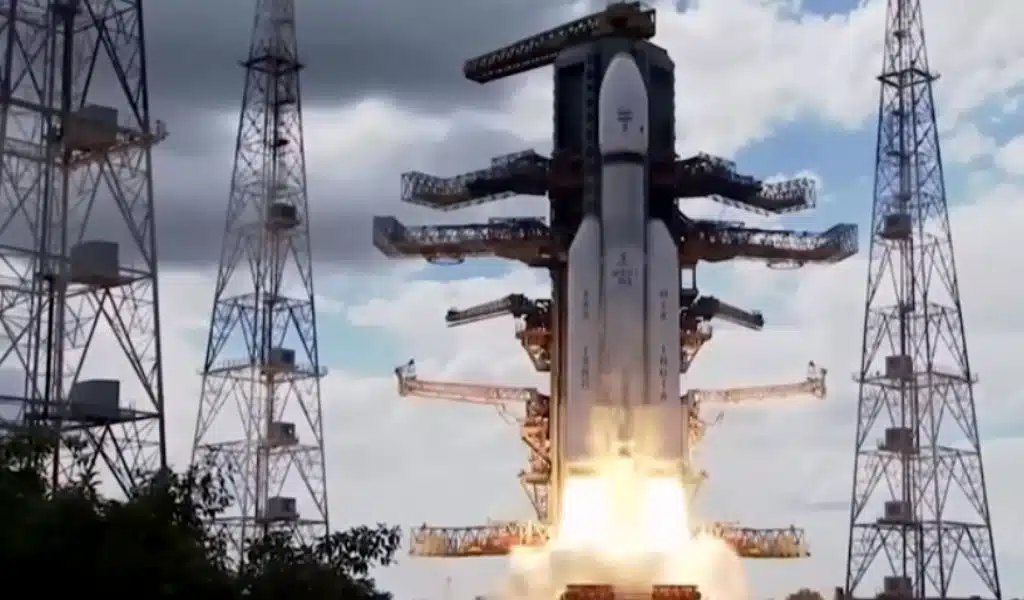
Chandrayaan-3, India’s third mission to the Moon, was launched on July 14 with the goal of making a soft landing on the sole natural satellite of the Earth. After the United States, China, and the Soviet Union, India would become the fourth nation to accomplish exceptional accomplishments with a successful landing.

The technically difficult soft landing on the lunar surface, which Chandrayaan-2 was unable to do, has been scheduled for 5.47 p.m. on August 23, according to the Indian Space Research Organisation (ISRO).

According to G. Madhavan Nair, a former chairman of ISRO, the success percentage of lunar missions is only about 50% due to uncertainties that arise when rockets leave Earth’s gravitational field.

“The Sun has a significant impact on other planets. In space, there are numerous radiation situations, which makes some machinery or components vulnerable to breakdown. We accurately reached the moon’s orbit in both of India’s Chandrayaan missions (Chandrayaan 1 and 2), Mr. Nair said on Friday, according to PTI.

According to the statistics, India, the United States, the USSR (now Russia), Japan, the European Union, China, and Israel have all launched various lunar missions between 1958 and 2023, including orbiters, landers, and flybys (orbiting the Moon, landing on the Moon, and passing by the Moon).

The United States launched Pioneer 0, the first lunar mission, on August 17, 1958, but it was a failure. Both the USSR and the US launched six further missions that year, all of which were unsuccessful.

On January 2, 1959, the USSR launched Luna 1, which had some success. Furthermore, it was the first “Moon flyby” mission.

The first mission to photograph the Moon up close was the American Ranger 7 mission, which was launched in July 1964.

Luna 9, launched by the USSR in January 1966, made the first soft lunar landing and the first lunar surface images. A comparable mission known as Surveyor-1 was successfully launched by the United States five months later, in May 1966.

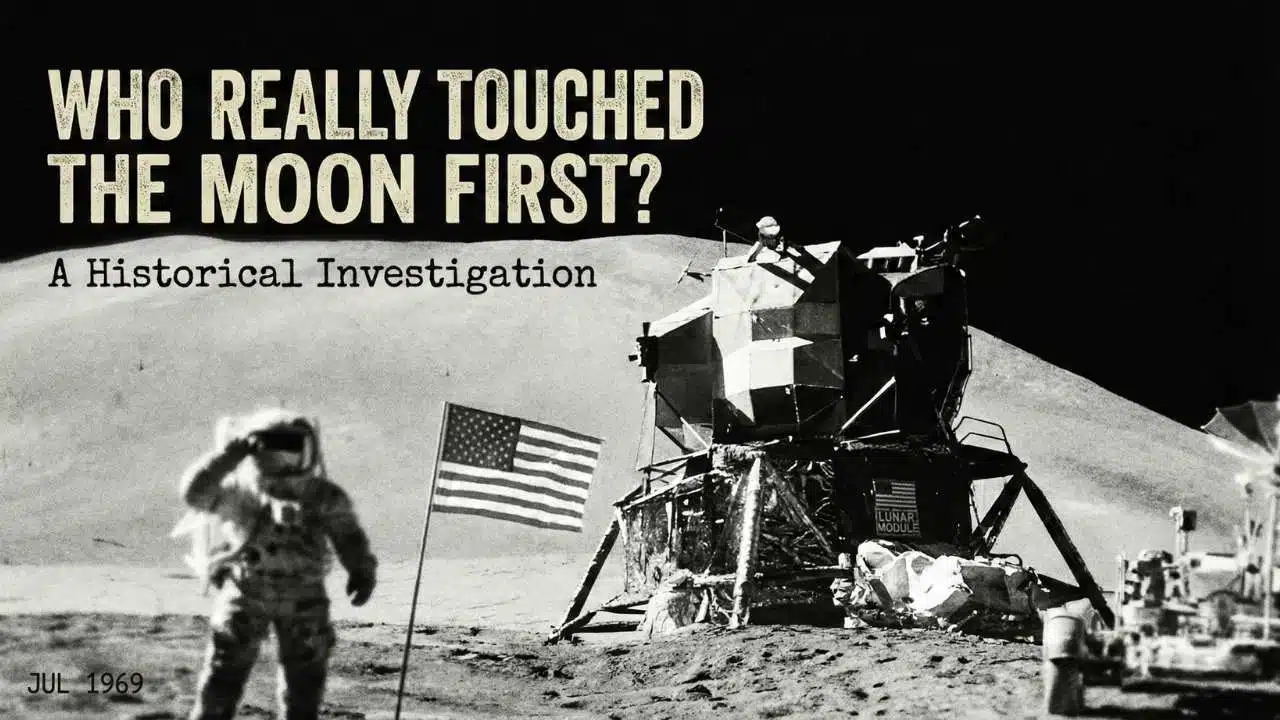
The historic mission known as Apollo 11 that took place in July 1969 was the one that allowed mankind to set foot on the moon for the first time. Neil Amstrong served as the mission’s commander.

Only the US and the USSR launched Moon missions between 1958 and 1979. 90 such space voyages have been launched by the two nations in these 21 years.

In the decade that followed, from 1980 to 1989, there were no lunar missions. Late additions included Japan, the European Union, China, India, and Israel.

In January 1990, Japan launched the Hiten orbiter mission. Additionally, this was Japan’s first Moon expedition. After that, Japan launched Selene, another orbiter mission, on September 2007.

From 2000 to 2009, there were six lunar missions: Europe (Smart-1), Japan (Selene), China (Chang’e 1), India (Chandrayaan-1), and the United States (LCCROSS and Lunar Reconnaissance Orbiter).

Together, the United States, Japan, India, the European Union, China, and Israel have launched 21 lunar missions since 1990.


Subscribe to Our Newsletter

Related Articles

Top Trending

Best AI Meeting Assistants
9 Best AI Meeting Assistants and Note-Takers for a Consistent Workflow
Flowchart on a monitor showing AI task automation architecture with business data analysis and human approval checkpoint.
How AI Task Automation Actually Works Behind the Scenes
cloud service models
IaaS vs PaaS vs SaaS: The Cloud Service Models Explained
Pomodoro Technique
What Is the Pomodoro Technique and Why It Works: All You Need to Know
What Does CAAS Stand for
What Does CAAS Stand for? The Rise of CAAS in The Digital Age

Technology & AI

Best AI Meeting Assistants
9 Best AI Meeting Assistants and Note-Takers for a Consistent Workflow
Flowchart on a monitor showing AI task automation architecture with business data analysis and human approval checkpoint.
How AI Task Automation Actually Works Behind the Scenes
cloud service models
IaaS vs PaaS vs SaaS: The Cloud Service Models Explained
What Does CAAS Stand for
What Does CAAS Stand for? The Rise of CAAS in The Digital Age
AI productivity agents managing email, calendars, project tasks, documents, and approval workflows through a connected workplace dashboard.
AI Productivity Agents: What They Are and How They Work

GAMING

Ways to Reduce Game Development Costs
12 Ways Studios Cut Game Development Costs
NFT game development cost
How Much Does NFT Game Development Cost? A Realistic Budget Breakdown
Reasons Why You No Longer Need the Best Roblox AI Scripter
Forget Best Roblox AI Scripter: 10 Reasons Why You No Longer Need It
Blockchain Platforms for Game Development
The 9 Best Blockchain Platforms for Game Development
Free Game Engines for Beginners
Top 10 Best Free Game Engines for Beginners

Business & Marketing

How To Start A Digital Marketing Consultancy From Scratch
Ecommerce Data Analysis with Claude
The Complete Guide to Ecommerce Data Analysis with Claude
SaaS valuation decline
Why $50B SaaS Valuations Won't Survive: 10 Top Reasons Explained
Enterprise AI Agent Strategy
The Age of AI Agents: How to Build an Enterprise AI Agent Strategy
Side Hustle Projects
Top 10 Side Hustle Projects That Will Generate MRR In 2027

EdTech & E-Learning

How AI Tutoring Systems Work
How AI Tutoring Systems Work And Whether They Actually Help
Everyday counting practice for kids as a child counts forks while setting the table with a parent.
9 Everyday Moments That Double as Counting Practice for Kids
How Gamification In Education Works
How Gamification In Education Works: The Motivation Science Explained
Microlearning
What Is Microlearning And When Is It Actually Effective?
Learning Management System
What Is A Learning Management System And How To Choose One

Software & Apps

Best AI Meeting Assistants
9 Best AI Meeting Assistants and Note-Takers for a Consistent Workflow
cloud service models
IaaS vs PaaS vs SaaS: The Cloud Service Models Explained
What Does CAAS Stand for
What Does CAAS Stand for? The Rise of CAAS in The Digital Age
chrome extensions for productivity
12 Best Chrome Extensions for Productivity in 2026: Work Smarter
How to digital declutter your tech using a tidy laptop, minimal phone screen, and organized desk for a calmer, distraction free workspace.
How to Digital Declutter Your Tech Without Going Offline