


The Software as a Service (SaaS) industry has revolutionized how businesses operate and individuals access technology. By offering cloud-based solutions that are scalable, cost-effective, and user-friendly, SaaS has become a cornerstone of modern industries.
However, staying ahead in this dynamic field requires businesses to keep up with innovative SaaS trends that shape the future of the industry.
In this article, we explore the most transformative SaaS trends that are redefining technology and business practices. From AI-powered automation to sustainability in SaaS, these trends highlight where the industry is heading and how businesses can adapt to thrive.
What Are SaaS Trends and Why Do They Matter?
The Evolution of SaaS
The SaaS model started as a simple way to deliver software without the need for physical installations or licenses. Today, it encompasses a wide range of applications, from customer relationship management (CRM) systems to advanced analytics and collaborative tools.
SaaS has also expanded to include specialized, niche solutions for specific industries and use cases, marking a significant shift in how businesses leverage software.
Key milestones in the SaaS industry include:
- The rise of cloud computing in the early 2000s.
- Adoption of subscription-based pricing models.
- Integration of cutting-edge technologies like artificial intelligence (AI) and blockchain.
- The advent of mobile-first and vertical SaaS solutions.
Importance of Staying Updated on SaaS Trends
For businesses, keeping up with innovative SaaS trends is essential for:
- Staying competitive: Adopting the latest SaaS innovations ensures companies remain at the forefront of their industries.
- Enhancing customer satisfaction: SaaS solutions tailored to user needs improve customer experience and retention.
- Driving operational efficiency: Leveraging trends like automation and data analytics reduces costs and boosts productivity.
12 Key SaaS Trends Revolutionizing the Industry

1. AI-Powered Automation in SaaS
Artificial Intelligence (AI) is transforming the SaaS landscape by automating routine tasks and enabling smarter decision-making. AI’s ability to process vast amounts of data and deliver actionable insights is unlocking new levels of efficiency for businesses.
Applications of AI in SaaS:
- Customer Support: AI chatbots and virtual assistants provide 24/7 support, reducing response times.
- Workflow Automation: Automating repetitive tasks like data entry or email responses saves time and resources.
- Predictive Analytics: AI helps businesses forecast trends, enhancing planning and strategy.
| Key Benefits of AI in SaaS | Details |
| Operational Efficiency | Automates repetitive tasks, freeing resources. |
| Enhanced Customer Experience | Personalized support through AI-driven tools. |
| Cost Reduction | Minimizes manual labor costs. |
Example: Salesforce Einstein is a prominent AI-powered SaaS platform that enables businesses to analyze customer interactions and predict behavior patterns, boosting sales and marketing efforts.
2. Personalized SaaS Experiences
Today’s customers expect solutions tailored to their unique needs. Personalization in SaaS delivers targeted features and services, fostering deeper user engagement and satisfaction.
Examples of SaaS Personalization:
- Dynamic Dashboards: Adjusting dashboards to display relevant metrics for specific users.
- Adaptive Interfaces: Software that learns and adapts to user preferences.
- Customized Notifications: Alerts tailored to individual roles or goals.
| Personalization Features | Benefits |
| Tailored Dashboards | Increases user efficiency and relevance. |
| Adaptive Learning Algorithms | Enhances usability and customer satisfaction. |
| Custom Notifications | Improves engagement with relevant updates. |
Case Study: Netflix’s SaaS-based recommendation engine personalizes content for millions of users globally, driving higher viewer retention rates.
3. Vertical SaaS Solutions
Unlike horizontal SaaS platforms that serve multiple industries, vertical SaaS focuses on niche markets. This trend addresses the specific needs of industries, providing highly specialized tools and features.
Examples of Vertical SaaS:
- Healthcare: SaaS platforms tailored for patient data management and telemedicine.
- Fintech: Solutions designed for financial analytics and compliance.
- Real Estate: Tools for property management and virtual tours.
| Industry | Examples of Vertical SaaS | Benefits |
| Healthcare | HealthCloud, Teladoc | Streamlined patient management. |
| Fintech | Plaid, Stripe | Simplified financial transactions. |
| Real Estate | Zillow, Matterport | Enhanced property visualization. |
Why Vertical SaaS Matters:
- Offers industry-specific tools, leading to higher efficiency and better outcomes.
- Easier to implement and scale within a targeted niche.
4. Micro-SaaS Startups Gaining Momentum
Micro-SaaS businesses are small-scale, niche-focused startups that solve specific problems for users. These lean and agile platforms are often created by small teams or even solo entrepreneurs.
Why Micro-SaaS is Thriving:
- Lower operational costs.
- High potential for scalability within targeted markets.
- Faster adaptability to user feedback and needs.
| Micro-SaaS Advantages | Details |
| Lower Overheads | Operates with minimal resources. |
| Niche Focus | Targets specific, unmet user needs. |
| High Profit Margins | Generates revenue from a loyal user base. |
Example: Bannerbear, a Micro-SaaS platform, automates social media image generation, catering to marketers and small businesses.
5. Data-Driven SaaS Platforms
As businesses become more data-centric, SaaS solutions are evolving to integrate advanced analytics and business intelligence tools. This empowers companies to derive actionable insights and make data-driven decisions.
Real-World Use Cases:
- Predictive analytics for customer behavior.
- Real-time reporting for operational insights.
- Performance optimization through data tracking.
| Feature | Use Case |
| Predictive Analytics | Identifying sales trends and patterns. |
| Real-Time Reporting | Monitoring operational KPIs effectively. |
| Advanced Visualizations | Simplifying complex data for stakeholders. |
Case Study: Tableau, a leading SaaS analytics platform, enables businesses to create visual dashboards that simplify decision-making for non-technical users.
6. Enhanced Security and Compliance
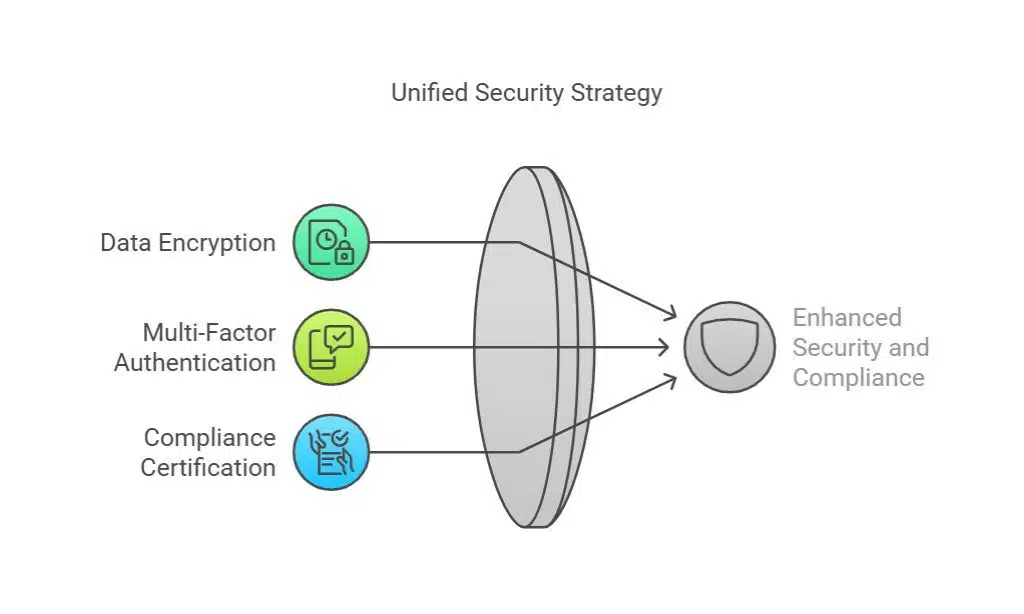
With increasing cybersecurity threats, SaaS providers are prioritizing robust security measures and compliance with regulations. Security has become a key differentiator for SaaS platforms, especially those handling sensitive data.
Key Focus Areas:
- Encryption and multi-factor authentication.
- Adherence to global standards like GDPR and HIPAA.
- Continuous monitoring and threat detection.
| Security Feature | Benefit |
| Data Encryption | Safeguards sensitive information. |
| Multi-Factor Authentication | Adds an extra layer of security. |
| Compliance Certification | Builds trust with clients and regulators. |
Example: Okta, a SaaS identity management platform, ensures secure access through advanced authentication protocols and compliance certifications.
7. SaaS-Enabled Remote Work Solutions
The rise of remote work has driven a massive demand for SaaS tools that enable seamless collaboration, communication, and productivity across geographically dispersed teams. This trend is shaping how businesses maintain continuity in a hybrid or fully remote work model.
Key SaaS Products for Remote Teams:
- Slack: Simplifies team communication with real-time messaging and integrations.
- Zoom: Facilitates video conferencing and virtual meetings.
- Asana: Streamlines task management and project tracking.
| SaaS Tool | Functionality | Benefits for Remote Teams |
| Slack | Real-time messaging and integrations | Enhances team collaboration. |
| Zoom | Video conferencing and webinars | Improves remote communication and engagement. |
| Asana | Task and project management | Ensures clarity in goals and deadlines. |
Example: During the pandemic, many organizations adopted Zoom as their primary communication tool, enabling millions to stay connected despite physical separation.
8. Blockchain Integration in SaaS
Blockchain is revolutionizing SaaS by enhancing transparency, security, and operational efficiency. As more businesses adopt decentralized technologies, blockchain’s role in SaaS continues to grow.
Benefits of Blockchain in SaaS:
- Enhanced Security: Immutable records reduce the risk of data breaches.
- Transparent Transactions: Smart contracts automate and secure agreements.
- Decentralized Storage: Improves data accessibility and reduces reliance on centralized servers.
| Blockchain Feature | Use Case | Benefit |
| Smart Contracts | Automating contract execution | Ensures accuracy and minimizes disputes. |
| Decentralized Ledgers | Secure record-keeping | Enhances transparency in transactions. |
| Tokenization | Enabling secure microtransactions | Streamlines payment systems in SaaS. |
Example: Storj, a blockchain-based SaaS solution, offers decentralized cloud storage, providing businesses with a secure and cost-effective alternative to traditional cloud providers.
9. Subscription-Based Scalability
Subscription-based models have redefined how businesses consume SaaS products. Offering flexible pricing and scalable solutions, this model is favored by startups and enterprises alike.
Key Features of Subscription-Based Models:
- Pay-as-you-go Pricing: Allows businesses to scale usage and costs based on their needs.
- Tiered Plans: Offers different levels of service to cater to diverse customer segments.
| Feature | Advantage |
| Customizable Plans | Aligns services with business requirements. |
| Predictable Revenue Streams | Helps providers forecast income accurately. |
| Reduced Upfront Costs | Makes SaaS accessible to smaller businesses. |
Example: Adobe Creative Cloud uses a subscription model, allowing users to access tools like Photoshop and Illustrator at an affordable monthly rate.
10. Mobile-First SaaS Platforms
As mobile usage surpasses desktop, SaaS providers are prioritizing mobile-friendly interfaces to ensure seamless access on the go.
Why Mobile Accessibility Matters:
- Expands accessibility to underserved regions.
- Supports remote work by enabling on-the-go productivity.
| Mobile-First Feature | User Benefit |
| Responsive Design | Ensures usability across devices. |
| Offline Access | Allows users to work without constant internet. |
| Push Notifications | Keeps users updated in real-time. |
Example: Canva, a SaaS graphic design platform, offers a mobile app that empowers users to create and edit designs directly from their smartphones.
11. Low-Code and No-Code SaaS Platforms
Low-code and no-code platforms are democratizing software development, allowing users without technical expertise to create custom solutions.
Popular Platforms:
- Zapier: Connects apps and automates workflows.
- Airtable: Combines spreadsheet functionality with database features.
| Platform | Use Case | Benefit |
| Zapier | Workflow automation | Saves time by eliminating manual tasks. |
| Airtable | Data management | Simplifies complex database operations. |
| Bubble | App development | Empowers non-developers to build apps. |
Example: A small business used Airtable to create a custom CRM system, significantly improving its operational efficiency without hiring a developer.
12. Sustainability in SaaS
SaaS companies are increasingly adopting eco-friendly practices to align with global sustainability goals. This trend appeals to environmentally conscious consumers and helps reduce the industry’s carbon footprint.
Examples of Sustainability in SaaS:
- Green Hosting Solutions: Utilizing renewable energy sources for data centers.
- Optimized Resource Usage: Designing software to consume less energy.
| Sustainability Initiative | Impact |
| Renewable Energy Data Centers | Reduces carbon emissions. |
| Virtual Collaboration Tools | Minimizes travel-related environmental impact. |
| Resource Optimization Algorithms | Lowers energy consumption during usage. |
Example: Google Cloud is carbon-neutral and has committed to running entirely on renewable energy by 2030, setting a benchmark for sustainability in SaaS.
Takeaway
The future of SaaS is brimming with opportunities, driven by technological advancements and evolving customer needs. Businesses that align with these innovative SaaS trends will not only thrive in competitive markets but also redefine customer experiences.
Whether it’s through AI-powered automation, personalized solutions, or sustainability initiatives, SaaS continues to pave the way for innovation and growth.
By staying informed about these trends, businesses can make strategic decisions that drive success in an ever-evolving digital landscape.

























