
Spring arrives, and so does the sneezing. Does it feel like your eyes water and your nose runs the moment you step outside? In my clinic, I see so many patients who spend months feeling foggy and tired. You are definitely not alone in this fight. Here is a surprising update for you. A January 2026 report from the CDC found that 25.2% of US adults now have a diagnosed seasonal allergy.
That means over 80 million people are dealing with the exact same pollen and weather triggers, turning their favorite season into a struggle.
I am going to walk you through a complete how-to manage seasonal allergies: clinical guide. We will cover the exact steps I recommend to spot symptoms early and find treatments that actually work. Grab a cup of coffee, and let’s go through it together.
Understanding Seasonal Allergies
Your immune system overreacts to harmless substances in the air during specific times of year. That overreaction is exactly what we call seasonal allergies. Pollen from trees, grasses, and weeds floats through the air and triggers your body to release chemicals. This causes those annoying symptoms like sneezing and congestion.
What are seasonal allergies?
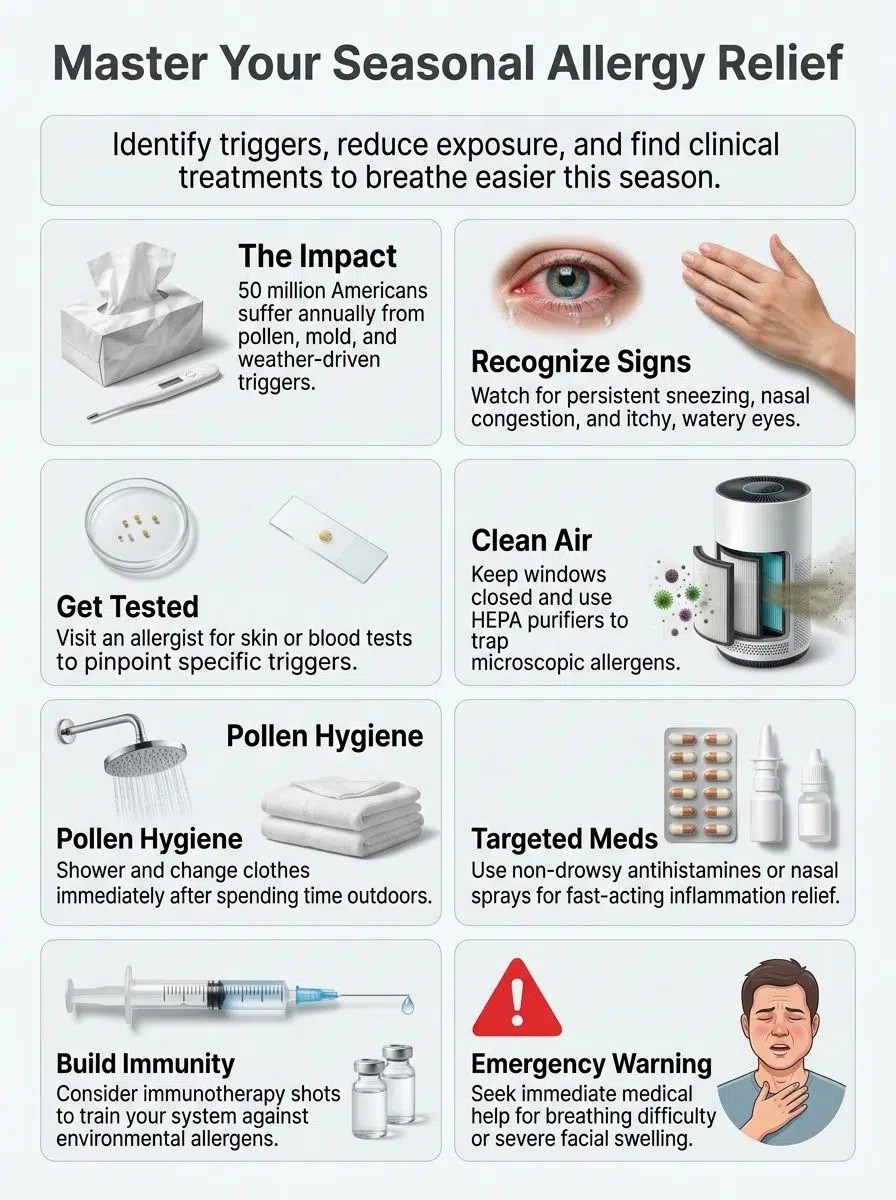
Seasonal allergies strike tens of millions of people each year, especially during spring and fall when pollen counts spike. Your immune system treats harmless substances like pollen, mold spores, or dust mites as dangerous invaders. This overreaction triggers the release of histamine. That chemical causes the classic hay fever symptoms you know all too well.
Pollen serves as the primary culprit, though mold and weather changes can also spark reactions. Think of it this way: your body’s defense system gets a bit too eager and launches a false alarm attack.
Seasonal allergies differ from year-round allergies because they follow nature’s calendar. Spring brings tree pollen, summer brings grass pollen, and fall brings ragweed pollen. A single ragweed plant can produce up to a billion pollen grains, and wind can carry them for hundreds of miles.
According to the CDC’s most recent 2026 data, seasonal allergies affect roughly one in four adults in the US, making them a leading chronic respiratory condition.
Common triggers: pollen, mold, and weather changes
Pollen floats through the air during spring and fall, triggering allergic rhinitis. Mold spores and sudden weather shifts can make your symptoms much better or far worse, depending on conditions.
- Pollen counts spike during specific times of year. Trees release pollen in spring, grasses in early summer, and weeds in late summer and fall. Tracking local forecasts helps you plan wisely.
- Mold grows in damp environments like basements and outdoor areas with poor drainage. Indoor humidity levels above 50 percent create ideal conditions for mold growth. Running a dehumidifier matters greatly here.
- Temperature changes affect how your body reacts to environmental allergens. Cold air can irritate your nasal passages and make congestion feel worse.
- Wind carries pollen and mold spores across greater distances. This makes symptoms more severe on breezy days. Rain temporarily clears pollen from the air, giving you brief relief.
- Weather patterns shift throughout the year. Unseasonably warm winters can trigger early pollen release from trees, starting allergy season weeks ahead of schedule.
Recognizing the Symptoms of Seasonal Allergies
Your body sends clear signals when seasonal allergies strike. These signs show up during specific times of year and range from mildly annoying to completely exhausting.
Sneezing and nasal congestion
Sneezing and nasal congestion rank among the most bothersome symptoms. They hit hard when pollen grains invade your nasal passages, triggering intense inflammation. This inflammation makes your nose swell and produces excess mucus. Sneezing becomes your body’s desperate attempt to expel these irritants.
According to data from the Allergy and Asthma Network, allergic rhinitis is responsible for an average of 3.6 missed work days yearly per affected person. It is not just a minor inconvenience.

Nasal congestion forces many people to mouth-breathe at night. This dries out the throat and destroys sleep quality, leading to daytime fatigue.
Many people reach for oral antihistamines or a nasal spray to combat the congestion. Others try saline solution irrigation to physically flush out pollen directly. Treating sneezing and nasal congestion early prevents these symptoms from worsening into painful sinus infections.
Itchy, watery eyes
Your nose and throat are not the only parts that suffer. Pollen lands directly on your eye surface, leaving your eyes itchy, watery, and red. Tears stream down your face, but they do not bring relief. Your eyes feel gritty and sensitive to light, making computer work feel nearly impossible.
For immediate relief, I often suggest an over-the-counter antihistamine eye drop containing Ketotifen. Products like Zaditor block histamine right at the source and typically stop the itching within 15 minutes.
Cold compresses also soothe irritated eyes and reduce swelling around the lids. Wearing wraparound sunglasses outside acts as a great physical barrier against floating pollen.
Coughing and throat irritation
Pollen particles irritate your throat lining when you breathe them in. This triggers a dry cough that just will not quit.
Hay fever causes your body to produce extra mucus, which drips down the back of your throat. This postnasal drip leads to constant coughing, especially at night when you lie flat in bed.
Treating the cough starts with managing the allergic rhinitis itself. You can also soothe the irritation directly.
- Stay hydrated: Drinking extra water thins out thick mucus and prevents it from pooling in your throat.
- Use local honey: A spoonful of honey coats a scratchy throat and reduces the urge to cough.
- Try saline sprays: Keeping your nasal passages moist prevents the intense dryness that triggers a throat tickle.
- Elevate your head: Sleeping with an extra pillow stops postnasal drip from aggravating your airway at night.
Diagnosing Seasonal Allergies
A doctor can run specific tests to figure out your exact triggers. Getting an official diagnosis opens the door to a treatment plan that actually works.
When to see an allergist
You should schedule an appointment with an allergist if over-the-counter medications fail to control your hay fever. The same applies if your allergy symptoms last more than two weeks.
If severe nasal congestion disrupts your sleep, it is time to seek professional help. Many clinics now offer telehealth visits for an initial consultation, making it easier than ever to get expert advice.
An allergist specializes in diagnosing allergic rhinitis. They offer prescription allergy treatments and advanced relief strategies that go far beyond what you will find on pharmacy shelves.
Allergy testing methods
Allergists use several testing methods to pinpoint exactly what triggers your seasonal allergies. These tests provide the roadmap for your relief plan.
- Skin prick testing stands as the most common method. A technician pricks your skin with tiny needles carrying small amounts of different allergens. Small red bumps appear within 20 minutes if you have an allergy.
- Intradermal testing goes deeper by injecting allergen extracts just below your skin’s surface. Doctors use this method when skin prick results seem unclear.
- Specific IgE blood tests measure antibody levels in your blood. Labs analyze your sample to detect immunoglobulin E antibodies against specific triggers.
- Component-resolved diagnostic testing is an advanced blood test that breaks down allergens into individual proteins. This newer method helps doctors predict how severe your allergic reactions might become.
How To Manage Seasonal Allergies: Clinical Guide to Effective Strategies
You can take real action to cut down on allergens that trigger your symptoms. Smart planning makes a huge difference in how you feel.
Reduce exposure to allergens
Cutting down on allergen exposure forms the foundation of seasonal allergy management. Simple daily habits can dramatically improve your quality of life.
- Keep your windows closed during high pollen seasons. Air conditioning filters indoor air and prevents outdoor allergens from entering your home.
- Change your clothes immediately after spending time outside. Wash these items in hot water to kill any lingering allergens.
- Shower and wash your hair before bed. This simple habit prevents you from transferring pollen to your pillow and breathing it in all night.
- Use a vacuum equipped with a HEPA filter twice weekly. Standard vacuums can actually blow microscopic allergens right back into the room.
- Wipe down your pets with a damp cloth after they come inside. Animals carry massive amounts of pollen on their fur.
Monitor pollen counts and plan activities accordingly
Pollen counts shift dramatically throughout the day. Tracking these levels helps you stay one step ahead of hay fever symptoms.
- Check pollen forecasts every morning before you head outside. Plant pollen release typically peaks between 5 AM and 10 AM.
- Use dedicated tracking tools like the Pollen.com app or the Best Life allergy tracker. These apps give you accurate, localized information about environmental allergens.
- Plan outdoor exercise for late afternoon or evening hours when pollen counts drop significantly.
- Track your personal symptom patterns alongside pollen counts to identify which allergens trigger your allergic rhinitis the most.
Keep indoor air clean with air purifiers
Controlling what happens inside your home matters just as much as tracking outdoor pollen. Air purifiers work hard to trap pollen and mold spores that sneak indoors.
You need a device with a True HEPA filter, which captures 99.97% of particles down to 0.3 microns. Top-rated models like the Coway Airmega 400S or the IQAir HealthPro Plus are excellent for filtering large living spaces efficiently.
Your home’s HVAC system also plays a massive role in air quality. Upgrading your furnace filter is a quick win.
| Filter Type | Particle Capture Rate | Best For |
|---|---|---|
| Basic Fiberglass (MERV 1-4) | Only captures large dust and lint. | Protecting the HVAC motor, not your lungs. Poor for allergies. |
| Pleated Filter (MERV 8-13) | Removes up to 85% of airborne particles. | Standard allergy relief. MERV 13 is the EPA recommendation for homes. |
| High-Efficiency (MERV 14-16) | Captures particles as small as 0.3 microns. | Severe seasonal allergies. May require HVAC system modifications. |
Treatment Options
Your doctor can recommend several powerful treatments that work fast. Let’s look at the best ways to stop allergy symptoms in their tracks.
Over-the-counter medications
Over-the-counter allergy medications provide strong symptom relief. Most people choose these options first before calling their doctor.
| Medication Type | How It Works | Common Brands | Best For | Timing Tips |
|---|---|---|---|---|
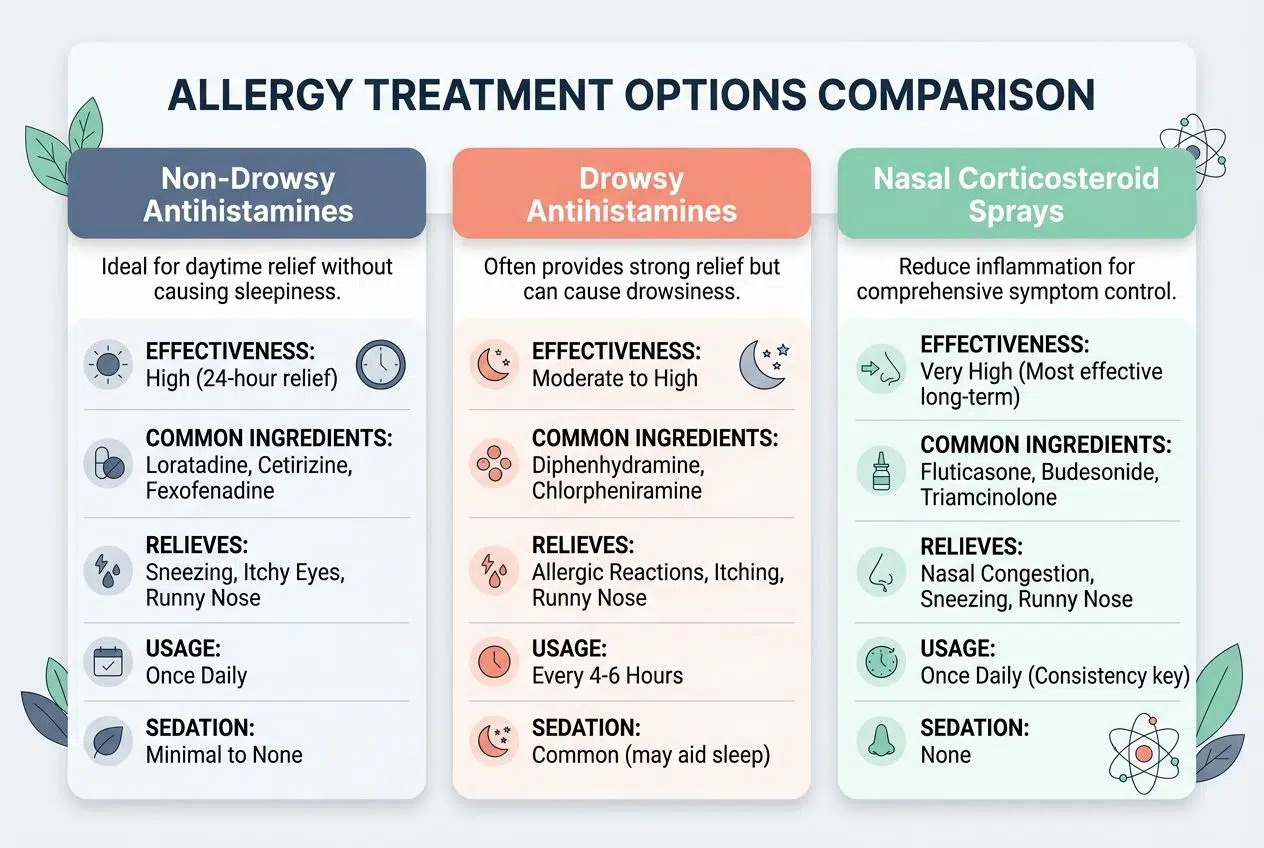
| Antihistamines (Non-Drowsy) | Blocks histamine release to stop itching, sneezing, and hives. | Cetirizine (Zyrtec), Fexofenadine (Allegra), Loratadine (Claritin) | Daily maintenance for mild to moderate symptoms | Take once daily in the morning. Works best if taken before pollen season starts. |
| Antihistamines (Drowsy) | Older generation antihistamines that cross the blood-brain barrier. | Diphenhydramine (Benadryl) | Severe itching or nighttime relief when sleep is needed | Take at night before bed. Avoid driving. |
| Nasal Corticosteroid Sprays | Reduces inflammation in the nasal passages and blocks the immune response. | Fluticasone (Flonase), Triamcinolone (Nasacort) | Moderate to severe congestion and inflammation | Start spraying 2 weeks before allergy season for best results. Use daily. |
Most people find that non-drowsy antihistamines work best for daytime use. Nasal corticosteroid sprays bring strong anti-inflammatory action exactly where you need it.
Prescription allergy treatments
When over-the-counter options fail, prescription medications step in. Your doctor can prescribe stronger formulations for stubborn allergies.
| Prescription Treatment Type | How It Works | Best For |
|---|---|---|
| Prescription Antihistamines | Block histamine receptors with higher doses than OTC versions. | People who do not respond well to standard antihistamines. |
| Leukotriene Receptor Antagonists | Block leukotrienes, chemicals released during allergic reactions. Montelukast (Singulair) is a common option. | Allergies combined with asthma symptoms. |
Your allergist determines which prescription works best for your specific situation. They consider your symptom severity and medical history.
Nasal irrigation and rinsing
Saline solution offers a simple, drug-free approach to clear congestion. It physically removes allergens straight from your nose.
- Nasal irrigation flushes out pollen and mold from your nasal passages. A 2021 clinical trial published in medRxiv found that large-volume, low positive pressure rinses provide massive relief for respiratory issues.
- Squeeze bottles, like the NeilMed Sinus Rinse, give you excellent control over water pressure. They are highly effective for daily sinus congestion relief.
- Pressure-based systems, like the Naväge device, use light suction to pull saline through the nasal cavity. Many patients find this less messy than traditional neti pots.
- You must use distilled or boiled water mixed with salt to create your saline solution. Tap water can contain dangerous bacteria.
- Saline irrigation complements other allergy treatment options like nasal spray medications perfectly.
Immunotherapy (allergy shots)
Immunotherapy offers a powerful way to fight seasonal allergies at their source. Your allergist exposes you to small amounts of allergens over time, building up your tolerance.
Studies show that immunotherapy reduces allergy symptoms by 60 to 90 percent for many patients. You get to choose between two main delivery methods.
- Subcutaneous Immunotherapy (Allergy Shots): You receive regular injections at the doctor’s office. This is the most proven method for long-term relief from pollen and mold.
- Sublingual Immunotherapy (Allergy Drops/Tablets): You dissolve a tablet under your tongue at home daily. FDA-approved options like Odactra target specific allergens like dust mites or ragweed without the need for needles.
Alternative and Holistic Remedies
Some people turn to natural therapies to calm their allergy symptoms. These methods work alongside your main treatment plan to give you extra relief.
Herbal supplements
Many people find success with herbal supplements. Quercetin acts as a natural antihistamine that blocks allergy symptoms before they start.
Butterbur extract is another standout option. A recent review noted that the specific Ze 339 extract of Butterbur successfully blocks leukotriene, working similarly to some prescription allergy drugs.
If you try Butterbur, you absolutely must purchase a product labeled “PA-free.” Unprocessed butterbur contains pyrrolizidine alkaloids, which can cause severe liver damage.
Acupuncture and other therapies
Acupuncture places thin needles at specific points on your body to balance energy flow. A 2022 clinical trial showed acupuncture can significantly improve scores on the Sino-Nasal Outcome Test for allergy sufferers.
You can also support your immune system through simple lifestyle adjustments.
- Stress reduction: High stress increases histamine production. Yoga and meditation help calm your immune response.
- Acupressure: Applying gentle pressure to the LI20 points on either side of your nostrils can provide temporary relief from sinus congestion.
- Massage therapy: Facial massage improves lymphatic drainage and reduces sinus pressure safely and effectively.
When to Seek Professional Help
Sometimes your symptoms get worse, and basic treatments stop working. That is exactly when you need a personalized plan from an expert.
Identifying severe symptoms
Seasonal allergies can turn into serious health issues if you ignore warning signs. Knowing when to act keeps you safe.
- Severe difficulty breathing or shortness of breath signals a medical emergency. Call 911 right away.
- Anaphylaxis causes rapid swelling in your throat, lips, or tongue. This life-threatening reaction requires an immediate injection of Epinephrine and emergency care.
- Wheezing or whistling sounds when you breathe indicate your airways are constricting. Your current medication needs a serious adjustment.
- Severe headaches paired with thick nasal discharge could mean acute sinusitis has developed from your allergies.
- Persistent symptoms lasting more than two weeks despite using a nasal spray warrant a visit to your allergist.
Long-term management plans with a specialist
Your allergist crafts a long-term management plan that fits your life. This plan tracks your symptoms over months and years, spotting patterns you might easily miss.
Immunotherapy often plays a starring role in long-term allergy treatment plans. This approach takes time, usually requiring a commitment of three to five years, but the payoff is immense.
Your specialist fine-tunes your antihistamines and monitors your progress closely. A solid plan means you spend less time sneezing and more time enjoying outdoor activities.
Wrapping Up
Seasonal allergies hit hard, but you have the clinical tools to fight back. From antihistamines and saline irrigation to advanced immunotherapy, these strategies dramatically improve your daily life. Talk to an allergist about what fits your situation best. They can test you for specific triggers and adjust your approach as the weather shifts.
Take action today by tracking local pollen levels and upgrading your home’s air filters. Keep your indoor air clean and use your How To Manage Seasonal Allergies: Clinical Guide to stay prepared.
Hay fever and allergic rhinitis do not have to control your favorite seasons. With the right allergy management plan in place, you can finally breathe easy and enjoy the outdoors again.
Frequently Asked Questions (FAQs) on Seasonal Allergies
1. What are the main signs of seasonal allergies, and how do I spot them early?
If your nose starts running every spring or fall, you might have seasonal allergies. More than 50 million Americans experience seasonal allergies each year, with sneezing fits, itchy eyes, and a scratchy throat showing up around the same time annually.
2. How can I manage my allergy symptoms at home without always reaching for medicine?
Keep windows closed when pollen counts soar, change clothes after being outside, and shower before bed to avoid dragging allergens inside. A saline nasal rinse can help clear stuffy noses naturally without medication.
3. When should I see a healthcare provider about my seasonal allergies?
If over-the-counter antihistamines barely touch your symptoms after one week or if breathing feels tough, call your doctor right away. Persistent sinus pain or wheezing means it’s time for expert advice.
4. Are there long-term ways to prevent severe allergy flare-ups each season?
Yes, start tracking local pollen forecasts and begin taking prescribed meds before peak season hits. Allergy immunotherapy can reduce symptoms by 60 to 80% over time, helping you build tolerance if other treatments aren’t cutting it.