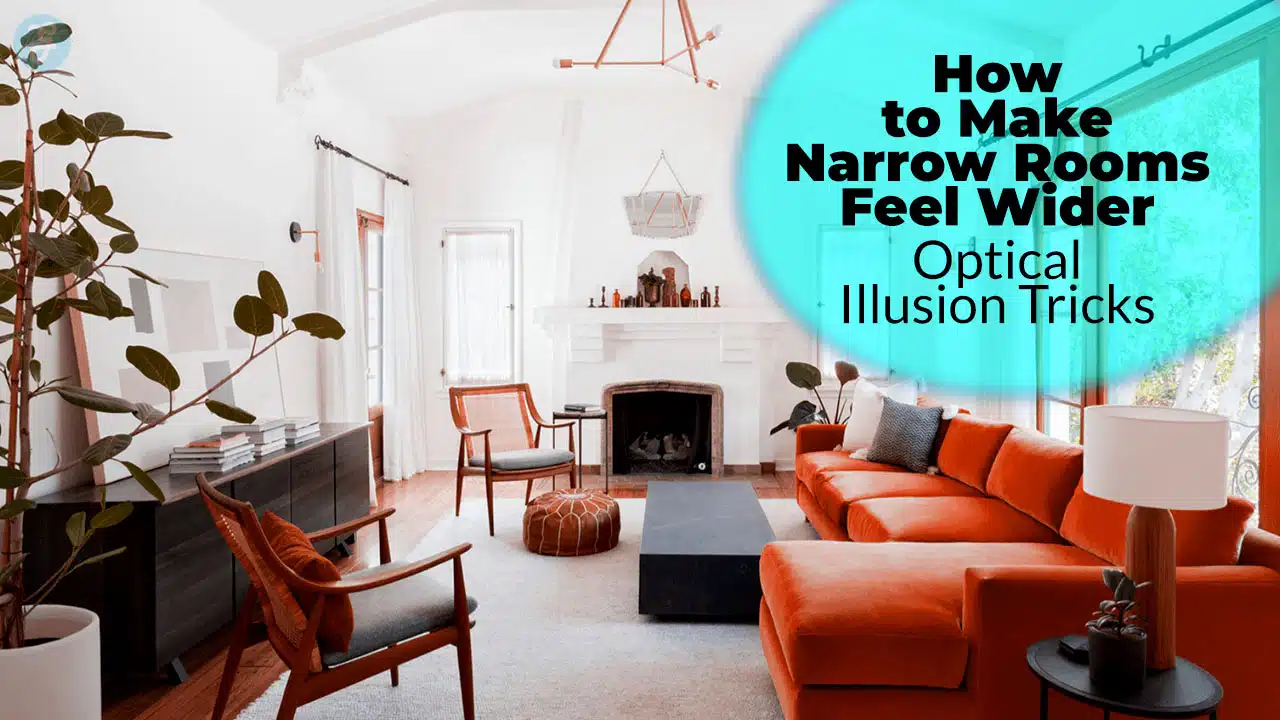
A narrow room can feel like a tight hallway, leaving little room to move. Mirrors can double the illusion of space with even lighting. How To Make Narrow Rooms Feel Wider shows you simple tricks.
You will learn five visual tricks, from light paint to reflective panels, smart furniture layout, horizontal stripes, and rugs for zoning. Read on.
Key Takeaways
- Paint walls and ceilings in light Farrow & Ball neutrals like off‑white, cool blue or pale green. Apply two coats with a roller and brush to boost width.
- Hang a wide, low mirror above a sofa or lean one opposite a window. Finnish designer Johanna Lehmuskallio says this trick doubles natural light.
- Choose sofas and tables with slim, exposed legs. Let light flow under each piece to free floor space and cut visual clutter.
- Add vertical accents such as drapes at the crown, a vertical‑striped wallpaper wall or a tall slim bookcase. These elements draw the eye upward.
- Run timber flooring boards across the longest wall and skip busy rugs. Use a laser level and tape measure for straight, consistent planks.
Use Light Colors on Walls and Ceilings
Soft-toned paints like off-whites, neutrals, cool blues, and pale greens expand a narrow room. A single hue creates cohesion and boosts spatial perception. Use a paint roller and paint brush to apply two coats.
Interior designers cite Farrow & Ball neutrals for sleek home decor.
Add subtle contrast with varied paint finishes on walls and ceiling. Paint a dark Sloe Blue accent wall at the far end to cut tunnel effect. This visual trick blends with natural light and cool colors.
It lifts narrow rooms below high ceilings and perks up any living room layout.
Incorporate Mirrors to Reflect Space and Light
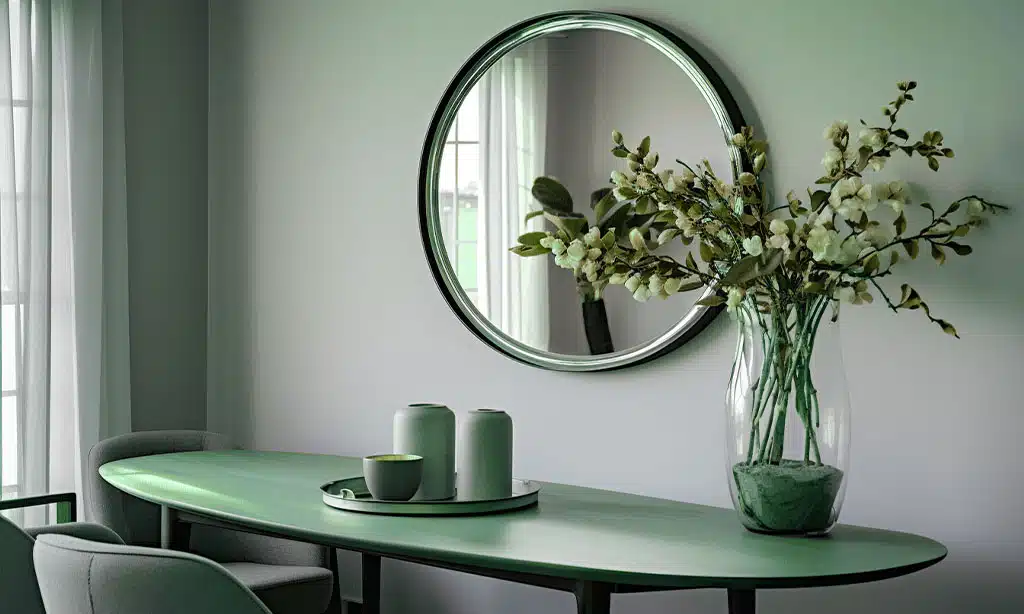
A giant wall mirror brings depth to a tight living room. It bounces natural light into every corner and lifts dull spots. Finnish designer Johanna Lehmuskallio favors wide, low mirrors above a sofa.
A horizontal mirror fools the eye, creating an illusion of extra width. Mirrored cabinetry also reflects shelves or patterned wallpaper and widens a narrow room.
Place a mirror opposite a window to trap bright rays and add glow. That simple trick enhances natural light, making room edges fade. You can lean it on the floor or mount it near crown molding.
Keep furniture placement clear around the mirror to avoid blocking the shine. These visual tricks create an illusion of depth that fools your eye.
Choose Furniture with Exposed Legs
Interior design pros place slim-legged sofas and chairs so light flows under each piece. That view of the floor tricks eyes into sensing a wider space in a narrow room. Lower-backed furniture blends into the scene, clearing visual clutter around a patterned wallpaper and boosting negative space near an accent wall.
Use a simple floor plan to check furniture placement, keep scale right, and dodge that cramped feel.
Pick a storage bench or nesting tables that pull double duty, so you free up floor area and boost flow. This multipurpose furniture design adds function without bulk. It works with high ceilings or narrow room shapes, and it plays well with rugs for zoning.
Casual lines and a light color scheme, say Farrow & Ball’s pale hues, will help maintain natural light and a breezy home decor vibe.
Add Vertical Elements to Draw the Eye Upward
High ceilings open views and distract from narrow width. Exposed timber beams add vertical flair. Intricate plasterwork frames the upper walls of a narrow room. Hang Farrow & Ball drapes up near the crown to boost height perception.
Place a tall bookcase or shelf against a slim wall; it pulls sight skyward.
Install pendant lights over the bed or a side table to draw gaze up. A vertical‑striped accent wall, made with patterned wallpaper, makes ceilings seem taller. Choose a slim metal ladder shelf or a corner bookcase to fit a tight furniture layout.
High windows fill the room with natural light near the top, boosting airy feel. Thin runner rugs for zoning tie the floor, so sight stays on the walls.
Create Flow with Consistent Flooring
Interior design pros carry timber boards from hall through living space. Run planks across the longest wall, it tricks the eye, it widens a narrow room. A laser level keeps lines straight.
A tape measure lets you mark each board to fit around architectural features.
Consistent flooring patterns improve flow across an open floor plan. A single floor type links zones in your living room layout. Skip busy rugs for zoning. Patterned carpets often draw focus to a slim space.
Use neutral mats instead.
Opt for Minimalist Window Treatments
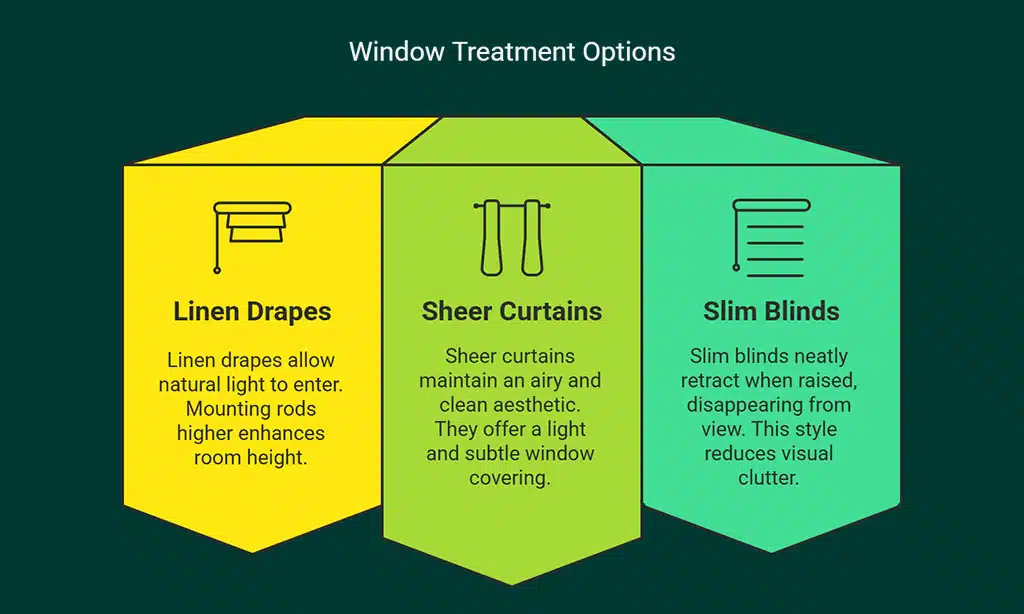
Linen drapes let natural light flood a narrow room. Mount rods just above the casing to boost height. Spread each drape to the window edge to frame a wide view. Thick drapes feel heavy and shrink space.
Sheer curtains keep the look airy and clean.
Slim blinds tuck tight when you raise them. A click and they vanish out of sight. This clean style cuts visual clutter. It blends with any living room layout and furniture placement.
You get a clear view, not a wall of fabric.
Reduce Visual Clutter with Smart Storage Solutions
Storage units that fit into walls trim visual clutter in a narrow room. Built-in cabinets save space and hide items.
Proper furniture placement clears sightlines and supports interior design flow. Some work a Farrow & Ball hue into cabinet backs to boost glow. Mirrored cabinetry bounces natural light and makes walls look distant.
Folding furniture slides under counters and clears pathways. Open storage under high ceilings draws the eye up, bookcases form an accent wall at eye level.
Takeaways
These optical tricks widen a narrow room, and they surprise your eyes. You can frame a reflector to boost depth and reflect light. Wall tints in soft tones lift brightness, while a banded pattern on a feature wall pulls the side walls apart.
A floor cloth zones areas, guiding flow as you walk. Low-profile seats, with legs in view, hint at extra room under the overhead plane. Bold overhead lights, with side drapes held back, stretch the view.
Guests will gasp when that skinny hall feels vast.
FAQs
1. What is a quick interior design trick for a narrow room?
Try rugs for zoning, clear visual clutter, push furniture to walls, you’ll own more floor space in no time.
2. How do patterned wallpaper and an accent wall trick the eye?
A stripe pattern on one long wall or a light accent wall by Farrow & Ball makes a narrow room stretch, like magic paint.
3. How can I boost natural light in a tight space?
Swap heavy drapes for sheer curtains, open every window, set a mirror across from the light source, I propped one by my sink once, and it felt like I stepped into a sunroom.
4. What architectural features help widen a room?
Highlight high ceilings with beams or crown molding, run long planks on the floor, they all lift your view and make walls recede.
5. What other visual tricks improve furniture layout?
Use smart furniture placement: push pieces to walls, pick slim chairs, clear paths, add glass tables and round mirrors, it feels breezy, like a breath of fresh air.