There are an increasing number of challenges facing society today: among the main ones are those related to the environment, such as combating pollution, climate change and resource waste, or protecting biodiversity and future generations. All this leads to an attempt to restore the entire life cycle of products that are brought to market in a way that is more environmentally friendly, starting with the production processes.
Making production environmentally sustainable means adopting strategies, means, tools, and materials that reduce resource waste, consumption, harmful emissions, and the amount of waste generated. The solutions that can be adopted are diverse and range from the use of sustainable and innovative materials, such as low carbon aluminium, to the implementation of smart technologies in manufacturing processes.
Let’s take a closer look, then, at how to make production processes more sustainable.
How to make production processes more green
Large, small, and medium-sized companies wishing to reduce the environmental impact of their production activities can implement a large number of solutions, choosing from the many that best suit their reality. The main ones include:
- the choice of innovative materials;
- the use of recycled materials;
- the use of renewable energy sources;
- digitization and the adoption of smart solutions.
Let’s analyze each of these points in more detail.
Innovative materials for environmentally sustainable production processes
The first method of reducing the impact of production processes on the environment is to focus on innovative materials. These, because of their special characteristics, make it possible to reduce the impact on the environment when:
- they are produced;
- they are used to produce the final good;
- they are disposed of, at the end of the product’s life cycle.
Among those that, more than others, are proving to be key in addressing present and future environmental challenges is the aforementioned low carbon aluminium, so defined because it is produced, in addition to exploiting renewable energy sources, through modern processes that aim to reduce direct emissions emitted during the electrolysis process. This material has the potential to make a difference in sectors with a high environmental impact, such as the construction and automotive industries.
Choosing recycled materials
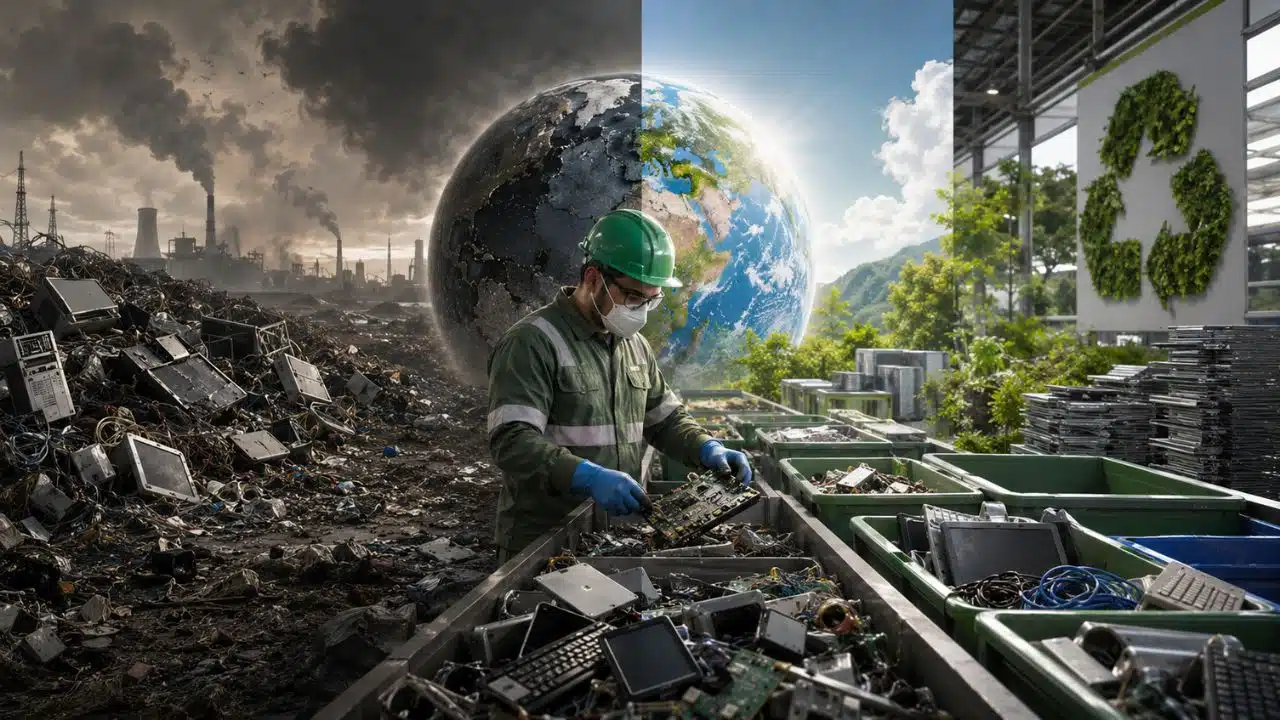
To reduce the impact on the environment, companies can also turn to recycled materials, so as to extend their life cycle and foster the development of a circular economy.
Of course, the former solution does not exclude the latter; on the contrary, materials such as aluminium with a low carbon footprint can also be fed back into the production chain, with excellent results, so as to reduce its impact even more.
Use of renewable energy sources
Another very effective solution for lowering the impact of the production chain on the environment is the use of energy derived from renewable sources. Solar, wind, hydroelectric, as well as geothermal and from the use of biomass are all solutions that can reduce or eliminate the use of fossil fuels and drive companies toward zero carbon emissions.
Process optimization through digitization
The digitization of production processes, if well-structured and leveraged in order to optimize the production chain, can also offer valuable help in decreasing the impact of this phase of product life on the environment.
From the use of big data management software to the use of smart and home automation solutions intended for data collection, exchange and monitoring, the solutions that can help reduce waste and keep emissions in check are numerous indeed.
Making production processes environmentally sustainable can be beneficial
Making production processes greener offers benefits not only to the planet, but also to the company itself. In particular, the latter can count on an excellent return on image, which is useful in attracting sustainability and environmentally conscious stakeholders, and a good competitive advantage.
In addition to assisting the adjustment of the production process to current standards, then, it helps, in the medium and long term, to cut costs.