

July 5 is a day that has seen many important events in history. It’s also the birthday of some very famous and influential people. This article will look at key moments that happened on July 5 in different years. We’ll explore big events in science, politics, and the fight for fairness. We’ll also learn about some important people born on this day. July 5 has been a day when big ideas were shared, countries changed, and people who would change the world were born.
Historical Events on July 5
A. Publication of Newton’s Principia (1687)
On July 5, 1687, a very important book was published. It was called “Philosophiæ Naturalis Principia Mathematica” (often just called “Principia”). Isaac Newton wrote this book. Newton was a brilliant scientist from England.
The Principia was a big deal because it explained how things move and why. Newton wrote about three main ideas:
- Things don’t move unless something pushes or pulls them.
- The harder you push something, the faster it goes.
- When you push on something, it pushes back just as hard.
These ideas might seem simple now, but they were new and exciting back then. Newton also wrote about gravity. He explained that gravity is what makes apples fall from trees and keeps the moon orbiting Earth.
The Principia changed how people thought about the world. It helped scientists understand the universe better. Many of the ideas in the book are still used today in science and engineering.
B. Siege of Corinth (1715)
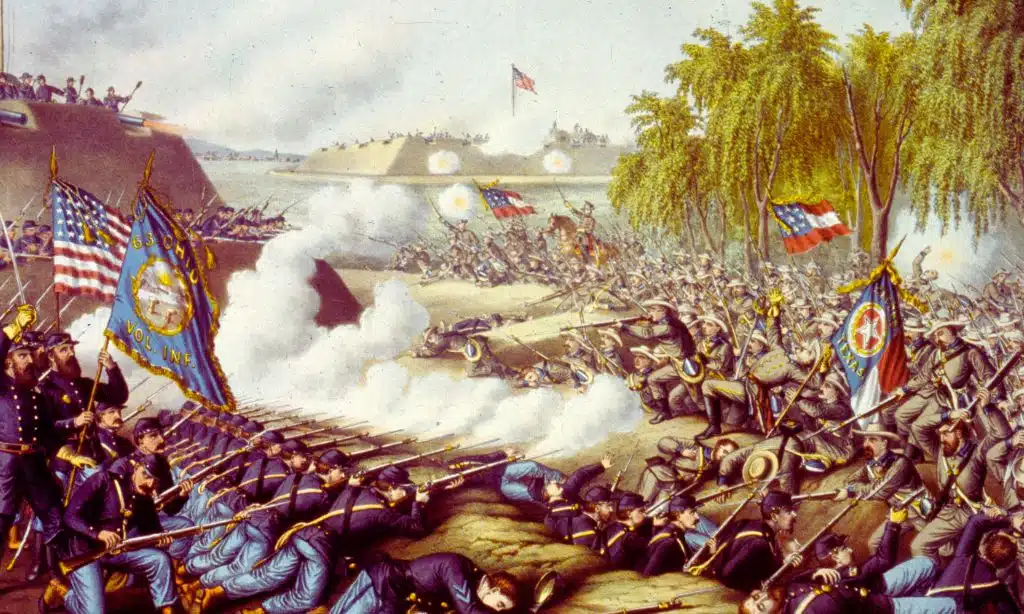
On July 5, 1715, a sad event happened in Greece. The Ottoman army attacked a place called Acrocorinth. This was a fort on top of a big hill near the city of Corinth.
The Ottoman Empire was very powerful at this time. They wanted to take over more land in Europe. The people in Acrocorinth tried to fight back, but the Ottoman army was too strong.
When the Ottomans won, they did some very cruel things. They killed many people who lived there. They also sold many people as slaves. This was a common but terrible practice in wars back then.
This event was so sad that it inspired a famous poem many years later. The poem was called “The Siege of Corinth” and was written by Lord Byron. Byron was an English poet who cared a lot about Greece.
C. Olive Branch Petition (1775)
On July 5, 1775, an important letter was written in America. It was called the Olive Branch Petition. The Second Continental Congress wrote this letter to King George III of England.
At this time, America was still ruled by England. But many Americans were unhappy with this. They wanted more freedom to make their own choices. There had already been some fighting between American colonists and British soldiers.
The Olive Branch Petition was a last try to make peace. It asked the king to stop the fighting and listen to what the Americans wanted. The Americans said they were still loyal to the king, but they wanted fair treatment.
Sadly, King George III didn’t listen. He refused to even read the petition. This made many Americans think that they had no choice but to fight for their independence. Less than a year later, America declared itself independent from England.
D. Venezuelan Declaration of Independence (1811)
On July 5, 1811, something big happened in South America. Seven provinces in Venezuela said they wanted to be free from Spain. This was called the Venezuelan Declaration of Independence.
For a long time, Spain had ruled over many parts of South America. But people in these places were starting to want their freedom. They wanted to make their own choices about how to run their countries.
The declaration was signed in Caracas, which is now the capital of Venezuela. It said that Venezuela should be a free country, not controlled by Spain anymore.
This was a brave thing to do. It led to a long war with Spain. But in the end, Venezuela did become independent. This inspired other parts of South America to fight for their freedom too.
E. Frederick Douglass’s “What to the Slave Is the Fourth of July?” speech (1852)
On July 5, 1852, a man named Frederick Douglass gave a very important speech. Douglass was a former slave who had escaped and become a leader in fighting against slavery.
The speech was called “What to the Slave Is the Fourth of July?” Douglass gave this speech to a group called the Ladies’ Anti-Slavery Society in Rochester, New York.
In his speech, Douglass talked about how the Fourth of July (Independence Day) was different for black people who were still slaves. He said it was wrong to celebrate freedom when so many people were not free.
Here’s a powerful part of what he said: “What, to the American slave, is your 4th of July? I answer: a day that reveals to him, more than all other days in the year, the gross injustice and cruelty to which he is the constant victim.”
Douglass’s speech made many people think hard about slavery. It helped more people understand why slavery was wrong and had to be stopped.
Famous Birthdays on July 5
A. David Farragut (1801-1870)
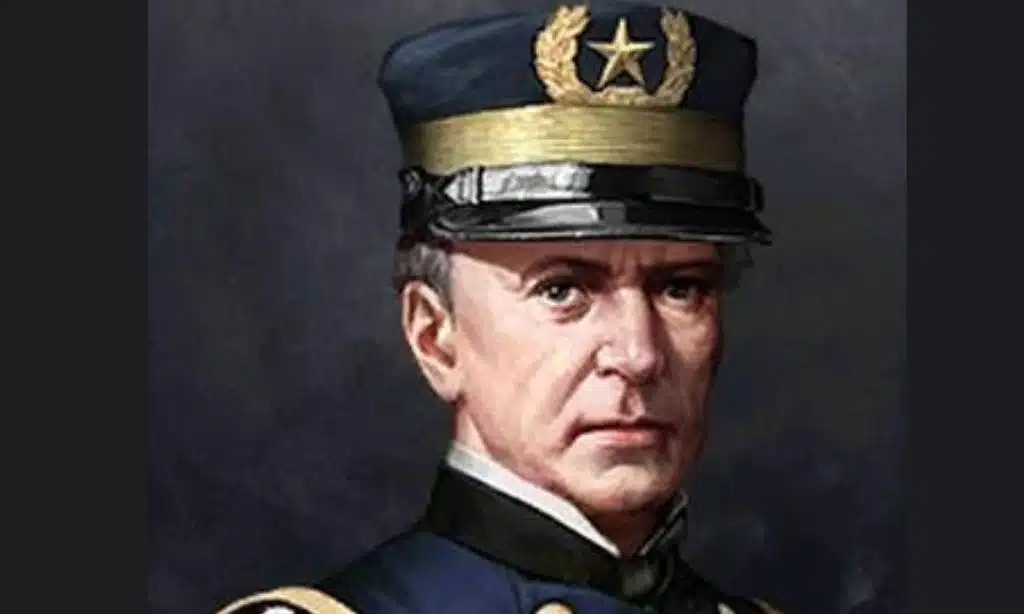
| Born | July 5, 1801, in Campbell’s Station, Tennessee |
| Died | August 14, 1870 (aged 69) |
| Occupation | Naval Officer |
| Known for | First rear admiral, vice admiral, and admiral in the U.S. Navy |
| Famous quote | “Damn the torpedoes, full speed ahead!” |
David Farragut was a famous American naval officer. He joined the Navy when he was just 9 years old! Farragut became well-known during the American Civil War.
In the Civil War, Farragut fought for the Union (the North). He led many important sea battles. His most famous moment was during the Battle of Mobile Bay. When his ships were in danger, he shouted, “Damn the torpedoes, full speed ahead!” This showed how brave he was.
Farragut became the first person to be named Admiral in the U.S. Navy. This is the highest rank in the Navy. He is still remembered as one of America’s greatest naval heroes.
B. P. T. Barnum (1810-1891)
| Born | July 5, 1810, in Bethel, Connecticut |
| Died | April 7, 1891 (aged 80) |
| Occupation | Showman, businessman, politician |
| Known for | Founding the Barnum & Bailey Circus |
| Famous quote | “There’s a sucker born every minute.” |
P. T. Barnum was a famous American showman. He is best known for starting the Barnum & Bailey Circus, which people called “The Greatest Show on Earth.”
Barnum started his career by running a variety of small businesses. But he found his true calling in entertainment. He opened a museum in New York City that showed strange and interesting things.
In 1871, Barnum started his traveling circus. It had acrobats, animals, and other exciting acts. The circus was very popular and traveled all over America.
Barnum was known for his clever advertising and his ability to entertain people. He helped create the modern idea of show business. Even today, his name is linked with big, exciting entertainment.
C. A. E. Douglass (1867-1962)
| Born | July 5, 1867, in Windsor, Vermont |
| Died | March 20, 1962 (aged 94) |
| Occupation | Astronomer, Archaeologist |
| Known for | Inventing dendrochronology (tree-ring dating) |
| Major contribution | Founding the Laboratory of Tree-Ring Research at the University of Arizona |
A. E. Douglass was an American scientist who worked in astronomy and archaeology. He is most famous for inventing dendrochronology, which is a way to date things using tree rings.
Douglass started his career as an astronomer. He was interested in how the sun’s activity affected Earth’s climate. This led him to study tree rings, which can show how much a tree grew each year.
Douglass discovered that trees of the same type in the same area have similar patterns of thick and thin rings. These patterns are like a code that can tell us how old things are. This was very useful for archaeologists studying ancient ruins.
Douglass’s work helped scientists understand climate change over long periods. It also helped archaeologists date ancient Native American ruins more accurately. His method is still used today in many fields of science.
D. Édouard Herriot (1872-1957)
| Born | July 5, 1872, in Troyes, France |
| Died | March 26, 1957 (aged 84) |
| Occupation | Politician, Writer |
| Known for | Serving as Prime Minister of France three times |
| Political party | Radical Party |
Édouard Herriot was an important French politician. He served as the Prime Minister of France three times between 1924 and 1932.
Herriot started his career as a teacher. He later became the mayor of Lyon, a big city in France. He held this position for many years and did a lot to improve the city.
In national politics, Herriot led the Radical Party. This party wanted to make changes in France but not in a extreme way. As Prime Minister, Herriot tried to improve relations with other countries and solve economic problems.
Herriot was known for his strong support of democracy and education. He wrote many books about history and politics. Even when France was controlled by Germany during World War II, Herriot spoke out against the Nazi government.
E. Eugen Fischer (1874-1967)
| Born | July 5, 1874, in Karlsruhe, Germany |
| Died | July 9, 1967 (aged 93) |
| Occupation | Professor of Medicine, Anthropologist |
| Known for | Work at Kaiser Wilhelm Institute of Anthropology, Human Heredity, and Eugenics |
| Controversy | Involvement in Nazi racial policies |
Fischer was the director of the Kaiser Wilhelm Institute of Anthropology, Human Heredity, and Eugenics. He studied how traits are passed from parents to children. But he used these ideas in ways that supported racist beliefs.
During the Nazi period, Fischer’s work was used to support harmful policies against certain groups of people. After World War II, many people criticized Fischer for his role in these policies.
Fischer’s story shows how science can be misused to harm people. It reminds us that scientists have a big responsibility to use their knowledge in ways that help, not hurt, people.
Takeaways
The day has also given us some very influential people. From naval heroes like David Farragut to entertainers like P.T. Barnum, these individuals have left their mark on history in different ways. We’ve also seen scientists like A.E. Douglass, whose work helps us understand the past better, and politicians like Édouard Herriot, who helped shape their countries.
Some of the events and people we’ve looked at remind us of difficult parts of history too. The Siege of Corinth and Eugen Fischer’s work show us that history isn’t always happy. But learning about these things helps us understand the past and do better in the future.
By looking at just one day – July 5 – we can see how much has happened in history. It shows us that every day can be important, and that people born on any day can grow up to do big things. Whether it’s making scientific discoveries, fighting for freedom, or entertaining people, each person has the potential to make a difference.
Next time you look at a calendar, remember that every date has its own stories. You might be surprised by what you find when you dig into history!
References:
- Newton, I. (1687). Philosophiæ Naturalis Principia Mathematica. Royal Society.
- Finlay, G. (1861). History of the Greek Revolution. William Blackwood and Sons.
- Maier, P. (1997). American Scripture: Making the Declaration of Independence. Knopf.
- Lombardi, J. V. (1982). Venezuela: The Search for Order, the Dream of Progress. Oxford University Press.
- Blassingame, J. (Ed.). (1985). The Frederick Douglass Papers: Series One: Speeches, Debates, and Interviews. Yale University Press.
- Duffy, J. (1976). Lincoln’s Admiral: The Civil War Campaigns of David Farragut. Wiley.
- Kunhardt, P. B., Kunhardt, P. B., & Kunhardt, P. W. (1995). P.T. Barnum: America’s Greatest Showman. Alfred A. Knopf.
- Webb, G. E. (1983). Tree Rings and Telescopes: The Scientific Career of A. E. Douglass. University of Arizona Press.
- Berstein, S. (1985). Edouard Herriot: The Republic and the Radical. Editions Sociales.
- Weindling, P. (1989). Health, Race and German Politics between National Unification and Nazism, 1870-1945. Cambridge University Press.
























