Have you ever sat in a doctor’s office, heard numbers like 200 and 150, and felt completely lost? Many people face this same confusion every single day. They just want to know the healthy cholesterol levels maintenance guide and keep their heart safe. The good news is that managing your health does not have to feel like climbing a mountain.
Here is a staggering fact from the Centers for Disease Control and Prevention: about 86.4 million American adults have borderline high or high cholesterol, yet most of them have no idea. This silent condition sneaks up quietly and builds up in your arteries without any warning signs.
This is exactly why taking action today matters so much. Your heart will thank you for making simple adjustments. I am going to walk you through the basics, from understanding your lab results to choosing better meals. You will learn what these lipids actually are and which types help or hurt your body.
We will explore real changes you can make today, like swapping out bad fats and moving your body more. You will also discover how sleep, food choices, and exercise work together to keep your numbers in a great place. So, grab a cup of water, and let’s go through it together. I will show you exactly what to do.
Exploring Cholesterol Fundamentals
Your body makes cholesterol, and you also get it from the foods you eat. Understanding the different types helps you take control of your heart health and make smarter choices every single day.
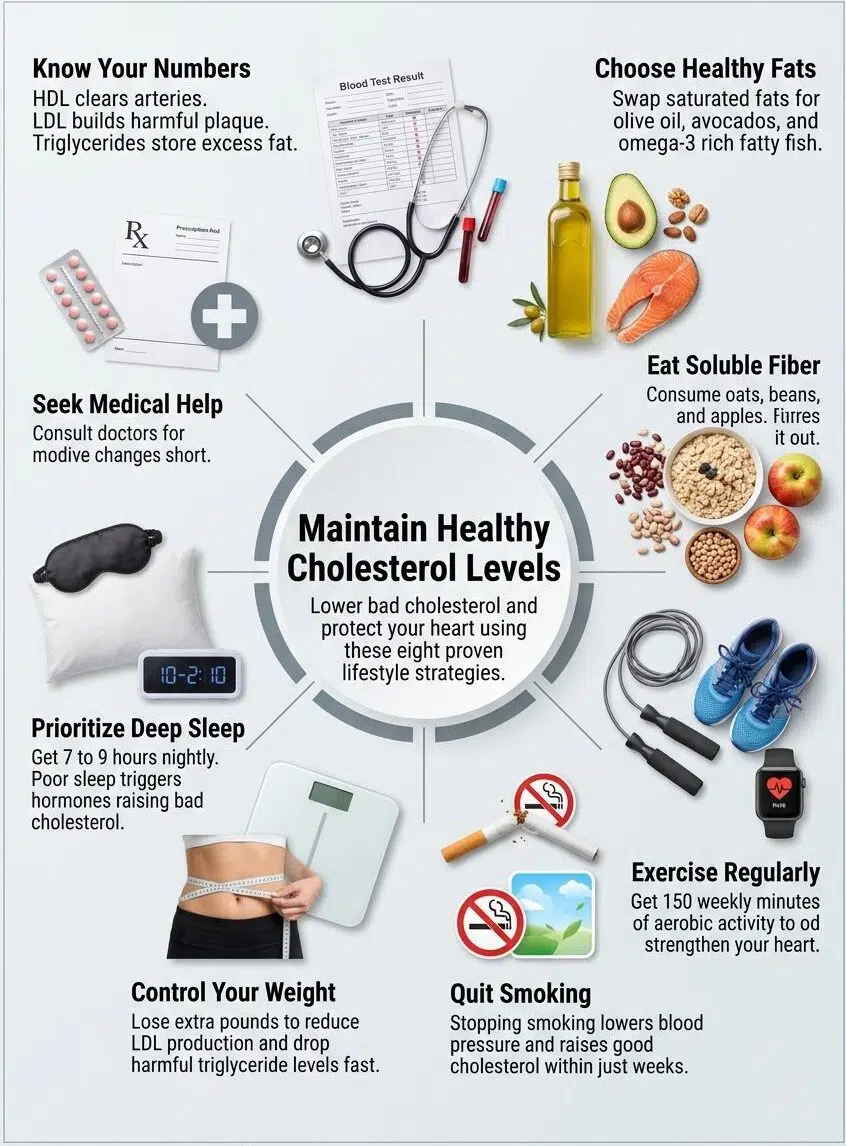
Types of cholesterol: HDL, LDL, and triglycerides
Cholesterol comes in different forms, and each one affects your body differently. In the US, a simple “lipid profile” blood test is the only way to know your exact numbers.
| Cholesterol Type | What It Does | Healthy Range | Impact on Health |
|---|---|---|---|
| HDL (High-Density Lipoprotein) | Sweeps cholesterol from your arteries and tissues. Transports this excess fat straight to your liver for safe disposal. Acts as a highly effective cleanup crew for your entire bloodstream. | 60 mg/dL or higher | Protects your heart against severe disease. Higher levels actively reduce your cardiovascular risk profile. Doctors call this “good cholesterol” for very solid reasons. |
| LDL (Low-Density Lipoprotein) | Delivers cholesterol packages throughout your body. Builds up inside your artery walls over time. Forms stiff plaques that dangerously narrow your blood vessels. | Less than 100 mg/dL for intermediate risk, or less than 70 mg/dL for high risk. | Increases your heart attack and stroke risk significantly when elevated. Damages your delicate artery walls through heavy oxidation. Earns the name “bad cholesterol” because it causes real cardiovascular emergencies. |
| Triglycerides | Stores the excess energy from the food you eat. Circulates heavily in your blood after heavy meals. Comes directly from excess carbohydrates, dietary fats, and alcohol. | Less than 150 mg/dL | High levels increase your heart disease risk tremendously. Works alongside LDL to damage your vital arteries. Rises quickly with poor diet choices and sudden weight gain. |
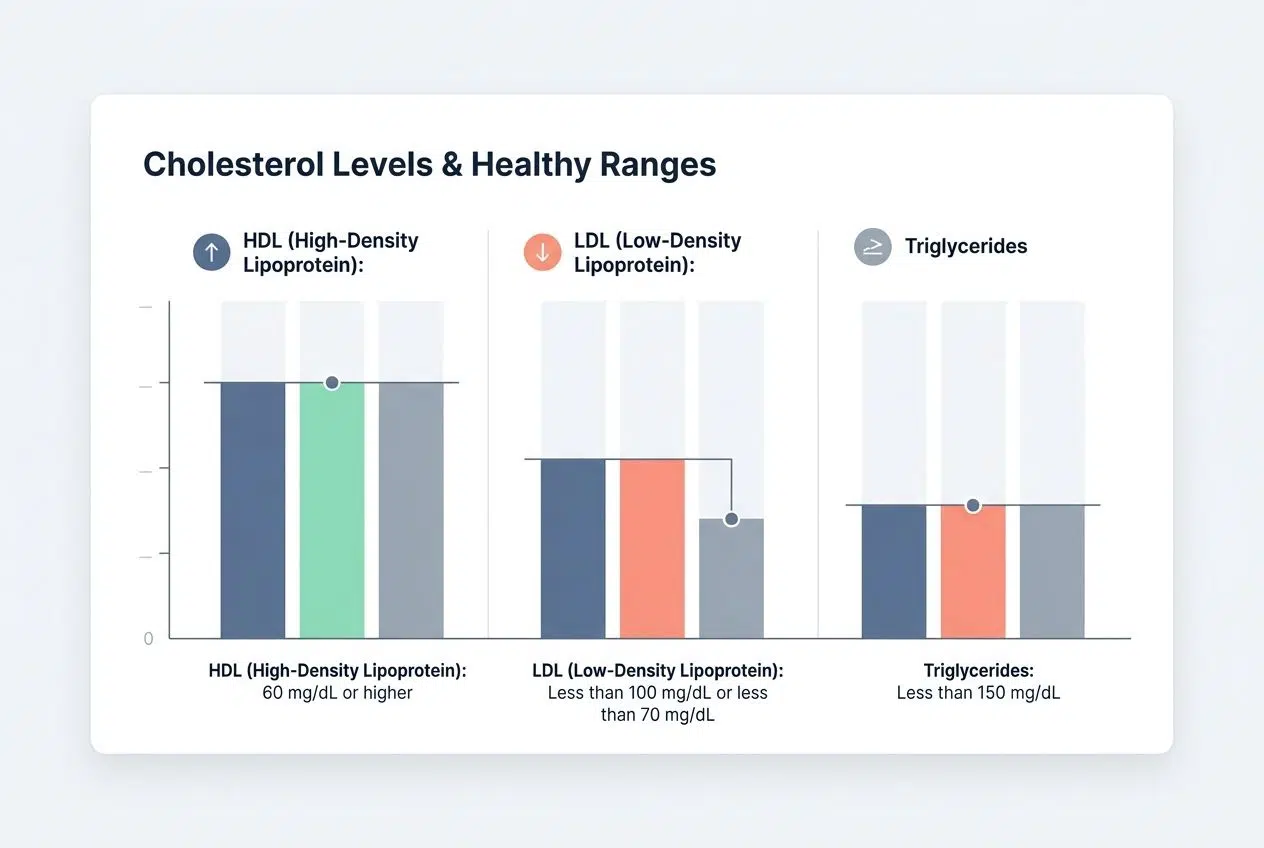
Think of HDL as the good neighbor who picks up trash from your street. LDL acts like someone dumping garbage in your driveway. Triglycerides are the extra packages piling up in your garage. Getting these three in balance matters more than you might think. Doctors focus on these numbers because they predict your risk of heart problems down the road.
Key Aspects of How To Maintain Healthy Cholesterol Levels
Understanding your lab results matters because HDL protects your heart while LDL causes damage. Let’s explore what makes these differences so important to your daily routine.
Benefits of HDL (High-Density Lipoprotein)
HDL acts like your heart’s dedicated cleanup crew. This helpful lipid travels through your bloodstream, picks up the bad stuff, and carries it away to your liver for disposal.
Your body relies on HDL to fight off cardiovascular disease and keep your ticker strong. Higher levels mean your heart health gets a real boost, and your risk of a sudden medical emergency drops significantly.
According to recent clinical data, aiming for HDL levels above 60 milligrams per deciliter provides optimal protection for your cardiovascular system.
HDL is like the garbage truck of your bloodstream, hauling away the junk that clogs your arteries.
Your daily lifestyle choices directly shape your HDL levels, so you hold the power here. Aerobic exercises like jogging, swimming, or cycling will pump up your HDL fast.
Eating polyunsaturated fats and monounsaturated fats from delicious sources like wild-caught salmon, olive oil, and walnuts raises your good numbers naturally. Quitting smoking also boosts HDL within weeks, giving your body an immediate advantage.
Even losing a small amount of weight lifts your numbers. This proves that minor changes create enormous results for your lipid profile.
Risks Associated with LDL (Low-Density Lipoprotein)
Now that you know how HDL protects you, we need to talk about the troublemaker on the other side of the coin. LDL often goes by the name “bad cholesterol” because it acts like a delivery truck dropping off unwanted packages inside your blood vessels.
- High levels build up fatty deposits inside your arteries.
- This buildup forms stiff plaques that restrict healthy blood flow.
- Restricted arteries force your heart muscle to work much harder.
- Plaque deposits can eventually crack open and cause dangerous clots.
Over time, these deposits directly threaten your life. Reducing this specific number should rank high on your priority list.
The 2026 guidelines from the American College of Cardiology and the American Heart Association emphasize exactly how important this is. They recommend that patients at high risk reduce their LDL by 50 percent or more to reach a goal of under 70 milligrams per deciliter.
Saturated fats and artificial trans fats are the main culprits that raise LDL in your body. Cutting down on these dietary fats protects your arteries from severe damage.
A healthy diet swaps out fatty meats and processed snacks for lean proteins and whole grains. You control most of these factors through daily choices, so every small swap counts.
Effective Lifestyle Changes for Cholesterol Control
You can take real action right now to lower your numbers through smart, everyday habits. Read on to discover which adjustments work best for your specific situation.
Choosing Heart-Healthy Foods
Your food choices shape your lipid levels more than almost anything else you do. Picking the right ingredients acts like a shield for your heart. Because long lists can be overwhelming, I have broken these tips into five powerful changes.
- Load your plate with fatty fish like wild-caught salmon or mackerel at least twice a week for essential omega-3 fatty acids.
- Swap butter for extra virgin olive oil when cooking to get those heart-protecting monounsaturated fats.
- Grab a bowl of steel-cut oats for breakfast, as their soluble fiber traps cholesterol directly in your gut.
- Snack on raw almonds and walnuts throughout the day to reduce LDL naturally.
- Fill half your dinner plate with colorful vegetables to get plenty of artery-protecting nutrients.
Adding More Soluble Fiber to Your Diet
Heart-healthy meals form the foundation of good nutrition, and soluble fiber reinforces that base. Fiber functions like a cleanup crew, actively trapping particles and moving them out of your system. Here are five powerful ways to get more fiber.
- Eat one and a half cups of cooked oatmeal daily to lower your LDL noticeably.
- Add black beans or lentils to your weekly meal prep for slow-digesting, satisfying fiber.
- Snack on whole apples and pears with the skin left on to get a heavy dose of natural pectin.
- Take a daily psyllium husk supplement, like Metamucil, which can drop LDL by five to fifteen percent over a few weeks.
- Sprinkle ground flaxseeds into your morning smoothie or yogurt for a quick fiber and omega-3 boost.
Enhancing Your Routine with Regular Exercise
Exercise stands as a highly effective tool for managing your health. Moving your body regularly can lower your bad numbers and raise your good ones simultaneously.

- Aim for at least 150 minutes of moderate aerobic activity each week, like brisk walking or swimming.
- Include strength training two or three times a week to build muscle mass and burn more calories at rest.
- Start slowly if you are new to fitness and gradually increase your intensity to avoid burnout.
- Schedule a 30-minute walk after your heaviest meal to help your body process sugars and fats efficiently.
Staying active does not mean you have to run marathons. Finding a sport or hobby you actually enjoy makes it much easier to stay consistent long-term.
Stopping Smoking for Better Health
Smoking damages your blood vessels in incredibly serious ways. When you quit smoking, your numbers start improving almost immediately. Your HDL rises within weeks, and your LDL drops as well.
The American Heart Association notes that smoking lowers your good cholesterol by up to 10 percent. Quitting reverses this damage and gives your cardiovascular system a chance to heal.
Tobacco smoke hardens your arteries and makes fatty plaques stick to your vessel walls much faster. Ditching cigarettes stops this dangerous cycle in its tracks.
Your blood pressure drops, your circulation improves, and your total wellness gets a massive upgrade. Talk to your primary care doctor about nicotine patches or specific smoking cessation programs that fit your lifestyle.
Keeping Weight in Check
Your body weight plays a massive role in your daily lab results. Dropping just a few extra pounds can completely shift your cardiovascular risk profile.
- Excess weight pushes your liver to produce more harmful LDL.
- Extra body fat increases inflammation throughout your vascular system.
- Losing just 5 to 10 percent of your weight boosts your protective HDL.
- Shedding pounds naturally lowers your circulating triglycerides.
You absolutely do not need to become a fitness fanatic overnight to see these benefits. Small, consistent changes to your diet and activity level add up incredibly fast.
Pairing a daily walk with high-fiber foods helps your body shed stubborn pounds without feeling starved. Consistency is the real secret to maintaining a healthy weight.
Moderating Alcohol Intake
Your weight management efforts go hand in hand with how you handle alcohol. Drinking heavily raises your triglycerides, which are circulating blood fats that directly impact your risk of a stroke. Even moderate drinking can tip the scales if you are not paying close attention. The American Heart Association recommends that men limit themselves to two drinks daily, while women should stick to one drink per day.
That single adjustment can lower your triglycerides significantly in just a few weeks. Alcohol also packs extra calories, making weight control much harder than it needs to be. Swapping a nightly beer for sparkling water or herbal tea helps you dodge empty calories while protecting your heart. Small tweaks to your drinking habits deliver massive results over time.
Nutritional Guidance for Managing Cholesterol
What you put on your plate dictates your test results more than any other habit. Smart choices can transform your lipid panel in a matter of months.
Opting for Healthy Fats
Your body requires fat to function properly, so cutting it out entirely is a huge mistake. Choosing the right types of fat makes all the difference for your arteries. Here are five easy swaps.
- Cook with extra virgin olive oil instead of butter to boost your intake of monounsaturated fats.
- Eat fatty fish like wild-caught salmon or sardines twice a week to get highly protective omega-3s.
- Add a quarter of a fresh avocado to your daily salad for a creamy texture and heart-healthy fats.
- Snack on unsalted peanuts or walnuts instead of processed potato chips when hunger strikes.
- Drizzle chia seeds over your morning oatmeal to add healthy fats and extra fiber in one step.
Getting these beneficial oils into your daily routine sets the stage for success. The next step is eliminating the ingredients that actively work against you.
Cutting Down on Trans Fats and Saturated Fats
Artificial fats and heavy saturated fats actively sabotage your heart. Cutting these out of your pantry yields immediate benefits for your blood flow.
- Read nutrition labels carefully to spot partially hydrogenated oils, even if the box claims zero trans fats.
- Choose lean cuts of poultry, like skinless chicken breast, instead of fatty cuts of pork or beef.
- Limit your portion of heavy cheeses, as they pack a massive amount of saturated fat into tiny bites.
- Avoid fast food deep-fried items, which are notoriously cooked in oils that spike your lipid panel.
- Replace whole milk with low-fat or skim milk in your morning coffee to easily reduce daily saturated fat.
In the US, the FDA has finalized actions to revoke the safe status of partially hydrogenated oils, essentially removing artificial trans fats from the food supply. However, you still need to watch out for saturated fats hiding in baked goods and pre-packaged meals.
Incorporating Cholesterol-Friendly Foods like Oats and Nuts
We have mentioned oats and nuts a few times, but they deserve their own spotlight. These two superfoods are highly effective at keeping your numbers completely balanced.
- Eat a bowl of steel-cut oats, as they process slowly and soak up bile acids in your gut.
- Keep a small container of almonds on your desk to manage midday cravings and support your heart.
- Incorporate walnuts into your baking, as they bring rare omega-3 fatty acids to the table.
- Mix a handful of pistachios into your yogurt for a flavorful crunch that naturally lowers LDL.
- Use pearl barley in your winter soups as a fantastic, high-fiber alternative to standard white rice.
These simple additions provide powerful nutritional pathways to protect your entire cardiovascular system.
Importance of Sleep for Cholesterol Balance
Your body does heavy lifting while you rest in bed. During deep sleep, your internal systems regulate fat processing and manage your lipid balance. Poor sleep disrupts this natural, protective process entirely.
A 2025 scientific statement from the American Heart Association revealed a fascinating “U-shaped” curve linking sleep duration and cardiovascular mortality.
The data showed that sleeping less than seven hours or more than nine hours significantly increases your risk for conditions like cardiometabolic syndrome. The sweet spot for optimal cardiovascular protection is exactly seven to nine hours of quality rest per night.
Sleep deprivation triggers cortisol and other stress hormones that actually increase fat production in your liver. These hormones force your body to hold onto bad lipids instead of clearing them out.
Establishing a solid bedtime routine strengthens your entire wellness plan. Keep your bedroom dark and cool to promote deeper, more restorative sleep stages.
Avoid looking at your phone or tablet for at least an hour before bed, as blue light severely limits your melatonin production. Sleep acts as the absolute foundation that makes your perfect diet and exercise routine actually work.
Seeking Medical Solutions When Lifestyle Changes Fall Short
Sometimes, perfectly executed lifestyle habits simply do not bring your numbers down to a safe range. When genetics steps in, your doctor might suggest specific prescription medications to help you hit your targets.

Considering Cholesterol-Lowering Medication
Your doctor might prescribe medication if your diet and exercise routines need a helping hand. Statins are incredibly reliable for lowering that dangerous LDL number fast.
- Statins like Atorvastatin lower LDL by blocking liver enzymes.
- Ezetimibe blocks your intestines from absorbing fats from food.
- PCSK9 inhibitors clear massive amounts of bad lipids from your blood.
These medications block a specific enzyme your liver uses to produce cholesterol. If statins are not enough, your doctor has other powerful tools to protect your arteries.
Medication is never a replacement for eating well and staying active; it works alongside your daily habits. Always talk openly with your doctor about any muscle aches or side effects you experience.
Collaborating with Healthcare Professionals
Your primary care provider plays a critical role in managing your long-term wellness. They order the specific lipid profile blood tests that reveal your exact baseline.
A good doctor will review your family history, daily stress levels, and current diet to create a highly personalized plan. They can spot hidden risk factors that you might completely miss on your own.
According to the latest 2026 guidelines, having an open conversation about your specific risk category is the best way to determine your next steps. Your doctor will explain exactly how often you need follow-up lab work.
Regular check-ins keep you totally accountable and let your medical team adjust your dosages as your body changes. This collaborative partnership transforms your heart health for the absolute better.
Wrapping Up
Learning How To Maintain Healthy Cholesterol Levels is a lifelong commitment to your heart, not a quick fix. You will find incredible success when you combine multiple strategies at once. Eating nutritious foods, moving your body, and managing your weight all work together perfectly.
These daily habits lower your bad lipids and raise your good ones. Some people see major improvements in just a few weeks. Others might need a little more time and patience.
Always talk to your doctor about what works best for your specific body. Do not hesitate to ask about medications if your daily habits are not quite enough. Taking control of your cardiovascular health puts the real power back in your hands.
Small, everyday choices add up incredibly fast. Swapping butter for olive oil or grabbing a handful of nuts changes your future. Each smart decision moves you closer to the healthy life you deserve. Stay consistent with your efforts and celebrate your progress along the way. Your future self will absolutely thank you for the investment you are making today.
Frequently Asked Questions (FAQs) on Healthy Cholesterol Levels Maintenance
1. What foods help keep cholesterol levels healthy?
Oats are a superstar here because they pack soluble fiber that can lower bad cholesterol by 5 to 10 percent. Beans, apples, nuts, and fatty fish like salmon work wonders, too, and swapping butter for avocado on your toast is a tasty win.
2. How does exercise affect my cholesterol?
Getting around 150 minutes of moderate activity each week helps raise good cholesterol and lower the bad kind. Even a brisk 30-minute walk counts, so feel free to make that living room dance session official.
3. Can stress mess with my cholesterol numbers?
Yes, it really can! Chronic stress bumps up bad cholesterol because it triggers hormones that mess with how your liver handles fats, and it often pushes people toward comfort food and away from exercise.
4. Should I get my blood checked often for cholesterol?
Absolutely! The American Heart Association recommends that healthy adults get their cholesterol checked every 4 to 6 years starting at age 20. If you have risk factors like family history or existing heart issues, your doctor will want to check more frequently, so ask what timeline makes sense for your situation.