Ever finish a session of gaming and feel worse than when you logged in? That happens more often than people admit. A bad night in ranked, a hostile Discord server, or a habit of playing past midnight can turn a hobby that should recharge you into something that drains your mood, sleep, and focus.
In the United States, ESA’s 2026 data says 212.3 million people play video games for at least an hour a week. That is why healthier gaming communities matter to millions of players, from brand-new teammates to long-time guild leaders.
Below, I’ll show you how to spot unhealthy gaming habits, protect your mental health, and build a game community that feels competitive without feeling cruel.
How Do Gaming Communities Affect Mental Health?
Gaming communities can be a real support system. Good teammates lower stress, make losses easier to shake off, and give you a place to belong after a long day.
The flip side is just as real. Repeated trash talk, exclusion, and toxic communities can make gaming feel like a second job instead of a break.
What Makes a Gaming Environment Supportive?
A supportive gaming environment feels predictable. You know the rules, you know where to report problems, and you know somebody will actually respond.
Discord’s 2026 community guide makes this practical: it recommends a short onboarding flow where new members agree to rules, choose a role, and land in the right channels right away. That matters because new players feel included before chat has a chance to go sideways.
- Short, clear rules: players follow standards they can remember.
- Visible staff roles: moderators, community leads, and mentors give people a clear path to help.
- Fast first response: even a quick confirmation lowers stress for the person who reported a problem.
- Positive rituals: newcomer nights, strategy tips, and teammate shout-outs make sportsmanship visible.
Structure helps more than most gamers expect. One welcome channel, one looking-for-group channel, and one simple report path can calm a busy server fast.
Healthy spaces also normalize boundaries. Muting, cooldown breaks, and stepping away from voice chat are healthy gaming tools, not signs that you are weak.
How Can Toxic Behaviors Be Addressed in Gaming Communities?
ADL’s 2024 survey found that 75% of U.S. online gamers were exposed to hate or harassment in 2023, and Activision’s November 2025 update reported repeat-offense drops of more than 43% in Black Ops 6 and 38% in Warzone after layered anti-toxicity changes. Together, those numbers make a strong case for fast reporting, visible rules, and proactive moderation.
| Moderation layer | What it does | Why it helps mental health |
|---|---|---|
| Pre-match reminders | Shows a code of conduct before competitive play starts. | It slows impulsive abuse and reminds players that behavior is part of the match. |
| AI filters | Blocks slurs, spam, and known scam content before it spreads. | Players see less harmful content in the first place. |
| Human review | Checks context, evidence, and appeals. | It keeps enforcement fair and builds trust in the system. |
| Clear penalties | Uses warnings, mutes, timeouts, and bans in a consistent order. | Players know what happens next, which lowers uncertainty and drama. |
If your platform supports voice or text chat, make reporting easy. Fast action against harassment, plus simple evidence capture and status updates, does more for community support than vague promises ever will.
What Are Effective Ways to Develop Positive Gaming Habits?
Healthy gaming habits are less about playing less and more about playing on purpose. You want gaming to fit your life, not quietly erase the parts of life that keep you steady.
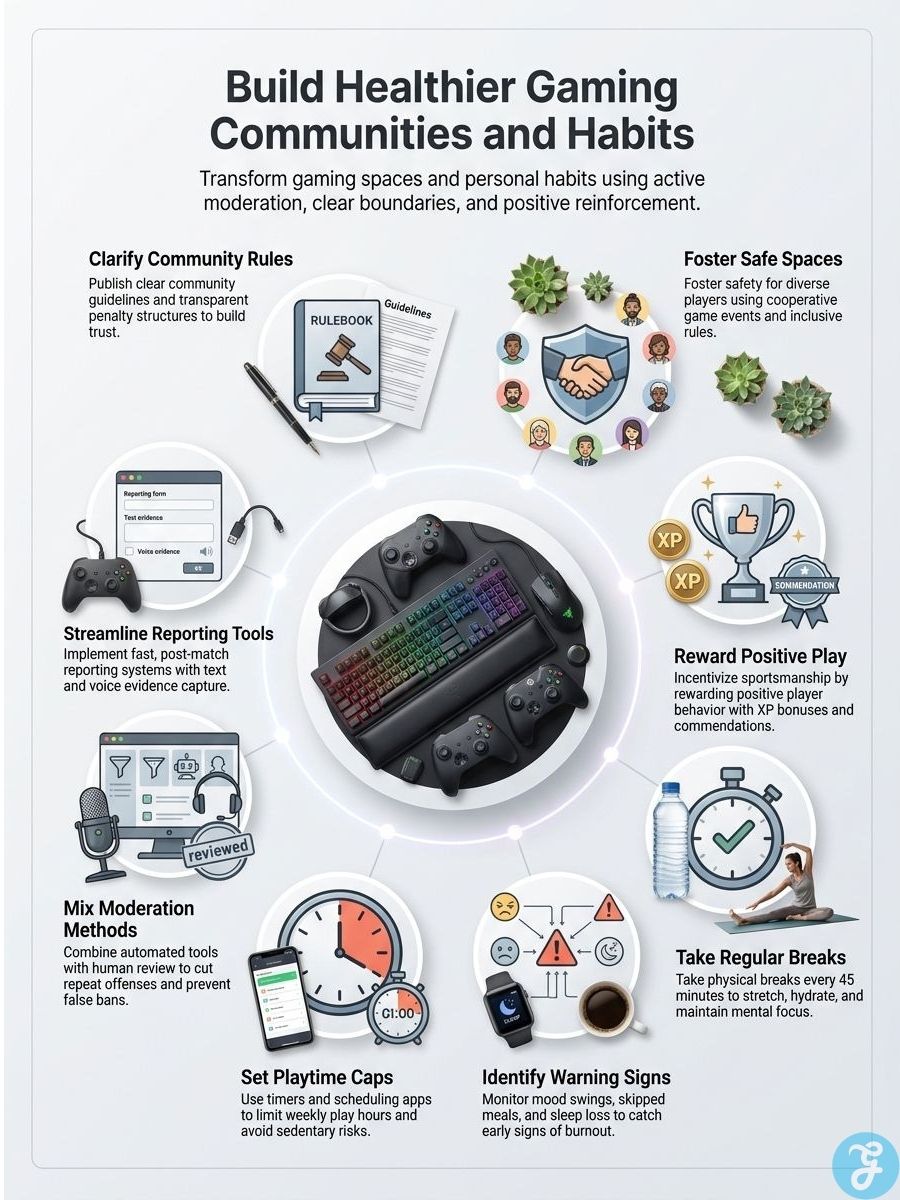
The basics still work: set a weekly cap, protect your sleep, plan breaks, and decide what kind of session you are starting before you queue, ranked practice, co-op fun, or a short unwind after work.
How Can You Balance Gaming with Daily Life?
Think like a coach, not like your late-night impulse. Put gaming on your calendar the same way you would a workout, a shift, or a tournament block.
Cleveland Clinic’s esports medicine team recommends a 6 to 10 minute break every hour, or at least 15 to 20 minutes every two hours, plus the 20-20-20 eye rule. That advice helps because it protects focus, posture, and recovery, not just your back.
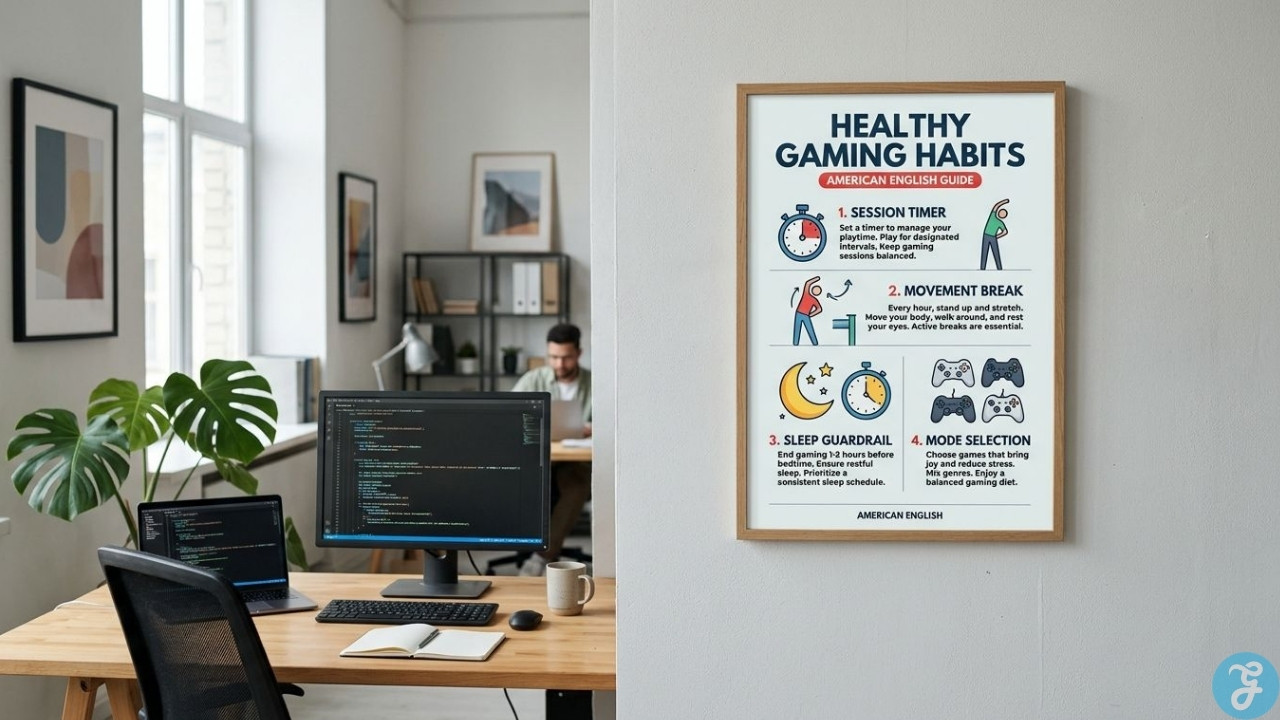
| Habit | Simple target | Why it works |
|---|---|---|
| Session timer | Set an end time before you queue | You stop because the plan says stop, not because tilt decides for you. |
| Movement break | Stand, stretch, walk, hydrate | Short breaks fight the sedentary lifestyle that makes long sessions feel worse. |
| Sleep guardrail | Choose a hard cutoff for late-night play | It protects next-day mood, focus, and reaction time. |
| Mode selection | Pick PvP, co-op, or practice on purpose | You match the game mode to your energy instead of forcing ranked while exhausted. |
If you want more structure, programs like Healthy Gamer can add accountability through coaching and group support. That kind of outside structure helps when you keep breaking your own rules the second friends ask for one more match.
- Use timers for hours a week: they turn fuzzy screen time into something you can measure.
- Keep water at your desk: hydration is a simple performance tool that many gamers ignore.
- Build in physical activity: a short walk, stretch block, or quick set between matches can reset your mood.
- Mute early: communication controls are part of healthy gaming, not a last resort.
How Can You Recognize Unhealthy Gaming Behaviors?
Passionate gaming is not the same as problem gaming. The warning signs show up when gaming stops feeling chosen and starts feeling compulsory.
In the latest CDC sleep guidance, adults need at least 7 hours of sleep and teens need 8 to 10. If gaming keeps pushing you below that line week after week, your habit is already taking a real toll.
- Loss of control: you plan for one match and stay for five more.
- Withdrawal: you feel unusually irritable, anxious, or low when you cannot play.
- Life spillover: skipped meals, late work, missed school, or canceled plans keep stacking up.
- Toxic recovery loop: you get flamed, feel awful, then queue again just to erase the feeling.
- Secrecy: you hide time spent, spending, or how bad you feel after playing.
Problem gaming is about loss of control and real disruption to daily life, not just a high hour count. If your gaming experience keeps leaving you numb, wired, angry, or isolated, it is smart to talk with a mental health professional before burnout becomes your normal.
If you feel overwhelmed, hopeless, or unsafe, get help right away. In the U.S., you can call or text 988 for free, confidential mental health support any time.
Building Healthier Gaming Communities
Better gaming communities do not appear by accident. Somebody sets the tone, writes the rules, answers reports, and shows people what good behavior looks like in real time.
If you run a Discord server, guild, clan, or esports hub, the goal is simple: make safe behavior easy, make harmful behavior hard, and make moderation consistent enough that nobody has to guess.
How Can Moderation and Guidelines Improve Gaming Spaces?
Start with layers. One tool misses context, and one human moderator misses volume.
Ubisoft’s 2025 player safety report explains why this works: proactive systems can catch harmful content before other players see it, while human moderators handle context, edge cases, and fair penalties. That mix is what makes AI moderation useful instead of blunt.
- Write short rules: ban slurs, threats, stalking, posting private information, and targeted pile-ons in plain English.
- Use AI for first-pass filtering: tools like Discord AutoMod can block spam, scams, and abusive keywords before they post.
- Keep humans in the loop: moderators should review appeals, sarcasm, and context-heavy disputes.
- Use a penalty ladder: warning, timeout, channel mute, temporary ban, then permanent ban if needed.
- Log moderator actions privately: staff consistency matters once a case gets messy.
- Protect children and new players: safer default chat settings and tighter access controls help a lot in youth-heavy spaces.
If your game or server uses voice chat, do not rely on reports alone. AI tools can flag what goes unreported, and human review can decide what actually deserves action.
What Are Ways to Foster Inclusivity and Positive Interaction?
Inclusivity is not a slogan. It is a set of choices that makes more people feel safe enough to speak, queue, and stay.
Women, LGBTQ+ players, disabled users, younger gamers, racial and religious minorities, and non-native speakers often feel the tone of a space first. If the tone is hostile, they leave before the community ever gets a second chance.
- Run newcomer nights: pair new players with calm veteran teammates instead of dropping them into the loudest channel.
- Reward positive behaviors: use commendations, helper roles, or public shout-outs for sportsmanship and patience.
- Offer low-pressure community nights: co-op games like Stardew Valley and Deep Rock Galactic help people bond without ranked stress.
- Separate match chat from support chat: people cool off faster when strategy, memes, and conflict are not packed into one room.
- Use event safety standards in real life too: conventions such as 2D Con publish zero-tolerance harassment rules and anonymous safety reporting, which is a smart model for local tournaments and LAN events.
One of the most overlooked moves is public repair. When moderators resolve a common problem, explain the rule and the standard, then move on, so the whole community learns without turning every incident into content.
And do not underestimate cooperative play. A weekly co-op session can do more for a game community than another angry ranked grind, because trust usually grows faster in collaborative spaces than in constant conflict.
The Verdict
Healthy gaming communities are built with better habits, better tools, and better follow-through.
You can protect your mental health by setting limits, guarding your sleep, and stepping away before tilt becomes your routine. You can protect your gaming communities by using clear rules, AI plus human moderation, and welcoming systems that help new players feel safe fast.
Start with one small change today.
Mute sooner, rest sooner, report clearly, and help make gaming feel good again.
Frequently Asked Questions on Healthier Gaming Communities
1. What is a healthier gaming community?
A healthier gaming community is a place where players feel safe, respected, and supported. It promotes mental health and positive gaming habits, by using friendly rules, support resources, and positive interactions.
2. How can communities promote mental health and positive gaming habits?
Set clear rules, use active community moderation, and share support resources. Teach gamers about healthy gaming, like limits on screen time, social play, and regular breaks. Add fun events, honest talks, and simple rewards, and you will build trust.
3. How should we handle toxic behavior in games?
Act fast, nip toxic behavior in the bud, remove harassers, warn repeat offenders, and use bans when needed.
4. How can individual gamers build positive gaming habits?
Set time limits, take real breaks, and play with friends who lift you up. Talk about stress, use support resources if you feel low, and keep gaming fun, not just about wins.